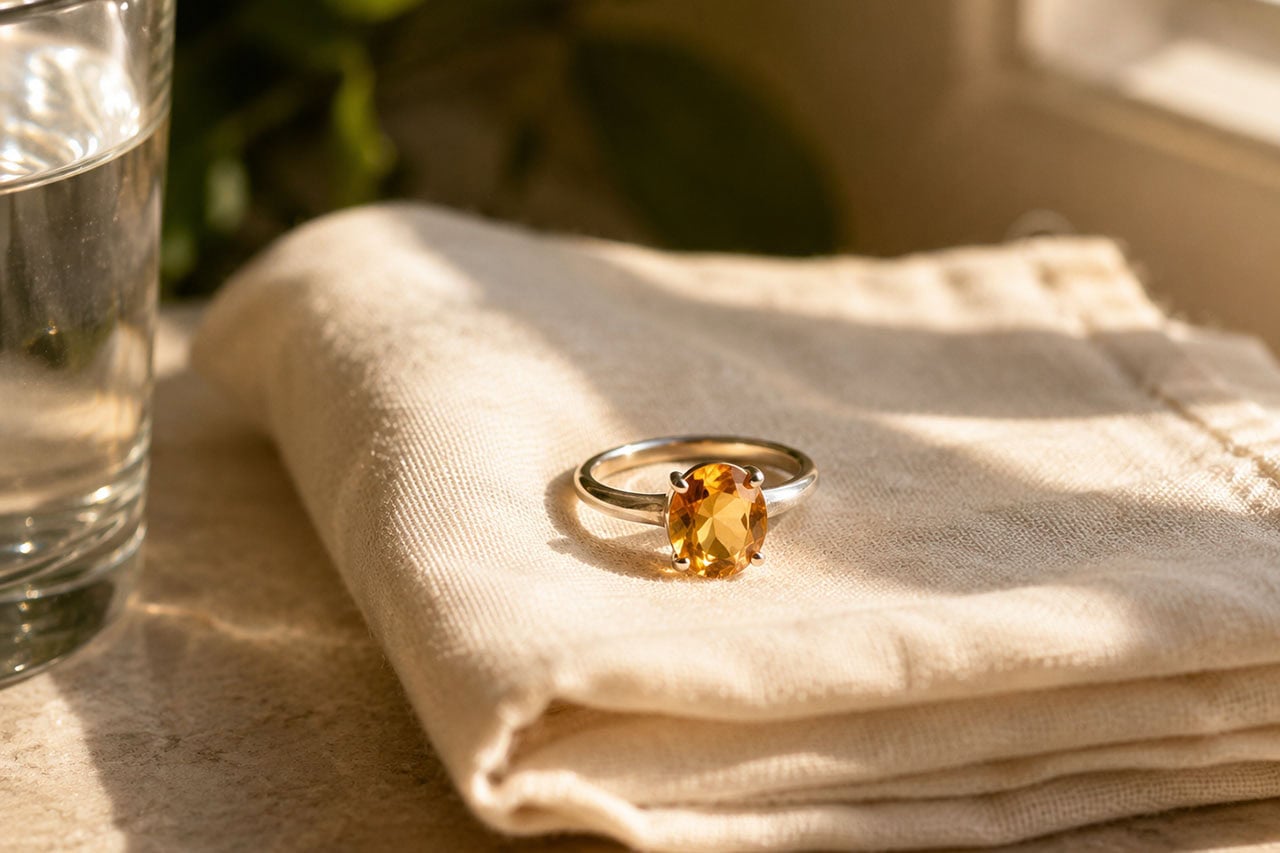
Yes, you can wear citrine every day. It’s one of the safest and most wearable crystals, hard enough at 7 on the Mohs scale to handle daily contact, chemically stable, and not associated with any common skin reactions. The one real caveat is that natural citrine fades in direct sunlight over long periods, so daily wear is fine but constant sun exposure isn’t ideal.
Here’s the small twist most articles miss. Almost all the citrine sold cheaply in crystal shops isn’t naturally yellow. It’s heat-treated amethyst. Both are real quartz. Both are genuine citrine in the technical sense. One just had its colour changed in an oven, and the other had it changed by geological heat millions of years ago. For daily wear, that distinction matters less than you’d think, but it’s worth knowing before you buy.
Honestly, citrine is the crystal I recommend most often to people who ask me “what can I wear without overthinking it.” Low maintenance, unlikely to clash with any other stone, pleasant to look at in almost any light. If you’ve been waiting for permission, this is it.
Why Citrine Is Safe for Daily Wear
Quartz, the mineral family citrine belongs to, is one of the hardest common crystals on Earth. That matters for jewellery because it means the stone handles daily knocks without chipping. A citrine ring scrapes against door handles all day without noticeable damage. A citrine pendant rides the chest during every change of clothes and keeps its polish.
The hardness. Citrine sits at 7 on the Mohs scale. For reference, steel is about 5.5, glass is about 5.5, a fingernail is about 2.5. Citrine can scratch most of those and resists being scratched by them. This is why quartz jewellery tends to last decades where softer stones get foggy within a year.
The chemistry. Citrine is silicon dioxide, the same stuff as beach sand and clear quartz. It doesn’t react with sweat, perfume, soap, or skin oils. You won’t get a green wrist the way you might from a cheap metal bracelet. You won’t trigger a mineral reaction. It’s essentially inert.
The energy. Citrine is traditionally associated with confidence, abundance, and warmth, and unlike some of the heavier stones (hematite, black tourmaline, smoky quartz), it doesn’t accumulate a sense of weight from constant wear. It’s one of the lightest stones in terms of how it feels emotionally over long use. People who find hematite too dense for daily contact often get on with citrine just fine.
The tradition. Citrine has been worn daily for centuries as a merchant’s stone, a solar plexus stone, and a general-purpose sunny presence. There’s no lore anywhere saying it should be taken off regularly or rested. Most stones work better with some break. Citrine is an exception.
What to Actually Watch For
A few real caveats that matter more than the scary-sounding warnings you’ll find online.
Direct sun over months. Natural citrine (the pale, soft-yellow kind) will fade in direct sunlight over long periods, months to years. Heat-treated citrine is more colour-stable, because the treatment fixes the orange tone. If you wear your citrine in the sun during a beach holiday, no issue. If you leave it on a south-facing windowsill for a year, it may shift toward pale yellow or clear. Take it off at night and keep it in a drawer rather than a sunny shelf.
Real shower wear is fine, hot saunas aren’t ideal. Citrine handles water. Soap is fine. Shampoo is fine. Swimming in a chlorinated pool won’t damage the stone, although it may affect the metal setting if it’s silver. What you want to avoid is extreme temperature swings, taking a ring from hot sauna to cold plunge, for example, which can stress the stone and any inclusions inside it.
The metal setting matters more than the stone. If your citrine jewellery has a sterling silver setting, daily wear will tarnish the silver before it damages the citrine. Budget jewellery with plated metal will degrade much faster. The stone is usually the most durable part of the piece. Plan your care around whatever the setting needs.
It’s not a sleep stone. This is where some people run into a small issue. Citrine is associated with energy and uplift. Some wearers find that keeping a citrine pendant on overnight leaves them feeling slightly over-activated at bedtime, the same way a cup of afternoon coffee can throw off sleep for people who are sensitive to it. If this happens to you, take it off an hour before bed. Most people don’t notice any effect either way.
Heat-treated vs natural. Both are fine. I mentioned this above. If you buy a deep-orange citrine with a whitish tip for a reasonable price, it’s almost certainly heat-treated amethyst. Natural citrine is rarer, paler, and more expensive. Heat-treated citrine is still genuine quartz and perfectly suitable for daily wear. The only reason to prefer natural is personal preference for how you think about the stone’s history.
Who Daily Citrine Wear Suits Best
People who want a low-maintenance stone. If you’ve been put off crystal jewellery by “never wear it in water, never leave it in the sun, cleanse it every full moon” warnings, citrine is the opposite. Put it on. Forget about it. Cleanse it once a month if you remember.
People working on confidence, visibility, or income. The traditional associations of citrine align with sustained daily wear. The solar plexus isn’t a chakra you want to activate once a week. It benefits from constant gentle contact.
People who run emotionally flat. Not people in crisis. Just people who feel a little muted, a little grey in the morning, a little low-wattage through the afternoon. Citrine’s sunny presence is real, and it’s a pleasant daily companion for that particular kind of low mood.
Less suited for people who run anxious or hot. If you’re already a high-energy, restless, overstimulated type, citrine can push you further in that direction. Not dramatically, just a small nudge. In that case, a calmer stone, blue lace agate or amethyst, is a better daily-wear choice. Save citrine for days you need the lift.