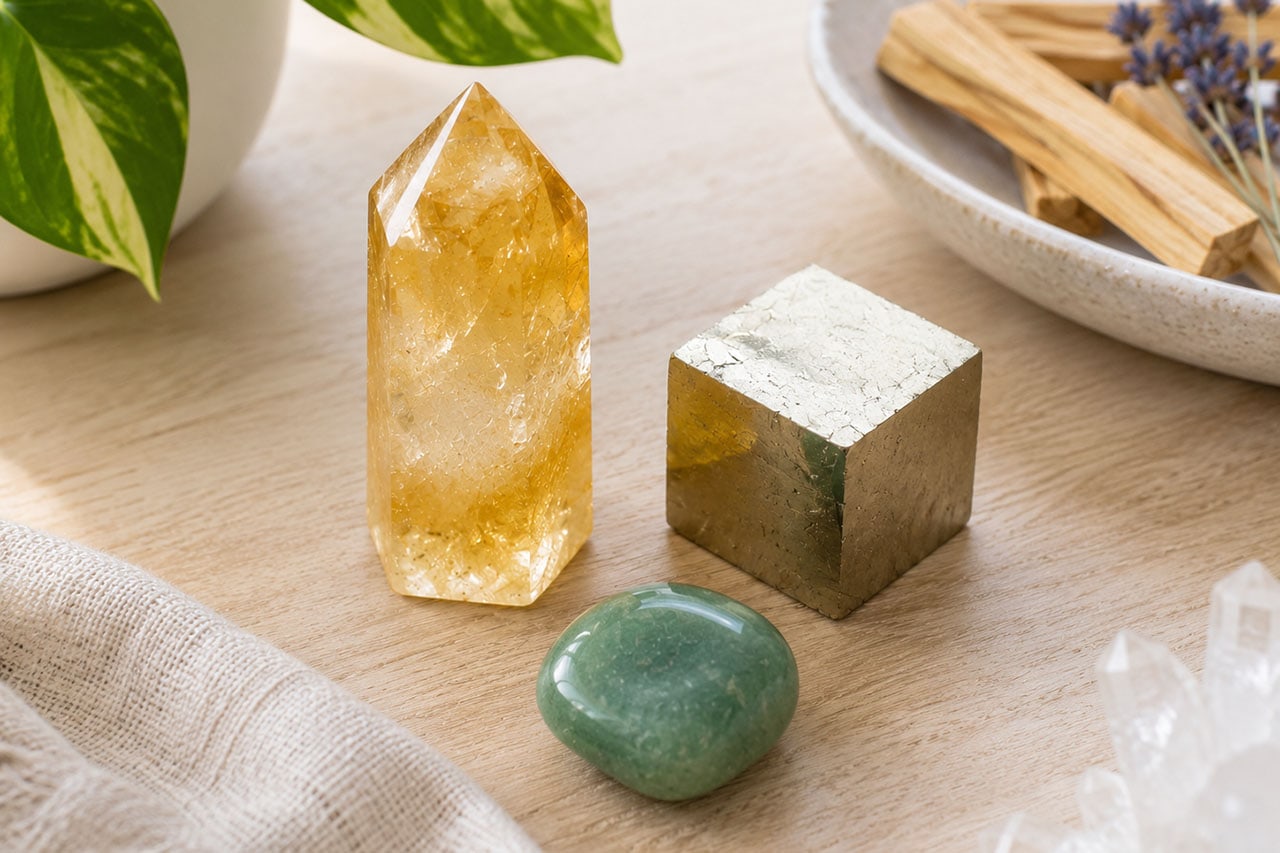
Citrine is the crystal most strongly associated with wealth. It’s been called the merchant’s stone for centuries and is traditionally kept in cash registers, wallets, and business spaces to attract abundance. Pyrite, jade, green aventurine, and tiger’s eye are the other four stones most commonly linked to prosperity.
Let me paint a picture. A small golden citrine point sitting on the corner of a shop counter, where the shopkeeper can see it every time she opens the register. It’s been there for six years. Customers ask about it. Some assume it’s decorative. She knows why it’s actually there.
Honestly, the wealth-crystal tradition is one of the oldest and most consistent threads in crystal lore, and it’s also the one that causes the most eye-rolling from people outside the community. Fair enough. No stone is going to deposit cash in your account. What wealth crystals actually do is a smaller, more useful thing, and worth knowing about before you write the whole category off.
Why Citrine Is the Classic Wealth Stone
Citrine is warm yellow-orange quartz, and it’s been called the merchant’s stone or the success stone for hundreds of years. The association comes from three threads that reinforce each other.
The colour. Citrine is the colour of gold. That’s not subtle. Across almost every culture, yellow and golden stones have been linked to sunlight, warmth, and material abundance. The symbolism was inevitable the moment someone found a piece and held it up to the light.
The solar plexus. In chakra tradition, citrine is linked to the solar plexus, the energy centre in plain English associated with confidence, personal power, and the ability to act on what you want. Wealth isn’t just money. It’s also the willingness to ask for a raise, set a price, or say no to work that undervalues you. Citrine’s traditional use leans heavily on that angle.
The folklore is remarkably stable. In European, Chinese, and Indian traditions, citrine or similar golden stones keep showing up in the same role. When folklore converges across cultures that had little contact, that usually means the symbolism comes from something obvious about the stone itself rather than a single tradition that spread.
A note worth knowing. Most “citrine” sold cheaply in crystal shops is actually heat-treated amethyst. Natural citrine is pale, soft yellow, not the deep orange with a white tip that you often see. Both are real quartz. Both have the same chemistry. The treated version just had its colour changed in an oven rather than by geological heat underground. Plenty of people use treated citrine without issue. Purists prefer natural. Ask your shop which they’re selling.
The Other Wealth Stones Worth Knowing
Citrine is the classic, but four others come up again and again when the topic turns to money.
Pyrite. Metallic, cube-forming, nicknamed fool’s gold. Pyrite looks like wealth, which is half the point. Associated with manifestation, willpower, and the ability to hold a vision long enough to see it through. Small pyrite cubes are commonly placed on desks or in offices.
Green aventurine. Soft green, with a quiet sparkle from embedded fuchsite flakes. Known as the stone of opportunity. Associated with luck in new ventures, which matters because wealth often follows from the decision to take a chance on something. Traditionally carried in the left pocket for attracting, the right for releasing.
Jade. Deep green, dense, cool to the touch. In Chinese tradition, jade has been associated with prosperity, longevity, and good fortune for over three thousand years. Worn as pendants, bangles, or kept in the home. Unlike most of the stones on this list, jade has almost no “alternative” use in Western crystal lore. Its wealth association is the main one.
Tiger’s eye. Golden-brown with a chatoyant shimmer. Associated with courage, focus, and good decisions under pressure. The money angle here is practical rather than mystical. Tiger’s eye is traditionally carried during negotiations, before meetings with bosses or investors, or whenever you need to stay clear-headed about what you’re actually worth.
How to Actually Use a Wealth Crystal
You don’t need a ritual. You need a placement you’ll see every day and a clear intention behind it.
-
On the desk or in the workspace: A citrine point, a pyrite cube, or a small jade piece sitting where you work. Every time your eye lands on it, you get a small mental cue to stay focused on the work that actually pays. Over weeks, this adds up.
-
In the wallet or purse: A small tumbled citrine, pyrite flake, or green aventurine tucked into a wallet pocket. This is one of the oldest wealth-crystal traditions. The point isn’t the crystal attracting money. The point is you seeing it every time you open your wallet, which builds a quiet habit of thinking before you spend.
-
In the cash drawer or near the register, if you own a business: The traditional merchant placement. Citrine is the classic choice. One piece, placed deliberately, renewed with a clear intention once a month or so.
-
In the wealth corner of the home (far left corner from the front door): In feng shui, this corner is associated with prosperity. A cluster of citrine, a small jade plant sculpture, or a piece of pyrite placed there is a traditional Chinese practice that has filtered into Western crystal use.
-
Held before negotiations or money decisions: Pick one stone, hold it for thirty seconds, set one specific intention. “Let me ask for what I’m actually worth.” “Let me not undercut my price out of nervousness.” Then put the stone down and go do the thing.
What to Be Honest About
This section matters more than the list of stones.
Wealth crystals don’t manifest money. They work, where they work at all, by keeping your attention on financial decisions you’d otherwise drift past. The citrine on your desk reminds you to send the invoice. The pyrite in your pocket reminds you not to say yes to unpaid overtime. The aventurine in your wallet reminds you to pause before the impulse purchase.
That’s a real effect. It’s also a small one, and it doesn’t replace financial literacy, saving, or any of the unglamorous habits that actually build money over time. Buy the stone if you like the stone. Use it as a focus object. Don’t wait for it to do the work.
If you want to read more about the stones mentioned here, the Crystalance Mineral Library has full entries on Citrine, Pyrite, Jade, and Green Aventurine.
Meta description: Citrine is the classic wealth crystal. Here’s why, which other stones share the tradition, and how to actually use one without fooling yourself. (145 chars)
Image prompt: A close-up photograph of a warm yellow citrine point, a small brass-yellow pyrite cube, and a polished green jade tumble arranged on a folded dark green linen cloth beside a worn leather wallet. Soft warm lamp light from the upper right, gentle shadows. Shot with a 50mm lens, shallow depth of field. No text, no hands, no visible money.