
Graphite
Native element
Steel gray to black
Metallic to dull earthy
1 - 2
2.09 - 2.23
Hexagonal
China, Brazil, Canada, Madagascar, Sri Lanka, North Korea
Common
C
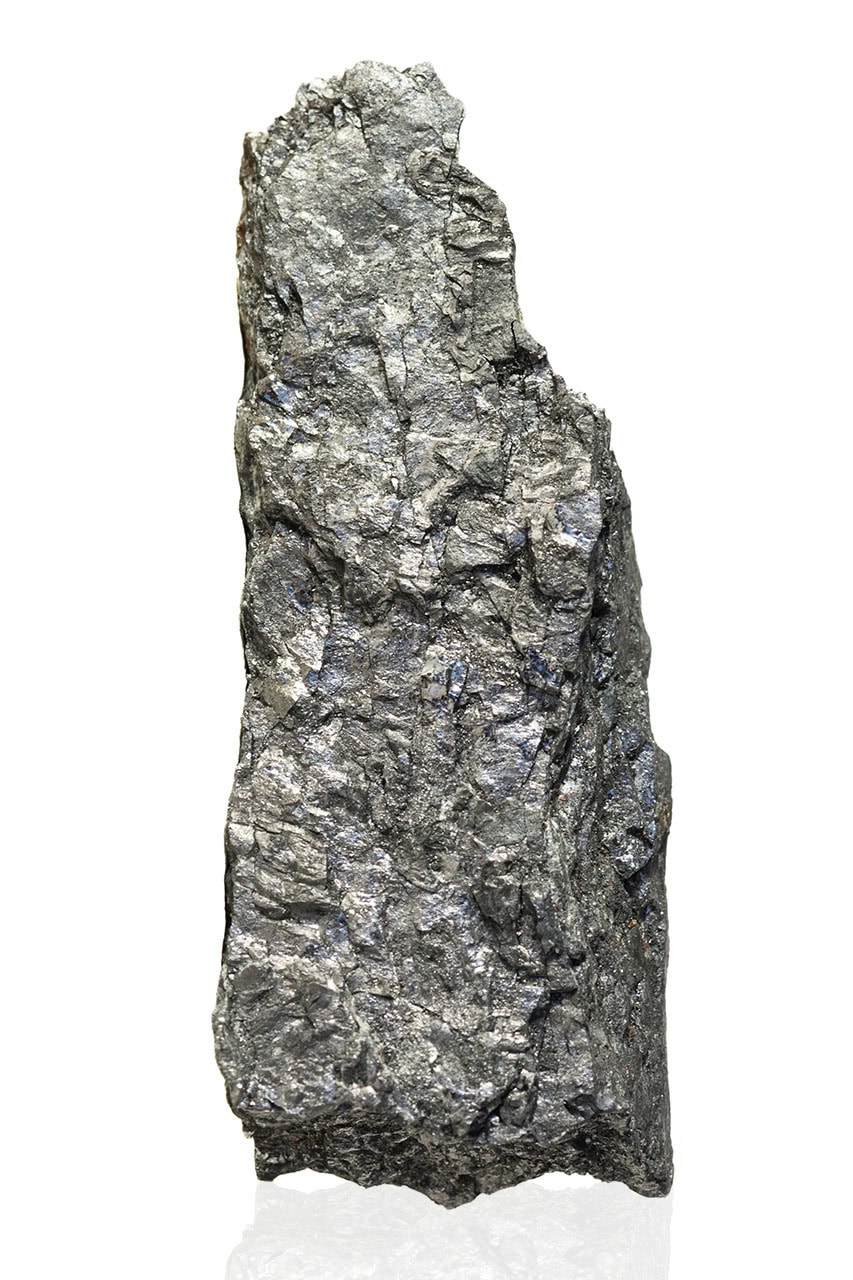
Deep within the Earth's crust, under crushing pressure and searing heat, ordinary carbon transforms into one of humanity's most paradoxical minerals—graphite, the soft sister of diamond. This metamorphic marvel shares the exact same chemical composition as Earth's hardest natural substance, yet it crumbles at the slightest touch, leaving its signature dark mark on everything it encounters.
From the ancient caves of Borrowdale in England's Lake District, where shepherds first discovered massive deposits in the 1500s, to the modern graphene laboratories where scientists unlock its two-dimensional secrets, graphite has shaped human civilization in ways both humble and revolutionary. Medieval armorers used it to cast cannonballs, while Renaissance artists wielded it to capture light and shadow on paper.
Today, this unassuming mineral powers our digital age—conducting electricity in batteries, moderating nuclear reactions, and forming the basis of graphene, the strongest material known to science. Yet for all its industrial importance, graphite remains deeply connected to human creativity and spiritual grounding, earning its place as the "stone of deep earth wisdom" among crystal practitioners.
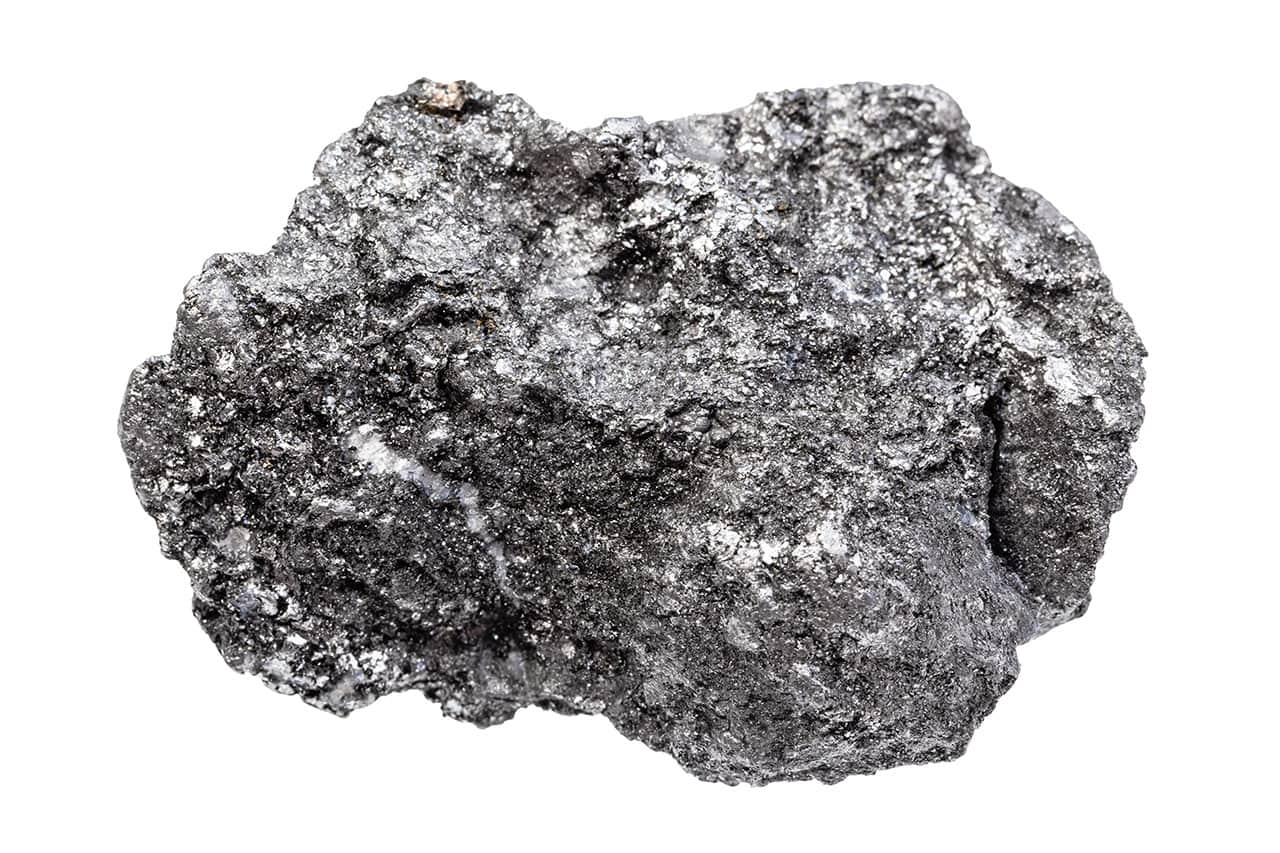

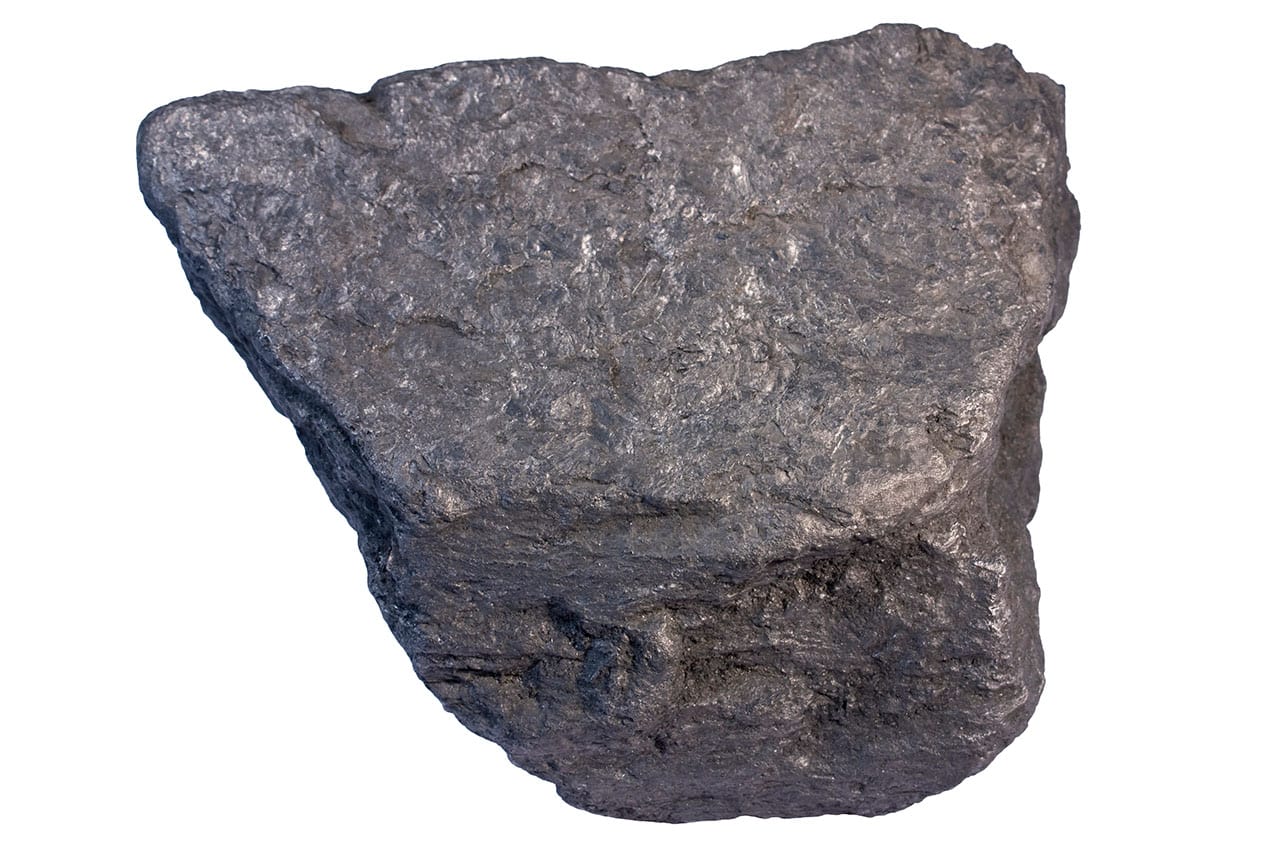
TABLE OF CONTENTS
Properties & Qualities
Physical Properties
Graphite presents itself as nature's writing instrument, its layered structure creating one of the most distinctive minerals in the geological kingdom. Each crystal consists of carbon atoms arranged in hexagonal sheets, stacked like infinite pages of atomic paper held together by weak van der Waals forces—a structure that explains its extraordinary softness despite being pure carbon.
The mineral's metallic luster can be deceptive, shifting from bright silver on fresh cleavage surfaces to a dull, sooty black when weathered or handled. This tarnishing happens almost instantly, as graphite's loosely bonded layers shed microscopic flakes at the slightest provocation, coating fingers and surfaces with its characteristic gray-black residue.
Temperature plays a fascinating role in graphite's behavior. While stable up to 3,000 degrees Celsius in the absence of oxygen, it begins to oxidize at just 400 degrees in air, slowly converting to carbon dioxide. This thermal stability, combined with its electrical conductivity, makes it unique among non-metallic minerals—conducting electricity along its layers as efficiently as many metals while insulating perpendicular to them.
Under magnification, graphite reveals its true nature as a mineral of layers and secrets. Natural crystals often show hexagonal plates and triangular markings, while massive varieties display a foliated structure reminiscent of metamorphic rocks. Some specimens contain inclusions of other minerals, creating patterns that practitioners read like geological tea leaves.
Metaphysical properties
Within metaphysical traditions, graphite occupies a unique position as the "recorder stone," its layered structure believed to store and transmit information across time and space. Energy workers describe its vibration as deeply grounding yet electrically active—a combination that mirrors its physical properties of conducting energy while maintaining structural stability.
Ancient Chinese Taoist alchemists recognized graphite's spiritual significance long before its chemical nature was understood, using it in meditation practices designed to connect heaven and earth energies. They believed its ability to leave marks represented the power to inscribe one's will upon reality, making it a favored tool for manifestation rituals.
The mineral's association with the root chakra stems from its carbon composition—the fundamental element of organic life. However, practitioners note that graphite's conductivity creates an unusual energetic signature that can activate all chakras simultaneously when used with focused intention, creating what some describe as a "lightning rod" effect for spiritual energy.
Modern crystal workers report that graphite's electromagnetic properties make it particularly effective for grounding high-frequency spiritual downloads into practical understanding. Its ability to create energetic boundaries that allow selective permeability has earned it recognition as a powerful tool for empaths and energy-sensitive individuals. The stone's connection to both earth and electricity has earned it the title of "shaman's pencil" among indigenous practitioners who use it to draw protective symbols and power sigils.
Meaning & Symbolism
Physical meaning
In the physical realm, graphite embodies the principle of potential energy awaiting release. Its structure—identical to diamond in composition but opposite in properties—speaks to how arrangement, not just substance, determines manifestation. This teaches that success often lies not in acquiring new resources but in reorganizing existing ones.
The mineral's role as humanity's writing tool for millennia imbues it with deep symbolic meaning around communication, creativity, and leaving one's mark on the world. Every graphite crystal contains the potential for countless words, drawings, and ideas—a crystallized reminder that we all carry unlimited creative potential within our carbon-based forms.
Its industrial applications further expand its physical symbolism. As a lubricant, it represents smooth progress and reduced friction in life's mechanisms. Its electrical conductivity symbolizes the flow of energy and information through systems. In nuclear reactors, it moderates powerful forces, suggesting our ability to control and channel intense energies safely. When transformed into carbon fiber, it demonstrates how apparent softness can hide incredible structural strength.
For those focused on material success, graphite represents the paradox of gentle persistence—how soft, consistent pressure can leave more lasting marks than violent force. Its use in pencils that can write in space reminds us that true tools of creation work in any environment, adapting to circumstances rather than demanding specific conditions.
Spiritual meaning
Graphite's spiritual significance transcends its humble appearance, representing the alchemical process of transformation through pressure and time. Mystics interpret its formation from organic matter as proof of consciousness surviving apparent death, transformed but not destroyed—a mineral testament to the eternal nature of energy.
The stone's ability to conduct electricity while maintaining its own structure serves as a powerful metaphor for spiritual mediumship. Just as graphite channels electrical current without being consumed by it, spiritual practitioners use it as a tool for channeling higher wisdom while maintaining personal boundaries and grounding.
Different spiritual traditions interpret graphite's message through their own lenses. Hermetic philosophy views it as crystallized Mercury principle—the medium of communication between realms. Buddhist thought sees its layers as representing levels of consciousness to be explored sequentially. Shamanic practice uses it to map journeys between worlds, literally drawing the pathways traveled in altered states.
Contemporary spirituality interprets graphite as a bridge between digital and organic consciousness, recognizing its role in both computer technology and biological life. This positions it as a teacher for the current age, helping humanity navigate the integration of artificial and natural intelligence. The mineral's presence in both ancient ritual tools and modern technology suggests its role as a constant companion in humanity's spiritual evolution, adapting its expression to each era's needs while maintaining its essential function as a recorder and transmitter of wisdom.
Healing Benefits
Physical healing
Traditional healing systems have incorporated graphite in various forms, though it's crucial to note these applications are based on energetic and folk medicine principles rather than proven medical science. Chinese medicine practitioners historically used sealed graphite amulets worn against the skin for treating conditions related to poor circulation, believing its conductive properties could help regulate the body's electrical systems.
Contemporary crystal healers report using graphite for addressing joint and bone issues, placing tumbled stones on arthritic areas during healing sessions. The mineral's electromagnetic properties have led some alternative health practitioners to recommend wearing graphite jewelry as protection against EMF exposure, though this remains purely anecdotal. Energy workers often incorporate graphite in layouts along meridian lines, believing it improves the flow of chi or prana through the body's subtle energy channels.
Some practitioners create "graphite water" using the indirect method—placing the stone in a sealed container within a water vessel—for external use only. This preparation is applied to skin conditions, with users reporting improvements in conductivity-related issues. However, graphite should never be ingested or used in direct elixirs due to potential impurities including heavy metals that can be present in natural specimens.
The mineral's high carbon content has led experimental healers to work with it for supporting cellular regeneration processes, based on carbon's fundamental role in organic chemistry. Others focus on its potential for enhancing bioelectrical communication between cells, though these applications remain in the realm of energy medicine rather than proven therapeutic interventions.
Emotional healing
The emotional healing attributes of graphite center on its ability to help individuals "write their own story," transforming painful narratives into wisdom. Therapists who incorporate crystals report that graphite's energy helps clients struggling with self-expression, particularly those who feel their voices have been silenced or dismissed.
The mineral's tendency to leave marks becomes metaphorically significant in trauma work, where practitioners use it to help clients understand how experiences leave imprints without defining identity. This "marking without scarring" principle helps reframe painful memories as information rather than damage, allowing for integration without identification.
Graphite's grounding properties make it particularly valuable for anxiety related to feeling "ungrounded" or disconnected from physical reality. Its conductive nature is said to help discharge overwhelming emotions through the body's natural electrical systems, preventing the buildup of emotional static that can manifest as panic or dissociation.
Creative blocks often respond well to graphite's influence, as its association with writing and drawing connects directly to expression channels. Practitioners report that holding graphite while journaling or engaging in art therapy can unlock suppressed emotions and facilitate their healthy expression. The stone's softness reminds us that vulnerability—often seen as weakness—is actually the quality that allows us to leave our mark on the world.
Spiritual healing
In spiritual healing contexts, graphite functions as what practitioners call an "interdimensional translator," helping to decode and ground high-frequency spiritual information into usable wisdom. This bridging quality makes it valuable for those experiencing spiritual emergence or kundalini activation, where overwhelming energetic experiences need integration rather than suppression.
Advanced energy workers utilize graphite for accessing the Akashic records, using its layered structure as a metaphysical filing system to navigate timeline information. The stone's recording properties are believed to help in soul retrieval work, drawing back fragmented aspects of self scattered across dimensions or lost through trauma.
The mineral's unique position as both grounder and conductor makes it essential for healing electrical disruptions in the aura. Practitioners describe graphite as creating a "translation matrix" that converts cosmic downloads into practical guidance, symbolic visions into actionable insights, and multidimensional experiences into linear understanding that the human mind can process.
For those working with entity attachments or psychic interference, graphite is said to create selective boundaries—allowing beneficial energies while filtering out parasitic ones. This discriminating quality extends to its use in updating outdated energetic patterns, where practitioners visualize graphite literally rewriting the energetic scripts that no longer serve the individual's highest good.
Use & Care
How to use
- Meditation enhancement: Hold raw graphite during grounding meditations to deepen Earth connection
- Creative catalyst: Keep specimens in art studio or writing space to enhance creative flow
- Dream work: Place under pillow to stimulate problem-solving dreams and remember insights
- Energy layouts: Position at base of spine during healing sessions for grounding
- EMF protection: Wear graphite jewelry when working with electronics
- Communication aid: Carry in pocket during important conversations or presentations
- Manifestation tool: Write intentions with graphite pencil for earth-based magic
- Chakra work: Place on root chakra while lying down to stabilize entire energy system
- Protection circles: Draw protective boundaries with graphite before ritual work
- Meridian tracing: Use tumbled pieces to trace energy pathways on body
- Study support: Keep on desk while learning to improve focus and retention
- Psychic development: Hold during channeling practice to maintain grounding
How to cleanse
- Sound cleansing: Use bells, singing bowls, or tuning forks—most recommended for graphite
- Smoke cleansing: Pass through sage, cedar, or palo santo smoke for 30-60 seconds
- Moonlight bathing: Leave under any moon phase overnight for gentle clearing
- Breath work: Hold stone and exhale forcefully with cleansing intention
- Visualization: Imagine white or violet light flowing through and around stone
- Selenite charging: Rest on selenite plates or wands overnight
- Earth burial: Bury in dry soil for 24-48 hours for deep cleansing
- Reiki symbols: Draw clearing symbols over stone if attuned
- Avoid water: Never use water as it can damage structure and create mess
- Avoid salt: Direct salt contact may cause surface deterioration
How to charge
- Earth charging: Bury in mineral-rich soil for strongest natural charge
- Lightning storms: Place safely indoors near window during electrical storms
- Magnetite contact: Rest on magnetite or lodestone for electromagnetic charging
- Crystal clusters: Place on clear quartz or amethyst clusters for amplification
- Sacred geometry: Set on printed Metatron's Cube or Sri Yantra patterns
- Pyramid power: Position inside copper or orgone pyramids for 24-72 hours
- Intentional programming: Hold during meditation while stating specific purpose
- Group charging: Pass among circle participants to build collective energy
- Copper charging: Place on copper plates or within copper coils
- Ley line exposure: Take to natural power spots for earth energy infusion
Combining with other stones
- Hematite: Ultimate grounding combination for severe anxiety and dissociation
- Black Tourmaline: Creates powerful EMF protection and psychic shielding
- Clear Quartz: Amplifies conductivity while adding clarity to insights
- Moldavite: Grounds intense transformation energies—use very cautiously
- Shungite: Forms superior electromagnetic harmonizing field
- Smoky Quartz: Transmutes negative energy while maintaining earth connection
- Pyrite: Powerful manifestation combination linking ideas to material reality
- Jet: Ancient shamanic protection pairing for journey work
- Copper: Enhances electrical conductivity for advanced energy healing
- Magnetite: Aligns body's electromagnetic field with Earth's
Identification
Can be mistaken for
- Molybdenite: Nearly identical appearance and softness—molybdenite has bluish tinge and higher specific gravity
- Galena: Similar metallic luster—galena is much heavier and forms cubic crystals
- Anthracite coal: Comparable color and feel—coal is lighter and lacks metallic luster
- Hematite: Massive varieties look similar—hematite is harder with red streak
- Stibnite: Metallic gray appearance—stibnite forms distinctive needle-like crystals
- Pyrolusite: Black color similar—pyrolusite is harder with different crystal structure
- Magnetite: Dark appearance—magnetite is magnetic and significantly harder
- Synthetic graphite: Industrial versions lack natural crystal patterns and impurities
How to spot a fake
- Streak test: Genuine graphite leaves black to dark gray streak on unglazed porcelain
- Softness check: Real graphite marks paper easily and feels greasy or slippery
- Conductivity test: Use multimeter—authentic graphite conducts electricity well
- Weight assessment: Natural graphite is surprisingly light for its size
- Magnification: Look for natural layered structure and hexagonal patterns
- Flexibility test: Thin pieces of real graphite bend without breaking
- Heat resistance: Genuine graphite withstands high heat without melting
- Price red flags: Suspiciously cheap "rare" specimens likely synthetic
- Source verification: Industrial graphite often mislabeled as natural specimens
- Impurity presence: Natural graphite contains minor impurities—pure synthetic doesn't