Kunzite
Silicate (Inosilicate - Pyroxene group)
Pink, lilac, violet, colorless
Vitreous
6.5 - 7
3.15 - 3.21
Monoclinic
Afghanistan, Brazil, Madagascar, USA, Pakistan, Myanmar
Uncommon to rare (gem quality)
LiAl(SiO₃)₂ (Lithium aluminum silicate)
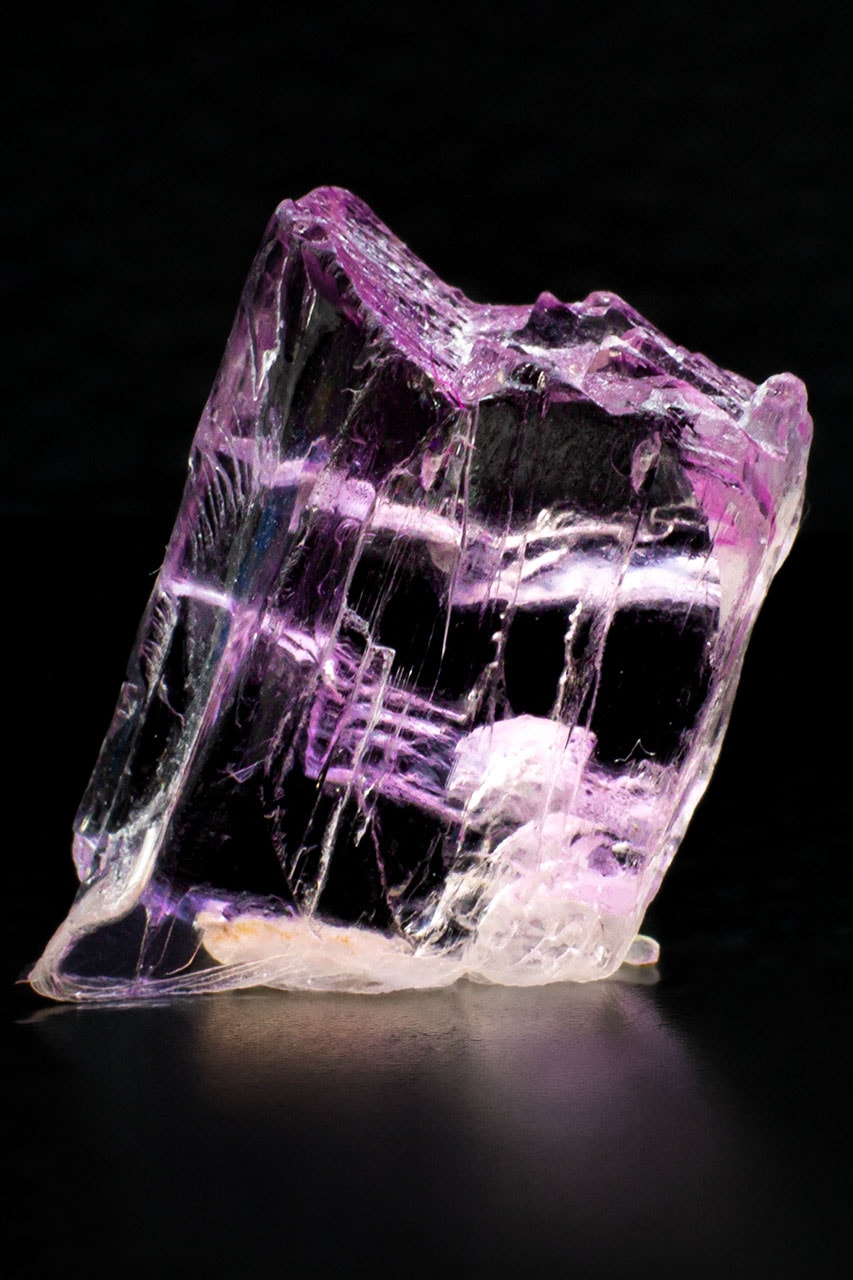
In the gem-rich pegmatites of San Diego County, California, legendary gemologist George Frederick Kunz discovered a pink crystal in 1902 that would bear his name and capture hearts for over a century. This lithium-rich variety of spodumene, displaying colors from pale pink to deep violet, emerged as one of the twentieth century's most romantic gem discoveries—a stone that seems to crystallize the very essence of unconditional love.
Kunz, who served as Tiffany & Co.'s chief gemologist, immediately recognized the stone's potential. Its delicate pink color, exceptional clarity, and impressive crystal sizes made it ideal for jewelry, while its lithium content hinted at calming properties that modern practitioners would later explore extensively. The stone quickly became associated with divine love and emotional healing, earning devoted following among those seeking heart-centered transformation.
Today, kunzite serves those navigating the complex terrain of the heart—healing old wounds, opening to new love, and learning to extend compassion to self and others. Its gentle energy doesn't force the heart open but creates conditions where opening feels safe. In an age where many have armored their hearts against further hurt, kunzite offers the revolutionary possibility that vulnerability might be strength, that opening might bring healing rather than harm.
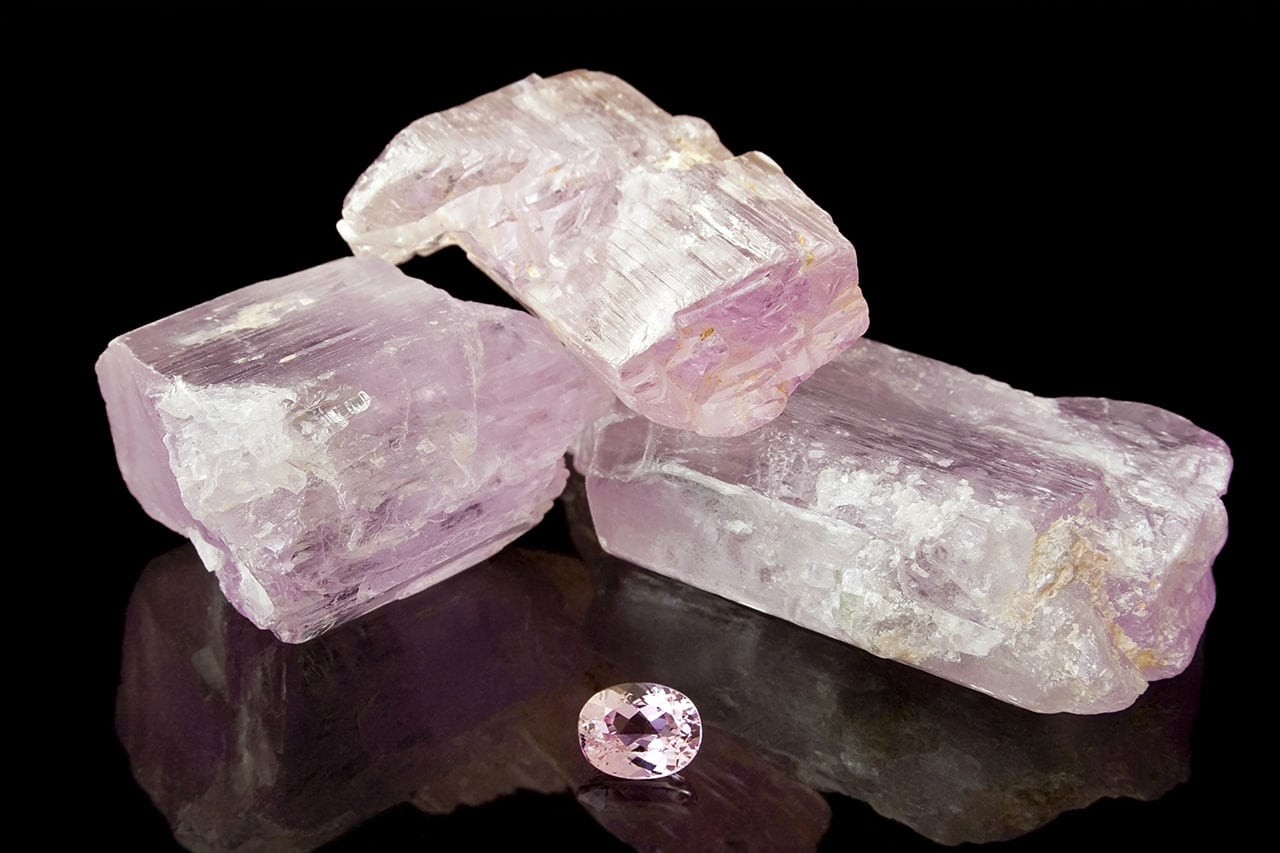
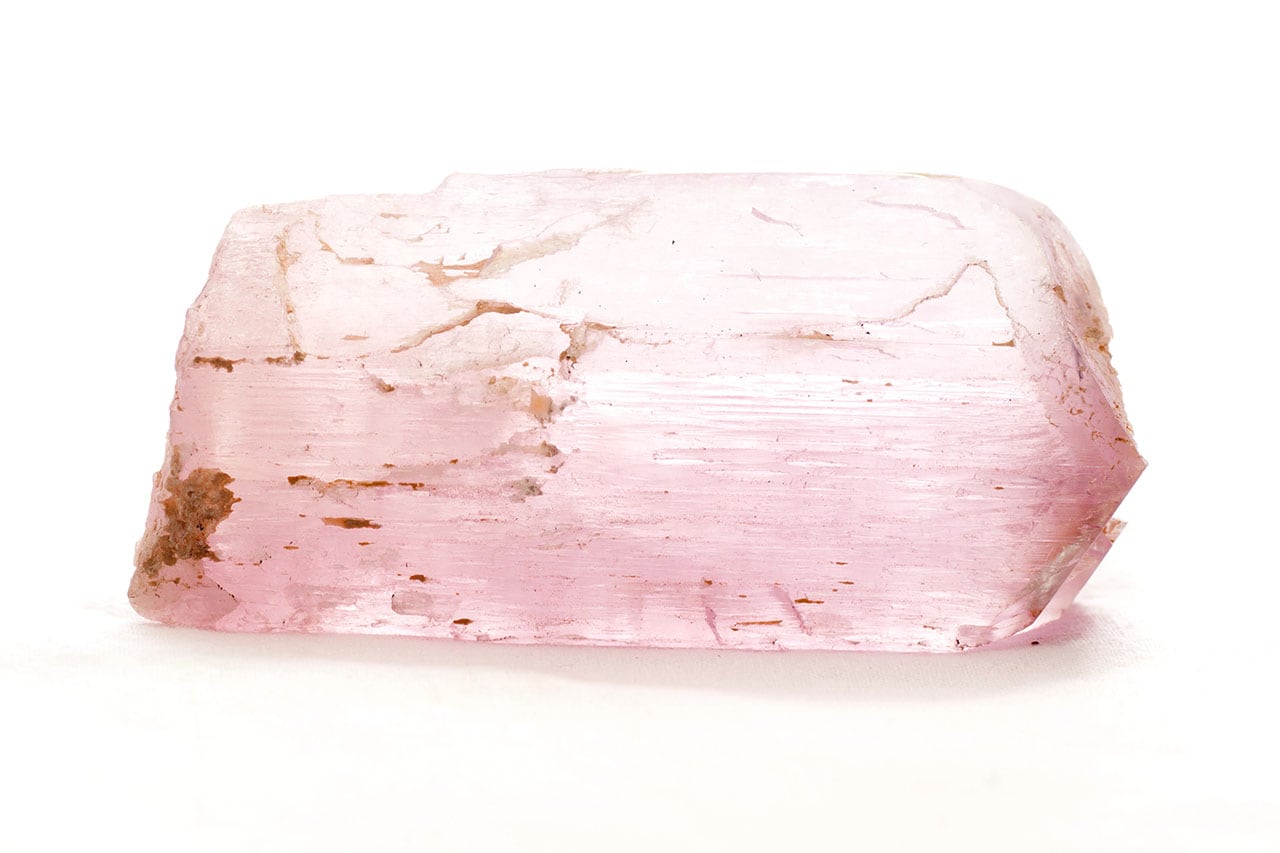
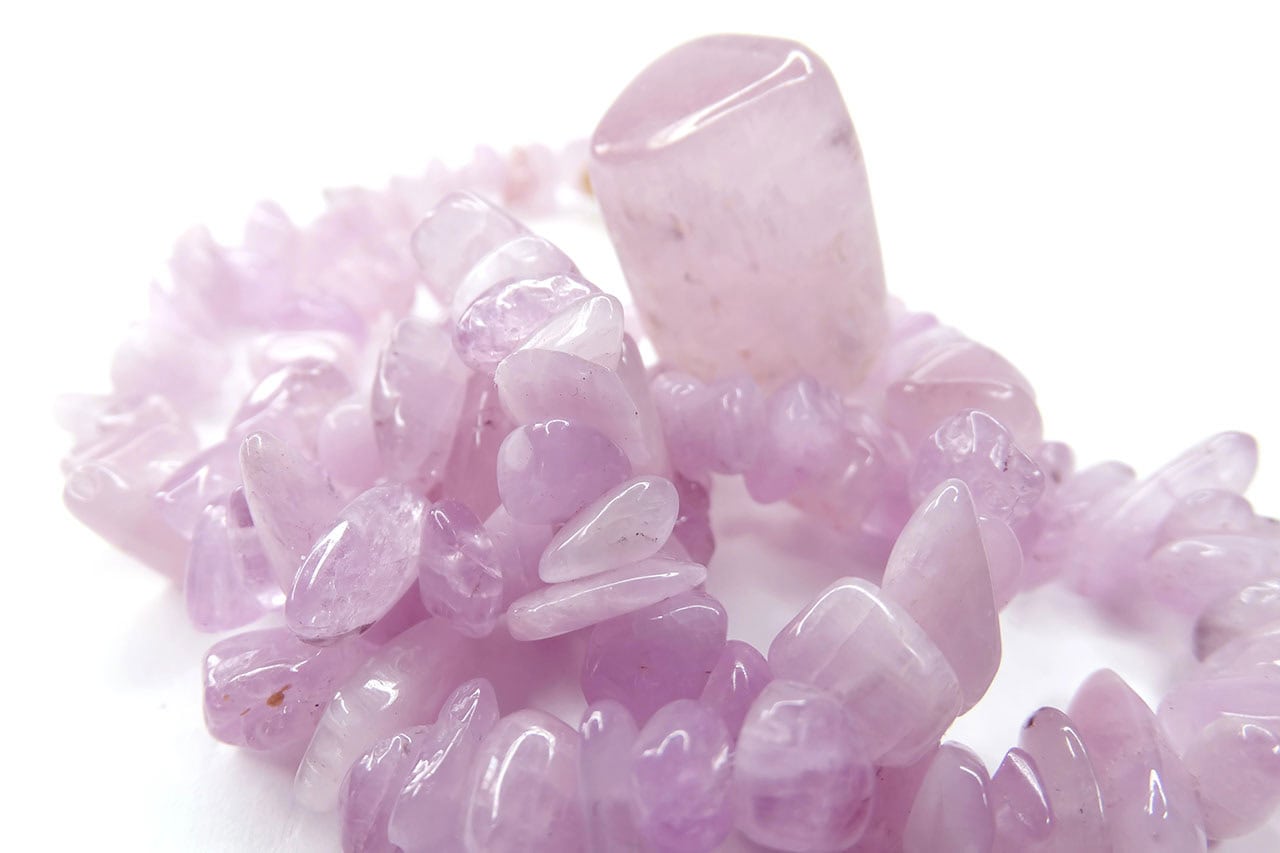
TABLE OF CONTENTS
Properties & Qualities
Physical Properties
Kunzite captivates through its delicate pink to violet coloration, ranging from barely-there blush to deep raspberry depending on manganese content. This color, caused by manganese substituting for aluminum in the crystal structure, creates gems that seem to glow with inner light. The finest specimens display saturated pink with excellent transparency, creating gems of extraordinary romantic beauty.
Crystal formation typically produces flattened prismatic crystals with distinctive spodumene habit—elongated forms with vertical striations and characteristic etch patterns on terminations. Kunzite crystals can grow to impressive sizes, with specimens exceeding several pounds not uncommon from Afghan deposits. These large crystals provide both spectacular specimens and significant gem rough.
The mineral exhibits strong pleochroism—appearing different colors when viewed from different crystallographic directions. A single kunzite crystal can show colorless, pink, and violet depending on viewing angle. This property requires careful orientation during cutting to display maximum color in finished gems, with the deepest pink visible when looking down the crystal's length.
Kunzite's most notable physical characteristic is its sensitivity to light—prolonged exposure to strong sunlight or heat can fade the delicate pink color, earning kunzite the nickname "evening stone." This photosensitivity requires careful storage and wearing practices, though it also creates metaphorical resonance with the gentle, protected nature of the heart kunzite serves.
Metaphysical properties
Within metaphysical circles, kunzite reigns as the premier stone of divine love and heart healing, its lithium content and pink color creating what practitioners describe as "crystallized compassion." Unlike aggressive heart-openers that force vulnerability, kunzite's energy gently dissolves the walls around the heart, creating safety for natural opening.
The stone's primary resonance with the heart chakra extends upward to the higher heart and throat, creating what energy workers call "loving communication"—the ability to speak truth with compassion, to express needs without aggression, and to hear others without defensive reaction. This heart-throat connection makes kunzite invaluable for relationship healing.
Kunzite's lithium content connects it to emotional stabilization, as lithium compounds are used medicinally for mood disorders. While kunzite doesn't provide pharmaceutical effects, practitioners believe its lithium signature creates calming energy that soothes emotional turbulence and reduces anxiety. This stabilizing quality makes heart-opening feel safe rather than threatening.
Modern practitioners particularly value kunzite for healing what they call "heart armor"—the protective walls built after emotional trauma that keep pain out but also prevent love from entering. Kunzite allegedly helps distinguish between healthy boundaries and fearful barriers, dissolving the latter while respecting the former.
Meaning & Symbolism
Physical meaning
In the physical realm, kunzite embodies the principle of strength through softness—its delicate color and light sensitivity belie genuine hardness and durability. This teaches that gentleness isn't weakness, that soft appearance can coexist with substantial strength, that the most powerful forces often wear tender faces.
The mineral's photosensitivity carries meaning about protection and appropriate exposure. Just as kunzite fades in harsh light, human hearts can be damaged by excessive exposure to harsh conditions. Kunzite teaches discernment about when to open and when to protect, when to expose the heart and when to shelter it.
For those in caring professions, kunzite symbolizes the sustainable compassion that doesn't burn out. Its gentle energy models how to remain open-hearted without becoming depleted, how to give love without losing self, how to maintain softness in a world that often rewards hardness.
The stone's discovery by a gemologist working for Tiffany's connects it to recognized value and professional appreciation. Kunzite teaches that gentle qualities deserve recognition and reward, that softness has market value, that the world needs and will pay for genuine tenderness.
Spiritual meaning
Kunzite's spiritual significance centers on its role as "The Stone of Divine Love," connecting practitioners to the unconditional love that spiritual traditions describe as the fundamental nature of reality. Its pink ray allegedly carries the frequency of divine compassion, helping humans access and embody this cosmic love.
The stone's lithium content connects it to the element of spirit in alchemical traditions, as lithium's name derives from "lithos" (stone) but its lightness suggests ethereal qualities. This combination of earth (stone) and air (lightness) positions kunzite as a bridge between material and spiritual love.
Different spiritual traditions interpret kunzite's heart-opening properties through their own frameworks. Buddhist practitioners might connect it to loving-kindness meditation. Christian mystics might associate it with divine love and grace. Hindu traditions might link it to the heart chakra and devotional practice. All recognize its fundamental connection to love.
The mineral's formation in pegmatites—the last, most evolved crystallization from cooling magma—represents spiritual refinement. Just as kunzite forms only after other minerals have crystallized, divine love often emerges only after baser emotions have been processed. This geological metaphor teaches patience with spiritual development.
Healing Benefits
Physical healing
Traditional healing applications for kunzite focus on its lithium content and heart associations. Contemporary crystal healers use kunzite for what they term "heart support," placing stones on the chest during sessions aimed at addressing both physical heart health and emotional heart wounds.
Some practitioners work with kunzite for stress-related conditions, believing its lithium signature helps calm the nervous system and reduce anxiety's physical manifestations. Placement on the heart or held in hands during relaxation practices allegedly enhances the body's natural calming response.
The stone's connection to the heart chakra has led to its use in addressing circulatory issues and heart-related concerns. Energy workers place kunzite on the chest during sessions focused on cardiovascular support, though effects remain within energy medicine rather than medical treatment.
Kunzite's calming properties have made it popular for addressing insomnia, particularly sleep disturbance caused by emotional upset or anxiety. Placed on the nightstand or under the pillow, kunzite allegedly creates the emotional calm necessary for restful sleep, soothing the racing heart and worried mind.
Emotional healing
The emotional healing properties of kunzite center on its unparalleled ability to heal heart wounds while maintaining safety. Therapists who incorporate crystals describe kunzite as essential for clients with significant relationship trauma, attachment wounds, or chronic difficulty trusting and opening to love.
For those dealing with grief—whether from death, divorce, or other loss—kunzite provides gentle support that doesn't rush the process. Its energy allegedly helps the heart remain open enough to process grief rather than armoring against it, while providing comfort that makes the pain bearable.
The stone excels at healing what practitioners call "love wounds"—the accumulated hurts from rejection, betrayal, abandonment, or abuse that create patterns of self-protection interfering with current relationships. Kunzite helps distinguish between past and present, allowing appropriate openness to current love while honoring past pain.
Kunzite's gentle energy makes it suitable for highly sensitive individuals who find more aggressive heart stones overwhelming. Its approach to emotional healing resembles a skilled therapist—patient, non-judgmental, creating safety for natural unfolding rather than forcing premature exposure.
Spiritual healing
In spiritual healing contexts, kunzite functions as what practitioners call a "heart initiator," preparing the heart for deeper spiritual opening and helping integrate spiritual experiences into emotional life. This makes it valuable for those whose spiritual development has outpaced emotional healing.
Advanced practitioners utilize kunzite for what they term "divine love transmission"—opening to receive and channel unconditional love from spiritual sources. The stone allegedly helps distinguish between human love (conditional, limited) and divine love (unconditional, infinite), facilitating connection to the latter.
For those experiencing spiritual heart closure—inability to feel divine presence, disconnection from spiritual love, or doubt about being loved by the universe—kunzite provides gentle reopening. Its energy doesn't argue against doubt but simply offers experience of love that gradually dissolves skepticism.
The stone's connection to the higher heart chakra makes it valuable for developing compassion that extends beyond personal relationships to embrace all beings. This expansion from personal to universal love represents significant spiritual development that kunzite allegedly supports.
Use & Care
How to use
- Heart chakra placement: Lie down with kunzite on chest center
- Meditation companion: Hold during heart-focused meditation
- Sleep support: Place on nightstand for peaceful rest
- Relationship healing: Hold during couples work or processing
- Self-love ritual: Gaze at kunzite while affirming self-worth
- Grief support: Carry during mourning periods
- Evening wearing: Wear as jewelry in evening to protect color
- Communication aid: Hold before difficult heart conversations
- Bath companion: Place beside bath for emotional release
- Journaling support: Keep nearby while processing emotions
- Prayer enhancement: Hold during devotional practice
- Protected storage: Keep away from direct sunlight when not using
How to cleanse
- Moonlight bathing: Leave under full moon overnight
- Sound clearing: Use gentle bells or crystal singing bowls
- Smoke cleansing: Light pass through rose or lavender smoke
- Selenite charging: Rest on selenite for purification
- Breath work: Gentle breath with loving intention
- Rose water: Mist lightly with rose-infused water
- No sunlight: Avoid sun exposure—causes fading
- No harsh methods: Gentle cleansing only for this delicate stone
- Visualization: Imagine pink light clearing and renewing
- Regular cleansing: Clean after emotional healing work
How to charge
- Moonlight charging: Full moon for emotional balance
- Rose quartz bed: Rest on rose quartz for heart energy
- Pink candle: Near pink flame for love energy
- Love intention: Charge while focusing on unconditional love
- Heart meditation: Hold during loving-kindness practice
- Rose proximity: Place among rose petals or near roses
- Venus timing: Charge on Fridays for love energy
- Gentle music: Play heart-opening music while charging
- Minimal handling: Charge through energy rather than manipulation
- Protected charging: Always away from direct sunlight
Combining with other stones
- Rose Quartz: Amplifies unconditional love energy
- Morganite: Fellow pink beryl for divine love
- Pink Tourmaline: Enhances emotional healing
- Rhodochrosite: Deepens self-love and inner child healing
- Green Aventurine: Balances heart with prosperity
- Amethyst: Adds spiritual protection to heart opening
- Clear Quartz: Amplifies kunzite's gentle properties
- Lepidolite: Fellow lithium stone for calm and balance
- Rhodonite: Adds grounding to heart healing
- Danburite: Enhances angelic connection with heart opening
Identification
Can be mistaken for
- Morganite: Pink beryl with similar color
- Rose Quartz: Similar pink but different structure
- Pink Tourmaline: Similar color range
- Pink Topaz: Can appear similar when cut
- Pink Sapphire: Similar color but much harder
- Hiddenite: Green spodumene variety
- Pink Spinel: Similar color, different properties
- Synthetic Kunzite: Lab-created versions exist
How to spot a fake
- Pleochroism test: Real kunzite shows strong color variation by angle
- Cleavage examination: Two directions at nearly 90 degrees
- Specific gravity: Test weight (3.15-3.21)
- Hardness check: Should scratch glass (6.5-7)
- Color depth: View down crystal length for deepest pink
- Natural inclusions: Look for characteristic growth features
- UV reaction: Some kunzite fluoresces under UV light
- Price indicator: Gem-quality kunzite commands significant prices
- Fading potential: Real kunzite fades in prolonged sunlight
- Expert verification: Valuable specimens benefit from certification