Onyx
Oxide (Chalcedony variety)
Black, white, gray, banded combinations
Vitreous to silky
6.5 - 7
2.55 - 2.70
Trigonal
Brazil, India, Madagascar, Mexico, Pakistan, USA
Common
SiO₂ (Silicon dioxide)
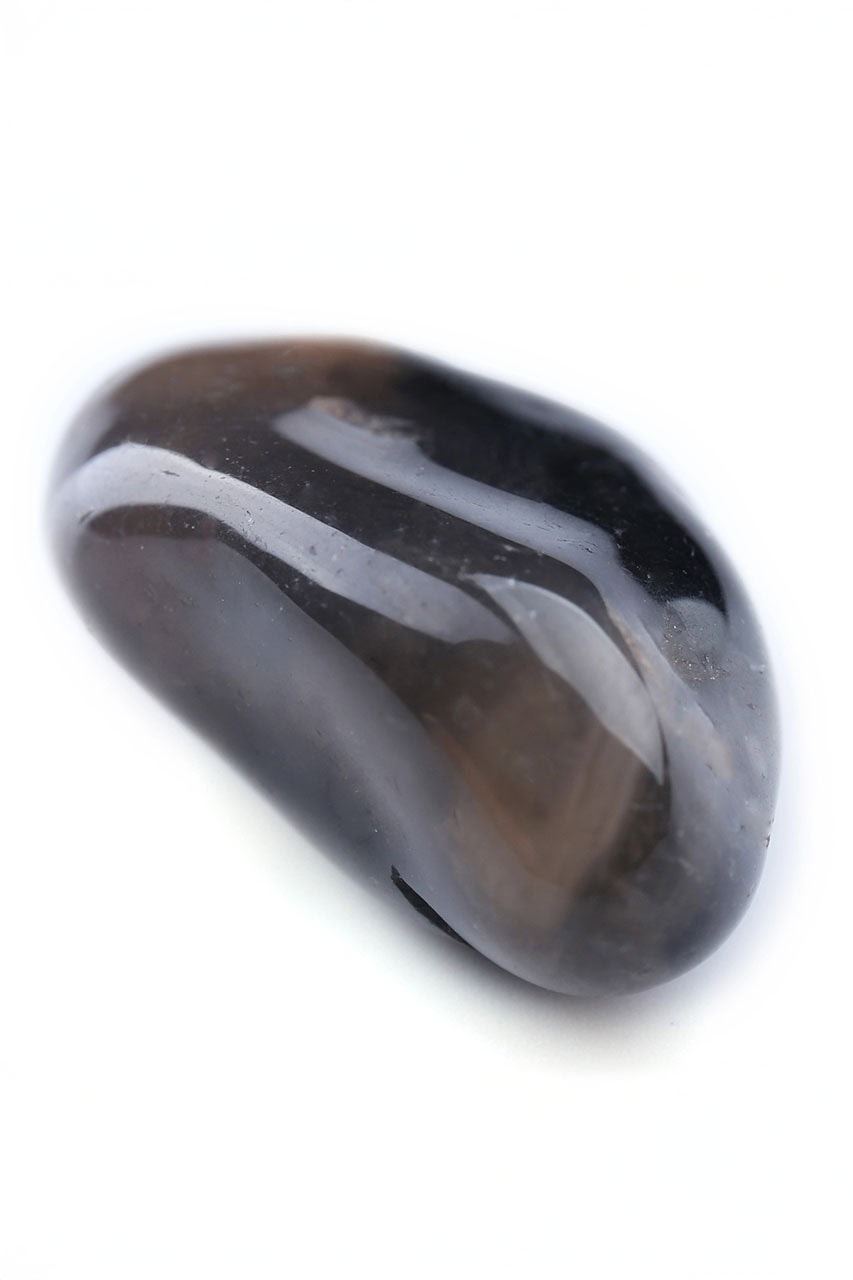
In the ancient quarries of Egypt and Rome, where master carvers sought the perfect stone for cameos and intaglios, black onyx emerged as the material of choice for depicting heroes and gods. This banded variety of chalcedony, with its parallel layers of black and white, seemed designed by nature to tell stories of light and shadow, strength and surrender, protection and power.
The name derives from the Greek "onyx" meaning fingernail or claw, inspired by flesh-toned varieties with white bands resembling fingernails. Yet it's the deep black onyx that captured humanity's imagination as the ultimate protection stone. Roman soldiers carried onyx engraved with Mars for courage in battle, while Indian and Persian traditions used it to protect against the evil eye.
Today, onyx continues its role as the "Stone of Strength," prized by those facing life's battles—whether in boardrooms or healing rooms. Its ability to absorb and transform negative energy rather than simply deflecting it makes onyx essential for anyone dealing with challenging people or environments. From the mourning jewelry of Victorian England to the power accessories of modern executives, onyx remains the ally of those who must maintain strength in adversity.
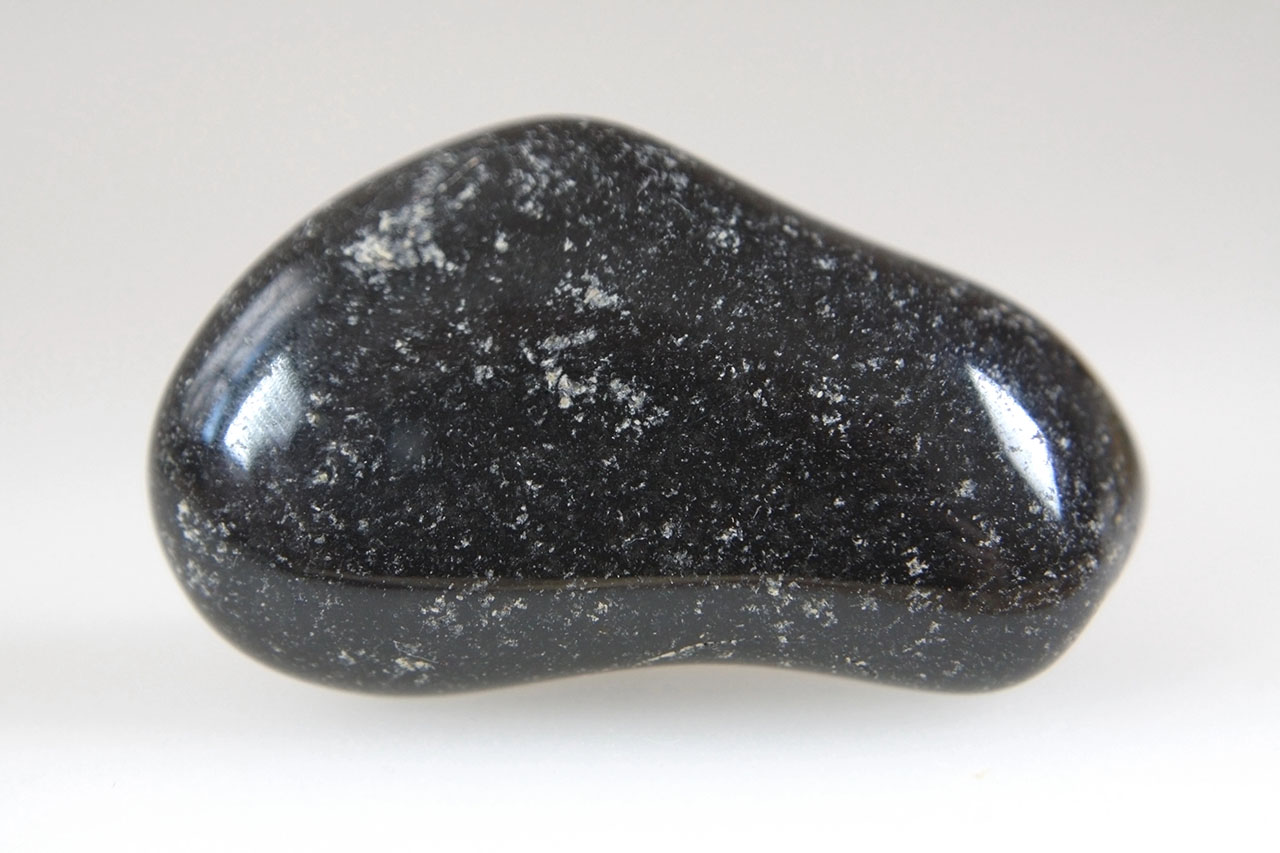
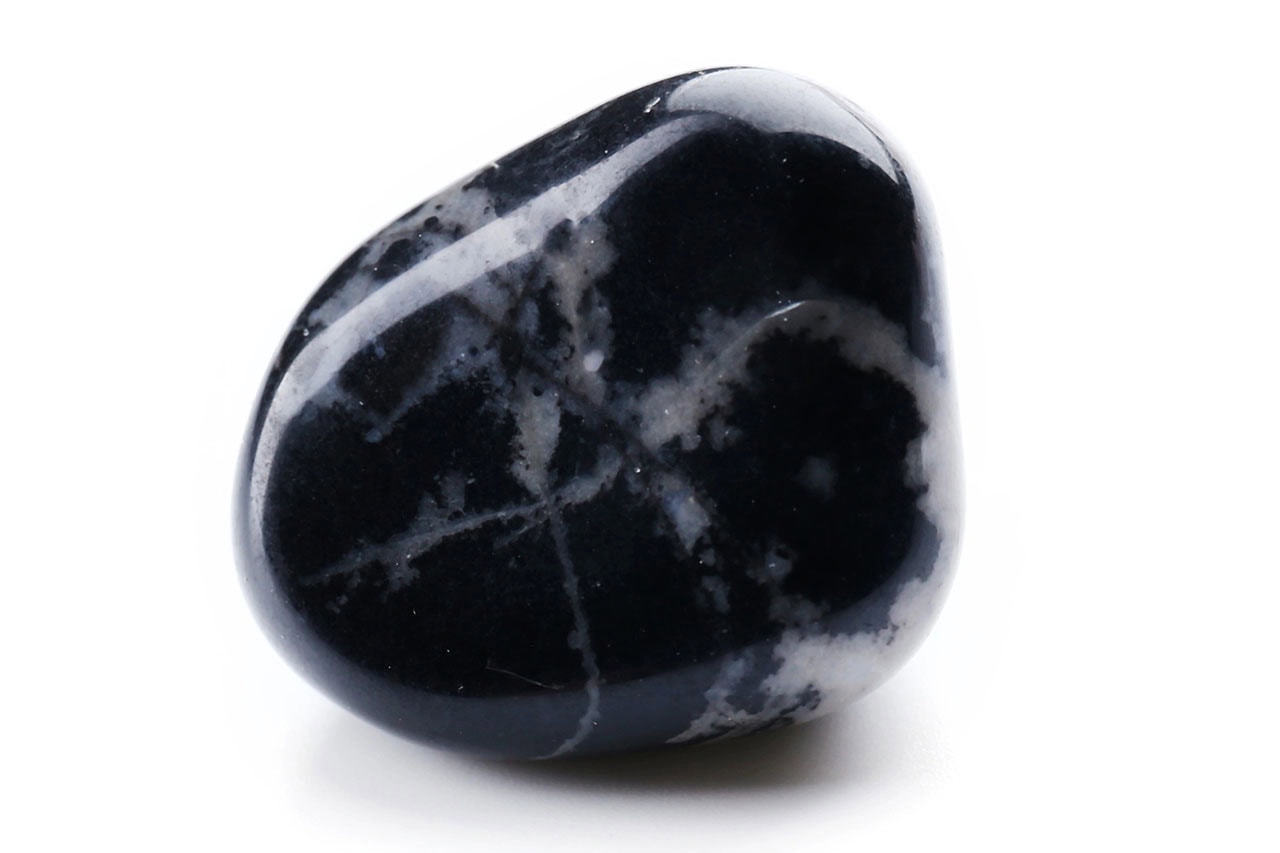
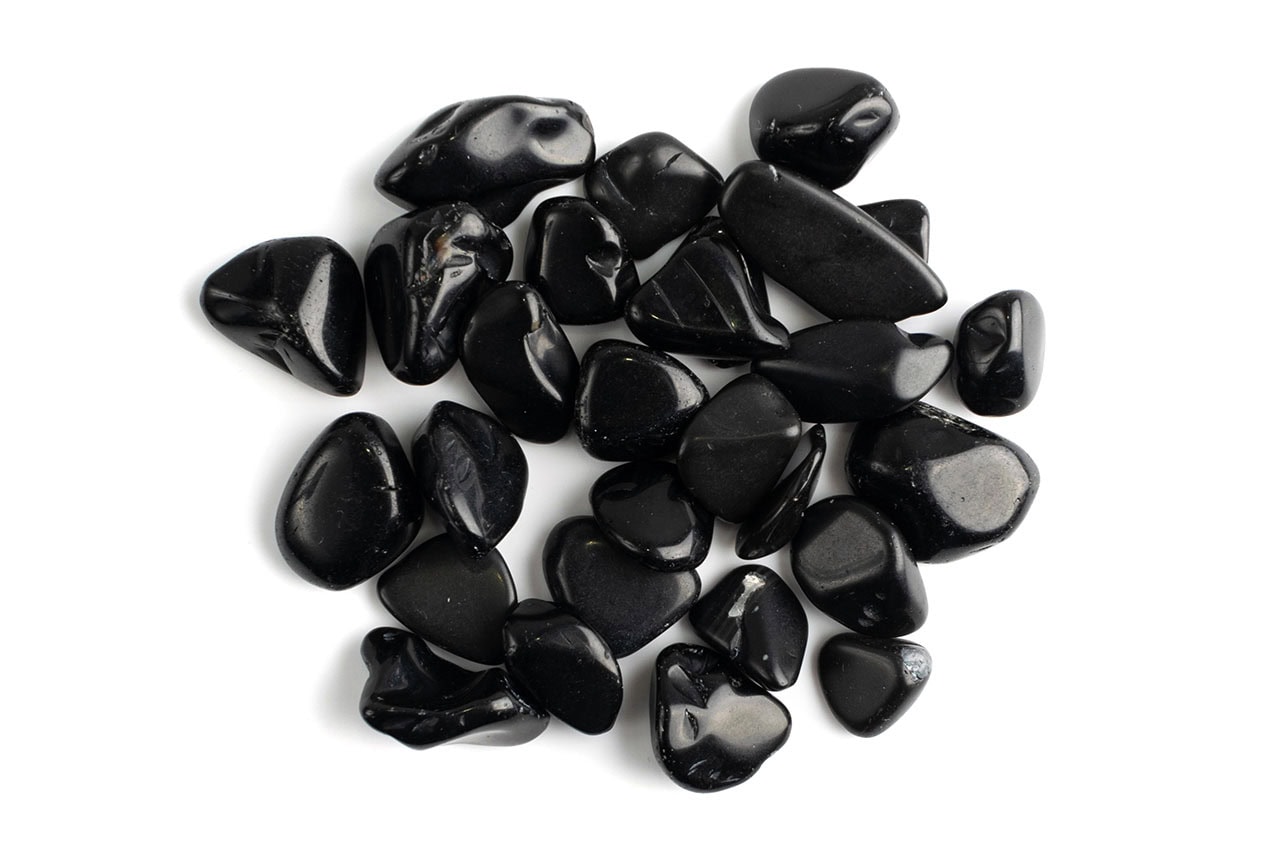
TABLE OF CONTENTS
Properties & Qualities
Physical Properties
Onyx presents itself through distinctive parallel banding that sets it apart from other chalcedony varieties. True onyx displays straight, parallel bands rather than the curved bands of agate, though the terms are often confused in commerce. These bands form as silica-rich solutions deposit in flat layers, creating nature's version of sedimentary art.
The most prized variety, black onyx, often receives enhancement to achieve uniform deep black color, as completely black natural onyx is rare. Natural black onyx typically shows gray to black banding with white layers. Sardonyx combines reddish-brown sard layers with white, while carnelian onyx shows red and white bands. The banding can be subtle or dramatic, fine or broad.
Onyx's microcrystalline structure creates a stone that takes exceptional polish while maintaining durability for daily wear. Unlike single crystals that can cleave, onyx's interlocking microscopic crystals create toughness that made it ideal for carved seals and cameos—uses requiring fine detail and durability.
The stone's porosity varies with formation conditions, affecting its ability to accept dyes and treatments. This has led to a long tradition of enhancement, dating back millennia. Ancient Romans discovered that soaking pale chalcedony in honey, then heating it, created black onyx—a practice that evolved into modern treatment methods.
Metaphysical properties
Within metaphysical traditions, onyx stands as the supreme stone of protection through strength rather than shielding. Practitioners describe its energy as deeply grounding and fortifying, creating what many call an "energetic backbone" that supports standing firm in challenging situations without becoming rigid.
The stone's primary resonance with the root chakra provides profound grounding, but onyx works uniquely—it doesn't just ground excess energy but transforms it into usable power. This transmutation ability makes onyx invaluable for those who must work in negative environments or deal with difficult people regularly, turning potentially draining situations into opportunities for strength building.
Ancient traditions recognized onyx as a stone of self-mastery, particularly regarding physical desires and emotional impulses. This isn't about suppression but conscious choice—onyx allegedly helps distinguish between genuine needs and compulsive wants, supporting those working to break addictive patterns or establish healthier habits.
Modern practitioners particularly value black onyx for psychic protection that maintains functionality. Unlike stones that create barriers, onyx absorbs negativity and transforms it, allowing continued engagement with the world while staying protected. This makes it essential for empaths, healers, and anyone in service professions.
Meaning & Symbolism
Physical meaning
In the physical realm, onyx embodies the principle of structured strength—its banded formation demonstrating how layer upon layer of experience creates resilience. Each band represents accumulated wisdom, showing that true strength develops through time and persistence rather than single dramatic events.
The stone's use in carved seals throughout history connects it to authority and commitment. Just as onyx seals marked important documents, working with onyx helps "seal" intentions and commitments, making it valuable for those establishing new habits or breaking old patterns.
For those in challenging professions—emergency responders, healthcare workers, customer service—onyx provides the emotional armor needed to remain compassionate while protected. Its black color absorbs the negativity encountered daily, while its strength prevents absorption from becoming depletion.
The mineral's enhancement tradition teaches that improvement through conscious effort is natural and honorable. Just as onyx accepts treatment to reveal its full potential, we too can consciously work to enhance our natural gifts rather than accepting limitations as permanent.
Spiritual meaning
Onyx's spiritual significance centers on its role as the "Stone of Spiritual Warrior," not promoting aggression but developing the strength to face spiritual challenges without flinching. Its black depths represent the void—not as emptiness but as the pregnant darkness from which all creation emerges.
The stone's banded structure carries deep symbolism about spiritual development occurring in layers. Each band represents a level of initiation or understanding, reminding us that spiritual growth happens incrementally rather than through sudden enlightenment. This makes onyx valuable for those on long-term spiritual paths requiring patience.
Different traditions interpret onyx's protective qualities as creating sacred space for shadow work. Its black color doesn't reject the shadow but absorbs and integrates it, teaching that spiritual wholeness includes rather than excludes our darker aspects. This integration creates genuine spiritual power.
The mineral's connection to Saturn in astrological traditions links it to karma, discipline, and mastery through limitation. Onyx helps understand that restrictions often serve spiritual growth, that saying "no" to some things allows deeper "yes" to purpose.
Healing Benefits
Physical healing
Traditional healing applications for onyx focus on its perceived ability to strengthen the physical structure of the body. Ancient Greek athletes wore onyx for endurance, while Roman physicians prescribed onyx elixirs for bone and teeth problems, connecting its layered structure to skeletal strength.
Contemporary crystal healers use onyx primarily for what they term "structural support," placing stones along the spine or on joints during healing sessions. The root chakra connection allegedly helps with legs, feet, and bones—the body's foundation. Some practitioners use onyx for issues related to bone marrow and blood cell formation.
The stone's absorptive properties have led to its use in detoxification support, with healers placing onyx on areas of congestion or inflammation. The theory suggests onyx draws out energetic toxins that contribute to physical symptoms, though such applications remain within energy medicine.
Some alternative practitioners create onyx elixirs using the indirect method for external use on skin conditions, particularly those involving excess oil or congestion. The stone's connection to structure extends to cellular level, with some believing it supports healthy cell division and growth.
Emotional healing
The emotional healing properties of onyx center on developing emotional strength and resilience rather than providing comfort. Therapists who incorporate crystals describe onyx as particularly helpful for clients who need to develop boundaries or break patterns of codependency.
For those dealing with grief, onyx provides unique support. Rather than softening pain, it provides strength to bear it, making it valuable for those who must continue functioning despite loss. This quality made onyx traditional for mourning jewelry—acknowledging grief while supporting strength.
The stone excels at revealing and healing patterns of self-sabotage. Its mirror-black surface reflects truth without distortion, helping identify where we undermine our own efforts. This clarity can be uncomfortable but leads to genuine change rather than temporary improvement.
Different types address specific needs: black onyx for protection and strength, sardonyx for courage in relationships, white onyx for clarity in emotional confusion. All varieties share onyx's core gift of emotional fortification.
Spiritual healing
In spiritual healing contexts, onyx functions as what practitioners call a "karmic clarifier," helping understand the spiritual purposes behind challenging life circumstances. Its connection to Saturn and karma makes it valuable for those ready to take responsibility for their spiritual development.
Advanced practitioners utilize onyx for past life healing related to abuse of power. The stone allegedly helps identify where power was misused in past incarnations, creating current life challenges. Onyx supports healing these patterns through developing right use of power in present circumstances.
For those experiencing psychic attack or energy vampirism, onyx provides active defense. Rather than simply shielding, it transforms directed negativity into neutral energy, teaching the spiritual aikido of using opponents' force against them. This makes onyx essential for public figures or anyone visible in spiritual communities.
The stone's grounding properties make it valuable for integrating spiritual experiences that threaten to destabilize daily life. Onyx helps maintain "feet on the ground, head in the stars" balance essential for sustainable spiritual development.
Use & Care
How to use
- Protection amulet: Wear continuously for psychic shielding
- Strength builder: Hold during challenging conversations
- Meditation anchor: Use for grounding during spiritual practice
- Boundary setting: Carry when establishing limits
- Shadow work: Gaze into black surface for self-reflection
- Grief support: Wear during mourning for strength
- Addiction breaking: Hold while affirming new patterns
- Sleep protection: Place under bed for nightmare prevention
- Office shield: Keep on desk for workplace protection
- Root chakra: Place at base of spine for grounding
- Decision making: Hold for clarity and conviction
- Physical training: Wear during exercise for endurance
How to cleanse
- Earth burial: Bury in soil for 24-48 hours for deep cleansing
- Salt cleansing: Use dry sea salt for absorption
- Smoke clearing: Sage or cedar smoke for purification
- Sound vibration: Deep drums or Tibetan bowls
- Moonlight: New moon for release, full for empowerment
- Running water: Brief rinse under natural water
- Black candle: Pass through black flame visualization
- Breath work: Exhale absorbed negativity with force
- Regular cleansing: Essential due to absorptive nature
- No sunlight: Prolonged sun can fade black color
How to charge
- Earth charging: Direct contact with soil for grounding
- Night charging: Leave out during dark moon
- Root vegetables: Bury with potatoes/beets for earth energy
- Iron contact: Place with iron for strength
- Mountain stone: Charge with other grounding stones
- Protection ritual: Charge during banishing ceremonies
- Saturn timing: Charge on Saturdays for discipline
- Black tourmaline: Pair for enhanced protection
- Visualization: See stone filled with protective black light
- Minimal charging: Onyx holds charge well
Combining with other stones
- Black Tourmaline: Ultimate protection combination
- Hematite: Enhances grounding and strength
- Obsidian: Deepens shadow work and protection
- Clear Quartz: Amplifies protective properties
- Red Jasper: Adds physical vitality to strength
- Smoky Quartz: Helps transmute absorbed negativity
- Garnet: Increases courage and vitality
- Jet: Traditional mourning combination
- Carnelian: Balances strength with creativity
- Tiger's Eye: Adds discernment to protection
Identification
Can be mistaken for
- Black Agate: Similar but agate has curved bands
- Jet: Jet is organic and much lighter
- Obsidian: Volcanic glass, different properties
- Black Jasper: Opaque, lacks banding
- Dyed Chalcedony: Often sold as black onyx
- Black Tourmaline: Different crystal structure
- Hematite: Metallic, much heavier
- Glass: Black glass imitates onyx
How to spot a fake
- Banding check: Look for parallel, not curved bands
- Weight test: Should feel substantial but not heavy
- Temperature: Natural onyx stays cool longer
- Dye test: Acetone on cotton may show dye
- Hardness test: Should scratch glass (6.5-7)
- Price indicator: Natural black onyx affordable
- Surface inspection: Look for natural variations
- Translucency: Hold to light—may show some
- Treatment disclosure: Most black onyx is treated
- Uniformity: Perfect black often means heavy treatment