Tourmaline (Watermelon)
Silicate (Cyclosilicate - Tourmaline group)
Pink core with green rind (sometimes reversed)
Vitreous
7 - 7.5
3.00 - 3.25
Trigonal
Brazil, Nigeria, Madagascar, Afghanistan, USA, Mozambique
Rare
Na(Li,Al)₃Al₆(BO₃)₃Si₆O₁₈(OH)₄ (Complex borosilicate)
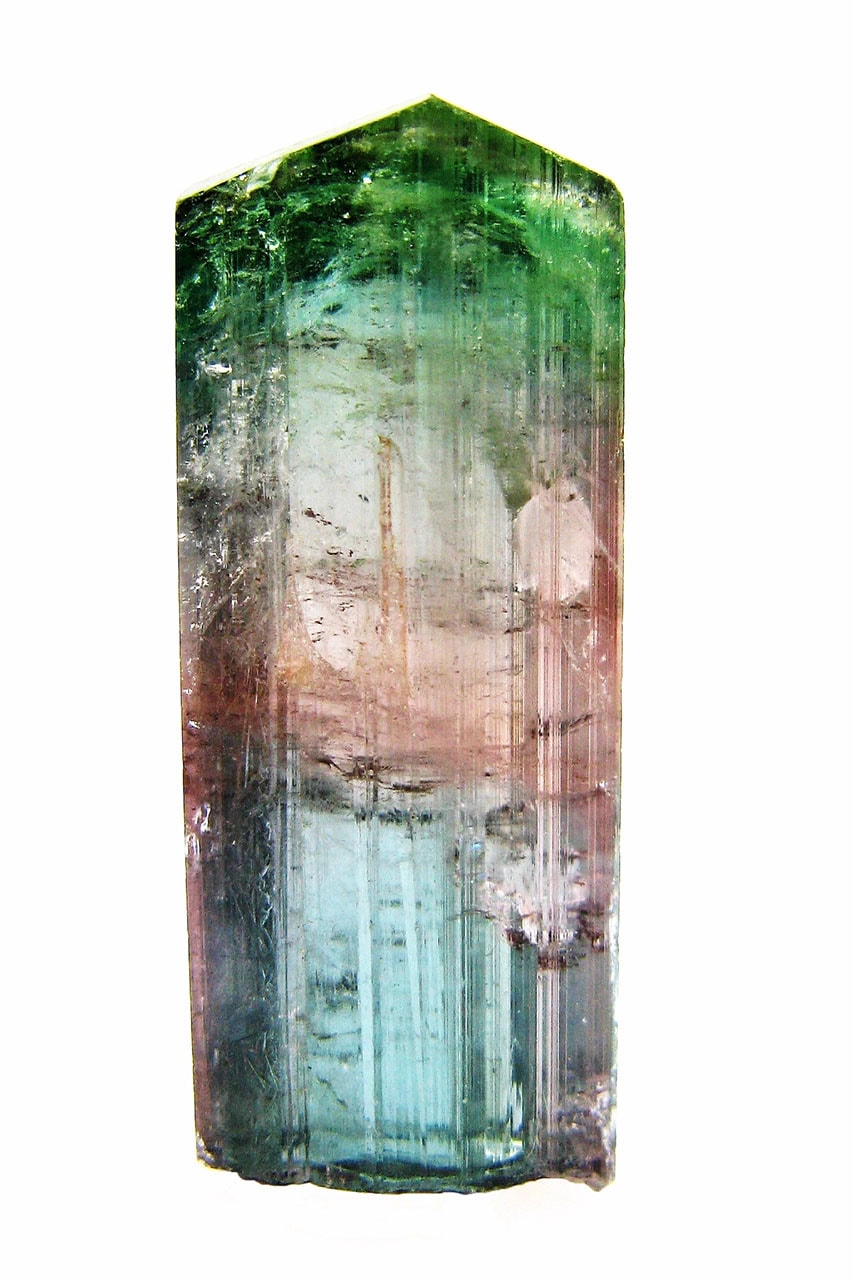
Nature occasionally creates art so perfect it seems intentional, and watermelon tourmaline stands as perhaps her finest masterpiece. This remarkable variety of tourmaline displays pink centers surrounded by green rims—or sometimes the reverse—creating cross-sections that uncannily resemble slices of the fruit for which it's named. This isn't mere coincidence of color but a geological record of changing conditions during crystal growth, each zone marking shifts in the chemical environment that produced this edible-looking wonder.
The formation of watermelon tourmaline requires precise conditions rarely achieved in nature. As tourmaline crystals grow in pegmatite pockets, changing concentrations of manganese (creating pink) and iron or chromium (creating green) produce distinct color zones. When these changes occur in the right sequence with the right timing, the result is crystals that, when sliced perpendicular to their length, reveal the characteristic watermelon pattern that has captivated collectors and healers alike.
Today, watermelon tourmaline serves those seeking heart healing that honors complexity rather than demanding simplicity. Its combination of pink (emotional love) and green (heart chakra, growth) creates what practitioners describe as "complete heart medicine"—addressing both the giving and receiving aspects of love, both the wounds and the healing, both the vulnerability and the strength. In a world that often demands we choose between opposing qualities, watermelon tourmaline teaches integration.
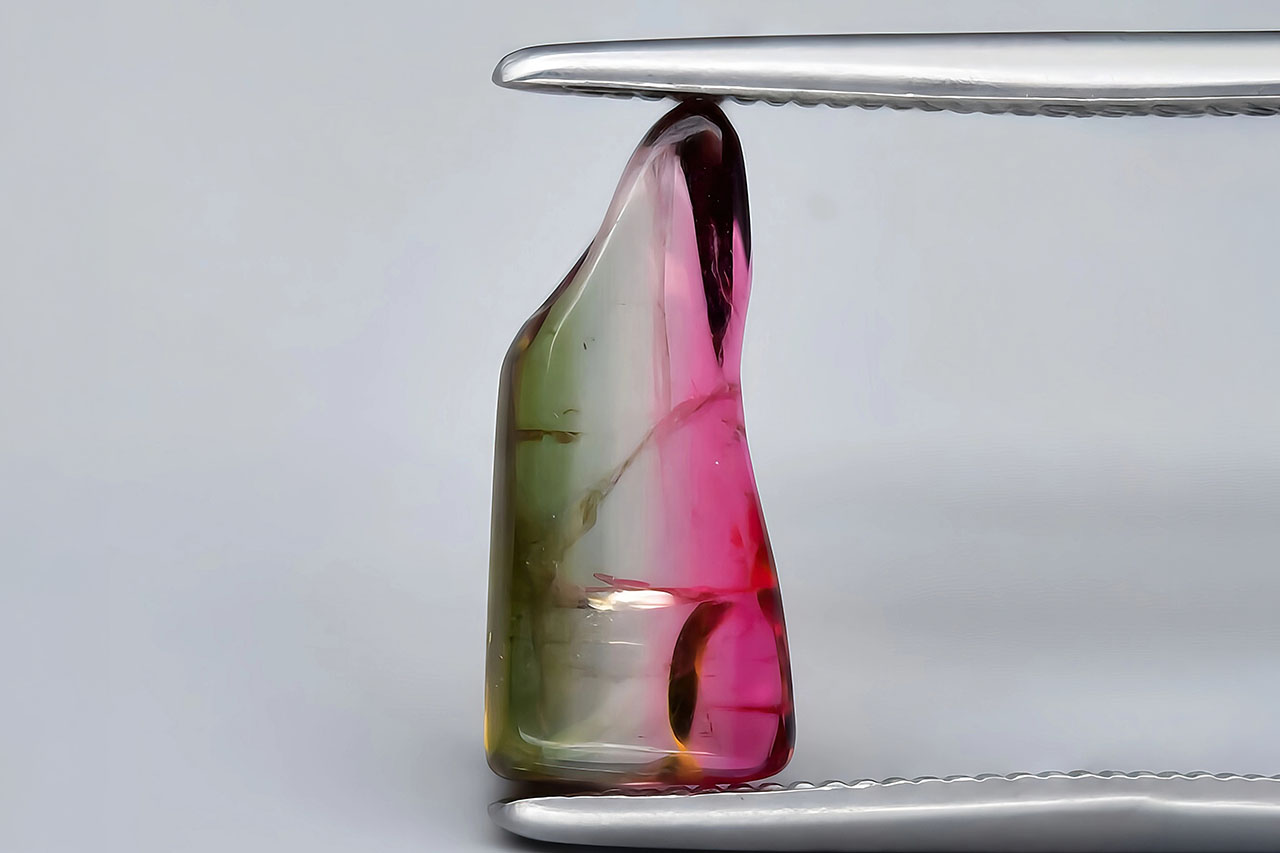
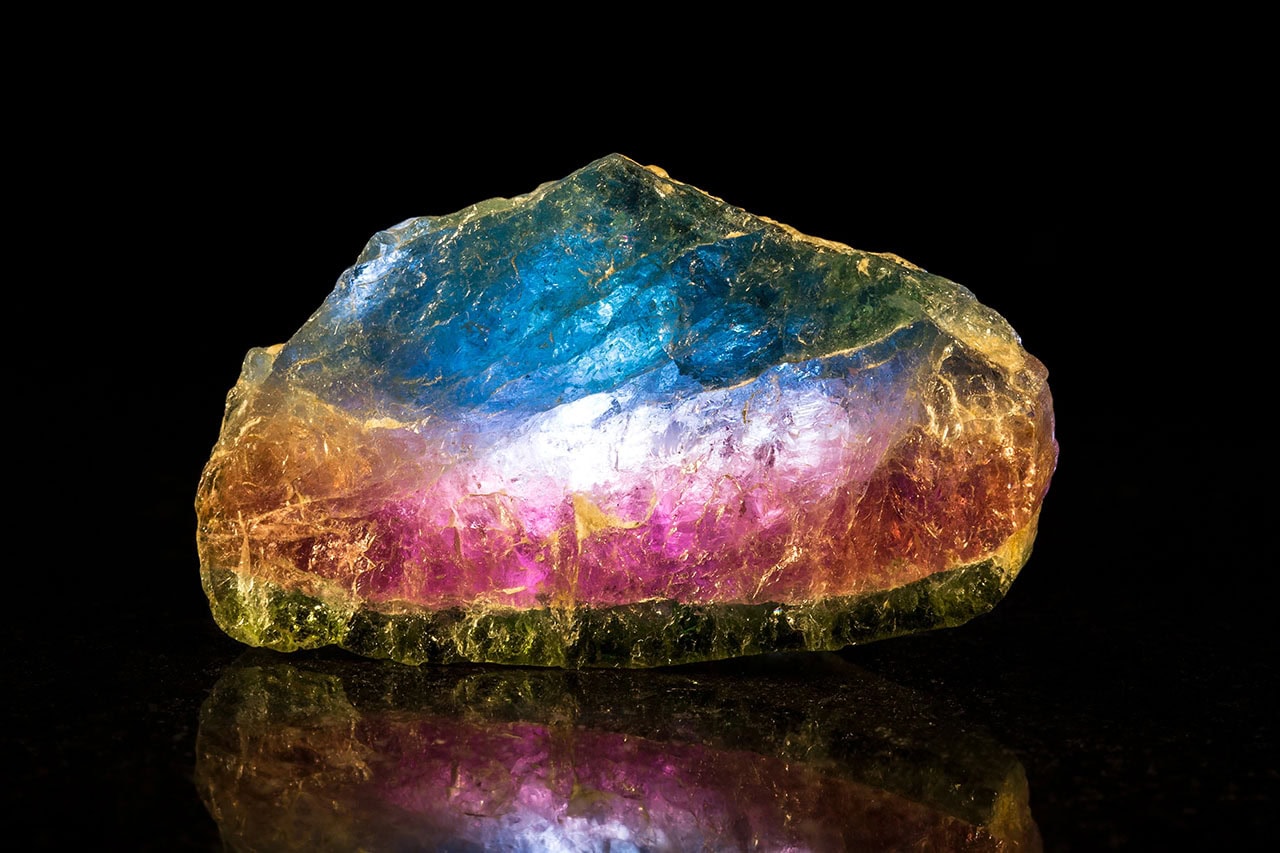
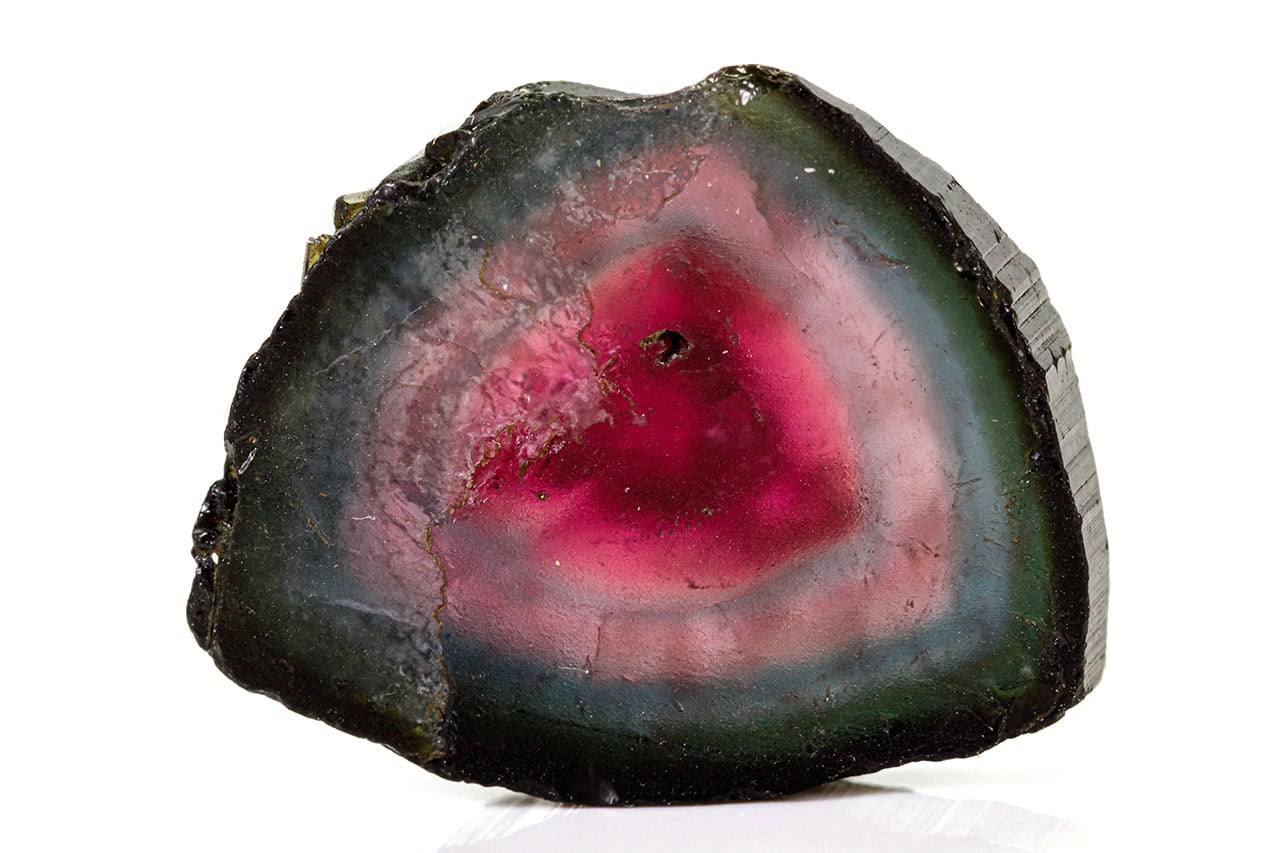
TABLE OF CONTENTS
Properties & Qualities
Physical Properties
Watermelon tourmaline captivates through its distinctive color zoning—typically pink to red cores surrounded by green outer layers, though reversed specimens with green cores and pink rims also occur. This zoning results from changes in trace element availability during crystal growth, with manganese producing pink tones and iron or chromium creating green. The boundary between colors can be sharp or gradual, creating varied visual effects.
Crystal formation follows tourmaline's characteristic trigonal habit, producing elongated prismatic crystals with rounded triangular cross-sections and vertical striations. The striated surfaces catch light differently than smooth faces, creating subtle texture that adds visual interest. Crystals can range from small fragments to impressive specimens several inches long, though gem-quality watermelon material remains rare at any size.
The most prized specimens display clear color separation with saturated hues in both zones. Some watermelon tourmalines show additional complexity—multiple color bands, gradual transitions, or asymmetrical zoning that creates unique patterns in each slice. This natural variation ensures that no two watermelon tourmalines are identical, each crystal recording its own unique growth history.
Tourmaline's piezoelectric and pyroelectric properties—generating electrical charge under pressure or temperature change—extend to watermelon varieties. These electrical properties, combined with the visual drama of color zoning, have contributed to tourmaline's reputation as an energetically active stone. The combination of pink and green in a single crystal creates what practitioners believe is uniquely balanced energy.
Metaphysical properties
Within metaphysical circles, watermelon tourmaline reigns as the supreme stone of heart healing and emotional integration, its pink-green combination described as "complete heart medicine" that addresses all aspects of love and emotional well-being. Practitioners consistently report that watermelon tourmaline works more comprehensively than single-color heart stones.
The stone's primary resonance with the heart chakra operates through both its colors simultaneously. Pink activates the emotional, receptive aspects of the heart—the ability to receive love, feel worthy of affection, and experience tenderness. Green activates the expansive, giving aspects—the ability to extend love, grow through relationship, and heal through connection. Together, they create balanced heart function.
Watermelon tourmaline's formation through changing conditions carries metaphysical significance. Just as the crystal integrated different chemical environments into unified beauty, working with watermelon tourmaline allegedly helps integrate different aspects of emotional experience into coherent wholeness. This integration proves essential for those whose hearts hold contradictory feelings.
Modern practitioners particularly value watermelon tourmaline for healing the split between giving and receiving that troubles many people. Those who give excessively while struggling to receive, or who take without reciprocating, find watermelon tourmaline helps restore balance. Its dual-color nature models the healthy heart that both gives and receives freely.
Meaning & Symbolism
Physical meaning
In the physical realm, watermelon tourmaline embodies the principle of integration creating beauty—its distinct colors combining into something more striking than either alone. This teaches that apparent opposites can coexist not just peacefully but synergistically, creating value greater than the sum of parts.
The mineral's formation through changing conditions represents adaptability within continuity. The crystal maintained its essential tourmaline nature while incorporating different elements as availability changed. This models how individuals can remain true to core identity while adapting to changing circumstances.
For those navigating transitions—career changes, relationship shifts, life stage passages—watermelon tourmaline symbolizes graceful adaptation. Its color zones record successful navigation of changing conditions, demonstrating that change can enhance rather than diminish, that transitions can add beauty rather than causing fragmentation.
The stone's resemblance to fruit carries meaning about nourishment and natural abundance. Watermelon tourmaline reminds us that Earth provides not just necessities but delights, that nature creates beauty apparently for its own sake, that abundance includes aesthetic pleasure alongside practical provision.
Spiritual meaning
Watermelon tourmaline's spiritual significance centers on its role as "The Integration Stone," teaching that spiritual wholeness includes rather than transcends apparent opposites. Its pink-green combination represents the union of divine feminine (pink, receptive) and divine masculine (green, active) within the heart.
The stone's dual nature connects to spiritual teachings about non-duality—the recognition that apparent opposites are actually complementary aspects of unified reality. Watermelon tourmaline provides visceral demonstration of this truth, showing how different colors can coexist in single crystal without conflict or compromise.
Different spiritual traditions interpret watermelon tourmaline's integration through their own frameworks. Taoist practitioners might connect it to yin-yang harmony. Tantric traditions might associate it with the union of Shiva and Shakti. Jungian approaches might link it to the integration of anima and animus. All recognize its teaching about wholeness through inclusion.
The mineral's heart chakra resonance positions it as a stone of love in its highest spiritual sense—not merely romantic attachment but the unconditional love that spiritual traditions describe as the fundamental nature of reality. Watermelon tourmaline allegedly helps access and embody this cosmic love.
Healing Benefits
Physical healing
Traditional healing applications for watermelon tourmaline focus on its heart associations and balancing properties. Contemporary crystal healers use watermelon tourmaline for what they term "heart harmonization," placing slices or crystals on the chest during sessions aimed at supporting cardiovascular health and emotional heart healing simultaneously.
Some practitioners work with watermelon tourmaline for conditions they associate with imbalance—whether between activity and rest, giving and receiving, or any paired functions that should operate in harmony. The stone's dual-color nature allegedly helps restore equilibrium to systems that have become skewed toward one extreme.
The mineral's electrical properties have led to theoretical applications in energy healing. Some practitioners believe watermelon tourmaline's piezoelectric nature helps regulate the body's bioelectrical systems, supporting healthy nerve function and cellular communication. These applications remain speculative within energy medicine.
Watermelon tourmaline's calming yet energizing combination has led to its use in addressing fatigue that coexists with anxiety—the exhausted-but-wired state common in chronic stress. Its balanced energy allegedly helps restore natural rhythms of activity and rest that stress disrupts.
Emotional healing
The emotional healing properties of watermelon tourmaline center on its unparalleled ability to heal heart wounds while restoring capacity for joy. Therapists who incorporate crystals describe watermelon tourmaline as essential for clients whose emotional pain has stolen their ability to experience pleasure, whose hearts have closed not just to pain but to happiness.
For those dealing with relationship trauma, watermelon tourmaline provides comprehensive support. Its pink aspect helps heal wounds from past relationships while its green aspect supports growth into healthier patterns. This dual action addresses both the damage and the development needed for future relationship success.
The stone excels at healing what practitioners call "love imbalance"—the patterns of excessive giving or taking that create relationship dysfunction. Watermelon tourmaline allegedly helps identify these patterns and restore the reciprocity that healthy relationships require, modeling balanced exchange through its own integrated nature.
Watermelon tourmaline's joyful energy makes it valuable for those recovering from depression or prolonged grief. Its vibrant colors and balanced energy allegedly help restore emotional range that suffering has narrowed, reopening capacity for positive emotions without denying the reality of pain.
Spiritual healing
In spiritual healing contexts, watermelon tourmaline functions as what practitioners call a "heart integrator," helping unify fragmented aspects of the emotional and spiritual heart into coherent wholeness. This makes it valuable for those whose hearts hold contradictory feelings or unresolved conflicts.
Advanced practitioners utilize watermelon tourmaline for what they term "inner marriage"—the spiritual work of uniting masculine and feminine aspects within the individual psyche. The stone's pink-green combination allegedly facilitates this union, helping practitioners achieve the internal wholeness that mystics describe as prerequisite for genuine spiritual advancement.
For those experiencing heart chakra blockages that resist single-color stones, watermelon tourmaline provides comprehensive approach. Its dual nature addresses multiple aspects of blockage simultaneously, often succeeding where simpler approaches have failed.
The stone's formation through integration of changing conditions makes it valuable for healing spiritual wounds related to change and transition. Those who've been damaged by life changes—feeling fragmented rather than enriched by experience—find watermelon tourmaline helps restore sense of continuous identity through change.
Use & Care
How to use
- Heart chakra placement: Place slice directly on heart center
- Meditation focus: Hold while contemplating integration
- Relationship healing: Both partners hold during couples work
- Joy restoration: Carry daily during depression recovery
- Balance ritual: Hold while setting intentions for equilibrium
- Visual meditation: Gaze at slice while breathing deeply
- Sleep support: Place on nightstand for emotional processing
- Self-love practice: Hold while affirming self-worth
- Creative inspiration: Keep in workspace for balanced creativity
- Bath companion: Place beside bath for emotional release
- Altar centerpiece: Display as reminder of integration
- Gift of love: Share with those needing heart healing
How to cleanse
- Moonlight bathing: Leave under full moon overnight
- Running water: Rinse under cool water briefly
- Sound clearing: Use heart-frequency singing bowls
- Smoke cleansing: Pass through rose or sage smoke
- Selenite charging: Rest on selenite for purification
- Earth contact: Place on soil briefly for grounding cleanse
- Breath work: Gentle breath with loving intention
- Visualization: Imagine pink and green light clearing stone
- Rose water mist: Light spray of rose-infused water
- Regular cleansing: Clean weekly with regular heart work
How to charge
- Sunrise charging: Expose to first light for balanced energy
- Full moon: Lunar light for emotional charging
- Rose quartz bed: Rest on rose quartz for heart energy
- Garden charging: Place among living plants for green energy
- Pink flowers: Surround with roses or peonies
- Heart meditation: Hold during loving-kindness practice
- Venus timing: Charge on Fridays for love energy
- Nature immersion: Leave in garden or forest setting
- Joyful music: Play uplifting music while charging
- Gratitude ritual: Charge while expressing thanks
Combining with other stones
- Rose Quartz: Amplifies unconditional love energy
- Green Aventurine: Enhances heart healing and growth
- Kunzite: Adds divine love to heart integration
- Rhodochrosite: Deepens self-love and inner child healing
- Morganite: Fellow pink stone for divine love
- Pink Tourmaline: Intensifies emotional healing
- Green Tourmaline: Enhances growth and vitality aspects
- Clear Quartz: Amplifies watermelon tourmaline's properties
- Lepidolite: Adds calm to heart healing work
- Rhodonite: Grounds heart healing in practical action
Identification
Can be mistaken for
- Dyed Quartz: Artificial watermelon patterns created
- Bi-color Tourmaline: Other pink-green combinations
- Assembled Stones: Glued pink and green pieces
- Glass Imitations: Manufactured to mimic pattern
- Other Zoned Tourmalines: Different color combinations
- Synthetic Tourmaline: Lab-created versions possible
- Painted Specimens: Color added to enhance pattern
- Heat-Treated Material: Color modified through heating
How to spot a fake
- Natural zoning: Real watermelon shows organic color transitions
- Crystal structure: Look for tourmaline's triangular cross-section
- Striation check: Vertical striations characteristic of tourmaline
- Hardness test: Should scratch glass (7-7.5)
- Specific gravity: Test weight (3.00-3.25)
- Color boundaries: Natural boundaries slightly irregular
- Inclusion examination: Natural inclusions present in genuine stones
- Price indicator: Real watermelon tourmaline commands high prices
- Slice examination: Cross-sections should show consistent pattern
- Expert verification: Valuable specimens benefit from certification