Unakite
Rock (metamorphic/granite)
Pink and green mottled
Vitreous to dull
6 - 7
2.85 - 3.20
Aggregate (no single crystal system)
USA (Unaka Mountains), South Africa, Brazil, China
Common
Complex combination of epidote, feldspar, and quartz
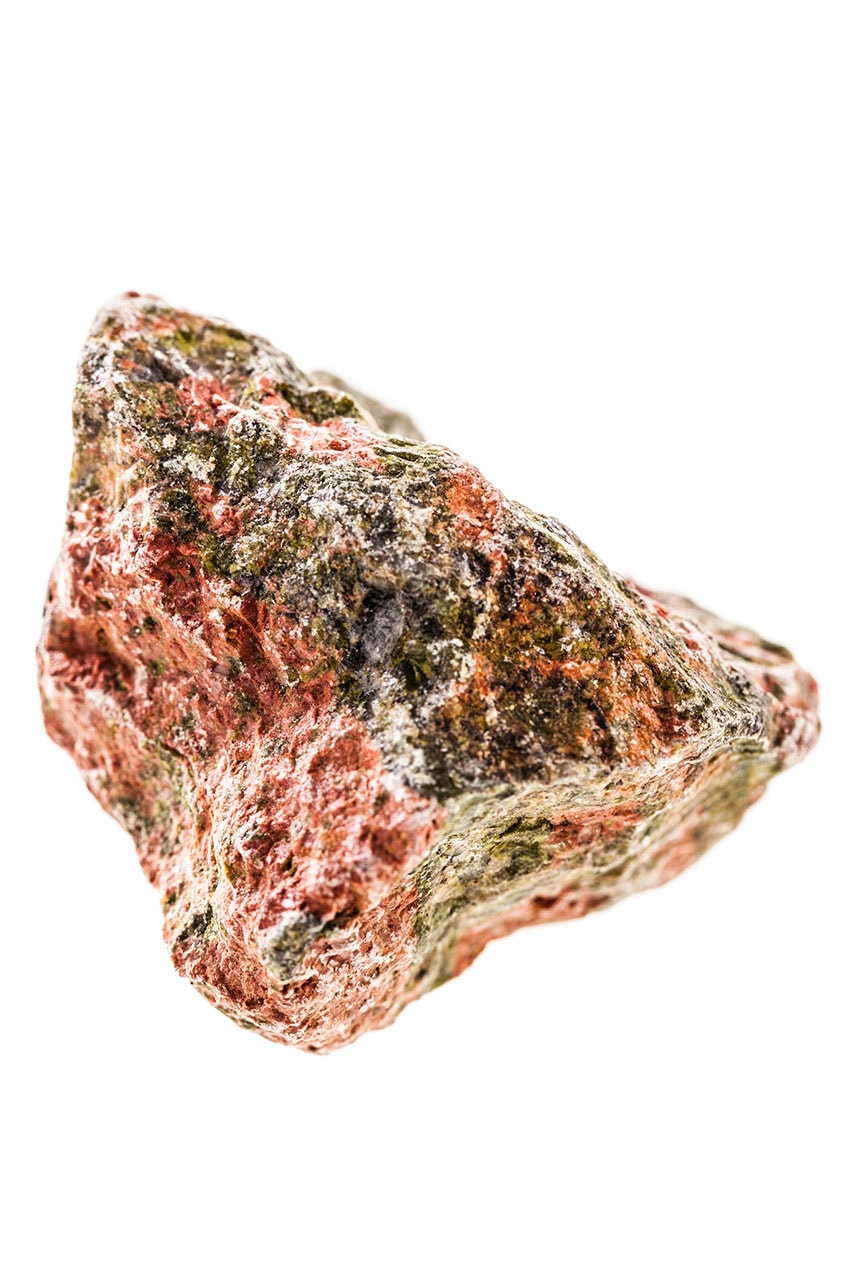
High in the Unaka Mountains straddling Tennessee and North Carolina, where ancient granite met metamorphic forces, nature painted a unique canvas in pink and green—creating unakite, a stone that captures the eternal dance between heart and growth. Named after its discovery location, this composite rock blends salmon-pink feldspar with pistachio-green epidote, often dotted with clear quartz, creating patterns reminiscent of blooming gardens.
Unlike precious gems formed in earth's depths, unakite tells a gentler story of transformation—granite altered by hydrothermal fluids over millions of years, its minerals reorganizing into new patterns while maintaining their essential nature. This gradual metamorphosis makes unakite the perfect teacher of patience and persistent growth, earning it the nickname "stone of vision" among those who understand that true sight requires seeing both what is and what can become.
From Native American vision quests to modern recovery programs, unakite has served those navigating life's transitions with grace. Its unique combination of nurturing pink and growth-oriented green creates an energetic balance that supports both emotional healing and forward movement—teaching that we can honor where we've been while actively creating where we're going.
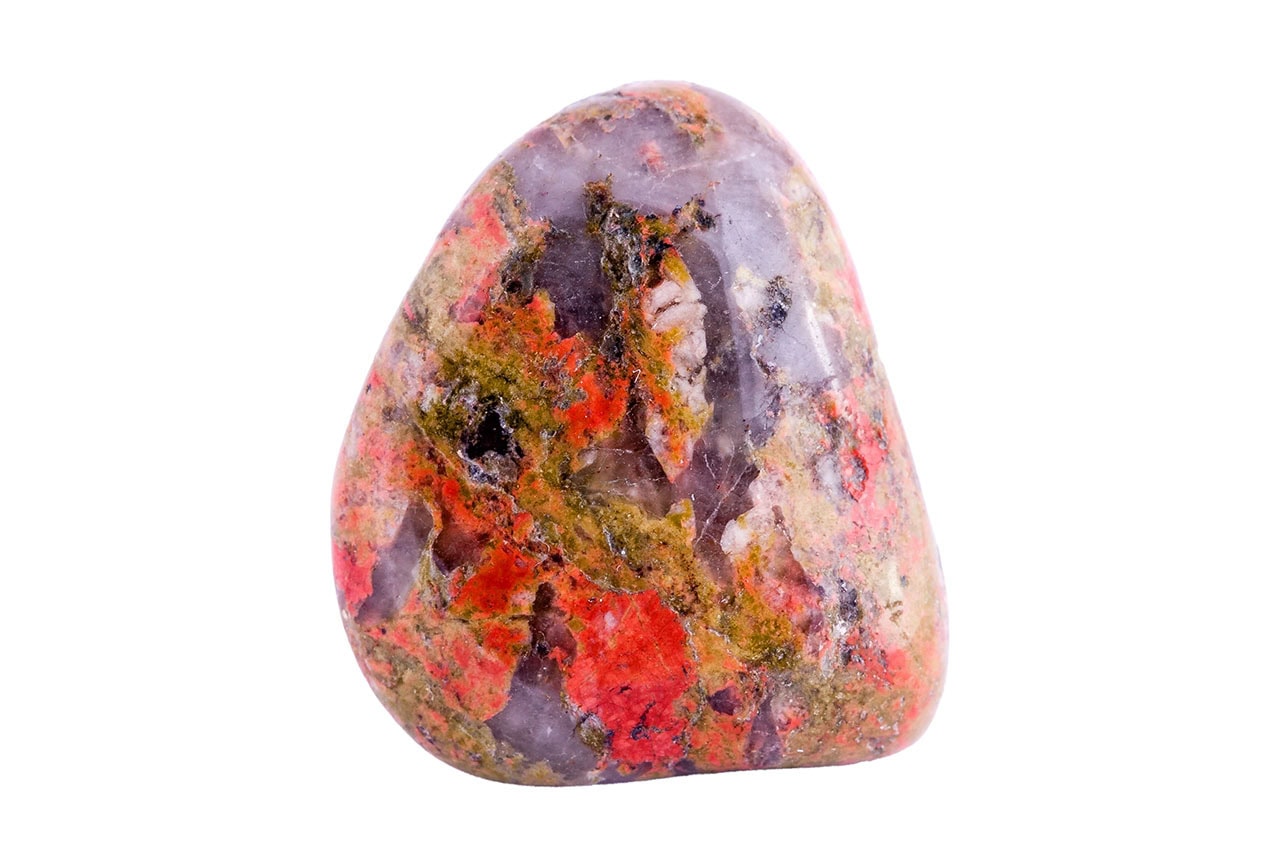
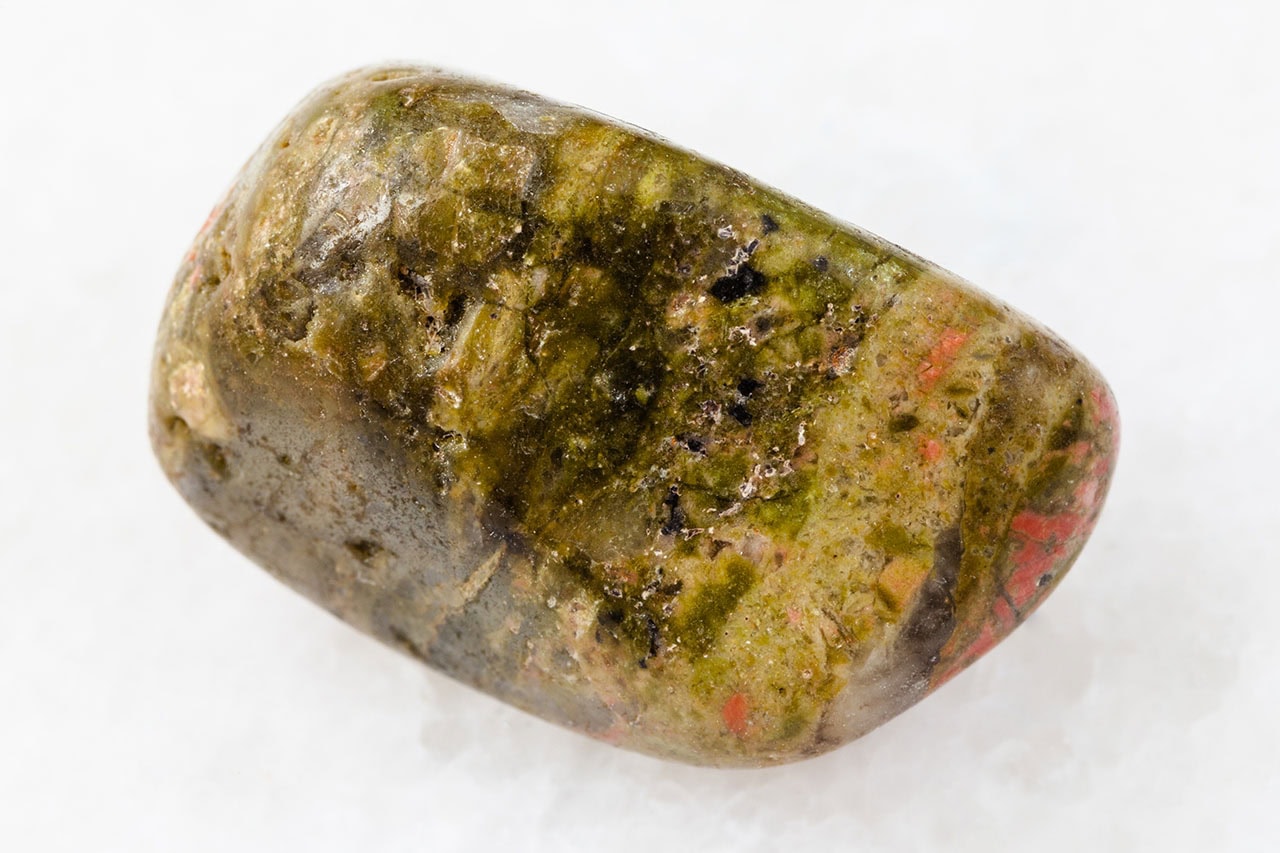
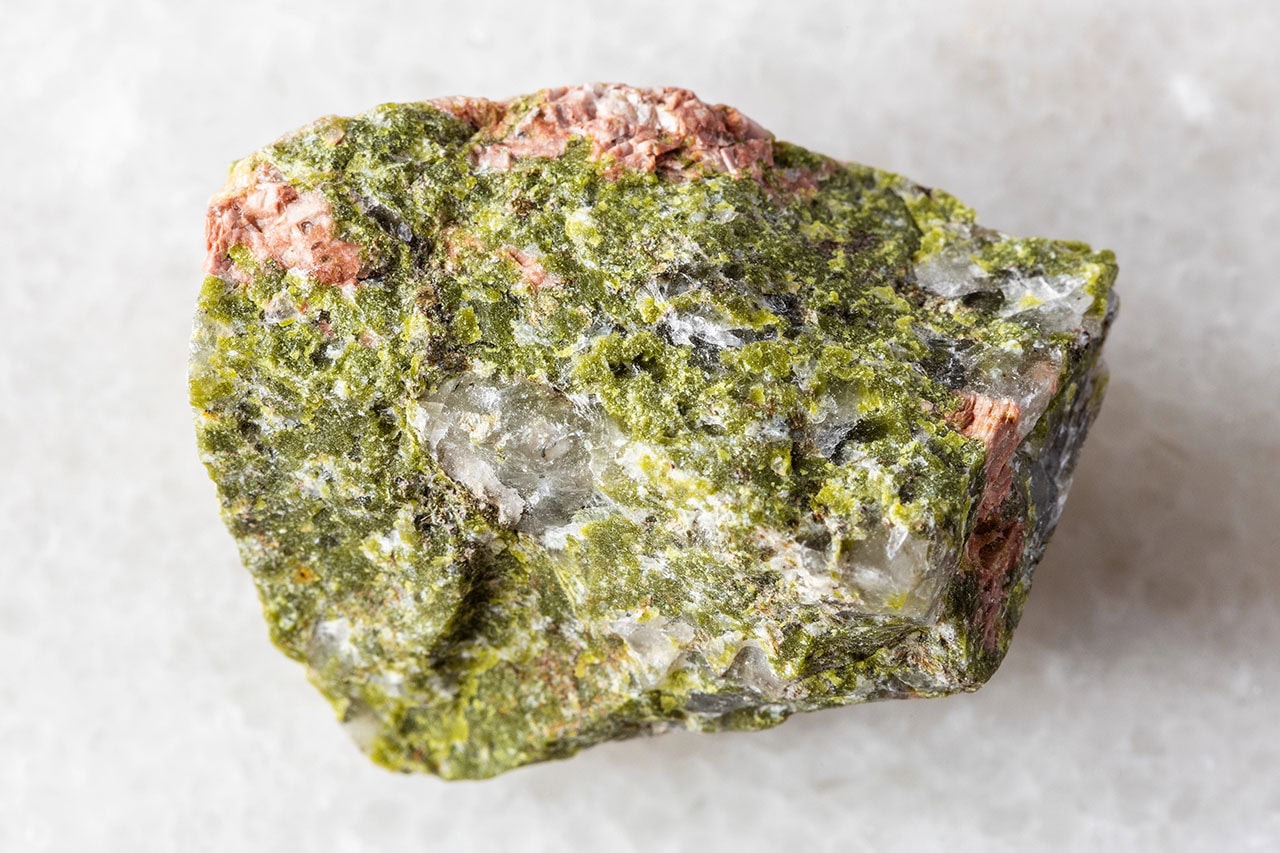
TABLE OF CONTENTS
Properties & Qualities
Physical Properties
Unakite presents itself as nature's abstract art, its mottled patterns creating unique landscapes in every piece. The pink orthoclase feldspar ranges from pale salmon to deep rose, while the epidote varies from yellow-green to deep olive. These colors interweave in patterns that can resemble everything from cherry blossoms against leaves to aerial views of spring meadows.
The rock's formation through metamorphism creates a granular texture that takes good polish but retains a slightly rough feel, connecting users to its earthy origins. Unlike crystals with perfect cleavage, unakite breaks irregularly, each fracture revealing new color combinations. This unpredictability in structure mirrors its teaching about embracing life's unexpected turns.
Clear quartz often appears as small crystalline windows within the matrix, adding sparkle and transparency to the opaque base. These quartz inclusions can create areas of translucency that seem to glow when backlit, earning some pieces the designation "gem-quality unakite." The proportion of pink to green varies dramatically—some pieces predominantly pink with green accents, others mostly green with pink highlights.
Weathering affects unakite uniquely, with the feldspar sometimes eroding faster than the epidote, creating textured surfaces that enhance its organic appearance. This differential weathering in natural specimens adds character, though most commercial pieces are stabilized to prevent deterioration.
Metaphysical properties
Within metaphysical traditions, unakite occupies a unique position as the "stone of coupled balance," its pink and green energies creating harmony between seemingly opposite forces—emotion and logic, heart and mind, being and becoming. Practitioners describe its energy as gently persistent, like a patient gardener tending slow-growing perennials.
The stone's primary resonance bridges the heart and solar plexus chakras through the connecting bridge of the higher heart chakra. This three-chakra activation creates what energy workers call "embodied compassion"—the ability to act on love with practical wisdom rather than just feeling it abstractly. This makes unakite invaluable for those whose caring nature needs grounding in sustainable action.
Native American traditions particularly valued unakite for vision quests, believing its combination of colors helped seekers see both the emotional and practical aspects of their visions. This dual sight continues in modern practice, where unakite is used to develop "spiritual pragmatism"—the ability to pursue spiritual growth while managing earthly responsibilities.
Modern practitioners report that unakite works gradually but persistently, creating lasting change through gentle pressure rather than dramatic breakthrough. This makes it ideal for those who find intense stones overwhelming or for situations requiring sustained transformation rather than quick fixes.
Meaning & Symbolism
Physical meaning
In the physical realm, unakite embodies the principle of integrated growth—its formation showing how different elements can maintain individual identity while creating unified beauty. This teaches that personal development need not require abandoning core self but rather integrating new aspects harmoniously.
The stone's discovery in mountain regions connects it to steady climbing and sure footing on life's journey. Just as mountain paths require patience and persistence, unakite supports those undertaking long-term projects or lifestyle changes that unfold gradually. Its energy favors the marathon runner over the sprinter.
For those in healing or nurturing professions, unakite represents sustainable service. Its balance of giving (pink) and renewal (green) teaches the importance of self-care within caregiving, preventing the burnout that comes from pouring from an empty vessel. This makes it valuable for parents, teachers, healers, and anyone in demanding service roles.
The rock's composite nature—neither purely igneous nor fully metamorphic—symbolizes successful adaptation. Rather than completely transforming under pressure, unakite shows how we can evolve while honoring our origins, making it powerful for those navigating career changes or life transitions that require balancing old and new identities.
Spiritual meaning
Unakite's spiritual significance centers on its role as the "stone of rebirth," but not the dramatic phoenix-from-ashes variety. Instead, it represents the gentle rebirth of spring—gradual, inevitable, and honoring what came before while embracing new growth. This makes it valuable for spiritual paths emphasizing integration over transcendence.
The stone's pink and green coloration represents the spiritual marriage of divine feminine (pink) and nature consciousness (green). This union creates what mystics call "embodied spirituality"—the recognition that spiritual evolution happens through, not despite, physical existence. Unakite teaches finding the sacred in the ordinary.
Different spiritual traditions interpret unakite's message as patience with divine timing. Its slow formation over geological ages reminds us that soul evolution follows its own schedule, not ego's demands for quick enlightenment. This makes unakite valuable for those frustrated with their spiritual progress or comparing themselves to others.
The mineral's connection to vision extends beyond physical sight to spiritual perception—specifically, the ability to see the sacred patterns connecting all life. Working with unakite develops what indigenous traditions call "soft eyes"—perception that sees wholes rather than parts, connections rather than separations.
Healing Benefits
Physical healing
Traditional healing applications for unakite focus on its balancing properties, though all uses remain within energy medicine rather than proven medical treatment. The stone's pink feldspar component has led to its use in supporting reproductive health, with practitioners placing tumbled stones on the lower abdomen during sessions focused on fertility or pregnancy support.
Contemporary crystal healers frequently use unakite for what they term "recovery support"—not just from substances but from any depleting condition. The stone's patient energy is thought to support the gradual rebuilding of vitality after illness, surgery, or chronic stress. Some practitioners create unakite elixirs using the indirect method for this purpose.
The green epidote component connects unakite to growth and regeneration, leading to its use in supporting healthy weight management and metabolism. Energy workers might place stones on various body points during sessions aimed at balancing appetite and supporting the body's natural regulatory systems.
Some alternative practitioners use unakite in layouts designed to support the integration of healing—helping the body adjust to positive changes rather than reverting to old patterns. This makes it popular in holistic approaches to chronic conditions where lasting change requires patient persistence.
Emotional healing
The emotional healing properties of unakite center on its ability to gently uncover and release deep-seated patterns without overwhelming the psyche. Therapists who use crystals describe it as ideal for clients who need to process trauma or grief gradually rather than through cathartic breakthrough.
For those dealing with emotional numbness or disconnection, unakite's pink energy gently reawakens feeling capacity while its green aspect prevents emotional flooding. This balanced approach makes it valuable for trauma survivors who fear that feeling anything means feeling everything at once.
The stone excels at healing what practitioners call "abandonment wounds"—not through dramatic revelation but through slowly building self-worth and trust. Unakite's patient energy mirrors the consistent presence needed to heal attachment injuries, making it valuable for those working on relationship patterns.
Unakite's particular gift lies in supporting emotional growth that honors the past while moving forward. Rather than demanding we "just let go," it helps integrate experiences into wisdom, transforming wounds into sources of compassion for self and others.
Spiritual healing
In spiritual healing contexts, unakite functions as what practitioners call a "soul gardener," tending the gradual growth of consciousness with the patience of someone who understands that souls, like gardens, can't be rushed. This makes it invaluable for sustainable spiritual development versus dramatic but unsustainable openings.
Advanced energy workers utilize unakite for healing the emotional body across timelines—not through dramatic past-life regression but through gentle integration of patterns playing out in current life. The stone's balanced energy helps process karmic lessons without becoming overwhelmed by their weight.
For those experiencing spiritual bypassing—using spirituality to avoid emotional work—unakite provides gentle confrontation. Its pink-green balance insists that true spiritual growth includes emotional maturity, preventing the dissociation that can occur when seeking transcendence without integration.
The stone's connection to vision makes it valuable for developing spiritual discernment—learning to distinguish between ego projections and genuine guidance. Unakite teaches that true visions serve collective healing, not just personal gratification, helping filter spiritual experiences through the lens of service.
Use & Care
How to use
- Heart healing layout: Place on heart chakra while lying down for emotional balance
- Vision quest: Carry during meditation or nature walks for insight
- Pregnancy support: Keep near during pregnancy for nurturing energy
- Recovery ally: Hold during healing from illness or addiction
- Garden blessing: Bury small pieces in garden for plant health
- Relationship healing: Place in bedroom to support partnership growth
- Patience practice: Hold when frustrated to cultivate acceptance
- Dream work: Keep under pillow for gentle insight dreams
- Creative projects: Place in workspace for sustained inspiration
- Child's stone: Give to children for emotional support and grounding
- Grief support: Carry during mourning for gradual healing
- Daily reminder: Wear as jewelry for continuous gentle support
How to cleanse
- Running water: Hold under cool water while setting cleansing intention
- Earth burial: Bury in soil for 24 hours for deep earth cleansing
- Moonlight bathing: Leave under any moon phase for gentle clearing
- Smoke cleansing: Pass through sage, sweetgrass, or cedar smoke
- Sound clearing: Use soft bells or nature sounds for cleansing
- Garden placement: Leave among healthy plants overnight
- Breath work: Breathe spring imagery onto stone for renewal
- Sunlight brief: Morning sun for 30 minutes maximum
- Selenite pairing: Rest on selenite for vibrational clearing
- Regular cleansing: Monthly cleansing usually sufficient due to gentle energy
How to charge
- Spring water: Sprinkle with fresh spring water for renewal
- Flower charging: Surround with fresh pink and green flowers
- Earth charging: Place on grass or soil for natural energy
- Dawn light: Charge during sunrise for new beginning energy
- Plant partnership: Place in potted plant for living energy exchange
- Heart breathing: Hold at heart and breathe love into stone
- Nature sounds: Play recordings of birds or streams while charging
- Crystal combinations: Charge with rose quartz and green aventurine
- Intention setting: Program with specific gentle healing purpose
- Seasonal charging: Particularly powerful during spring equinox
Combining with other stones
- Rose Quartz: Amplifies heart healing and self-love aspects
- Green Aventurine: Enhances growth and opportunity recognition
- Rhodonite: Deepens emotional healing and forgiveness work
- Prehnite: Strengthens connection to nature and healing wisdom
- Rhodochrosite: Supports inner child healing and joy recovery
- Moss Agate: Enhances connection to earth and plant spirits
- Clear Quartz: Amplifies unakite's gentle healing properties
- Smoky Quartz: Adds grounding to emotional processing
- Moonstone: Enhances intuition and emotional intelligence
- Jasper: Provides additional nurturing and stability
Identification
Can be mistaken for
- Rhodonite: Pink color similar but rhodonite has black veining not green
- Pink and Green Tourmaline: Similar colors but tourmaline has crystal structure
- Chrysoprase with Pink Stones: Combination can look similar
- Dyed Stones: Some stones dyed to imitate unakite's colors
- Other Granite: Various granites have similar appearance
- Epidote in Feldspar: Natural combination but different proportions
- Chinese Unakite: Often different mineral composition than true unakite
- Synthetic Composites: Resin-bound minerals imitating natural unakite
How to spot a fake
- Pattern examination: Natural unakite has random, non-repeating patterns
- Texture feel: Genuine has granular texture even when polished
- Color bleeding: Dyed stones may show color concentration in cracks
- Weight check: Natural unakite has moderate weight, not too light
- Temperature: Real stone feels cool and stays cool longer
- Hardness test: Should scratch glass (6-7 hardness)
- Price point: Natural unakite affordable—overpricing suspicious
- Pattern depth: Real patterns appear throughout, not just surface
- Quartz inclusions: Look for natural clear quartz crystals in matrix
- Source inquiry: Ask for specific locality information