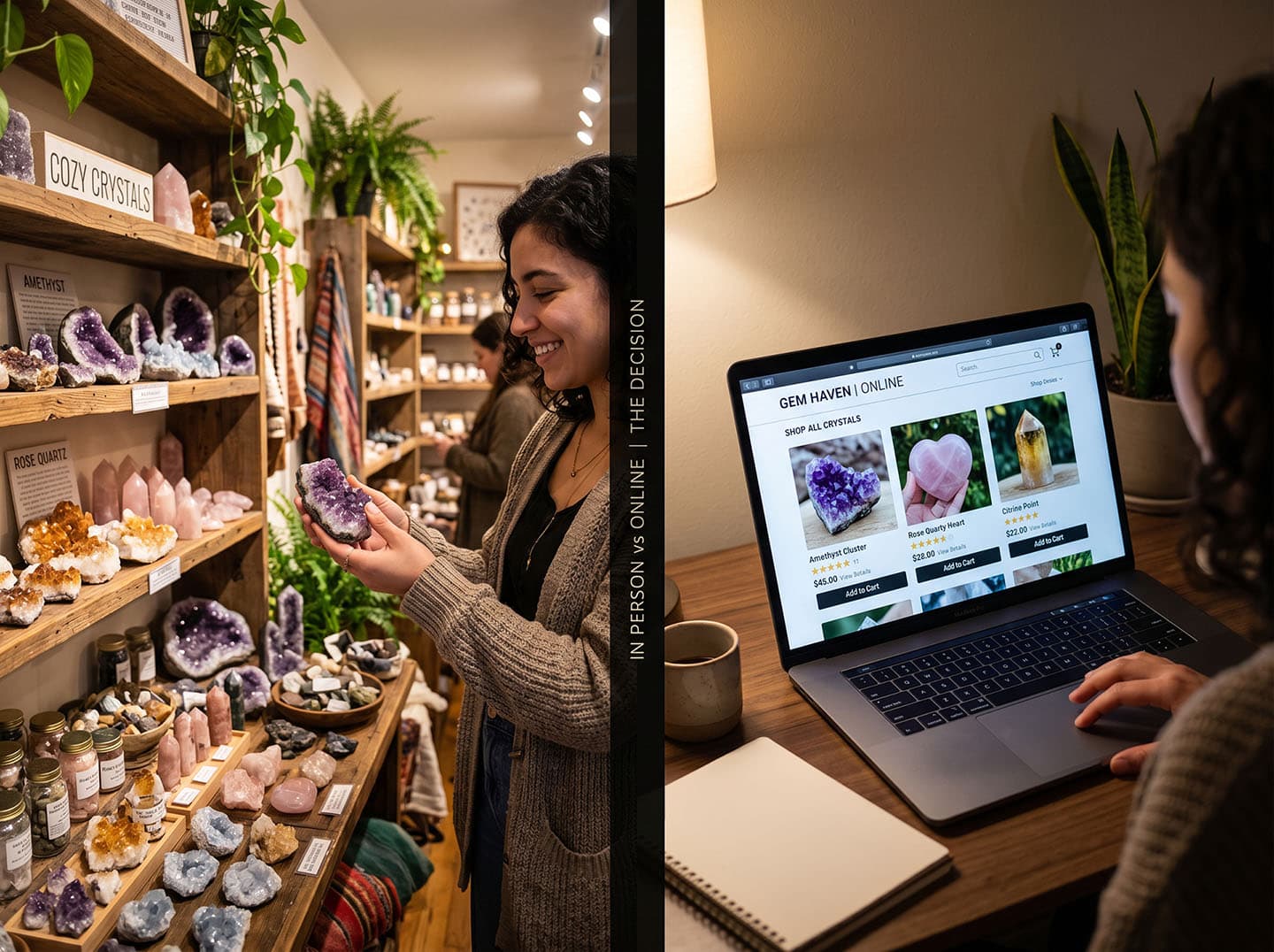
The channel follows the stone. Some properties survive a photograph and some are destroyed by one, and which kind you are buying is a fact about the mineral, so the answer changes stone by stone.
GIA’s guidance on judging amethyst says this. Colour zoning “is most visible when an amethyst is viewed face-down through its pavilion on a white background. It’s not as visible face-up.”
The angle that shows you the zoning is an angle a listing photograph is unlikely to be taken from, because a listing photograph is taken from the angle that sells the stone. The camera and the diagnostic angle face in different directions, and that is a fact about light rather than about anybody’s honesty.
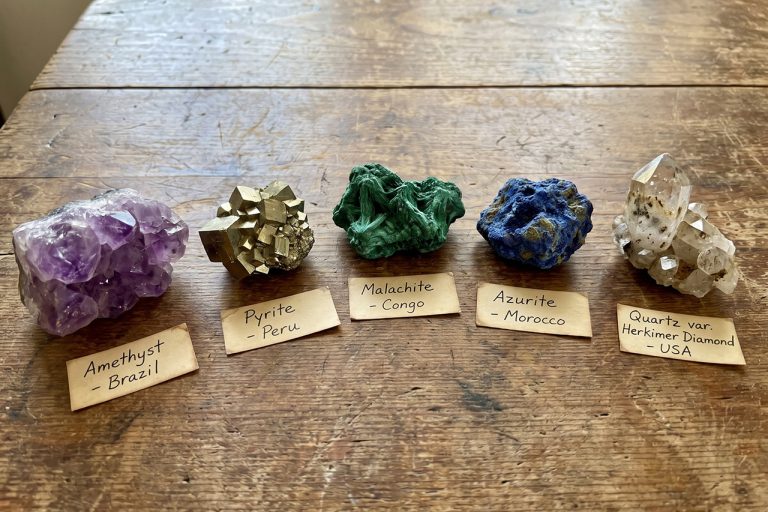
I own a small amethyst geode, roughly mug-sized, and the thing I like about it is a gradient: the points near the centre are a much deeper violet than the ones around the rim. In flat light it is close to invisible. It appears when the light comes in at a slant, and it disappears again when either the light or the geode moves. Any photograph of it is a photograph of one decision somebody made about where to stand.
Stones a photograph cannot tell you about
GIA’s note on phenomenal gems describes labradorescence as a broad flash of colour in labradorite feldspar, caused by light interacting with thin layers inside the stone, that “disappears when the gem is moved.” A photograph of labradorite is taken at a position where the effect exists. It is one frame out of a range, and it is the best frame in the range, because that is the one worth taking.
What you want to know about a stone like that is how wide the good angle is, and a still image carries no information about width. A short video carries it. A JPEG does not.
Colour zoning behaves the other way round and ends up just as invisible, because zoning is a fact about the inside of a stone and the angle that reveals it is the angle a stone looks worst from.
Where one piece stands in for another
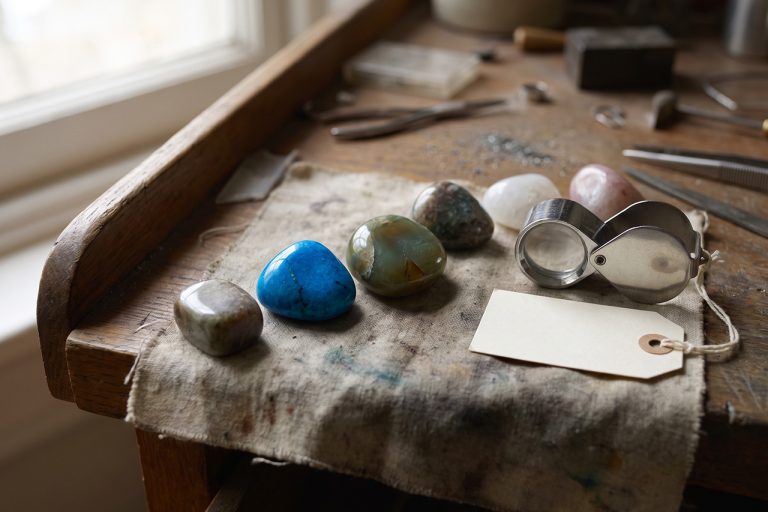
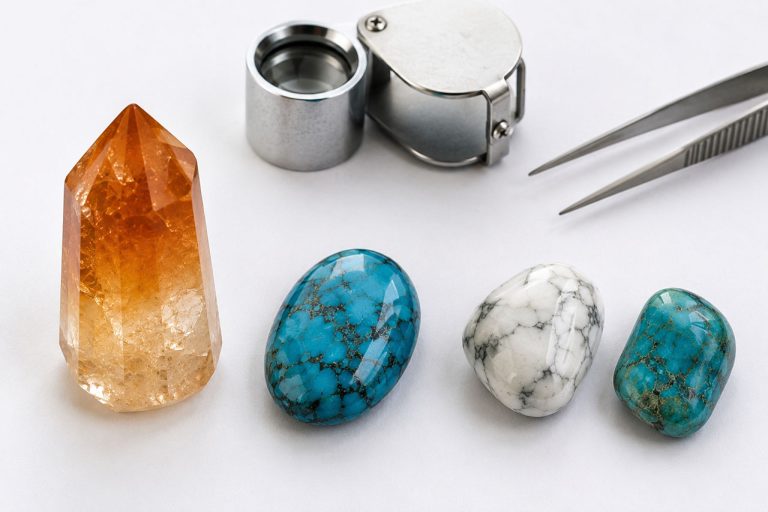
A great deal of what sits in crystal shops is opaque material with no orientation and little variation: tumbled stones, massive material cut into palm stones, plain red jasper, sodalite in its solid blue, aventurine. For those, a photograph of one piece is a fair account of the next piece out of the same barrel, because there is no direction in the material for the photograph to be wrong about. Buying them in a room is spending an afternoon on a decision that was already made.
That is the division: whether the property you are paying for lives in the bulk of the material, or in the way its surface behaves when the light moves.
A shop lets you sort
I bought a tiger’s eye tower at an expo, palm-height, from a table with a great many of them on it. The reason I took that one is that the chatoyancy, the cat’s-eye shimmer that runs across a stone as it tilts, moves over the whole surface rather than sitting in a single band. Choosing it took about ten minutes and a tableful of comparison by hand, and the gap between the piece I carried home and the ones either side of it was large and would have been invisible in any photograph of any of them.
A room also calibrates you. Handle forty amethysts in an hour and you learn what ordinary looks like, and that is knowledge you keep. It makes every purchase afterwards better, including the ones you make sitting down.
The third thing is that a shop answers back. Put a piece down, pick up its neighbour, ask why one costs twice the other, and whatever comes back tells you something about the stones or about the shop.
A listing is a document
A listing sits still and can be read twice. It carries dimensions, a weight, a locality, a statement about treatment, and none of that evaporates the way a conversation across a market stall does.
Size is where this pays off most, because photographs are poor at scale and buyers are optimistic about it. A stated 12 centimetres is a fact you can hold a ruler against. A photograph of something that looks big is an impression.
What a listing cannot do is make its adjectives mean anything. GIA’s own colored stone reports describe the gemstone type, whether it is natural or synthetic, any detectable treatments, and, where determinable, the origin, plus cutting style, shape, weight, measurements and colour. What they do not carry is a quality grade, because GIA does not issue one for coloured stones at all. If a laboratory of that standing declines to say how good an amethyst is, “AAA” on a product page is not a claim two shops could both be held to. Read the numbers and let the adjectives go.
A website also lets you compare across sellers, which no town does. The septarian nodule I like best, a sedimentary concretion sliced open to show the cracked-egg pattern inside it, came from an online shop after an evening spent working through far more of them than was sensible. It is better than anything I could have found locally, because the local shops between them had three.
Deciding per stone
The working question takes about ten seconds. Is the thing I want from this stone visible in a still photograph taken from one position, or does it only exist while the stone is moving?
Labradorite, moonstone, opal and tiger’s eye all need a room, or a seller who films the piece turning, because every one of them is sold on a flash or a sheen. Zoned material sits in the middle. A photograph shows a banded fluorite or a sliced agate honestly enough while saying nothing about how the colour reads under a lamp at home. Tumbles, palm stones and opaque massive material can simply be ordered, and the saved afternoon spent on something else.
Each mineral’s page in the Crystalance Mineral Library lists its optical properties, so if you are unsure which half of that a stone falls into, the answer is in the entry.
Sources
- GIA, Amethyst Quality Factors, for colour zoning being most visible face-down through the pavilion: gia.edu
- GIA, The Phenomenal Properties of Gems, for labradorescence disappearing when the gem is moved: 4cs.gia.edu
- GIA, Colored Stone Analysis Report service, for what a coloured stone report does and does not contain: gia.edu