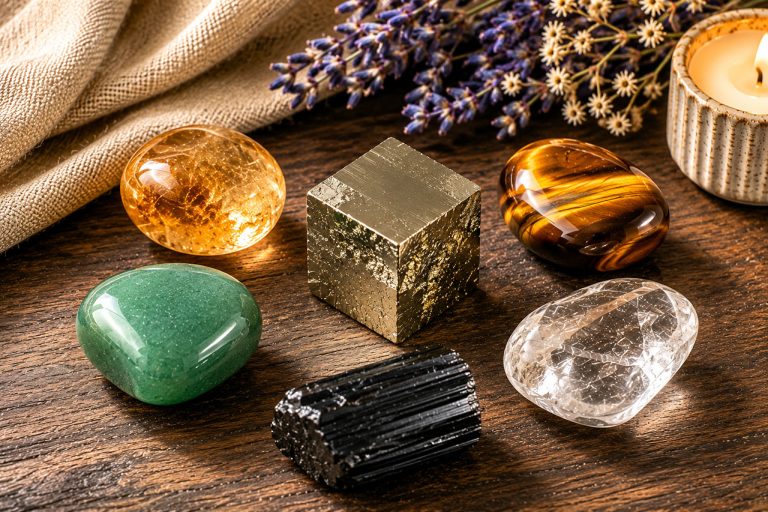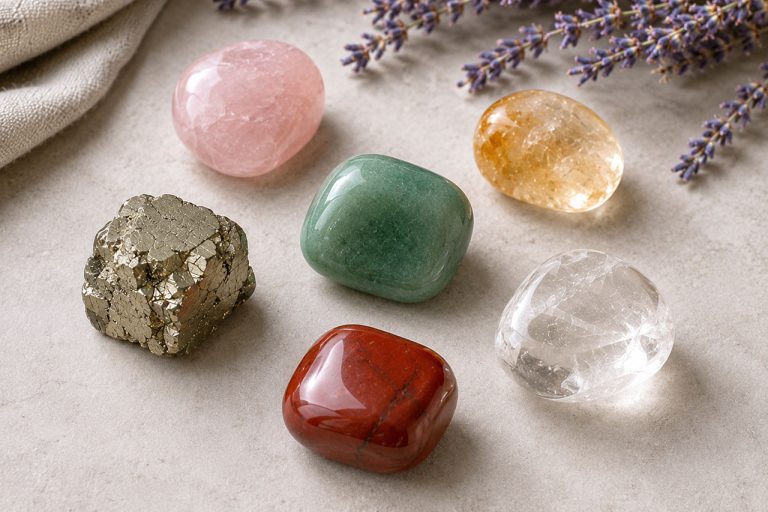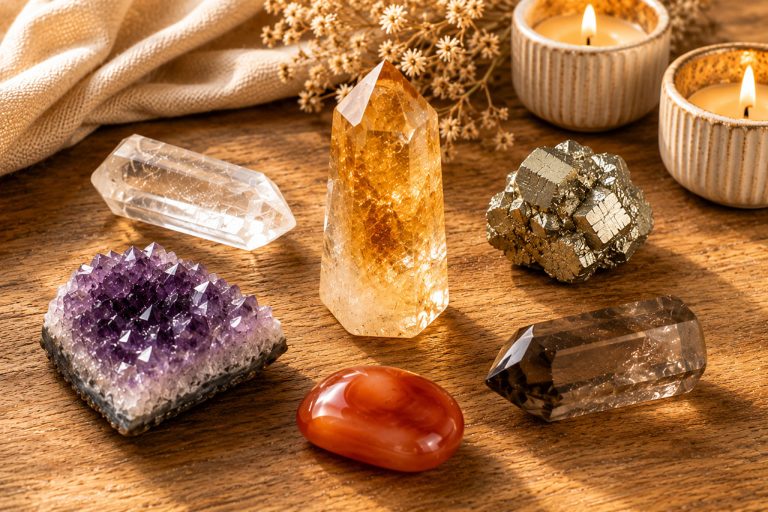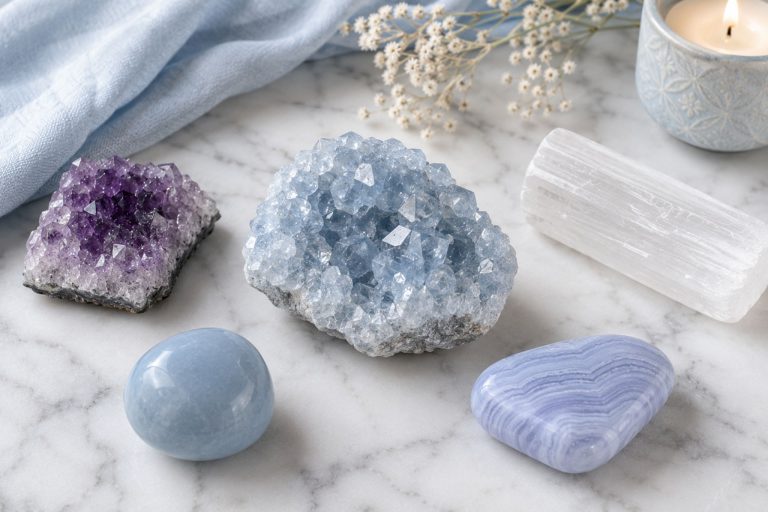
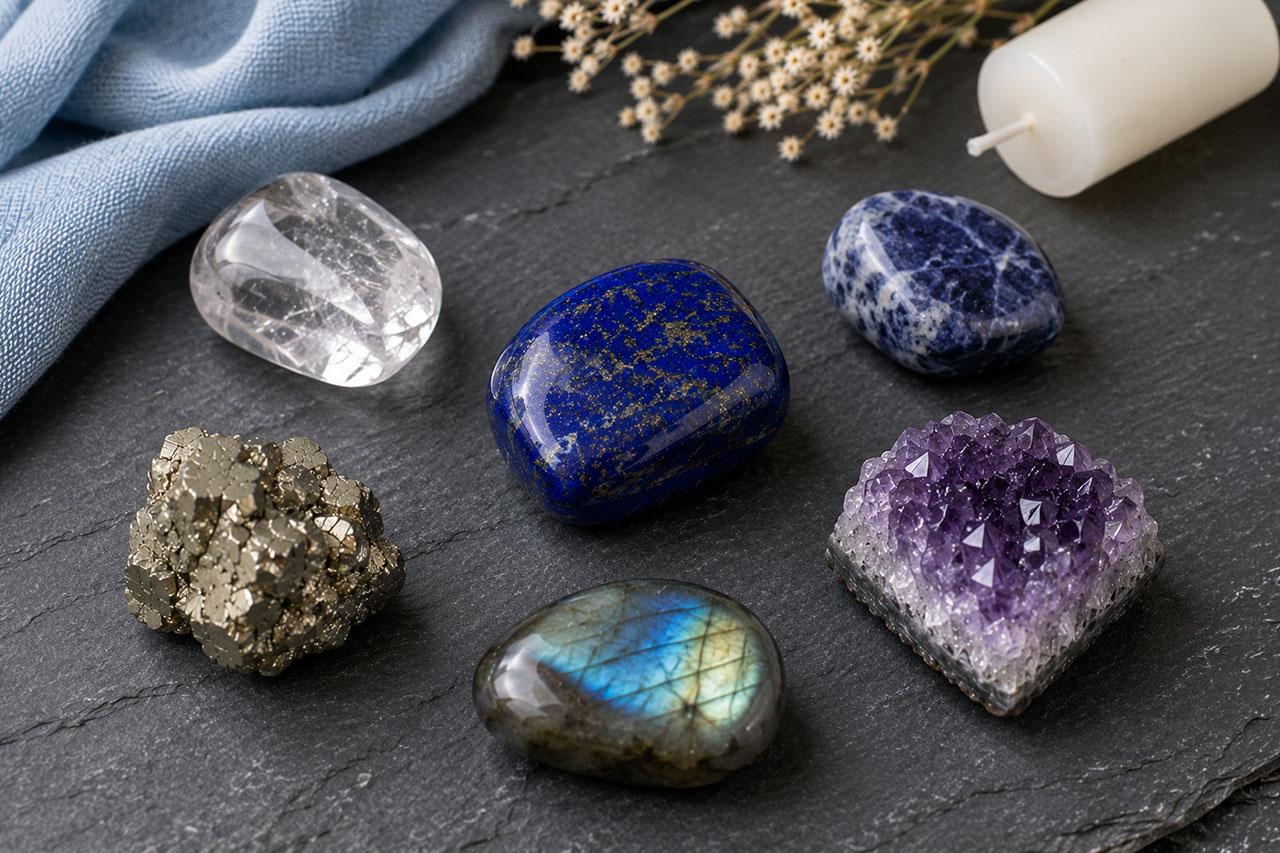
Lapis lazuli pairs well with clear quartz, sodalite, amethyst, labradorite, pyrite, and blue kyanite. It’s a stone associated with truth, wisdom, and self-expression, and it works best alongside crystals that deepen its reflective quality or amplify its connection to communication and clarity.
Lapis lazuli is one of the oldest crystals in recorded use. It appears in the burial sites of ancient civilizations, in the paint used for medieval religious art, and in more contemporary crystal work as a stone associated with truth-telling, intellectual depth, and the confidence to say what you actually think. That particular combination, inner knowing plus the willingness to express it, gives lapis its distinctive character and shapes which other stones work well alongside it.
Pairings for Communication and Clarity
Lapis lazuli and sodalite is a pairing between two blue stones with genuinely complementary focuses. Sodalite is associated with logical thinking, calm communication, and emotional balance. Lapis brings the deeper wisdom layer. Together they create a combination well-suited for people who work with language, teaching, writing, or any situation where both clear thinking and honest expression matter. They sit naturally alongside each other without one overpowering the other.
Lapis lazuli and blue kyanite is less commonly discussed but quite useful. Kyanite is associated with alignment, communication, and clearing energetic blockages. Paired with lapis lazuli it creates a combination that suits anyone working to remove internal obstacles to honest self-expression, particularly useful for people who struggle to say what they mean or who hold back in communication out of fear or habit.
Lapis lazuli and clear quartz amplifies. As with most crystals, adding clear quartz to a lapis combination strengthens its effects. Clear quartz doesn’t redirect lapis, it simply intensifies its quality. This is a clean, practical pairing for anyone wanting more of what lapis does without adding new variables.
Pairings for Wisdom and Inner Work
Lapis lazuli and amethyst is a combination that works along the upper chakras, the third eye and crown, which in practical terms means the mental and intuitive domains. Amethyst brings stillness and reflective insight, lapis brings intellectual depth and truth-seeking. Together they’re well-suited for meditation, journaling, studying, and the kind of thinking that requires both calm and real rigor. An ideal pairing for people in intellectually demanding work or periods of significant personal reflection.
Lapis lazuli and labradorite pairs two stones associated with inner knowledge and the deeper layers of truth. Labradorite adds its protective, transformative quality to lapis’s more direct truth-seeking energy. The combination works well for people who are navigating major decisions or transitions where self-honesty matters more than comfort.
Lapis Lazuli and Pyrite: A Different Kind of Pairing
Lapis lazuli and pyrite is an interesting combination because pyrite is often included in lapis lazuli naturally. The gold flecks in many specimens of lapis are pyrite inclusions, which means these two minerals have a literal geological relationship. In combination as separate stones, pyrite adds grounding confidence and practical ambition to lapis lazuli’s more introspective quality. If you’re working on translating vision and clarity into action, this pairing reflects that intention quite directly. It’s also worth knowing that the flecks in lapis that people assume are gold are almost always pyrite, not actual gold.
What Tends Not to Work with Lapis Lazuli
Lapis lazuli’s energy is strongly associated with the upper chakras and with inward, reflective modes of knowing. Very heavy root chakra stones like hematite or black obsidian create a notable contrast. The combination isn’t impossible, but it tends to pull in opposing directions unless you’re specifically working with an integration intention. Very activating stones like carnelian can also feel slightly discordant, since lapis works through depth and quietness rather than heat and momentum.
How to Use Lapis Lazuli Combinations in Practice
Lapis lazuli is a durable stone but it does require some care. It has a moderate hardness and shouldn’t be stored with very hard stones like quartz or topaz if loose, as it can scratch. For cleansing, avoid prolonged water exposure, as lapis can be sensitive to moisture and the pyrite inclusions can be affected by water over time. Moonlight and sage are the most recommended options.
For placement, lapis lazuli works well at a work desk, study space, or anywhere that serves as a thinking environment. The communication-focused pairings, particularly with sodalite or clear quartz, suit these contexts well. Keeping lapis at a desk during periods of writing, study, or work that requires sustained concentration and clear articulation is a practical use that many people find genuinely useful.
For worn use, lapis lazuli’s historically most common placement was near the throat, given its association with the throat chakra and honest expression. A necklace or pendant is a natural choice if you’re working with the communication aspect of the stone.
Common Questions About Lapis Lazuli Combinations
Can lapis lazuli and amethyst go together?
Yes. Both are associated with the upper chakras, and they work well together for meditation, study, and reflective inner work.
Can you pair sodalite with lapis lazuli?
Absolutely. Sodalite and lapis lazuli are a natural pairing. Both are blue stones associated with communication and truth, and they complement each other without competing.
Can lapis lazuli and labradorite be used together?
They work well together. Both are associated with wisdom and inner knowing, and the combination suits periods of significant personal decision-making or transition.
Can lapis lazuli and clear quartz go together?
Yes. Clear quartz amplifies lapis lazuli’s effects without changing its character. A clean, practical pairing.
Can pyrite and lapis lazuli go together?
They can, and there’s a literal geological connection between the two since many lapis specimens contain natural pyrite inclusions. Pyrite grounds lapis lazuli’s reflective quality with practical confidence.
Lapis lazuli rewards consistent, intentional use more than casual decoration. Its association with truth-telling is specific enough that people who use it regularly tend to notice its effects in the form of greater willingness to be honest with themselves and in their communication. That’s not magic, exactly. It’s more like having a physical reminder of what you’re trying to practice.
For a complete look at lapis lazuli, including how to identify quality specimens and distinguish it from sodalite or dyed howlite, the Crystalance Mineral Library covers everything.