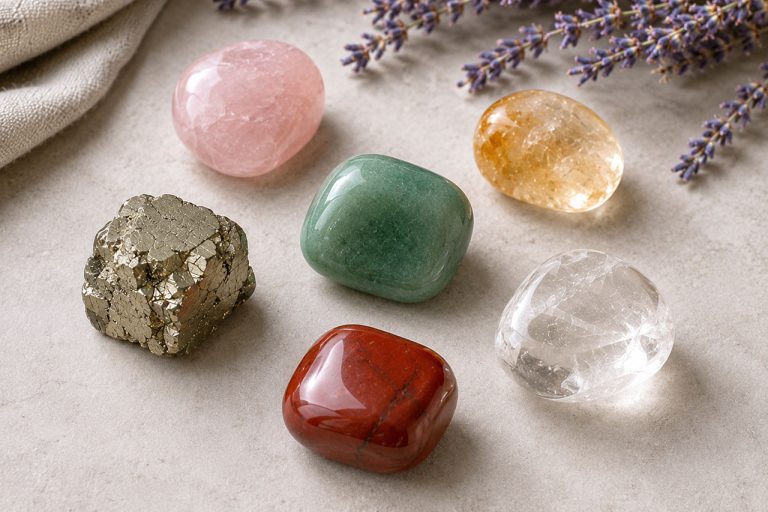
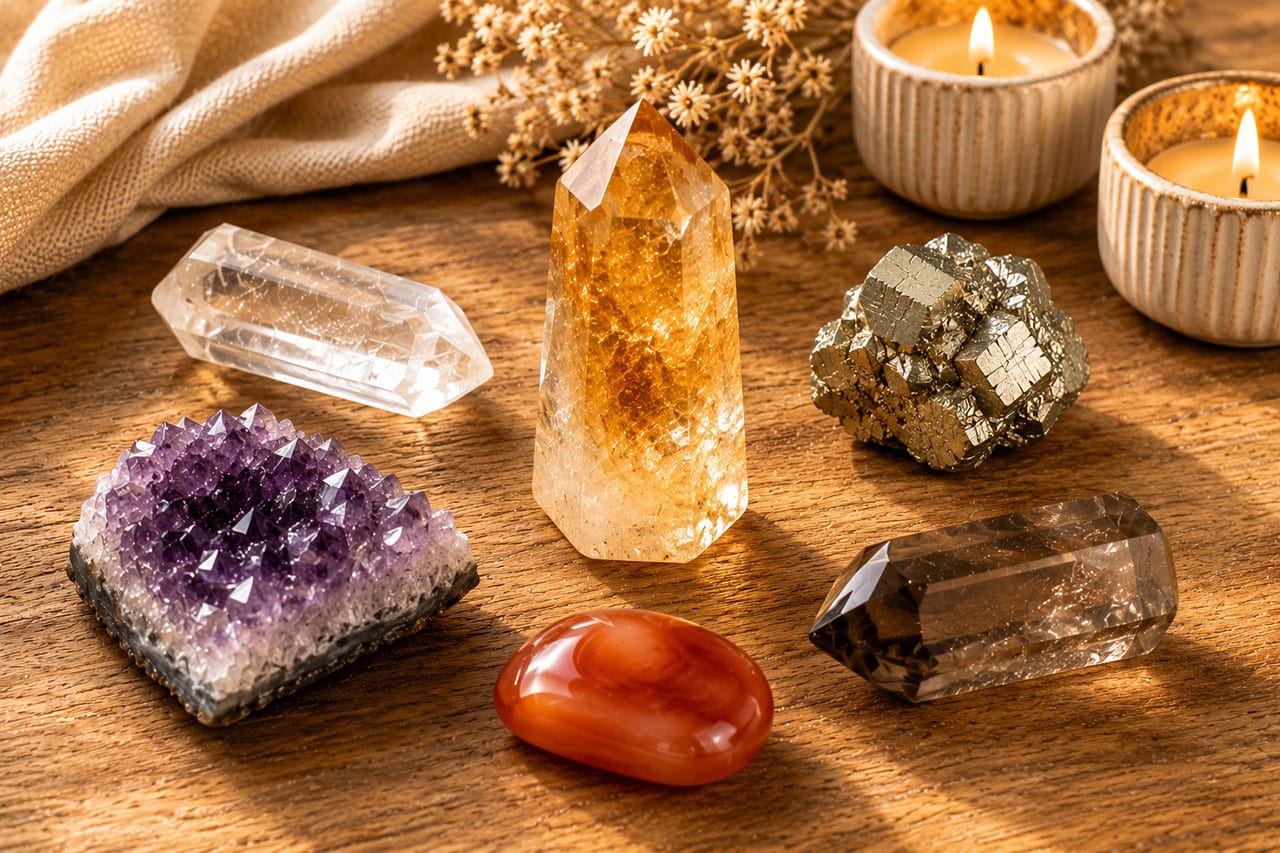
Citrine pairs well with pyrite and carnelian for drive and abundance, and with amethyst or smoky quartz for balance. Before you build any of it, check which citrine you have, because a lot of what sells as citrine is heat-treated amethyst.
The single most popular citrine pairing is citrine with amethyst, and there is a quiet joke folded into it. A great deal of the citrine on shop shelves is amethyst that has been heated until the purple turns gold, which means a fair share of those citrine-and-amethyst pairings are really one mineral sitting next to itself in two colours. GIA is plain about it. Most citrine in the market is heated amethyst, purple quartz turned gold by heat. That does not make the pairing wrong, and it does not make your stone a fake. It just means the first useful question about pairing citrine is a question about the citrine.
None of that ruins the pairing. Heated amethyst is a real, useful stone, and the combination can feel exactly as warm as you hoped. What changes is quieter. It is what you think you are holding, and what you paid for it. That takes two minutes to settle before you build a practice on the stone, because the one thing no seller can do is turn a treated stone back into a rare natural one.
Telling natural citrine from heated amethyst
Natural citrine is usually a soft, slightly smoky yellow, often pale, and its colour tends to run evenly through the stone. Heat-treated amethyst comes out brighter, more of a saturated orange-gold, and it frequently keeps a whitish base where the original amethyst was, with the colour strongest toward the tips. Neither is a bad stone. Heat-treating is an old, honest process when a seller names it, and much of the citrine people love is exactly this. The problem is only the seller who calls it natural Brazilian citrine and charges for the rarer thing.
There is a genuine curiosity here too. When amethyst and citrine grow together in a single quartz crystal, half purple and half gold, the trade sells it as ametrine, and it is the one case where the citrine-and-amethyst pairing is literally one stone. If telling warm quartzes apart is the part you find fiddly, orange calcite versus citrine works through a comparison people get wrong even more often than the treated-amethyst one.
Pairings that push citrine forward
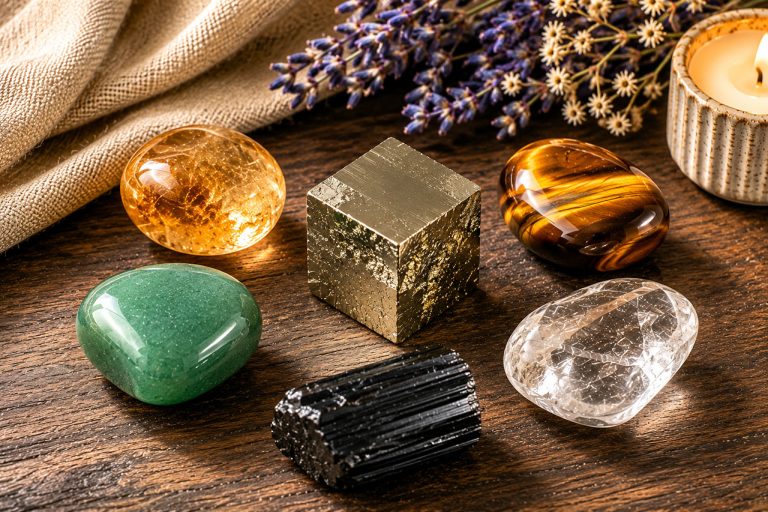
Whatever kind you have, citrine reads in the tradition as a warm, forward stone, tied to confidence, optimism and abundance, and its most reached-for partners lean into that. Pyrite is the classic. Practice links its brassy metallic cubes to wealth and nerve, so beside citrine the pair becomes the backbone of nearly every money-intention kit, the thing people keep on a desk where financial decisions get made. If that is the thread you are pulling, does citrine attract money takes the wealth association apart honestly rather than promising the stone pays your rent.
Carnelian pushes in a slightly different direction. Where pyrite is about receiving and holding, the tradition treats carnelian as drive and initiative, the get-started stone, so with citrine it suits building something new, or finding the nerve for a first move. Clear quartz belongs in this group for a simpler reason. Practice treats it as an amplifier, a stone that strengthens whatever sits beside it without adding a flavour of its own, so next to citrine it turns the warmth up rather than changing it. Reach for it when citrine feels faint and you want more of the same, not something new.
Pairings that settle it, and living with the stone
Citrine’s brightness is not always what you want, and its steadying partners are the ones that give it somewhere to land. Amethyst is the natural first choice, and here the pairing earns its popularity honestly rather than as an accident of treatment. The tradition reads amethyst as calm and clarifying, so it takes the restlessness off citrine’s optimism and leaves something closer to steady, which is why the two turn up together on so many bedside tables. Smoky quartz does a heavier version of the same job, grounding citrine’s lightness when purely upbeat stones start to feel unanchored.
None of this asks much upkeep, which is part of citrine’s appeal as a stone you reach for daily. Citrine is a quartz, so it sits at 7 on the Mohs scale of mineral hardness, hard enough to take daily wear and to share a pouch with the other quartz-family stones on this list, pyrite included, without either scratching the other. It works worn or placed, whichever suits the pairing you have chosen.
The real through-line is smaller than the pairing charts make it. Pick the partner for the direction you want citrine pointed, forward with pyrite and carnelian or settled with amethyst and smoky quartz, and check the stone itself before you decide it is rarer than it is. For the full profile, including more on telling natural from heat-treated, the Crystalance Mineral Library has citrine in depth.