
Smithsonite
Carbonate
Blue, green, pink, purple, yellow, white, brown
Vitreous to pearly
4 - 4.5
4.3 - 4.5
Trigonal
Mexico, USA, Greece, Namibia, Australia, Italy
Common to rare (depending on color and quality)
ZnCO₃ (Zinc carbonate)
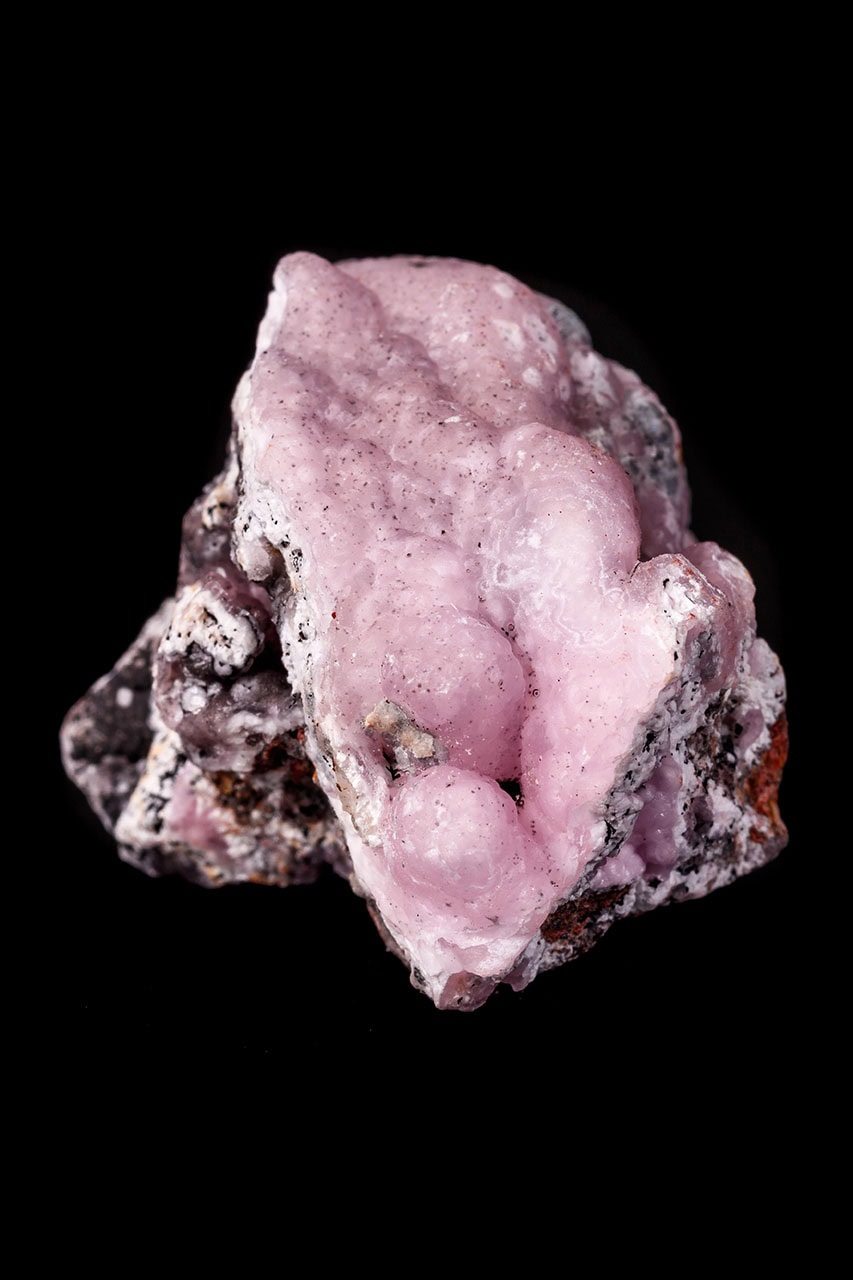
In the oxidized zones of zinc deposits worldwide, nature performs a gentle transformation—converting harsh metallic ores into smithsonite, a mineral so softly beautiful it seems designed to soothe rather than dazzle. Named after James Smithson, whose bequest founded the Smithsonian Institution, this zinc carbonate creates botryoidal crusts that resemble frozen bubbles of pastel light, each color telling a story of trace elements and patient crystallization.
Unlike flashier minerals that announce their presence, smithsonite whispers. Its soft colors—baby blue, mint green, lavender pink—evoke nursery walls and spring mornings, earning it the nickname "the comfort stone" among healers who recognize its profound ability to soothe emotional wounds, particularly those rooted in childhood. This gentleness belies its importance; smithsonite served as a primary zinc ore before modern smelting techniques, literally helping build the industrial age while maintaining its ethereal beauty.
Today, from the spectacular blue specimens of New Mexico’s Kelly Mine to the pink varieties treasured by collectors, smithsonite continues its dual role as both practical mineral and metaphysical ally. Its ability to form smooth, rounded surfaces from angular cavities serves as a perfect metaphor for its energetic properties—transforming sharp emotional edges into gentle curves, making it essential for anyone seeking to heal with compassion rather than force.
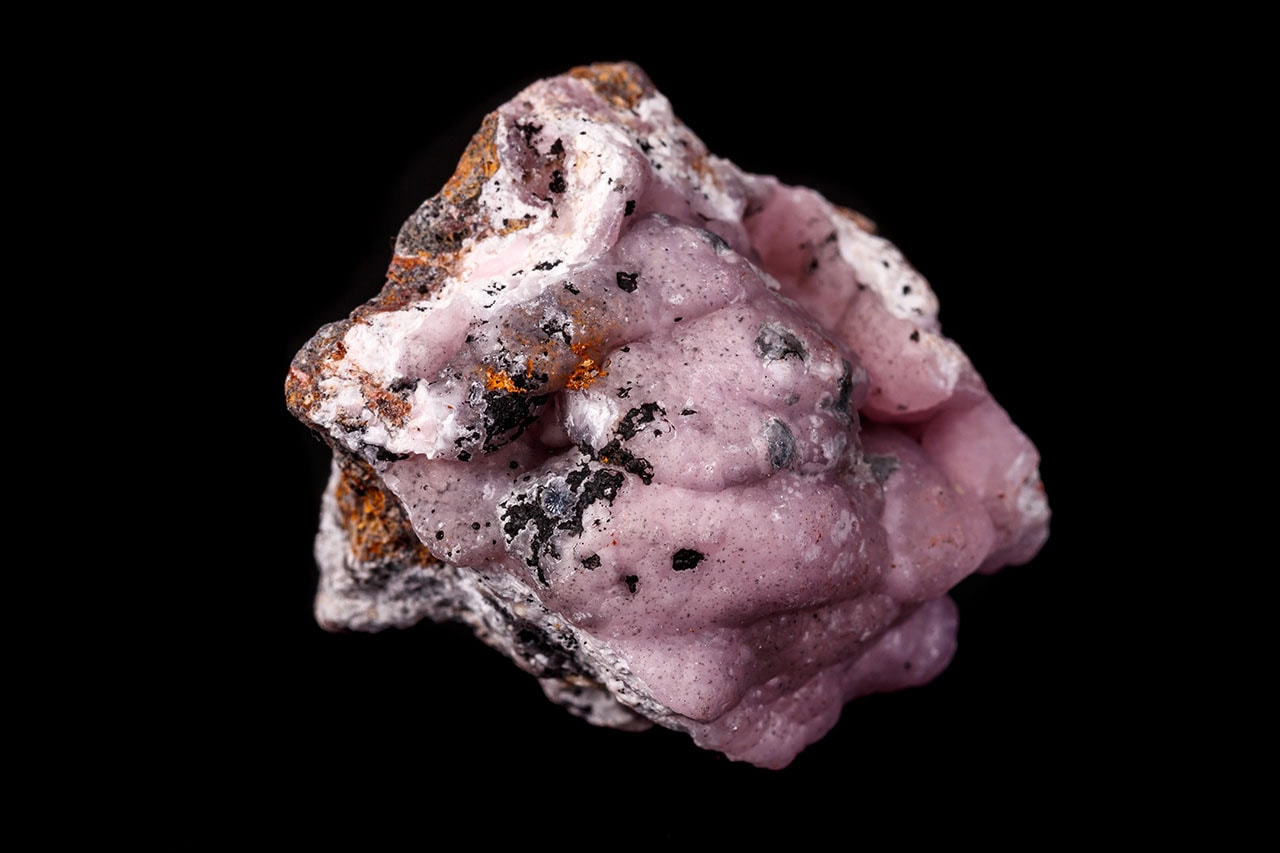
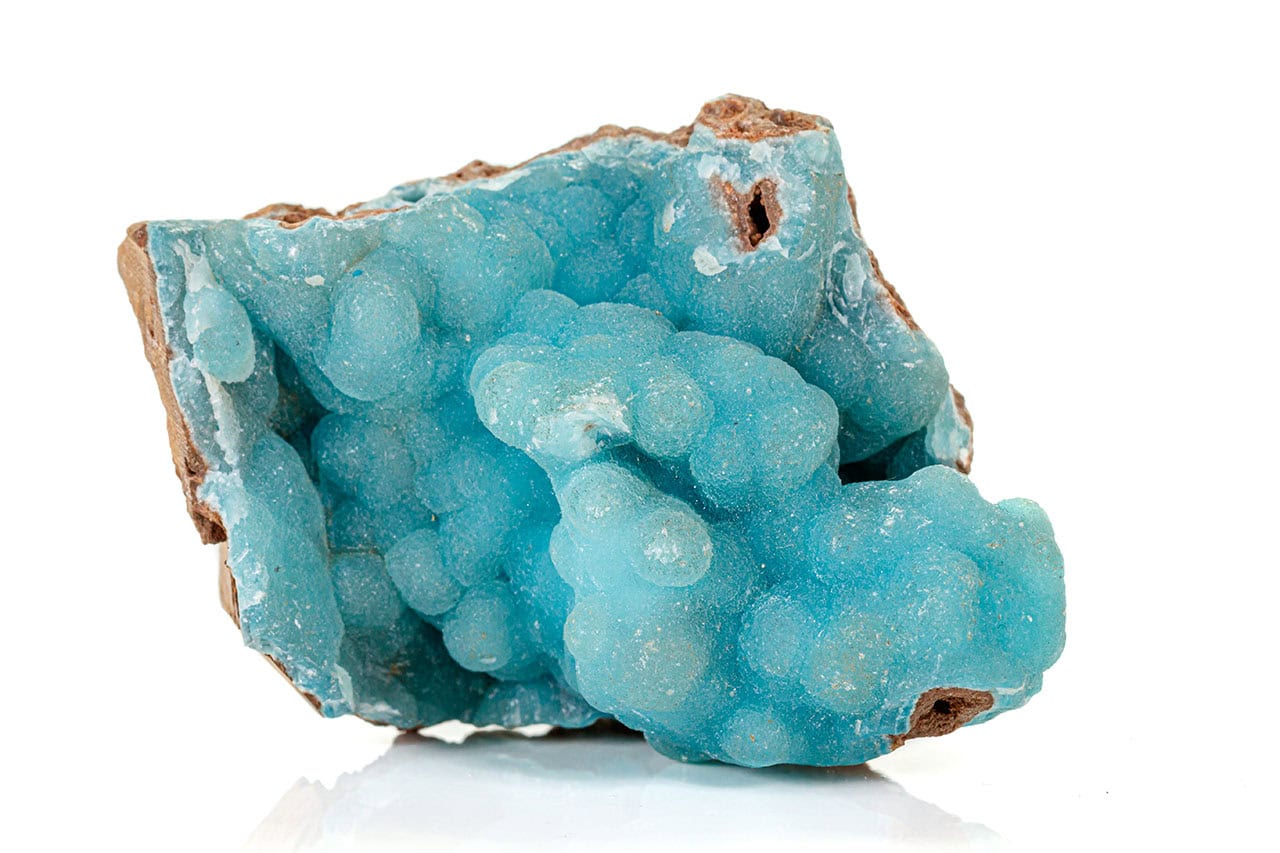
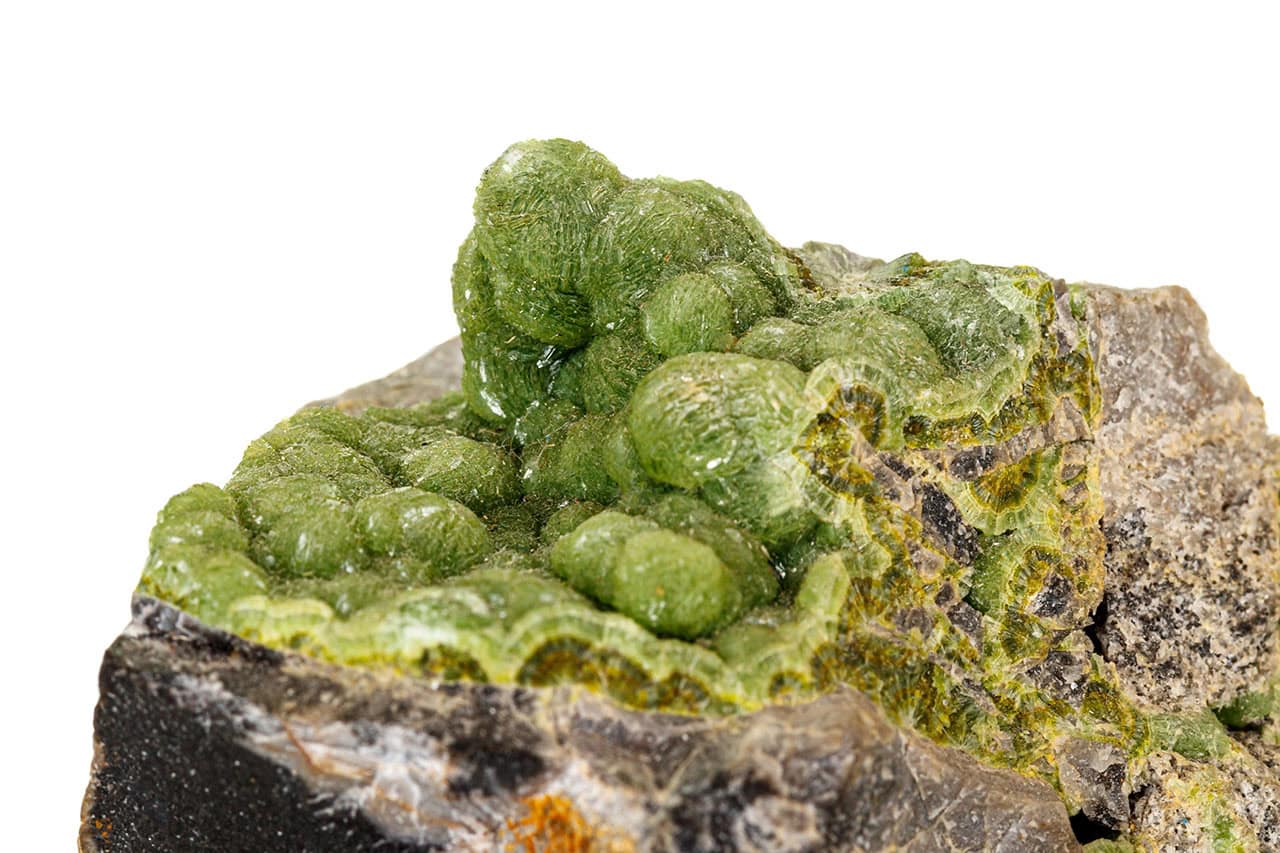
TABLE OF CONTENTS
Properties & Qualities
Physical Properties
Smithsonite captivates through its distinctive botryoidal habit—forming grape-like clusters with surfaces so smooth they appear melted or water-worn. This rounded formation results from its crystallization process in cavities and fractures, where countless microscopic crystals create undulating surfaces that play with light in subtle ways. The finest specimens resemble colored glass that has been softly sculpted by patient hands.
The mineral's remarkable color range stems from trace element substitutions in its crystal lattice. Pure smithsonite appears white or gray, but nature rarely creates pure specimens. Copper produces the prized blue-green varieties, cobalt creates pink to purple hues, cadmium yields yellow, while iron generates browns and yellows. The most celebrated blue-green specimens, from the Kelly Mine in New Mexico, rival the finest turquoise.
Crystal formation typically produces rhombohedral crystals, though well-formed crystals remain rare. More commonly, smithsonite creates massive crusts, stalactitic formations, or fills cavities with its characteristic rounded surfaces. Under magnification, the botryoidal surface reveals itself as composed of countless tiny crystal terminations, each catching light to create the overall silky luster.
The mineral's relative softness and perfect rhombohedral cleavage make it challenging for lapidaries but reward careful work with cabochons that seem to glow with inner light. Some specimens display a phenomenon called "dry bone" texture—a porous, coral-like structure that occurs when smithsonite replaces other minerals while preserving their form.
Metaphysical properties
Within metaphysical circles, smithsonite reigns as the supreme stone of emotional healing and inner child work, its gentle energy described as "mother's touch in mineral form." Practitioners report that smithsonite doesn't force healing but creates such a safe energetic space that wounds naturally surface for gentle resolution, making it a favorite for gentle inner child work.
The stone's primary resonance spans multiple chakras depending on color, but all varieties share a quality of harmonization. Blue smithsonite works with the throat and thymus chakras for expressing suppressed emotions. Pink varieties resonate with the heart for self-love and compassion. Purple connects crown and heart for spiritual love. This multi-chakra flexibility allows practitioners to choose specific colors for targeted healing.
Modern energy workers particularly value smithsonite for what they term "developmental wounds"—early hurts that people feel rather than remember. The stone’s rounded formations are seen as energetically "holding" these early wounds for slow, gentle work.
Unlike stones that blast through blockages, smithsonite dissolves them slowly, like water wearing away stone. This patient approach makes it ideal for highly sensitive individuals or those whose old hurts built protective habits that shouldn’t be removed too quickly.
Meaning & Symbolism
Physical meaning
In the physical realm, smithsonite embodies the principle of gentle transformation—its formation from harsh zinc ores into soft, beautiful crystals demonstrates how patient natural processes create more lasting change than violent force. This teaches that healing and growth often require time and gentleness rather than aggressive intervention.
The mineral's botryoidal formation represents the power of collective action—countless tiny crystals working together to create smooth, unified surfaces. This mirrors how small, consistent acts of self-care accumulate into significant healing, and how communities can create nurturing environments through collective compassion.
For those in caregiving professions, smithsonite symbolizes sustainable nurturing. Its zinc content—essential for growth and healing but toxic in excess—teaches the importance of balanced giving. The stone reminds healers, parents, and caregivers that effective nurturing requires boundaries and self-care.
The variety of colors within the smithsonite family represents the spectrum of emotional experiences, all valid and beautiful in their own way. This teaches acceptance of emotional diversity, both within oneself and others, as natural and necessary for complete human experience.
Spiritual meaning
Smithsonite's spiritual significance centers on its role as the "Stone of Rebirth Through Gentleness," representing the possibility of spiritual renewal without the harsh ego death demanded by more intense stones. This makes it valuable for those who've been traumatized by aggressive spiritual practices or teachings that emphasized transcendence through suffering.
The stone's formation in oxidation zones—where oxygen transforms primary minerals—serves as a metaphor for how spiritual breath (pneuma, prana) can transform dense experiences into beauty. This positions smithsonite as a teacher of pranayama and conscious breathing for spiritual transformation.
Some modern practitioners link smithsonite's soft colors with the subtle bodies or koshas that surround the physical form. Working with various colors allegedly helps heal and align these subtle layers, creating integrated healing that addresses all levels of being simultaneously.
The mineral's association with zinc—necessary for DNA replication and cellular growth—connects it spiritually to regeneration and the ability to rewrite one’s story. This makes smithsonite valuable for those seeking to heal ancestral patterns gently rather than through dramatic catharsis.
Healing Benefits
Physical healing
Smithsonite in crystal healing is a matter of practice and tradition, not medicine. Practitioners use it as a soothing stone and rest it on the chest or solar plexus during quiet sessions focused on comfort and calm.
Smithsonite is a zinc carbonate, so it is used as a polished stone, kept out of water and elixirs, and handled with clean hands. Many simply hold a piece during a few minutes of slow breathing.
Smithsonite is not a substitute for medical care. If something in your body worries you, see a doctor.
Emotional healing
The emotional healing properties of smithsonite center on its gentle approach to inner child work. Practitioners describe it as creating a "womb of safety" where the most vulnerable parts of the self can surface without fear of judgment.
For those who feel emotionally numb, smithsonite is used as a gentle reminder to let feeling return at its own pace. Rather than forcing feelings, the practice is to go slowly, so nothing comes up faster than a person can handle.
The stone is also used for what practitioners call "attachment wounds"—early experiences of inconsistent or absent nurturing that can echo in later relationships. Its steady, gentle presence serves as a reminder of the consistent care that was missing.
Different colors address specific emotional needs: blue for expressing unspoken childhood pain, pink for self-nurturing and learning to receive love, green for healing jealousy rooted in early deprivation, purple for connecting emotional healing with spiritual understanding.
Spiritual healing
In spiritual healing contexts, smithsonite functions as what practitioners call a "soul retriever"—but unlike dramatic shamanic extraction, it gently magnetizes lost soul parts back through creating irresistible safety. This makes it ideal for those whose soul fragmentation resulted from developmental trauma rather than single incidents.
Advanced energy workers utilize smithsonite for healing the etheric body, particularly areas where trauma created "frozen" spots that don't respond to energy flow. The stone's patient dissolution of blockages works even on ancient wounds that have calcified into the energy structure.
For those experiencing spiritual crisis stemming from forced opening (through intense retreats, premature kundalini activation, or aggressive practices), smithsonite provides integration without suppression. It helps slow and regulate spiritual energies to manageable levels while maintaining the gifts such openings can bring.
The stone's variety of colors makes it valuable for what some practitioners call "spectrum healing"—using different colored smithsonites to address wounds at each chakra level systematically. This creates comprehensive healing that doesn't leave gaps where trauma can re-anchor.
Use & Care
How to use
- Inner child meditation: Hold pink smithsonite at heart during healing work
- Emotional soothing: Place on areas of body holding emotional tension
- Sleep healing: Keep under pillow for gentle processing dreams
- Reflection support: Hold while reflecting on deep emotions
- Chakra healing: Use color-appropriate stones on each chakra
- Comfort object: Carry as touchstone during stressful times
- Grief processing: Hold while allowing tears and release
- Relationship healing: Place in bedroom for partnership harmony
- Creative expression: Use while journaling, drawing or painting
- Brief sessions: Work in short periods due to intensity of healing
How to cleanse
- Moonlight essential: Cleanse under full moon for maternal energy
- No water: Keep it out of water
- Gentle smoke: Light sage or sweetgrass pass
- Sound healing: Soft bells or maternal singing
- Silk wrapping: Store in silk between uses
- Selenite bed: Rest on selenite for gentle clearing
- Breath work: Breathe love and gratitude onto stone
- No salt: Keep it away from salt
- Minimal sun: Brief morning light only if needed
- Regular cleansing: After each emotional healing session
How to charge
- Mother energy: Charge while focusing on divine mother archetypes
- Rose petals: Surround with fresh or dried rose petals
- Pink candle: Set beside a pink or white candle, never close to the flame
- Lullaby charging: Play or sing gentle songs while charging
- Heart breathing: Hold at heart and breathe love into stone
- Flower essences: Place beside a bottle of flower essence (do not mist the stone)
- Maternal blessing: Have mothers bless the stone
- New moon: Charge during new moon for new beginnings
- Soft textiles: Place on velvet or silk while charging
- Gentle intention: Program with soft, nurturing purposes
Combining with other stones
- Rose Quartz: Amplifies gentle love and self-compassion
- Mangano Calcite: Enhances mother energy and comfort
- Pink Tourmaline: Adds emotional strength to gentleness
- Celestite: Brings angelic support to healing process
- Prehnite: Enhances inner child connection
- Rhodochrosite: Deepens emotional healing work
- Blue Lace Agate: Helps express childhood wounds
- Selenite: Maintains high vibration during deep work
- Lepidolite: Calms worry arising from healing
- Green Aventurine: Adds heart healing and hope
Identification
Can be mistaken for
- Hemimorphite: Similar blue color and botryoidal form
- Chrysocolla: Blue-green varieties can look similar
- Turquoise: Blue smithsonite sometimes mistaken for turquoise
- Calcite: Similar hardness and can form similar shapes
- Aragonite: Another carbonate with similar properties
- Prehnite: Green varieties can resemble prehnite
- Chalcedony: Botryoidal forms can look similar
- Dyed minerals: Various minerals dyed to imitate rare colors
How to spot a fake
- Specific gravity: Real smithsonite notably heavy (4.3-4.5)
- Botryoidal form: Natural shows true rounded crystal clusters
- Color distribution: Natural color often uneven
- UV reaction: Some fluoresce blue-white or green
- Price consideration: Rare colors command high prices
- Surface texture: Natural has characteristic silky feel
- Crystal structure: Look for rhombohedral cleavage
- Source verification: Quality pieces have locality data