Zoisite
Silicate (Sorosilicate)
Green, pink (thulite), blue-violet (tanzanite), ruby-in-zoisite
Vitreous to pearly
6.5 - 7
3.10 - 3.38
Orthorhombic
Tanzania, Kenya, Norway, Austria, India, USACommon (green), rare (blue tanzanite variety)
Common (green), rare (blue tanzanite variety)
Ca₂Al₃(SiO₄)₃(OH)
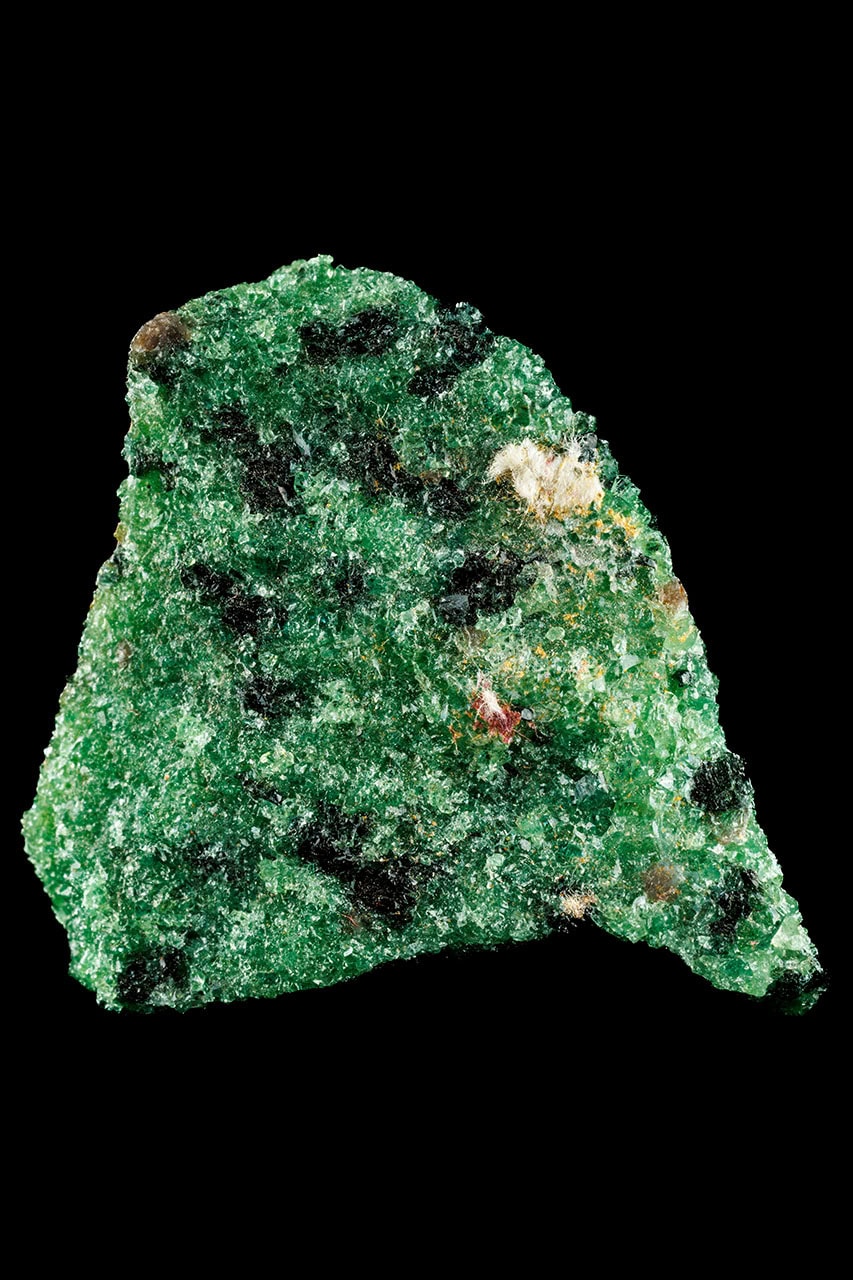
In the metamorphic terrains of Tanzania's Merelani Hills, where continental collision created unprecedented conditions, zoisite emerged in forms so varied that early mineralogists thought they'd discovered multiple new minerals. This calcium aluminum silicate, first identified in Austria's Saualpe Mountains in 1805, has proven to be nature's master of disguise—appearing as common green masses, rare blue tanzanite, pink thulite, and the striking combination of ruby-in-zoisite.
Named after Baron Sigmund Zois von Edelstein, who financed mineral collecting expeditions, zoisite remained relatively obscure until the 1960s discovery of its blue variety—tanzanite—catapulted it to gemstone fame. Yet practitioners of earth wisdom have long recognized that zoisite's true power lies not in its rare blue form but in its more common green variety, particularly when hosting ruby crystals like drops of blood in a verdant field.
Today, from the healing centers of alternative medicine to the collections of serious mineralogists, zoisite in all its forms serves as a bridge between heart and mind, teaching that true power comes from integrating opposing forces rather than choosing sides. Its ability to manifest in dramatically different colors while maintaining the same essential structure makes it the perfect teacher for those learning to embrace all aspects of self.
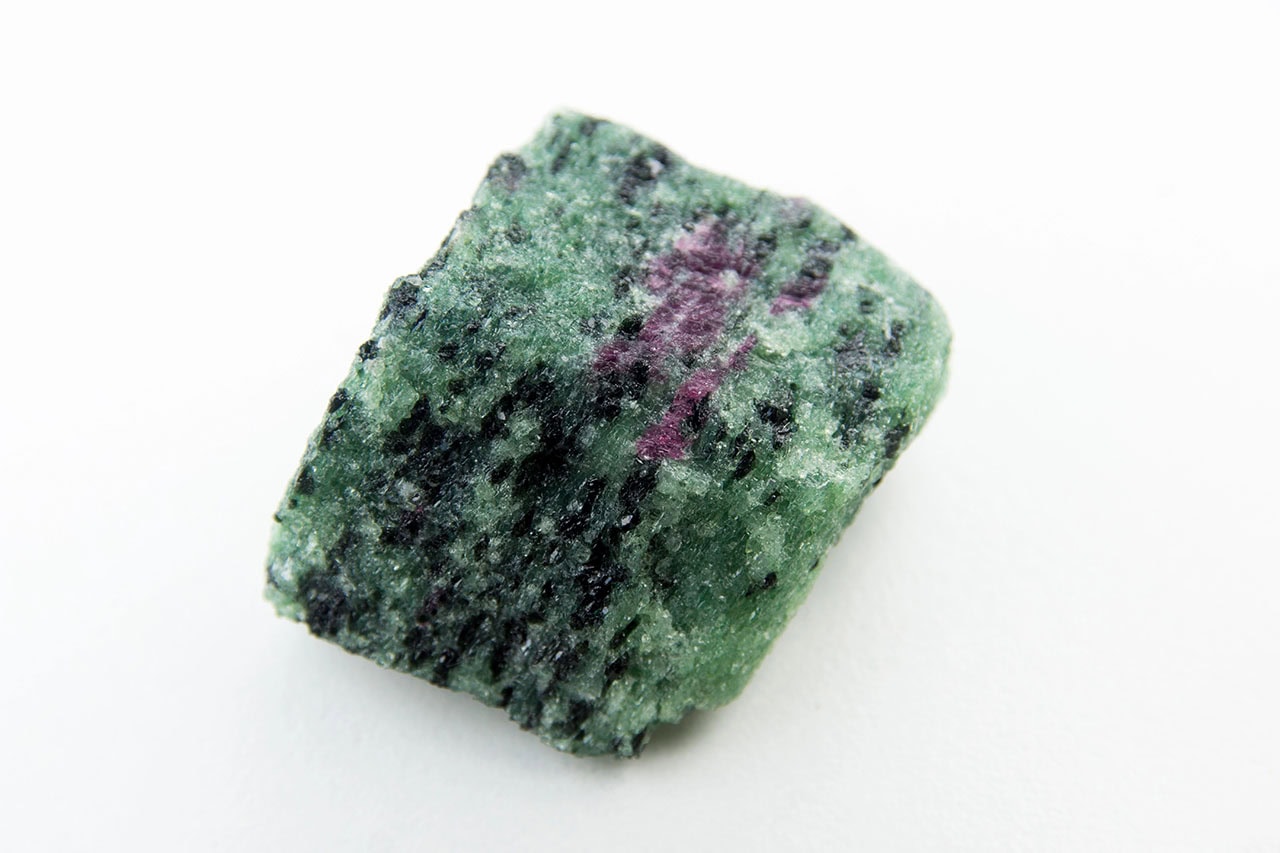
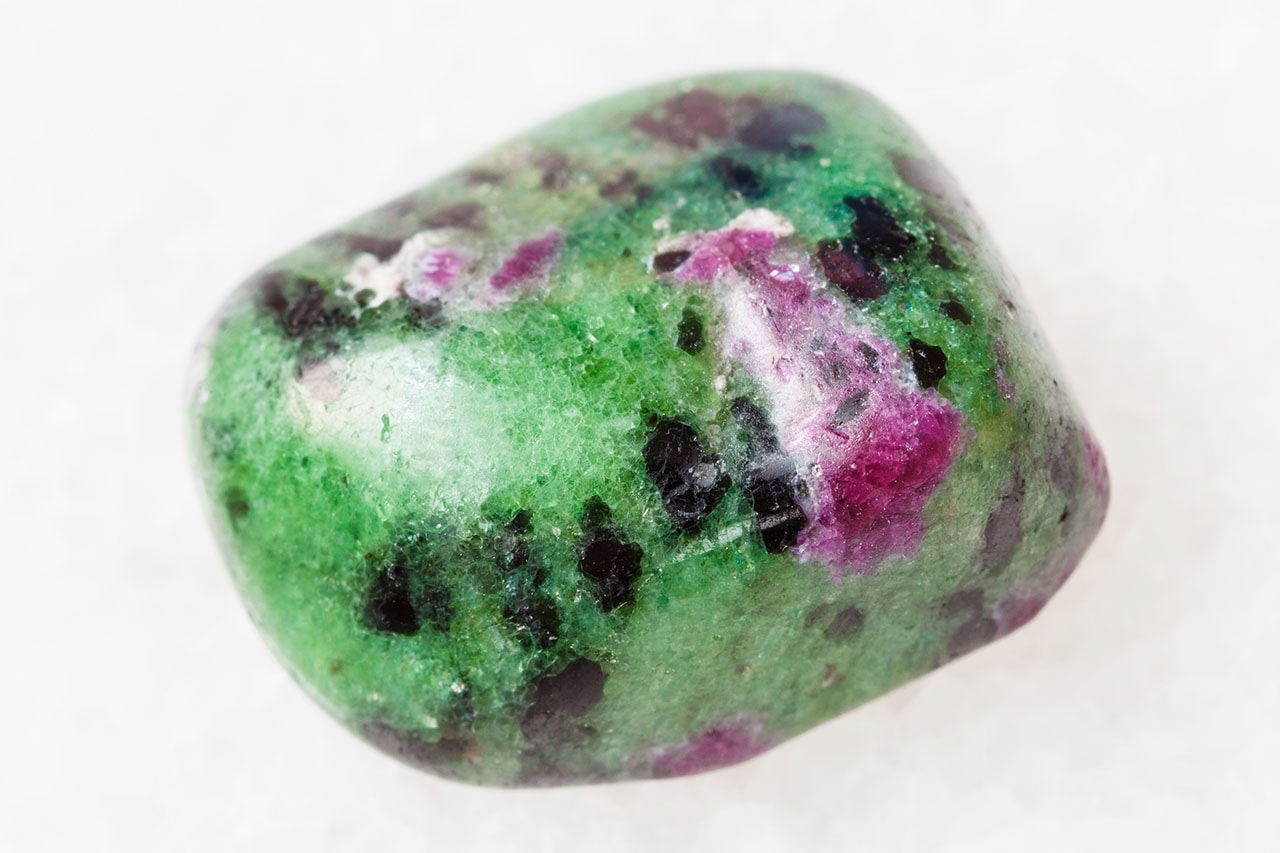
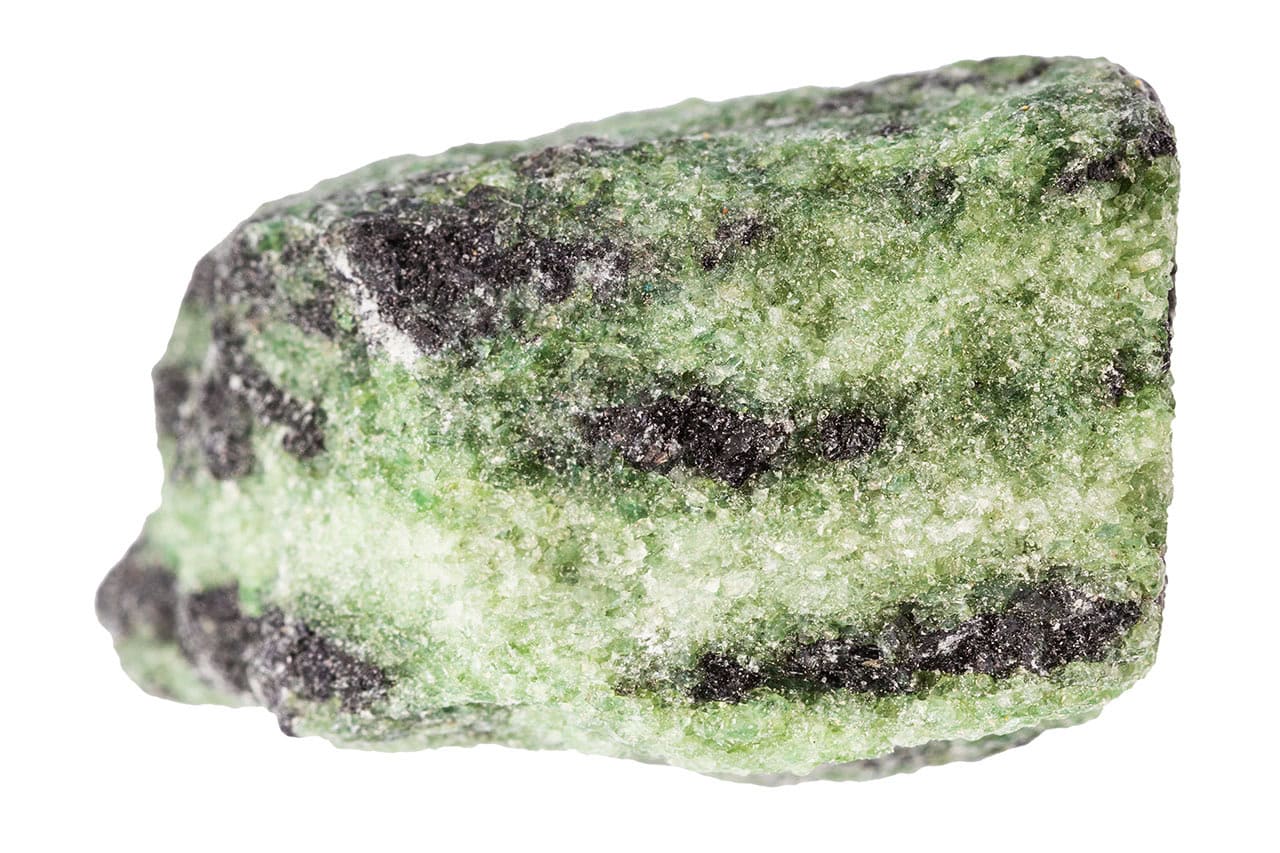
TABLE OF CONTENTS
Properties & Qualities
Physical Properties
Zoisite presents itself through remarkable diversity, its appearance so variable that its varieties were originally classified as separate minerals. The most common form appears as massive green rock, often with a sugary texture and black hornblende inclusions creating a mottled appearance. This green zoisite can range from pale pistachio to deep emerald, sometimes with areas of transparency revealing its true crystalline nature.
The pink variety, thulite, owes its color to manganese substitution and often displays a distinctive pistachio-green and pink mottling. Found primarily in Norway, thulite can achieve a translucency that makes it suitable for cabochon cutting, revealing internal patterns like abstract watercolors.
Ruby-in-zoisite, also called anyolite, creates nature's most dramatic color combination—blood-red corundum crystals embedded in bright green zoisite, often with black hornblende creating a third color element. The contrast between the ruby's hardness (9) and zoisite's relative softness (6.5-7) creates unique cutting challenges but results in spectacular ornamental stones.
Crystal formation in zoisite typically produces prismatic crystals with distinct striations, though well-formed crystals remain rare outside the tanzanite variety. The mineral's perfect cleavage in one direction can create smooth, pearly surfaces that contrast beautifully with its vitreous luster on crystal faces. Under magnification, zoisite often reveals complex internal structures recording its metamorphic journey.
Metaphysical properties
Within metaphysical circles, zoisite stands as the premier stone of transmutation—not the dramatic transformation of stones like moldavite, but the patient alchemy of turning life's base experiences into spiritual gold. Practitioners describe its energy as simultaneously activating and integrating, awakening dormant potentials while ensuring stable incorporation.
The stone's primary resonance with the heart chakra extends into what energy workers call "heart intelligence"—the wisdom that emerges when emotional and mental centers work in harmony. Green zoisite specifically strengthens this integration, making it invaluable for those whose spiritual growth has created disconnection between heart and mind.
Ruby-in-zoisite amplifies these properties dramatically, the ruby adding passionate life force to zoisite's growth energy. This combination creates what practitioners describe as "passionate detachment"—the ability to engage fully with life while maintaining spiritual perspective. The black hornblende inclusions add grounding, creating a three-way balance of passion, growth, and stability.
Modern energy workers particularly value zoisite for its ability to transmute negative energy into positive growth force. Unlike stones that simply deflect or absorb negativity, zoisite allegedly converts it into usable energy for personal development—spiritual composting that turns life's waste into fertile ground for new growth.
Meaning & Symbolism
Physical meaning
In the physical realm, zoisite embodies the principle of growth through adversity—its formation requiring specific metamorphic conditions teaches that pressure and heat, properly channeled, create beauty rather than destruction. This makes it a powerful ally for those transforming life challenges into strengths.
The mineral's color variations within single specimens symbolize the multifaceted nature of growth. Just as zoisite can be simultaneously green and pink, or contain both itself and ruby, personal development often requires holding multiple perspectives and integrating seeming contradictions into a coherent whole.
For those in transformative industries—recycling, renovation, therapy, or any field focused on positive change—zoisite provides energetic support. Its ability to maintain structure while changing form mirrors the skills needed to guide transformation without losing essential identity.
The presence of ruby in some zoisite speaks to hidden treasures within ordinary circumstances. This combination teaches that valuable discoveries often lie embedded in everyday experience, waiting for the right perspective to reveal their worth.
Spiritual meaning
Zoisite's spiritual significance centers on its role as the "Stone of Return"—not return to the past but to authentic self after life's necessary detours. Its formation through metamorphism represents the spiritual journey of maintaining essence while allowing experience to refine and transform expression.
The stone's green color connects it to the heart chakra and nature wisdom, but unlike gentle heart stones, zoisite insists on heart-centered power rather than passive love. This makes it valuable for spiritual warriors who need to act from love without becoming doormats or martyrs.
Different varieties carry specific spiritual messages. Pink thulite teaches the integration of strength and gentleness. Blue tanzanite opens higher consciousness while maintaining heart connection. Ruby-in-zoisite demonstrates that passion and peace can coexist, that fire and earth create fertile ground for spiritual growth.
The mineral's association with growth and fertility extends to spiritual creativity—the ability to birth new aspects of consciousness while nurturing existing wisdom. This makes zoisite valuable for those feeling spiritually stagnant or unable to integrate new insights with established practice.
Healing Benefits
Physical healing
Traditional healing systems have incorporated zoisite primarily for its perceived effects on fertility and reproductive health, though all applications remain within energy medicine rather than proven treatment. The stone's green color and growth associations have led to its use in supporting healthy pregnancy and easing labor, always as complement to proper medical care.
Contemporary crystal healers use zoisite for what they term "cellular regeneration support," placing stones on areas needing healing during energy sessions. The combination of ruby-in-zoisite is particularly valued, with practitioners believing the ruby adds life force to zoisite's growth energy, potentially supporting recovery from illness or surgery.
The stone's transmutation properties have led to its use in detoxification support, with healers creating gem elixirs using the indirect method. Some practitioners use zoisite in layouts designed to support the immune system, believing its energy helps the body distinguish between what to eliminate and what to integrate.
Energy workers report using different colored varieties for specific purposes: green for general healing and growth, pink thulite for heart and circulation support, and ruby-in-zoisite for vitality and life force enhancement. All uses emphasize zoisite's role as a supportive rather than primary healing tool.
Emotional healing
The emotional healing properties of zoisite center on its ability to transform stuck emotional patterns into growth opportunities. Therapists who incorporate crystals describe it as particularly effective for clients who intellectually understand their patterns but struggle to create actual change.
For those dealing with grief that has calcified into depression, zoisite provides gentle activation. Its growth energy doesn't rush the grieving process but prevents stagnation, helping mourners honor their loss while gradually opening to new life possibilities.
The stone excels at healing what practitioners call "either/or wounds"—the belief that we must choose between aspects of self. Zoisite's varied colors within single specimens demonstrate that we can be simultaneously strong and gentle, passionate and peaceful, grieving and grateful.
Ruby-in-zoisite specifically addresses passion wounds—disappointments that have led to shutting down life force rather than redirecting it. The ruby rekindles passion while zoisite ensures it flows constructively, preventing the burnout that comes from undirected fire.
Spiritual healing
In spiritual healing contexts, zoisite functions as what practitioners call a "dharma activator"—awakening understanding of life purpose and providing energy to pursue it. This differs from stones that simply reveal purpose; zoisite insists on action aligned with recognition.
Advanced energy workers utilize zoisite for soul retrieval specific to life purpose—recovering parts of self abandoned when following others' expectations rather than authentic path. The stone's growth energy helps these retrieved aspects integrate and flourish rather than remaining dormant.
For those experiencing spiritual crisis or dark night of the soul, zoisite provides hope without bypassing necessary shadow work. Its transmutation properties help convert spiritual suffering into wisdom, ensuring that difficult passages yield growth rather than just endurance.
The stone's ability to work with both heart and mind makes it valuable for integrating spiritual experiences that the rational mind rejects. Zoisite helps build bridges between mystical experience and practical life, preventing the split between spiritual and mundane that can lead to dysfunction.
Use & Care
How to use
- Heart chakra activation: Lie down and place green zoisite on heart center
- Life purpose meditation: Hold while contemplating authentic path
- Growth ritual: Include in ceremonies for new beginnings
- Fertility support: Keep in bedroom when trying to conceive
- Creative projects: Place in workspace to transform ideas into reality
- Garden enhancement: Bury small pieces to support plant growth
- Recovery support: Carry during healing from illness or trauma
- Passion renewal: Work with ruby-in-zoisite to rekindle life force
- Dream activation: Place under pillow for growth-oriented dreams
- Relationship healing: Use pink thulite for heart connection work
- Daily transformation: Wear to maintain growth mindset
- Shadow work: Hold during therapy for integrated healing
How to cleanse
- Running water: Hold under cool running water with intention
- Earth connection: Place on soil or grass for natural cleansing
- Smoke cleansing: Pass through sage or palo santo smoke
- Sound clearing: Use bells or Tibetan bowls for vibrational cleansing
- Moonlight bathing: Leave under any moon phase overnight
- Plant partnership: Place near healthy plants for mutual clearing
- Breath work: Exhale stagnant energy while holding stone
- Selenite charging: Rest on selenite for high-vibration clearing
- Visualization: Imagine green light flowing through and cleansing
- Regular maintenance: Cleanse weekly when using for active growth work
How to charge
- Sunlight charging: Morning sun for 1-2 hours maximum
- Plant charging: Place among growing plants for life force energy
- Earth burial: Bury in rich soil for 24 hours
- Spring water: Sprinkle with natural spring water
- Growth visualization: Hold while imagining verdant growth
- Crystal cluster: Place on clear quartz or amethyst
- Heart breathing: Breathe love and growth intentions into stone
- Garden ritual: Charge during planting or harvesting
- Green candle: Place near green candle for growth activation
- Affirmation charging: Speak growth affirmations while holding
Combining with other stones
- Ruby: Amplifies passion and life force (naturally occurs together)
- Clear Quartz: Enhances all zoisite properties and adds clarity
- Green Aventurine: Increases growth and opportunity recognition
- Rose Quartz: Softens intensity for gentle heart healing
- Garnet: Strengthens manifestation and grounding
- Prehnite: Enhances connection to nature wisdom
- Moldavite: Accelerates transformation—use cautiously
- Black Tourmaline: Grounds growth energy and adds protection
- Citrine: Adds joy and abundance to growth process
- Serpentine: Enhances kundalini activation and energy flow
Identification
Can be mistaken for
- Epidote: Similar green color but different crystal structure
- Actinolite: Green variety can look similar but different properties
- Jade: Massive green zoisite sometimes mistaken for jade
- Aventurine: Green varieties can appear similar
- Maw Sit Sit: Contains similar minerals but different composition
- Diopside: Chrome diopside can resemble green zoisite
- Fuchsite: Green mica sometimes confused with green zoisite
- Prasiolite: Green quartz can look similar to transparent zoisite
How to spot a fake
- Texture examination: Natural zoisite has granular or fibrous texture
- Color distribution: Look for natural variations, not uniform color
- Weight check: Genuine zoisite has moderate weight (SG 3.10-3.38)
- Hardness test: Should scratch glass (6.5-7 hardness)
- Ruby inclusions: In anyolite, rubies should show natural crystal form
- Temperature feel: Natural stone stays cool longer than synthetics
- Price consideration: Ruby-in-zoisite affordable; if too cheap, suspect
- UV test: Some varieties show fluorescence patterns
- Cleavage check: Look for characteristic perfect cleavage in one direction
- Source verification: Buy from dealers who provide locality information