Yes. Settle two things about the object: how it looks from every side, and what was done to it before it reached the shop. The first you settle before you buy. The second has to travel with the gift, or it is lost the moment you hand it over.
There is a desert rose on my shelf that I bought out of a friend’s own collection for $50. That is the trade name for a bladed rosette that grows in sediment, and this one is warm reddish sand, wide enough to need both hands, much lighter than it looks.
It works from every side. The blades open outward all the way round, so wherever you happen to stand it reads as a fully opened flower, and that one property is why it would be the piece I gave away rather than any of the others. Almost everything else I own has a best face. The owner either finds it or lives for years with the back of a stone pointed at the room.
In a shop the problem is invisible, because you are holding the piece and turning it as you look. It appears the moment the object is set down on somebody else’s shelf and left alone.
Turn it all the way round
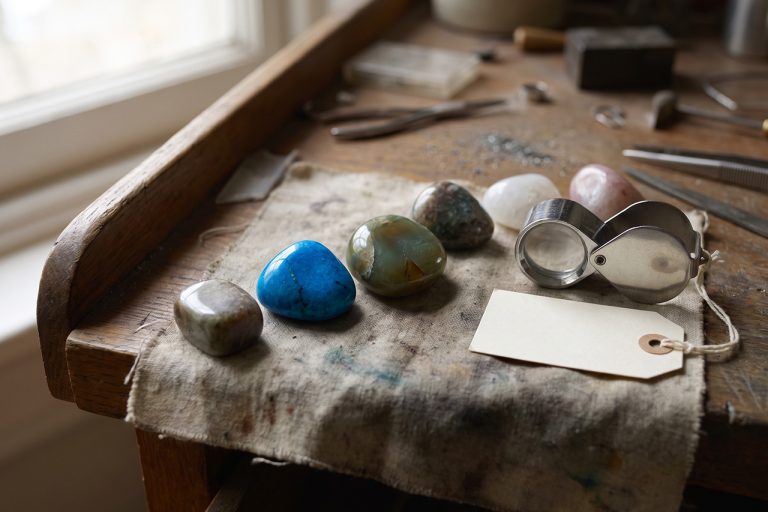
A cluster with a flat unfinished back is designed to sit against something, and on a round table in the middle of a room it will be wrong three days a week. That is the sort of thing a slow rotation catches and a glance does not, so find the angle the piece is worst from and ask whether the person receiving it will be looking at that angle. A tumbled stone has no bad angle at all, which is one reason a pocket-sized tumble is the safest thing on the shelf to give, quite apart from its price. Spheres come close behind, since a sphere has no orientation to get wrong, and a tower has one obvious one.
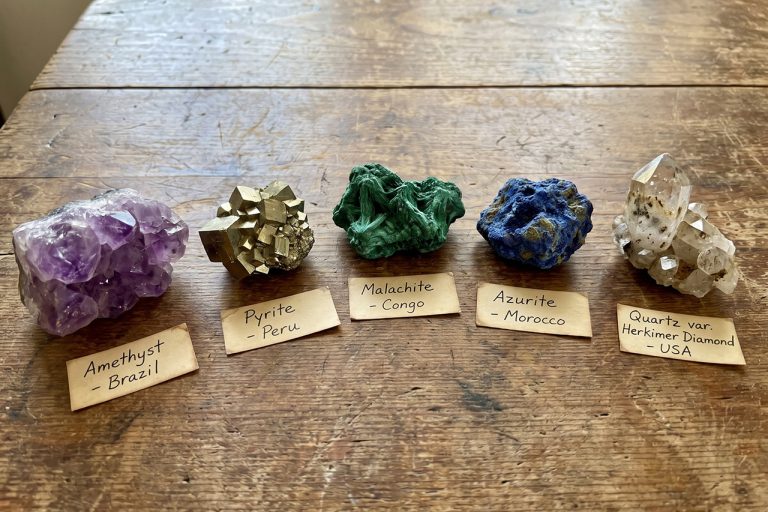
Raw specimens are where the risk sits and also where the good gifts are. A raw piece that survives being turned is a better object than a polished one that only works from the front, and fifteen seconds in the shop tells you which one you have in your hand.
Whatever was done to it has to travel with it
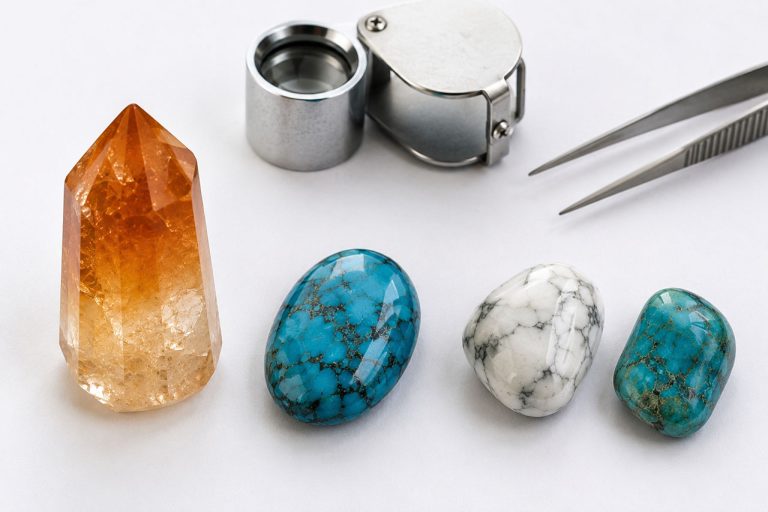
GIA’s page on gem treatments is direct about the disclosure side: “it is necessary and legally required for anyone selling a gem (including consumer to consumer trade) to disclose the treatment procedure.” Consumer to consumer. Handing a stone to your sister is inside that sentence.
The reason it is written that way is not paperwork. Treatments, GIA says, “can be permanent, long lasting, or short-lived under normal jewelry use”, and the practical consequence follows in one line: “Treated gems may require special care by their owner.” An owner who was never told is an owner who cannot give that care. They will put the piece on a bathroom shelf, or under a running tap when it looks dusty, and the object gives no sign either way.
That is the argument for finding out at the counter, while somebody is there to answer. Then say it when you hand the stone over, in ten words, and it is done. If the shop cannot tell you, buy something plainer and give that with a clear conscience. An untreated tumbled carnelian is a perfectly good present, and it needs no instructions at all.
Framing beats choosing
The worries that sit under this question are worries about a person.
Will this read as thoughtful or as odd? Will my friend think I am telling her something about her life? Is it strange to give a religious colleague a stone with a chakra, an energy centre in the body, printed on the tag? Those are the questions, and every one of them is about framing.
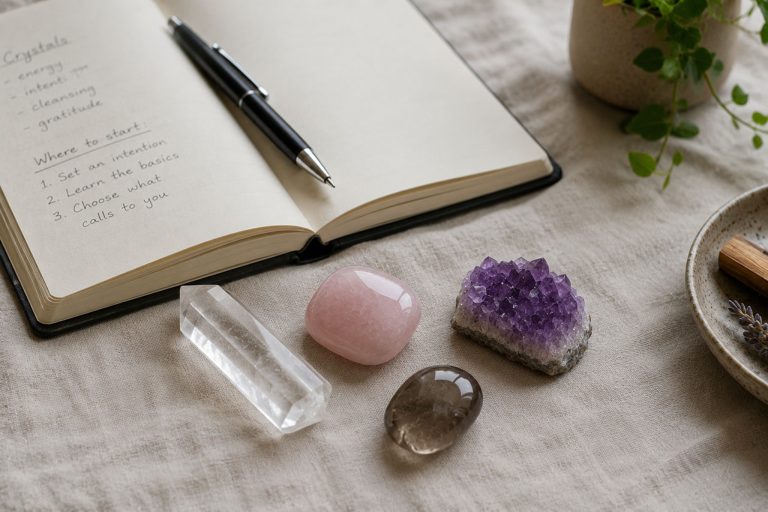
The framing that works is almost embarrassingly plain. Hand it over as an object. I saw this and thought of you. That sentence commits the recipient to believing nothing, asks them to take up no practice, and leaves them free to like it as a pretty rock, which is what many people will do. Handing something over with an account of what it will do for them puts the other person in the position of having to respond to a claim, and that is a heavier thing to receive than a stone.
If they want the other layer they will ask, and then you can tell them everything you know.
When to give something else
Someone with a stated religious position that conflicts with crystal practice should get something else rather than a carefully framed stone. No framing gets past a real objection, and the attempt lands worse than the gift would have.
Small children in the house change the answer too. I keep a raw black obsidian, chunky rather than long, and some of the fracture edges on it are still sharp enough to open a finger. Mine did, once, while I was photographing it. The National Park Service describes obsidian as a volcanic glass whose rapid cooling gives it a conchoidal fracture that “allows for easy flaking and sharp edges”. People made blades out of it for that reason. It is also why a raw piece is a poor thing to leave within reach of a two-year-old. Polished obsidian is a different object and perfectly fine.
And a stone bought in three minutes at an airport, on the way to the thing, carries less than you think. That is the ordinary problem with any gift chosen in three minutes. A specimen shows it more than most, because the appeal of a specimen is that somebody looked at it properly.
Two minutes in the Crystalance Mineral Library gets you the hardness and the water behaviour for whatever you are holding, and that is the difference between a gift with instructions and a gift without.
Then hand it over with the one sentence about what was done to it. That is the part they cannot get anywhere else.