Almandine
Silicate (Nesosilicate - Garnet group)
Deep red, brownish-red, purplish-red, black-red
Vitreous to resinous
7 - 7.5
4.05 - 4.32
Isometric (cubic)
India, Sri Lanka, Brazil, USA, Madagascar, Austria
Common
Fe₃Al₂(SiO₄)₃ (Iron aluminum silicate)
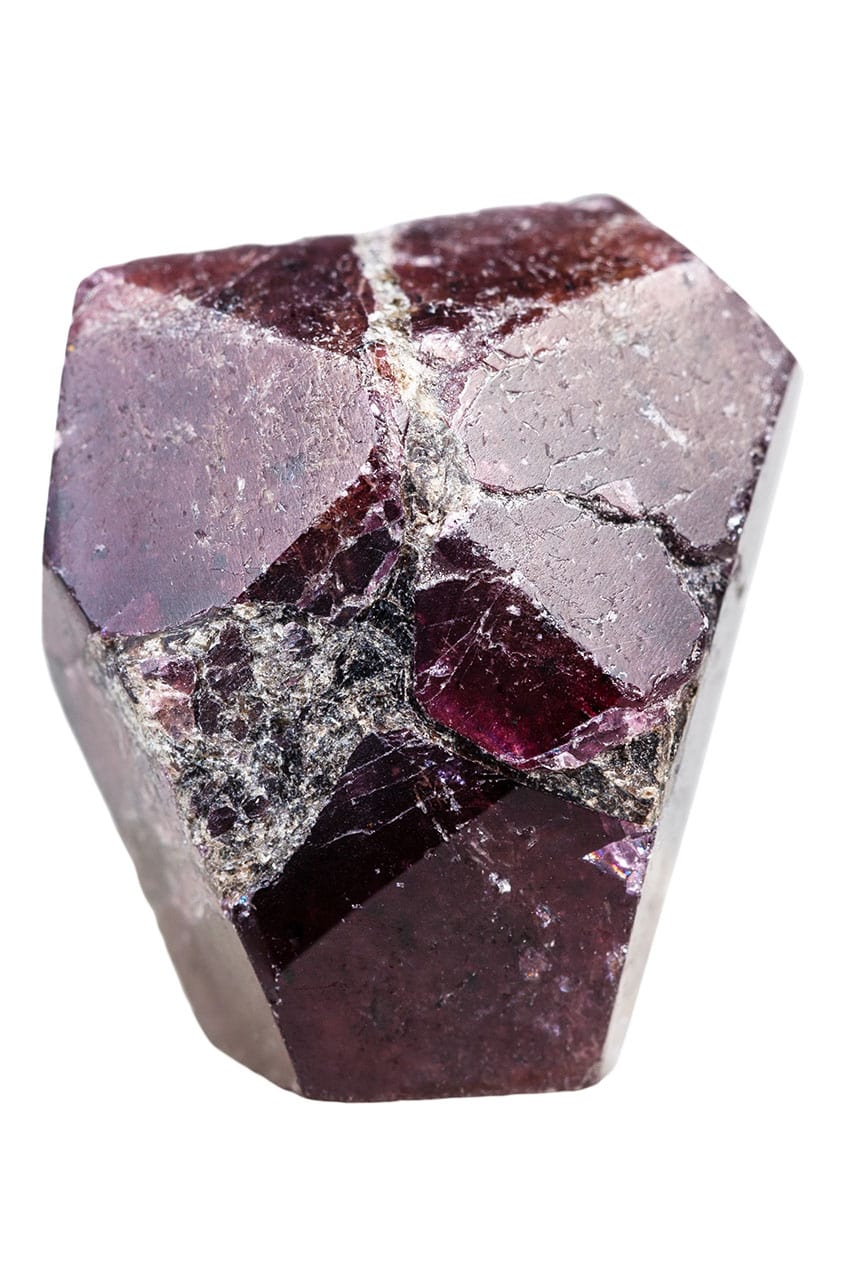
In the ancient gem markets of India, where garnets have been treasured for over five thousand years, almandine earned its name from the city of Alabanda in Asia Minor—a renowned cutting center where these deep red gems were shaped into the cabochons and carved intaglios that adorned Roman nobility. This iron-rich member of the garnet family, displaying colors from wine-dark burgundy to near-black crimson, has served humanity as a stone of protection and passion since the Bronze Age.
Warriors throughout history have carried almandine into battle, believing its blood-red color would protect them from wounds while granting courage in combat. Anglo-Saxon kings were buried with almandine-studded regalia, while medieval clergy set these garnets into ecclesiastical rings, believing they represented Christ's sacrifice. These traditions hint at almandine's deeper truth—its ability to connect us to life force, courage, and the willingness to sacrifice for what matters.
Today, while gem-quality almandine competes with other red stones in jewelry markets, its metaphysical significance has grown as modern seekers rediscover its grounding yet energizing properties. Unlike lighter garnets that stimulate, almandine anchors—providing the stable foundation from which passion can safely express. In an age of scattered energy and disconnected living, almandine offers the warrior's path: grounded strength in service of heartfelt purpose.
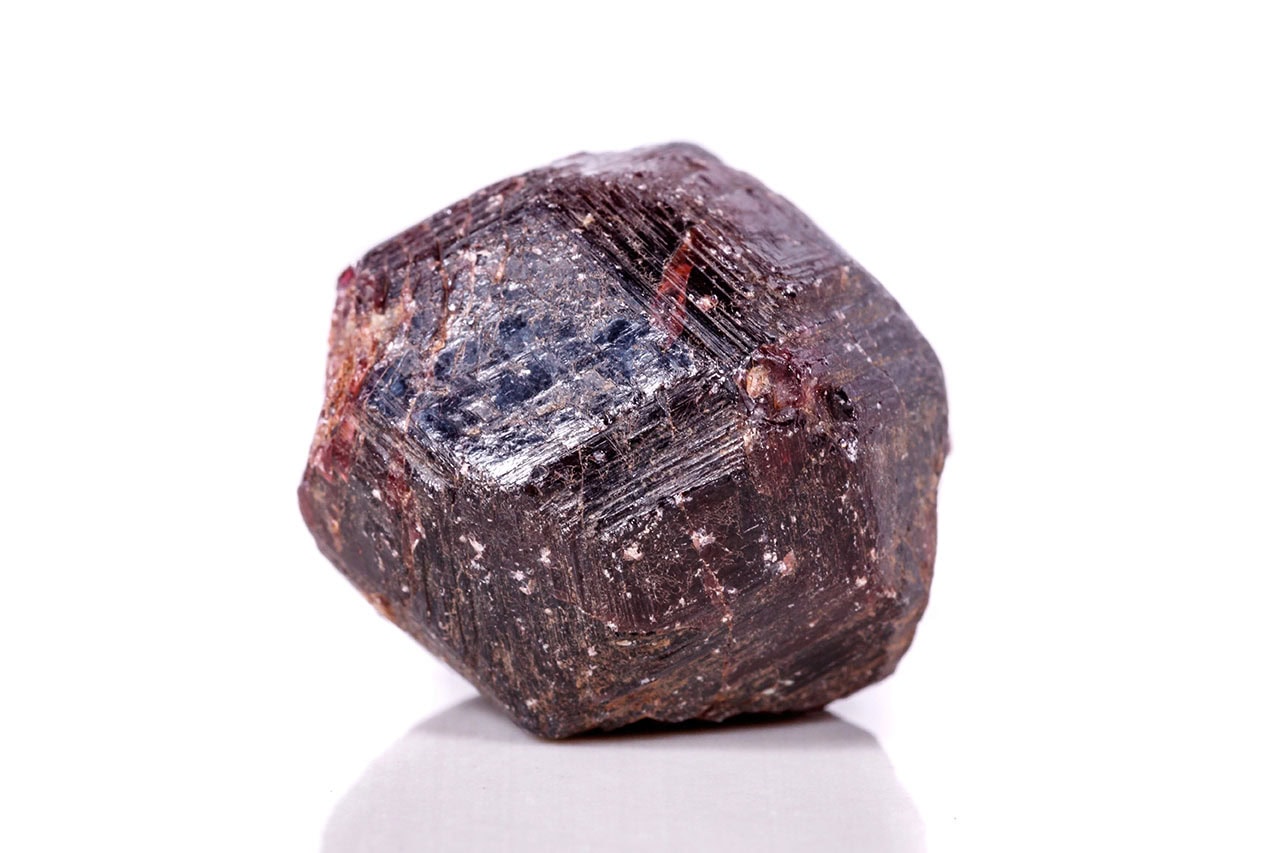
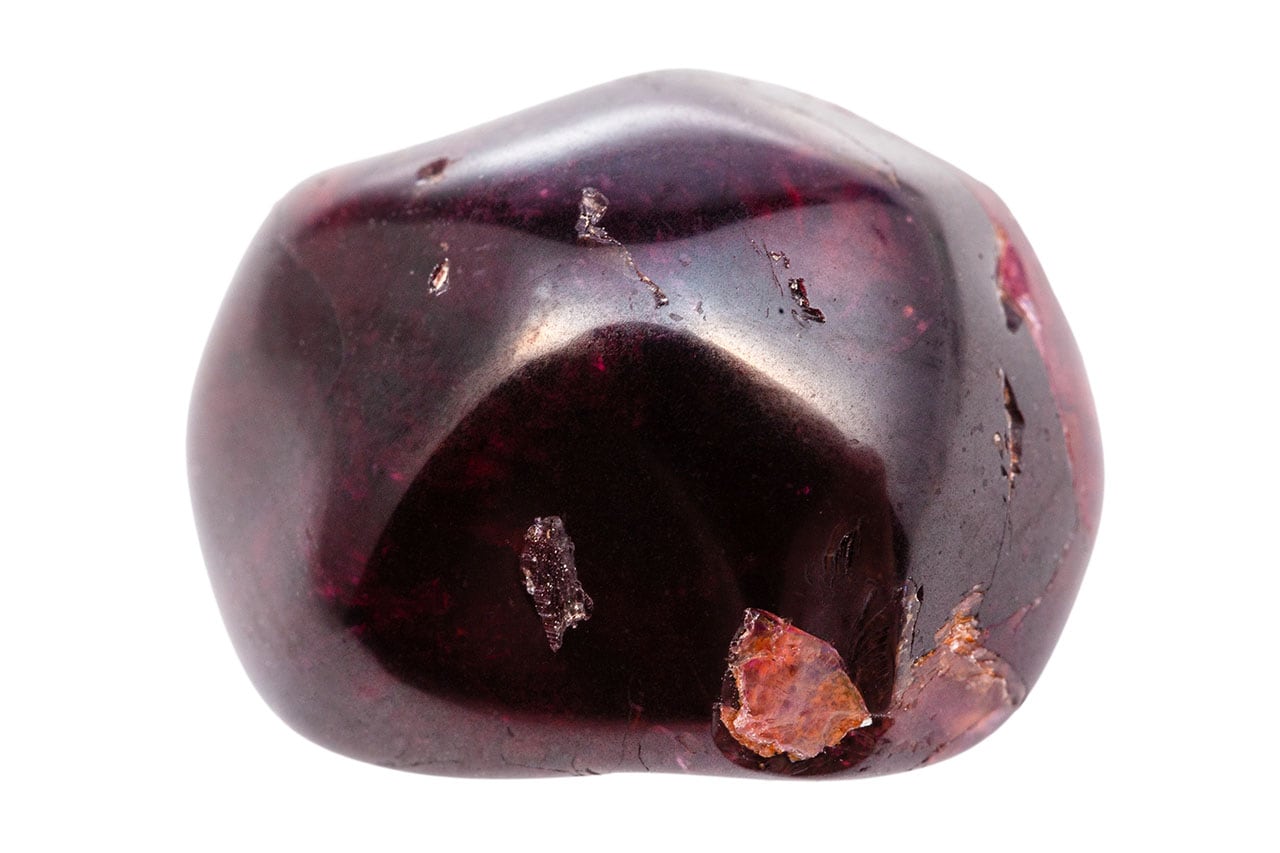
TABLE OF CONTENTS
Properties & Qualities
Physical Properties
Almandine captivates through its deep, saturated red coloration that can appear almost black in larger specimens. This darkness results from high iron content absorbing light, creating the characteristic "wine red" that distinguishes almandine from lighter pyrope or orange spessartine garnets. The finest specimens display rich burgundy with hints of purple, while lower grades show brownish or muddy tones.
Crystal formation typically produces the classic garnet dodecahedron—twelve-sided crystals with rhombic faces—or trapezohedrons with twenty-four faces. Many specimens show combinations of both forms, creating complex geometries that catch light from multiple angles. Some almandines grow to impressive sizes, with crystals exceeding several inches common in certain localities.
The mineral's high refractive index creates good brilliance in cut stones, though the dark color can limit light return in larger gems. Star almandines, displaying four-rayed asterism from oriented rutile inclusions, represent prized collector specimens. Some almandines show color-change properties, appearing different hues under incandescent versus daylight illumination.
Almandine's hardness and lack of cleavage make it exceptionally durable for jewelry, surviving daily wear that would damage softer stones. This toughness, combined with its deep color, made almandine popular for signet rings and seals throughout history—practical beauty that served functional purposes while adorning its wearer.
Metaphysical properties
Within metaphysical circles, almandine stands as the premier stone of grounded passion and protective strength, its deep red energy described as "root chakra fire"—vital force anchored firmly in earth rather than scattered into air. Practitioners note that almandine works differently than lighter red stones, providing sustainable energy rather than quick stimulation.
The stone's primary resonance with the root chakra creates profound grounding while simultaneously activating life force. This combination distinguishes almandine from purely grounding stones or purely energizing ones—it provides both stability and vitality, making it invaluable for those who need to act powerfully from a secure foundation.
Ancient traditions recognized almandine as a warrior's stone, but this extends beyond physical combat to any situation requiring courage, endurance, and commitment. Modern practitioners use almandine for challenging projects, difficult conversations, and any endeavor requiring sustained effort over time. Its energy supports marathon rather than sprint.
The stone's protective qualities operate through strength rather than shielding. Unlike stones that create barriers, almandine allegedly strengthens the wearer's own energy field to the point where negativity cannot penetrate. This active protection builds resilience rather than dependence on external shields.
Meaning & Symbolism
Physical meaning
In the physical realm, almandine embodies the principle of strength through density—its high specific gravity and iron content create a stone that feels substantial and grounded. This weight represents the commitment and gravitas needed for significant achievement, teaching that lasting success requires solid foundation.
The mineral's formation in metamorphic rocks under intense pressure and heat demonstrates how challenges create strength. Just as almandine crystallizes through geological stress, human character often develops most fully through difficulty. This makes almandine an ally for those facing challenging circumstances.
For those in demanding physical professions—athletes, first responders, manual laborers—almandine provides energetic support for sustained effort. Its connection to blood and iron resonates with physical vitality, while its grounding prevents the burnout that comes from unanchored exertion.
The stone's historical use in signet rings and seals connects it to authority and commitment. Just as seals made agreements binding, almandine helps seal our commitments to ourselves and others, providing the follow-through that transforms intention into accomplishment.
Spiritual meaning
Almandine's spiritual significance centers on its role as "The Warrior's Heart Stone," teaching that true spiritual strength combines courage with compassion, power with purpose. Its deep red color represents not aggression but the willingness to sacrifice for what matters—the warrior who fights for love rather than conquest.
The stone's iron content connects it to Mars energy and the spiritual warrior archetype, but almandine's grounding influence tempers martial fire with earth wisdom. This creates what some call "wise warrior" energy—the ability to fight when necessary while knowing when to yield, to protect without aggression.
Different spiritual traditions interpret almandine's blood-red color as representing life force itself—the sacred current that animates all living beings. Working with almandine allegedly strengthens connection to this universal life force, increasing vitality while deepening appreciation for life's preciousness.
The mineral's cubic crystal system connects to earth element and material manifestation, teaching that spiritual purpose must ground into physical action to fulfill its potential. Almandine helps translate spiritual vision into earthly achievement, bridging heaven and earth through committed action.
Healing Benefits
Physical healing
Traditional healing applications for almandine focus on its iron content and blood-red color, creating associations with circulatory health and vitality. Ancient healers placed almandine on wounds believing it would stop bleeding, while medieval physicians prescribed garnet elixirs for blood disorders—practices reflecting intuitive understanding of iron's importance.
Contemporary crystal healers use almandine for what they term "blood building" and vitality enhancement, placing stones on the root chakra or lower abdomen during sessions focused on increasing physical energy. The iron association extends to supporting healthy red blood cell formation, though effects remain within energy medicine.
Some practitioners create almandine elixirs using the indirect method for general vitality support. These preparations are used for fatigue, recovery from illness, or periods of high physical demand. The stone's grounding properties allegedly help the body use energy efficiently rather than scattering it.
The stone's connection to the root chakra has led to its use in addressing issues with legs, feet, and lower body. Energy workers place almandine at the base of the spine during sessions aimed at improving circulation to extremities or supporting structural health of the lower body.
Emotional healing
The emotional healing properties of almandine center on building emotional strength and resilience rather than providing comfort. Therapists who incorporate crystals describe almandine as particularly effective for clients who need to develop inner resources rather than rely on external support.
For those dealing with fear—whether of failure, rejection, or the unknown—almandine provides courage rooted in self-trust. Unlike stones that calm fear, almandine helps face it directly, building confidence through action rather than avoidance. This warrior approach to emotional healing appeals to those ready for active engagement.
The stone excels at healing what practitioners call "root chakra wounds"—early experiences that created feelings of unsafety, instability, or lack of belonging. Almandine's grounding energy helps rebuild the foundation of security from which emotional health grows, addressing causes rather than symptoms.
Almandine's connection to passion makes it valuable for those who've become emotionally numb or disconnected from desire. Its deep red energy rekindles the fire of wanting, helping those who've given up on dreams to reconnect with what truly matters to them.
Spiritual healing
In spiritual healing contexts, almandine functions as what practitioners call a "spiritual spine"—providing the structural support needed for challenging spiritual work. This makes it invaluable for practices requiring sustained effort, discipline, and commitment over time.
Advanced practitioners utilize almandine for healing first chakra damage from survival trauma—experiences that shattered basic trust in life's safety. The stone's grounding combined with protective qualities helps rebuild the energetic foundation necessary for higher spiritual development.
For those whose spiritual practice has become ungrounded—excessive focus on upper chakras, difficulty functioning in daily life, or spiritual bypassing of practical needs—almandine provides necessary correction. Its earth energy insists that spiritual growth includes rather than escapes material existence.
The stone's warrior associations make it valuable for spiritual protection work, particularly for those facing psychic attack or working in challenging energetic environments. Almandine strengthens the aura through vitality rather than shielding, creating resilience that doesn't require constant maintenance.
Use & Care
How to use
- Root chakra grounding: Place at base of spine during meditation
- Courage talisman: Carry when facing challenging situations
- Physical vitality: Wear during exercise or demanding activities
- Protection amulet: Wear continuously for strength-based protection
- Commitment ritual: Hold while making important commitments
- Blood building: Place on lower abdomen for vitality work
- Grounding meditation: Hold in both hands for deep anchoring
- Warrior practice: Include in martial arts or strength training
- Sleep grounding: Place at foot of bed for stable rest
- Decision support: Hold when making difficult choices
- Passion rekindling: Wear to reconnect with desires
- Daily strength: Carry as touchstone for ongoing support
How to cleanse
- Earth burial: Bury in soil for 24 hours for deep cleansing
- Running water: Hold under cool running water
- Salt cleansing: Place in dry sea salt overnight
- Smoke clearing: Pass through sage or cedar smoke
- Sound vibration: Use drums or deep singing bowls
- Moonlight: Leave under dark or new moon
- Sunlight brief: Short sun exposure for activation
- Breath work: Exhale forcefully while holding stone
- Root chakra sound: Use 396 Hz frequency
- Regular cleansing: Clean weekly with heavy use
How to charge
- Earth charging: Direct contact with soil overnight
- Sunrise exposure: Charge at dawn for vitality
- Physical activity: Carry during exercise to charge
- Fire proximity: Place safely near candle flame
- Root vegetables: Bury with beets or other red roots
- Blood moon: Charge during lunar eclipse
- Mars timing: Charge on Tuesdays for warrior energy
- Iron contact: Place near iron objects for resonance
- Movement charging: Dance or exercise while holding
- Commitment ritual: Charge while stating intentions
Combining with other stones
- Black Tourmaline: Enhances grounding and protection
- Hematite: Deepens earth connection and blood support
- Red Jasper: Increases physical stamina and endurance
- Smoky Quartz: Helps transmute dense energies
- Carnelian: Adds creative fire to grounded passion
- Bloodstone: Enhances vitality and courage
- Obsidian: Supports shadow work with protection
- Ruby: Amplifies passion and life force
- Clear Quartz: Amplifies almandine's properties
- Pyrite: Adds manifestation power to grounded action
Identification
Can be mistaken for
- Pyrope Garnet: Lighter red, less iron content
- Rhodolite: Purple-red garnet variety
- Spessartine: Orange to red-orange garnet
- Red Spinel: Similar color but different properties
- Ruby: Much harder and more valuable
- Red Tourmaline: Different crystal structure
- Red Zircon: Higher brilliance and fire
- Synthetic Garnet: Lab-created versions exist
How to spot a fake
- Specific gravity: Real almandine notably heavy (4.05-4.32)
- Hardness test: Should scratch glass easily (7-7.5)
- Color depth: Natural shows deep, wine-red color
- Inclusion inspection: Natural contains characteristic inclusions
- Crystal form: Look for dodecahedral or trapezohedral shapes
- No cleavage: Garnet lacks cleavage, shows conchoidal fracture
- Temperature: Natural stays cool longer than glass
- Price appropriate: Common garnet, should be affordable
- Refractive index: Single refraction (isotropic)
- UV reaction: Most almandine inert under UV