Erythrite
Arsenate
Crimson, pink, purple-pink, gray when weathered
Vitreous to pearly, dull when weathered
1.5 - 2.5
3.06 - 3.18
Monoclinic
Morocco, Germany, Canada, USA, Australia
Uncommon
Co₃(AsO₄)₂·8H₂O (Hydrated cobalt arsenate)
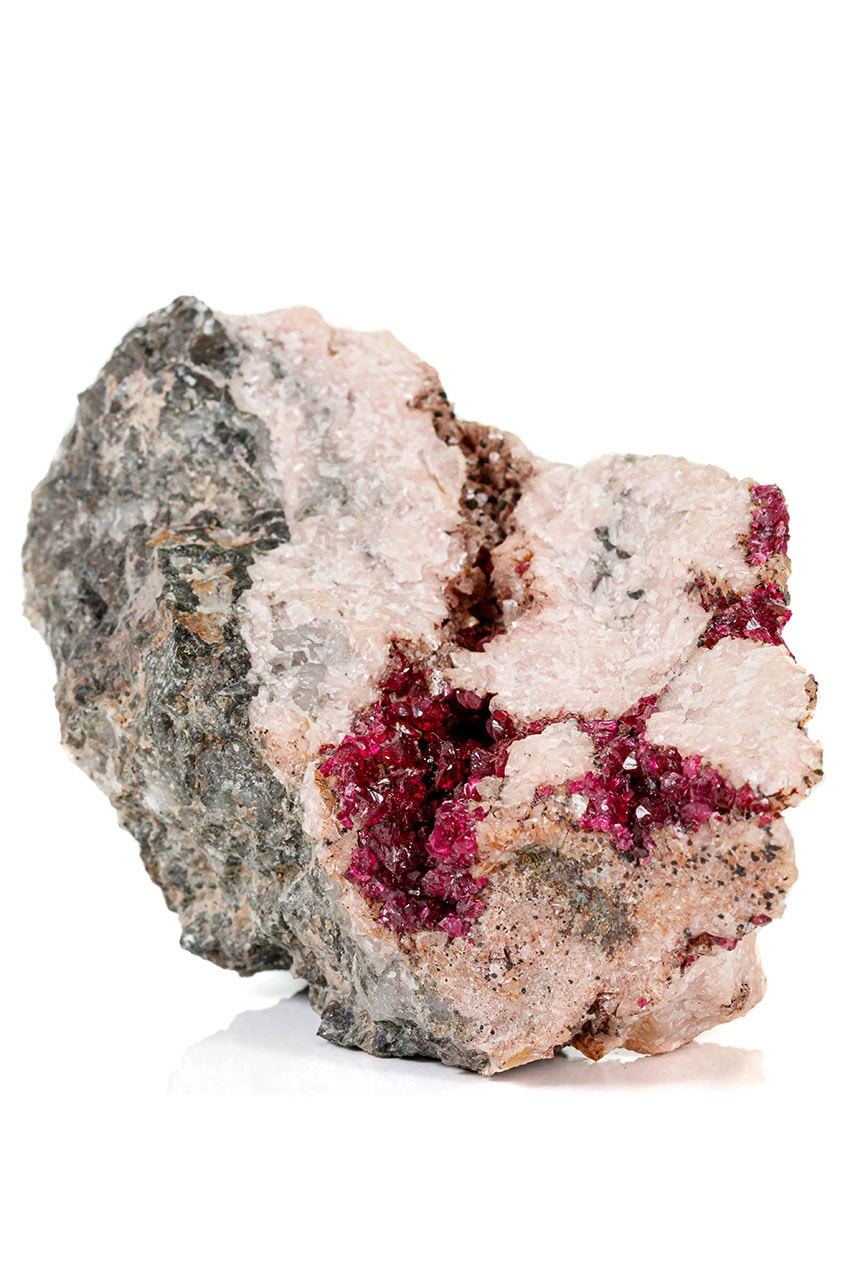
In the oxidation zones of cobalt-bearing ore deposits, nature creates one of its most delicate treasures—erythrite, whose crimson to pink crystals earned it the poetic name "cobalt bloom." This hydrated cobalt arsenate forms as a secondary mineral when primary cobalt ores weather, creating powdery coatings and rare crystalline clusters that seem to blush with their own inner light.
Known to miners as an indicator of cobalt deposits, erythrite served practical purposes long before its metaphysical properties were recognized. Its presence signaled valuable cobalt ores below, while its striking color made it useful as a pigment, though its arsenic content limited such applications. The name derives from the Greek "erythros" meaning red, perfectly capturing the rose-like hues that make specimens so visually striking.
Today, while collectors prize erythrite for its beauty and rarity, metaphysical practitioners have discovered its profound effects on emotional healing and self-love. Its delicate nature—soft, water-soluble, and requiring careful handling—mirrors its energetic properties of gentle yet powerful heart activation. In an age where self-criticism runs rampant, erythrite emerges as a teacher of radical self-compassion, though its toxicity requires respect and proper handling.
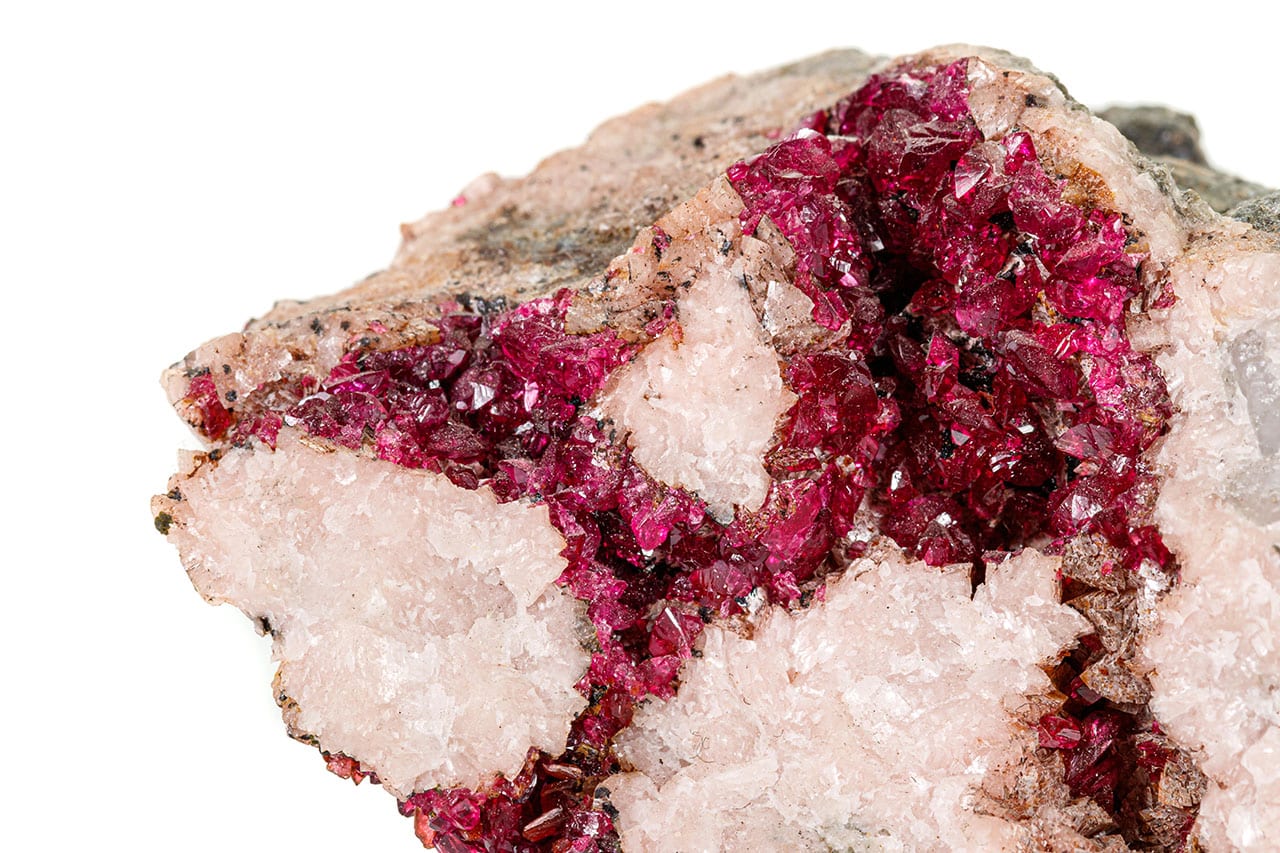
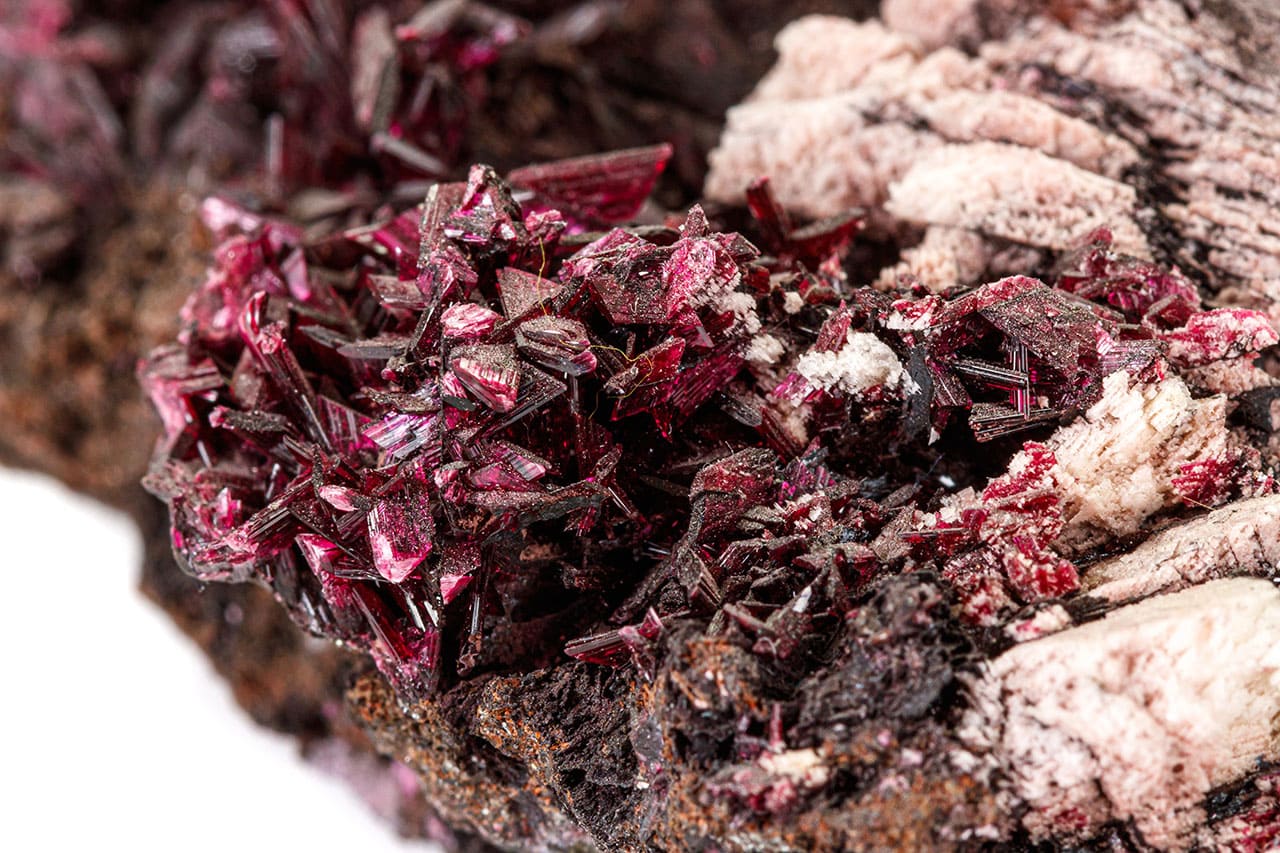
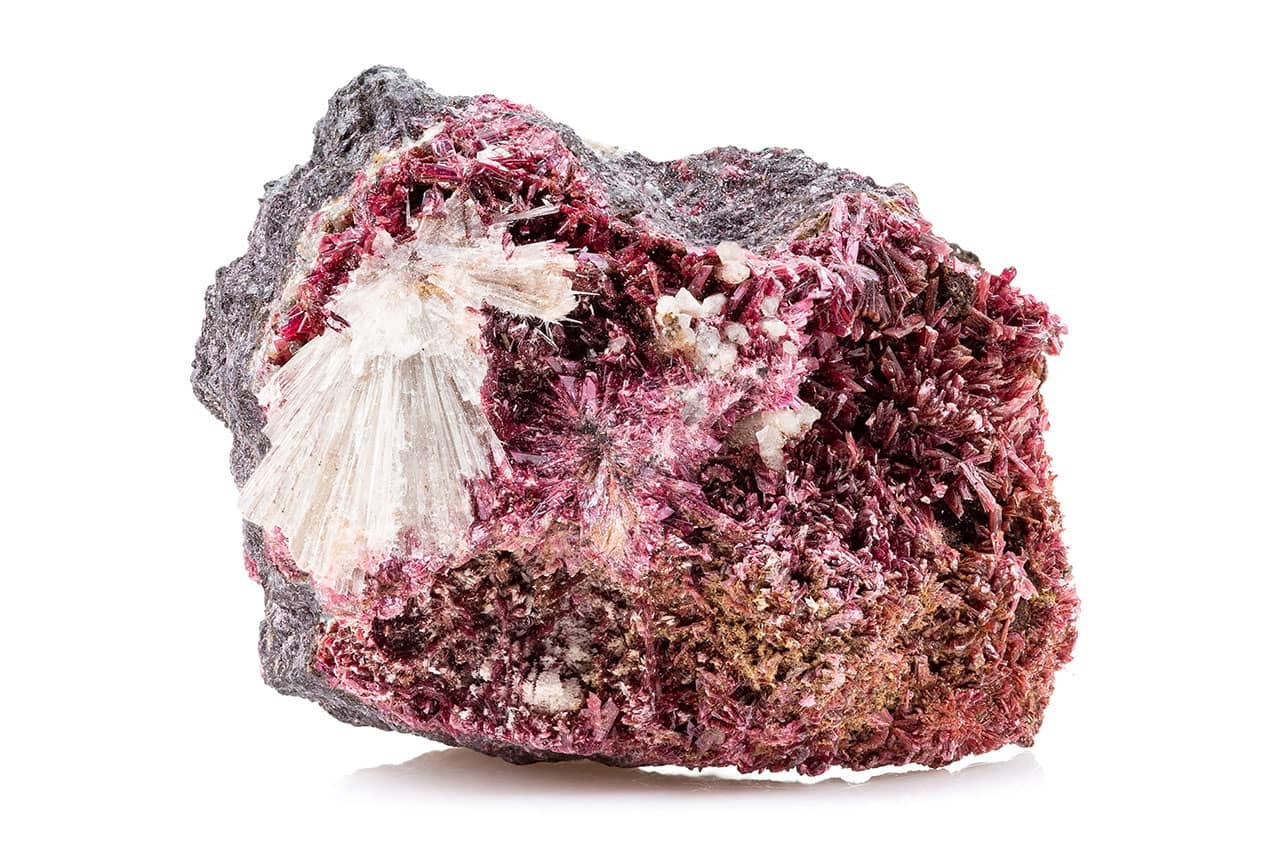
TABLE OF CONTENTS
Properties & Qualities
Physical Properties
Erythrite captivates through its distinctive pink to crimson coloration, ranging from pale rose to deep magenta depending on cobalt content and hydration state. Fresh specimens display vivid colors with pearly to vitreous luster, while exposure to air gradually transforms them to gray or pale pink as they dehydrate. This color transformation serves as a metaphor for the importance of nurturing what we wish to preserve.
Crystal formation typically produces acicular (needle-like) to prismatic crystals, often in radiating groups or crusty coatings on matrix rock. Well-formed crystals remain rare, with most erythrite occurring as earthy masses or powdery "blooms" on other cobalt minerals. The finest crystalline specimens come from Morocco and Germany, where conditions allowed slower crystallization.
The mineral's extreme softness and perfect cleavage make it among the most fragile specimens in collections. Combined with its water solubility, this requires special storage conditions—low humidity, stable temperatures, and minimal handling. Some collectors seal specimens to prevent dehydration, though this remains controversial among purists.
Under magnification, erythrite reveals its monoclinic crystal structure through striated faces and complex terminations. Some specimens show color zoning from pink cores to paler edges, recording changing conditions during formation. The pearly luster on cleavage faces creates an almost organic appearance, as if the crystals were flower petals rather than minerals.
Metaphysical properties
Within metaphysical circles, erythrite stands as a powerful yet gentle activator of self-love and emotional courage, though its toxicity requires it be used with extreme caution—typically in sealed containers or through distance work. Practitioners describe its energy as "concentrated divine mother love," providing the nurturing many lacked in childhood.
The stone's primary resonance with the heart chakra manifests as warm, enveloping energy that feels like an energetic hug. Unlike forceful heart openers, erythrite works through gentle persistence, slowly dissolving self-criticism and negative self-talk that blocks the ability to receive love. This makes it valuable for those whose hearts closed through criticism rather than trauma.
Due to its arsenic content, erythrite is never used in direct contact but rather as a meditation focus or altar piece behind glass. Even in sealed form, sensitive individuals report feeling its distinctive energy—a combination of strength and tenderness that characterizes healthy self-love. This "distance healing" aspect makes erythrite unique among crystals.
Modern practitioners value erythrite for addressing what they term "emotional anemia"—the depletion that comes from constantly giving without receiving. Its cobalt content energetically relates to vitamin B12 and vitality, while its pink color connects to emotional nourishment. Working with erythrite allegedly helps recognize and heal patterns of self-depletion.
Meaning & Symbolism
Physical meaning
In the physical realm, erythrite embodies the principle of transformation through oxidation—its formation from primary cobalt ores teaches that exposure and weathering can create beauty. This parallels how life's weathering can transform our raw experiences into wisdom and compassion, though the process requires time and proper conditions.
The mineral's role as an indicator of valuable deposits below represents how surface symptoms often point to deeper treasures. Just as erythrite signals cobalt ore, our surface challenges often indicate where our greatest gifts lie buried. This prospector's wisdom applies to personal development and shadow work.
For those in caring professions, erythrite's delicate nature requiring special handling mirrors the care needed in emotional healing work. Its beauty combined with toxicity teaches respect for powerful healing tools and the importance of proper boundaries and safety protocols in all healing work.
The stone's color transformation when exposed to air demonstrates the importance of creating proper containers for what we wish to preserve. Like erythrite needing controlled conditions, our tender emotional growth requires safe spaces and supportive environments to flourish.
Spiritual meaning
Erythrite's spiritual significance centers on its role as "The Divine Mother Crystal," embodying the unconditional love and acceptance of the cosmic feminine. Its formation as a secondary mineral represents second chances—the opportunity for transformation and rebirth that divine grace provides.
The stone's cobalt content connects it to stellar energies, as cobalt exists in stars and arrives on Earth through cosmic dust. This celestial connection combined with its earthly formation makes erythrite a bridge between cosmic love and human experience, helping ground universal compassion into personal self-acceptance.
Different spiritual traditions might interpret erythrite's pink color as representing the rose ray of divine love, but its toxic nature adds complexity—teaching that even divine love requires wisdom in application. This paradox makes erythrite a teacher of discernment in spiritual practice.
The mineral's fragility and need for protection parallels how spiritual gifts require careful tending. Like erythrite specimens needing controlled environments, our spiritual sensitivities need boundaries and conscious protection to remain vibrant and effective in service.
Healing Benefits
Physical healing
Due to erythrite's significant toxicity from arsenic content, it should never be used in direct physical healing applications, elixirs, or any practice involving physical contact. Historical uses were limited to homeopathic preparations in extreme dilutions, and modern safety standards prohibit such applications.
Contemporary crystal healers who work with erythrite do so exclusively through sealed specimens and distance healing. Some practitioners place sealed specimens in healing rooms, believing the energy radiates even through glass, supporting heart and circulatory system health energetically. However, this remains entirely within energy medicine theory.
The stone's cobalt content has led to theoretical connections with blood health and vitality, as cobalt is essential for vitamin B12 synthesis. Some energy workers use photos of erythrite in healing layouts, believing the image carries the energetic signature without physical risk.
Any work with erythrite requires extreme caution, proper ventilation, and hand washing after any handling. Many practitioners choose to work exclusively with high-quality photographs or sealed specimens viewed from a distance, prioritizing safety while still accessing the stone's reported energetic benefits.
Emotional healing
The emotional healing properties of erythrite center on developing genuine self-love and emotional resilience, though all work must be done with safety precautions due to toxicity. Therapists who use crystal energy typically work with sealed specimens or photographs, finding erythrite particularly helpful for clients with deep self-worth issues.
For those struggling with self-criticism and negative self-talk, erythrite's energy (accessed safely) provides what practitioners describe as "emotional vitamins"—the basic nurturing needed for emotional health. Its pink color resonates with inner child healing, particularly around feeling unlovable or fundamentally flawed.
The stone excels at healing what some call "emotional malnutrition"—the depletion from never receiving adequate emotional nurturing. Through safe distance work, erythrite helps individuals learn to provide themselves with the unconditional acceptance they missed, building emotional resilience from within.
Erythrite's fragility mirrors the vulnerability required for emotional healing, teaching that strength includes acknowledging where we need support. This makes it valuable for those who equate vulnerability with weakness, helping reframe sensitivity as a form of courage.
Spiritual healing
In spiritual healing contexts, erythrite functions as what practitioners call a "mother wound healer," addressing spiritual disconnection stemming from inadequate early nurturing. Working with sealed specimens or images during meditation reportedly helps heal the primal split between self and source.
Advanced practitioners utilize erythrite (always safely contained) for healing feminine spiritual wounds—damage to receptive, intuitive, and nurturing aspects regardless of gender. Its energy helps restore trust in the divine feminine principle, whether conceived as Goddess, Divine Mother, or feminine aspect of Source.
For those experiencing spiritual depletion from over-giving in service, erythrite teaches sustainable spirituality through self-nurturing. Its message: we cannot pour from empty cups, and self-care is not selfish but essential for continued service. This wisdom proves crucial for preventing healer burnout.
The stone's combination of beauty and danger makes it a teacher of spiritual discernment—not all that appears beautiful is safe to embrace directly. This lesson extends to spiritual teachings and teachers, encouraging wisdom in choosing influences while maintaining appreciation for beauty.
Use & Care
How to use
- Sealed display: Keep in sealed container for visual meditation
- Distance viewing: Place across room for energy work
- Photo meditation: Use high-quality images for safe working
- Altar placement: Include sealed specimen on altar
- Brief viewing: Limit direct observation sessions
- Never handle directly: Always use gloves if handling needed
- Ventilated space: Ensure good airflow in storage area
- Child-proof storage: Keep away from children absolutely
- Professional only: Best used by trained practitioners
- Energy sensing: Work with energy field from safe distance
- Visualization: Imagine pink light rather than physical contact
- Sacred witness: Honor from afar like museum piece
How to cleanse
- No physical cleansing: Never use water or direct methods
- Distance clearing: Use sound from across room
- Visualization only: Imagine light cleansing the specimen
- Selenite proximity: Place selenite near (not touching) container
- Sacred smoke: Waft smoke near sealed container only
- Moonlight: Leave sealed container in moonlight
- No handling: Cleanse container, not specimen
- Professional care: Have expert handle if needed
- Minimal disturbance: Less handling means less cleansing needed
- Energy clearing: Focus on clearing space around stone
How to charge
- Visual charging: Direct loving gaze from distance
- Pink light: Visualize rose light surrounding container
- Heart projection: Send love from your heart to stone
- Mother energy: Invoke divine mother while viewing
- Rose petals: Place petals around (not in) container
- Venus timing: Charge on Friday or Venus hours
- Distance Reiki: Send energy from across room
- Loving words: Speak affirmations to sealed stone
- Minimal interaction: Charge through intention mainly
- Safety first: Never compromise safety for charging
Combining with other stones
- Rose Quartz: Place near container for amplified self-love
- Rhodochrosite: Enhances inner child healing (separately)
- Pink Tourmaline: Supports emotional strength (at distance)
- Rhodonite: Aids forgiveness work (keep separate)
- Mangano Calcite: Gentle mother energy combination
- Selenite: Purifies energy field around erythrite
- Clear Quartz: Amplifies from safe distance
- Never direct contact: Keep other stones outside container
- Energy grid: Create grid around sealed specimen
- Distance work: All combinations through energy only
Identification
Can be mistaken for
- Cobaltite: Primary cobalt ore, different structure
- Roselite: Similar pink color but different composition
- Rhodochrosite: Pink but different crystal system
- Pink Halite: Salt mineral, very different properties
- Rhodonite: Pink but much harder and different structure
- Cinnabar: Red but mercury mineral, also toxic
- Realgar: Orange-red arsenic mineral, also toxic
- Synthetic materials: Pink powders sold as erythrite
How to spot a fake
- Extreme caution: Real erythrite requires careful handling
- Color stability: Natural erythrite fades when dehydrated
- Crystal form: Look for characteristic needle-like crystals
- Softness: Extremely soft (1.5-2.5), easily damaged
- Price reflection: Should reflect rarity and handling difficulty
- Seller knowledge: Reputable sellers emphasize safety
- Documentation: Should include safety warnings
- Matrix presence: Often on cobalt ore matrix
- Location data: Limited localities produce specimens
- Professional verification: Best identified by experts due to toxicity