Howlite
Borate
White, gray, colorless (often dyed blue)
Subvitreous to porcelaneous
3.5
2.53 - 2.59
Monoclinic
USA (California), Canada, Germany, Turkey, Mexico
Common
Ca₂B₅SiO₉(OH)₅ (Calcium borosilicate hydroxide)
In the gypsum deposits of Nova Scotia, Canadian chemist Henry How discovered an unusual white mineral in 1868 that local miners had been discarding as worthless rock. This calcium borosilicate, later named howlite in his honor, would become one of the most beloved calming stones in modern crystal practice—though its journey to recognition required patience befitting its own gentle energy.
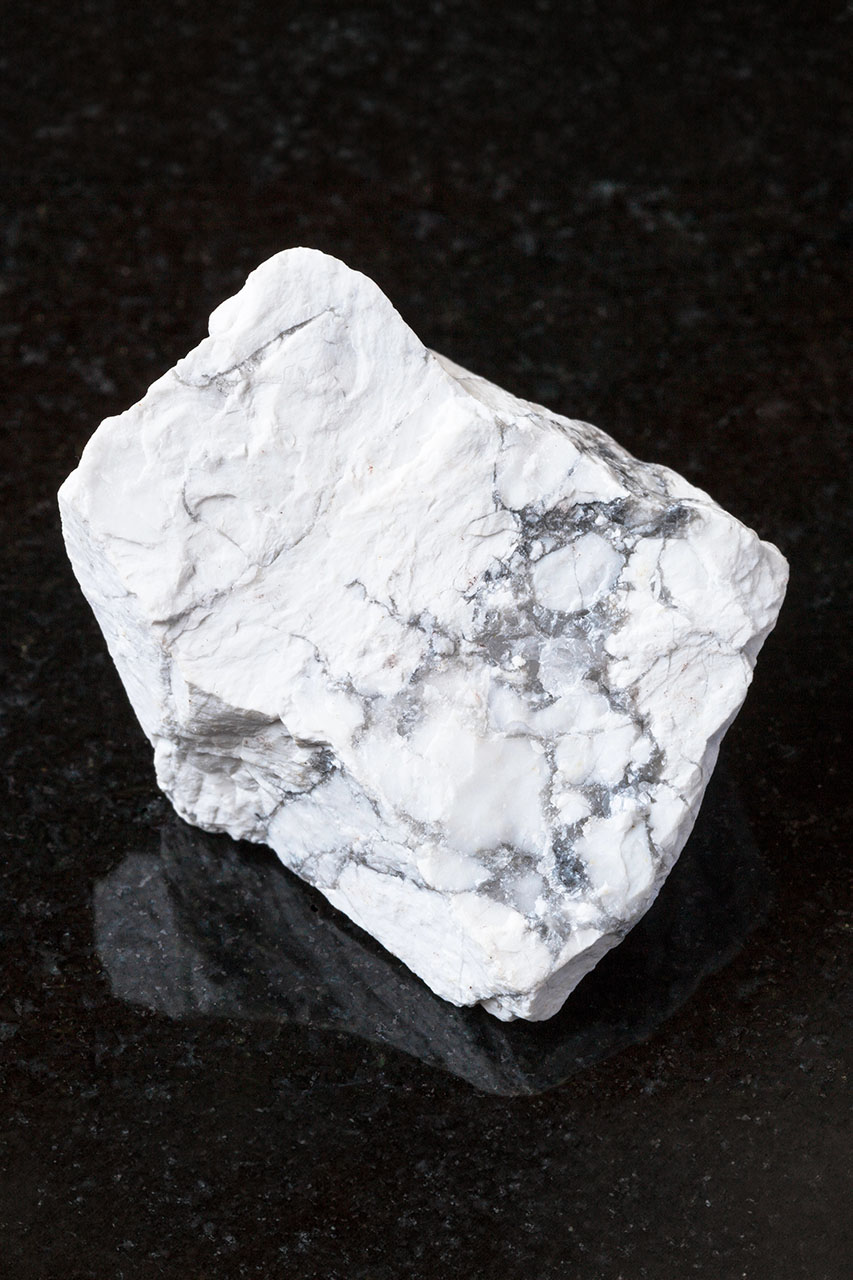
Howlite's distinctive appearance—white with gray or black veining resembling marble or porcelain—creates an aesthetic of serene elegance. This same appearance made howlite a target for dyers who discovered it readily accepts color, leading to widespread sale of blue-dyed howlite as "turquoise" or "turquenite." While this practice has given howlite an unfortunate reputation for deception, the natural white stone possesses profound healing properties entirely its own.
Today, as anxiety reaches epidemic proportions and the need for genuine calm has never been greater, howlite emerges as an accessible yet powerful ally. Its gentle energy doesn't force relaxation but creates conditions where peace naturally arises. From the insomniac who finally sleeps with howlite under their pillow to the anger-prone individual who finds patience through daily carry, howlite teaches that true strength often wears the quiet face of calm.
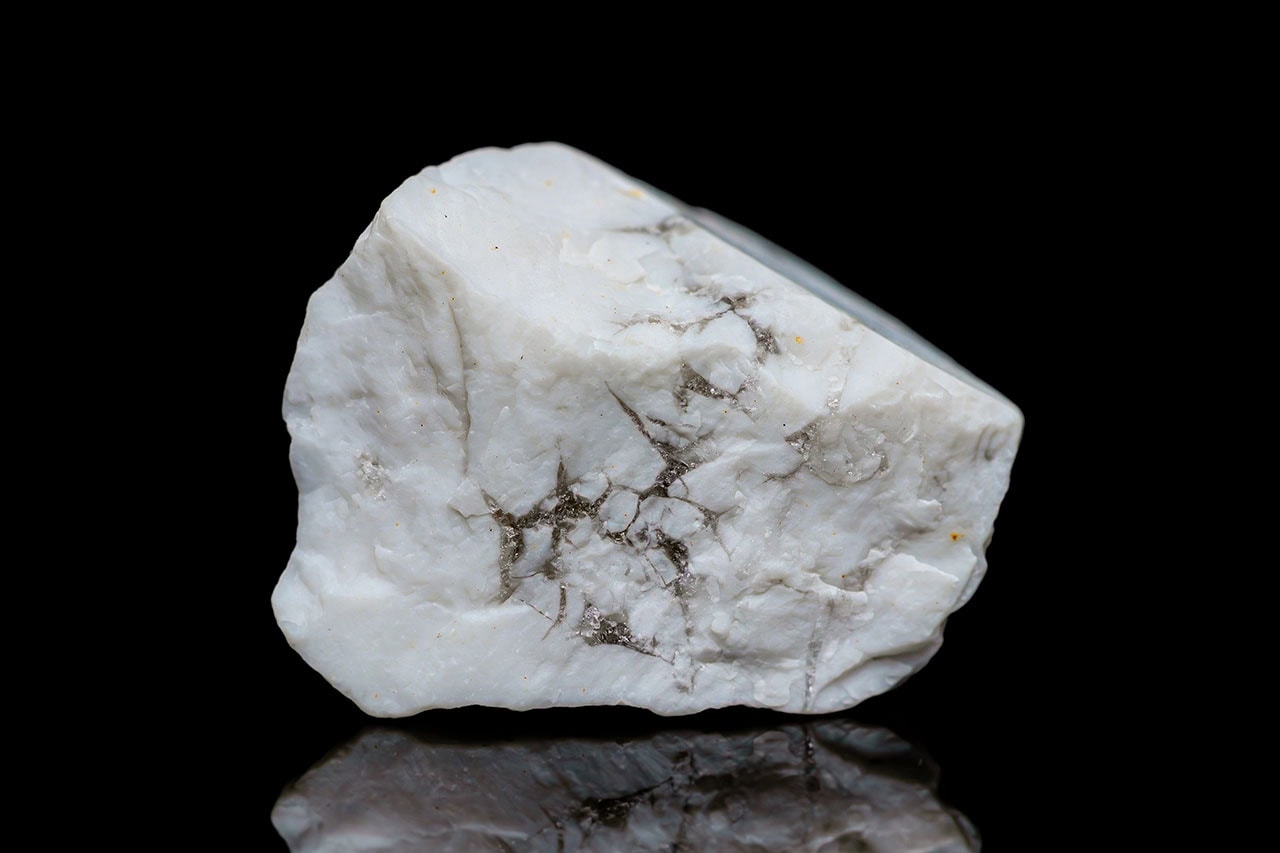
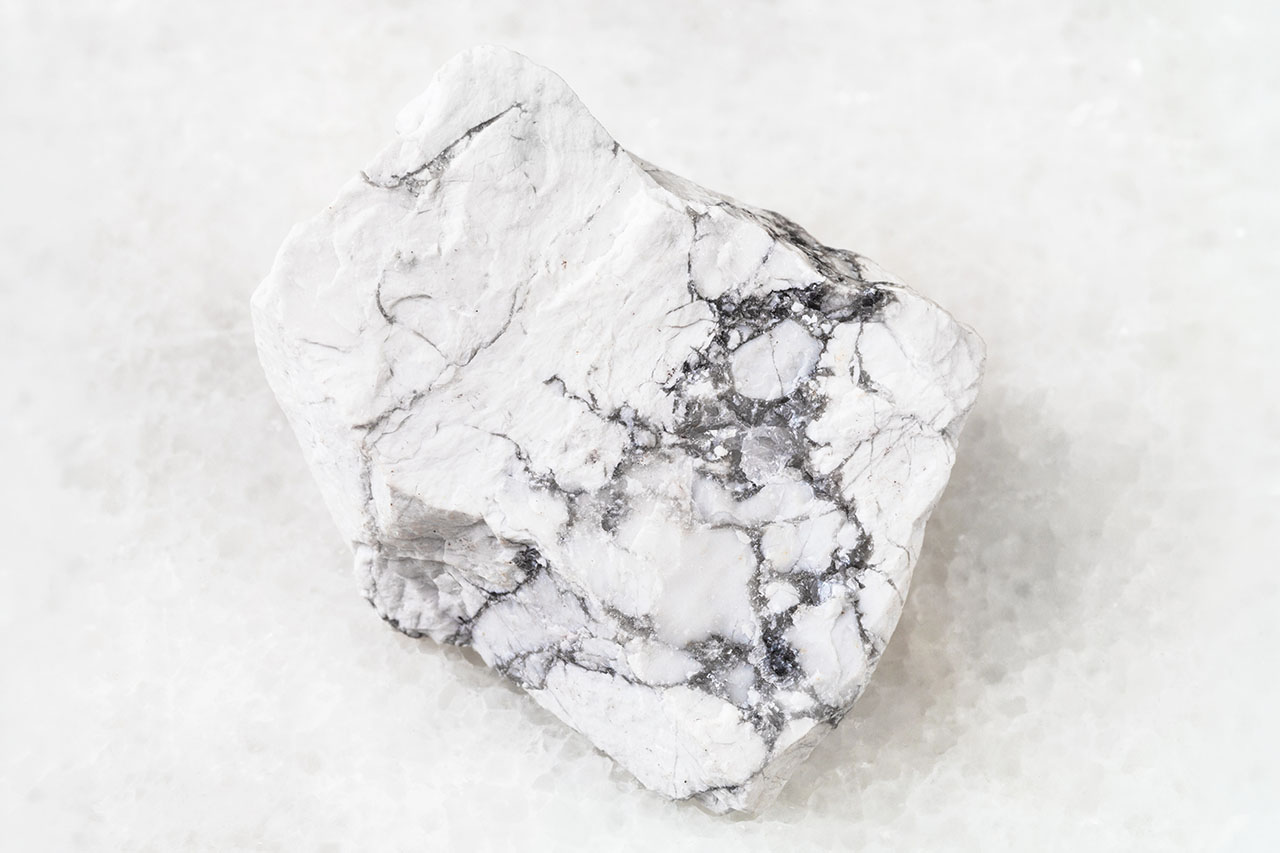
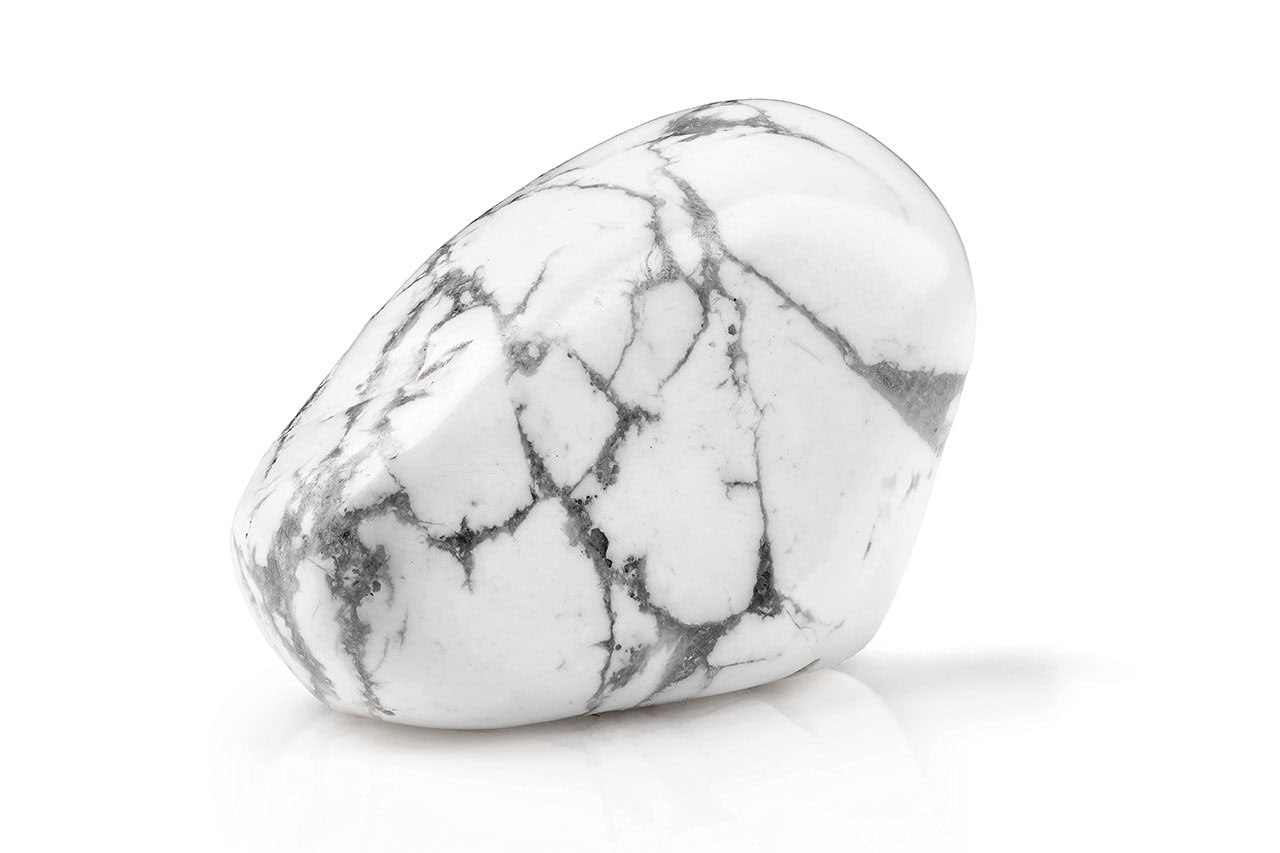
TABLE OF CONTENTS
Properties & Qualities
Physical Properties
Howlite presents itself through its characteristic white color with gray or black veining, creating patterns reminiscent of marble or spider webs. This distinctive appearance results from howlite forming as nodular masses with dark matrix material creating the characteristic veining. The porcelaneous luster adds to the stone's elegant, almost ceramic appearance.
The mineral typically occurs as cauliflower-like nodules rather than distinct crystals, though rare tabular crystals have been found. These nodules can range from small pebbles to masses weighing several pounds. The nodular habit, combined with howlite's softness and porosity, makes it ideal for tumbling and carving into beads, cabochons, and decorative objects.
Howlite's porosity—its ability to absorb liquids—has made it notorious in the gem trade as a material for dyeing. Blue-dyed howlite commonly substitutes for turquoise, while red-dyed versions imitate coral. This absorptive quality, while problematic for gem identification, reflects howlite's metaphysical property of absorbing negative energy and emotional turbulence.
The mineral's softness requires careful handling in jewelry, though its toughness (resistance to breaking) exceeds what its hardness might suggest. Natural howlite's white color can yellow slightly with age or exposure to oils, a characteristic that helps distinguish it from similar-looking minerals. The combination of distinctive appearance and workability has made howlite popular for both decorative and metaphysical purposes.
Metaphysical properties
Within metaphysical circles, howlite stands as the premier stone of calm and patience, its gentle energy described as "crystallized tranquility" that soothes without sedating. Practitioners note that howlite works differently than other calming stones—rather than suppressing difficult emotions, it creates space for them to settle naturally, like sediment in still water.
The stone's primary resonance with the crown chakra creates what energy workers call "peaceful awareness"—calm that doesn't diminish alertness but actually enhances it by removing the static of anxiety. This makes howlite valuable for meditation, study, and any activity requiring focused attention without tension.
Howlite's absorptive physical properties translate metaphysically into an ability to absorb emotional turbulence, anger, and stress. Unlike stones that transform or deflect negativity, howlite simply absorbs it, requiring regular cleansing to maintain effectiveness. This sponge-like quality makes it particularly effective for acute emotional situations.
Modern practitioners particularly value howlite for addressing insomnia and sleep disturbances. Placed under the pillow or on the nightstand, howlite allegedly calms the racing mind that prevents sleep, creating conditions for natural rest. This sleep support, combined with its accessibility and affordability, has made howlite one of the most recommended stones for beginners.
Meaning & Symbolism
Physical meaning
In the physical realm, howlite embodies the principle of strength through softness—its gentle appearance and low hardness belie a toughness that allows it to be carved and worn. This teaches that true resilience often appears gentle, that the ability to absorb impact without breaking represents a form of strength.
The mineral's discovery story—discarded as worthless until properly examined—represents overlooked value and the importance of patient investigation. What miners threw away became a beloved healing stone, teaching that apparent worthlessness often conceals genuine treasure awaiting recognition.
For those in high-stress professions, howlite's calming properties provide important symbolism and support. Its white color represents clarity and peace, while its veining suggests that calm can exist even when complexity runs through it. This models maintaining inner peace despite external complications.
The stone's porosity and ability to accept dye carries meaning about receptivity and influence. Howlite teaches awareness of what we absorb from our environment, reminding us that we're constantly influenced by surrounding energies and must choose our exposures consciously.
Spiritual meaning
Howlite's spiritual significance centers on its role as "The Stone of Awareness," helping practitioners observe their thoughts and emotions without becoming entangled in them. This witnessing consciousness—calm observation without reactive engagement—represents a key spiritual skill that howlite helps develop.
The stone's white color connects it to purity and spiritual cleansing, but howlite's teaching goes deeper than simple purification. Its veining represents the complexity that exists within apparent simplicity, teaching that spiritual peace includes rather than excludes life's complications.
Different spiritual traditions might interpret howlite's calming properties as supporting various practices—meditation, contemplation, prayer—all of which benefit from the quiet mind howlite helps create. Its accessibility makes it a democratic spiritual tool, available to all seekers regardless of resources.
The mineral's formation in evaporite deposits—where water evaporated leaving minerals behind—represents the spiritual process of letting go. As water releases its dissolved content through evaporation, spiritual practice releases accumulated tension through patient allowing. Howlite teaches this gentle release.
Healing Benefits
Physical healing
Traditional healing applications for howlite focus on its calming properties and their physical manifestations. Contemporary crystal healers use howlite for what they term "nervous system soothing," placing stones on the body during sessions aimed at reducing stress-related physical symptoms.
Some practitioners work with howlite for calcium-related issues, connecting its calcium content to bone and teeth health. Placement on areas of skeletal concern during healing sessions allegedly supports healthy calcium utilization, though effects remain within energy medicine rather than proven treatment.
The stone's boron content has led to theoretical connections with metabolism and hormone balance, as boron plays roles in these processes. Some healers include howlite in layouts for thyroid or metabolic issues, believing its boron signature provides energetic support for these systems.
Howlite's most consistent physical healing application involves sleep support. Practitioners recommend placing howlite under the pillow or on the nightstand for insomnia, believing its calming energy helps quiet the mind for natural sleep. Many users report improved sleep quality, whether through energetic effects or the placebo response of having a calming ritual.
Emotional healing
The emotional healing properties of howlite center on developing patience and releasing anger—two of the most challenging emotional skills for many people. Therapists who incorporate crystals describe howlite as particularly effective for clients with anger management issues or chronic impatience.
For those dealing with anxiety, howlite provides gentle, sustained support rather than dramatic intervention. Its energy creates a baseline of calm that makes anxiety spikes less severe and recovery faster. This ongoing support, rather than crisis intervention, makes howlite valuable for chronic anxiety management.
The stone excels at what practitioners call "emotional absorption"—taking in turbulent feelings without amplifying them. This creates space for emotions to settle naturally rather than escalating through resistance or suppression. Howlite teaches that sometimes the best response to difficult emotions is simply allowing them to be.
Howlite's white color with dark veining provides visual metaphor for its emotional teaching: peace can contain complexity, calm can coexist with difficulty. This integration of opposites—serenity holding turbulence—models emotional maturity that neither denies difficulty nor is overwhelmed by it.
Spiritual healing
In spiritual healing contexts, howlite functions as what practitioners call a "consciousness clarifier," helping still the mental chatter that obscures spiritual perception. This makes it valuable for meditation practice, particularly for beginners whose minds resist quieting.
Advanced practitioners utilize howlite for accessing higher states of consciousness through calm rather than intensity. While some stones blast open spiritual doors, howlite gently dissolves the barriers, creating natural opening that doesn't shock the system. This gentle approach suits those who've been overwhelmed by more intense spiritual experiences.
For those experiencing spiritual anxiety—fear about spiritual matters, existential dread, or worry about spiritual progress—howlite provides soothing reassurance. Its energy suggests that spiritual development doesn't require struggle, that peace itself is a valid spiritual path.
The stone's absorptive properties make it valuable for clearing spaces of accumulated spiritual debris. Placing howlite in meditation areas or healing rooms allegedly absorbs residual energies from previous sessions, maintaining clean space for ongoing work.
Use & Care
How to use
- Sleep support: Place under pillow for restful sleep
- Meditation aid: Hold during meditation for mental calm
- Anger management: Carry when patience needed
- Anxiety relief: Keep in pocket for ongoing calm
- Study support: Place on desk for focused learning
- Communication aid: Hold before difficult conversations
- Bath companion: Add to bath water for relaxation
- Stress absorption: Wear during high-stress situations
- Grid placement: Use in calming crystal grids
- Room harmonizer: Place in living spaces for peace
- Worry stone: Rub when anxious for tactile calm
- Daily carry: Keep with you for ongoing support
How to cleanse
- Moonlight bathing: Leave under full moon overnight
- Sound clearing: Use gentle bells or singing bowls
- Smoke cleansing: Pass through sage or lavender smoke
- Selenite charging: Rest on selenite for purification
- Visualization: Imagine white light clearing absorbed energy
- Brief water rinse: Quick rinse only—howlite is porous
- No soaking: Extended water exposure can damage
- No salt: Salt can affect porous surface
- Breath work: Gentle breath with clearing intention
- Frequent cleansing: Essential due to absorptive nature
How to charge
- Moonlight charging: Full moon for emotional balance
- Selenite bed: Rest on selenite for gentle charging
- Clear quartz cluster: Place on quartz for amplification
- White candle: Near white flame for purity
- Peaceful music: Play calming sounds while charging
- Meditation charging: Hold during peaceful meditation
- Nature sounds: Charge while playing water or wind sounds
- Lavender proximity: Place near lavender for calm energy
- Gentle intention: Program with soft, peaceful purposes
- Minimal need: Howlite maintains calm energy naturally
Combining with other stones
- Amethyst: Enhances spiritual calm and intuition
- Blue Lace Agate: Amplifies gentle communication
- Lepidolite: Deepens anxiety relief and peace
- Rose Quartz: Adds heart healing to calm
- Clear Quartz: Amplifies howlite's calming properties
- Black Tourmaline: Grounds while maintaining peace
- Selenite: Maintains high vibration with calm
- Sodalite: Enhances mental clarity with peace
- Moonstone: Adds emotional balance to calm
- Aquamarine: Combines calm with clear communication
Identification
Can be mistaken for
- Magnesite: Very similar appearance, often confused
- White Turquoise: Marketing term often applied to howlite
- White Marble: Similar veined appearance
- White Agate: Can look similar when polished
- Dolomite: White varieties resemble howlite
- Calcite: White calcite sometimes confused
- Porcelain: Howlite's luster resembles ceramic
- Dyed Howlite: Blue "turquoise" is often dyed howlite
How to spot a fake
- Natural color: Genuine howlite is white with gray/black veining
- Dye test: Acetone on cotton reveals blue dye
- Porosity check: Natural howlite absorbs water slightly
- Hardness test: Soft—easily scratched (3.5)
- Weight assessment: Relatively light for size
- Vein pattern: Natural veining irregular, not uniform
- Price indicator: Natural howlite very affordable
- "Turquoise" claims: Blue howlite is dyed, not turquoise
- Surface texture: Natural has characteristic porcelaneous feel
- Source verification: Major sources are North America