
Hypersthene
Silicate (Inosilicate - Pyroxene group)
Dark brown, greenish-black, gray-black with coppery sheen
Vitreous to submetallic, silky
5 - 6
3.4 - 3.9
Orthorhombic
USA, Canada, Norway, Greenland, Australia, India
Uncommon
(Mg,Fe)₂Si₂O₆ (Magnesium iron silicate)
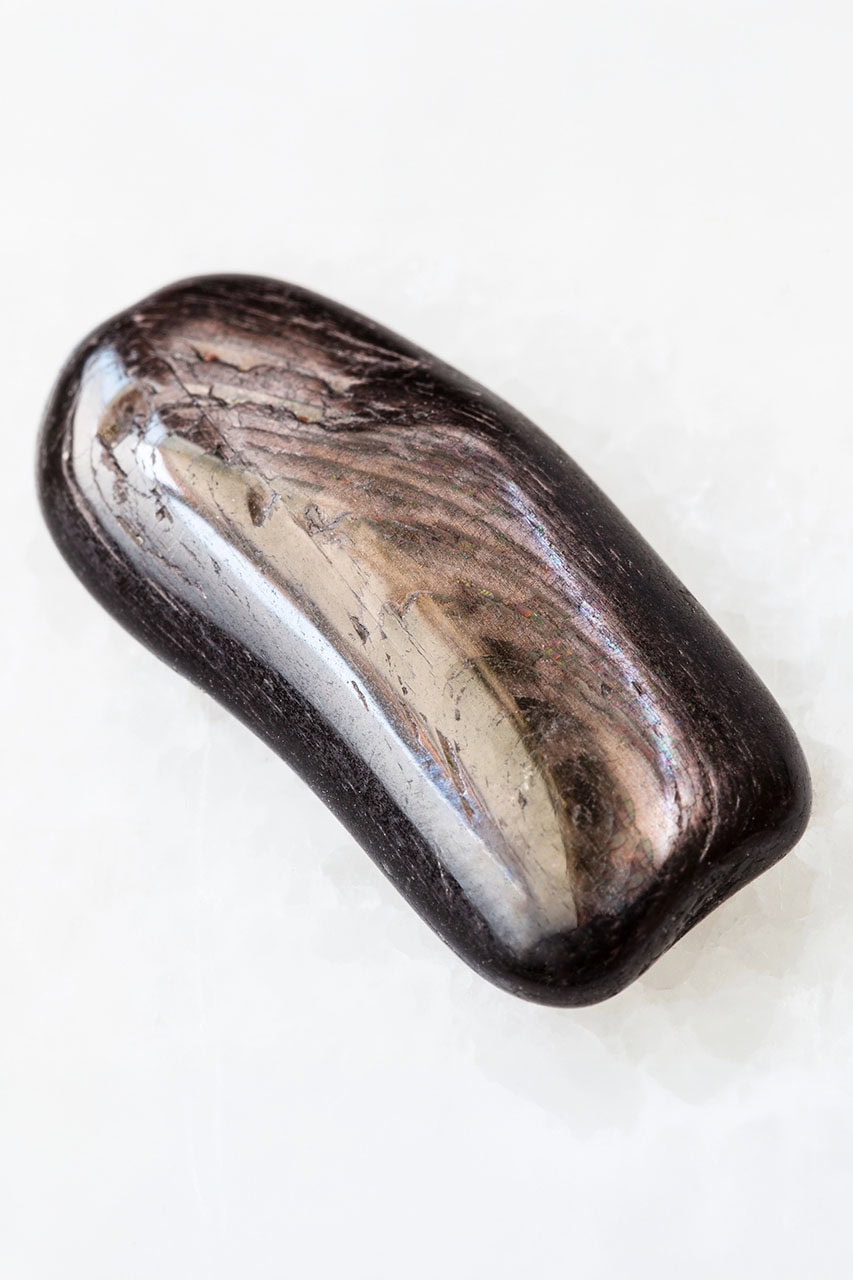
In the ancient volcanic intrusions where magma cooled slowly enough for crystals to grow, hypersthene formed as dark, mysterious plates displaying an optical phenomenon that seems almost supernatural. This iron-rich pyroxene mineral, whose name derives from the Greek "hyper" (above) and "sthenos" (strength), exhibits a coppery-red to golden schiller that flashes from within its dark depths like hidden fire—a visual metaphor for the inner strength it allegedly helps develop.
First described in 1804 from specimens found on the Labrador coast, hypersthene has long been confused with its close relatives bronzite and enstatite, all members of the orthopyroxene series. Modern mineralogists have reclassified hypersthene as iron-rich enstatite, though the traditional name persists in metaphysical circles where its distinct energy has earned devoted following among those seeking psychic protection and deep self-knowledge.
Today, hypersthene serves those who need strength that doesn't announce itself—the quiet power of deep roots rather than visible armor. Its dark color absorbs rather than reflects, its schiller reveals rather than displays, and its energy protects through stillness rather than confrontation. For empaths overwhelmed by others' energies, for seekers needing honest self-reflection, and for anyone requiring strength without aggression, hypersthene offers the power of the silent guardian.
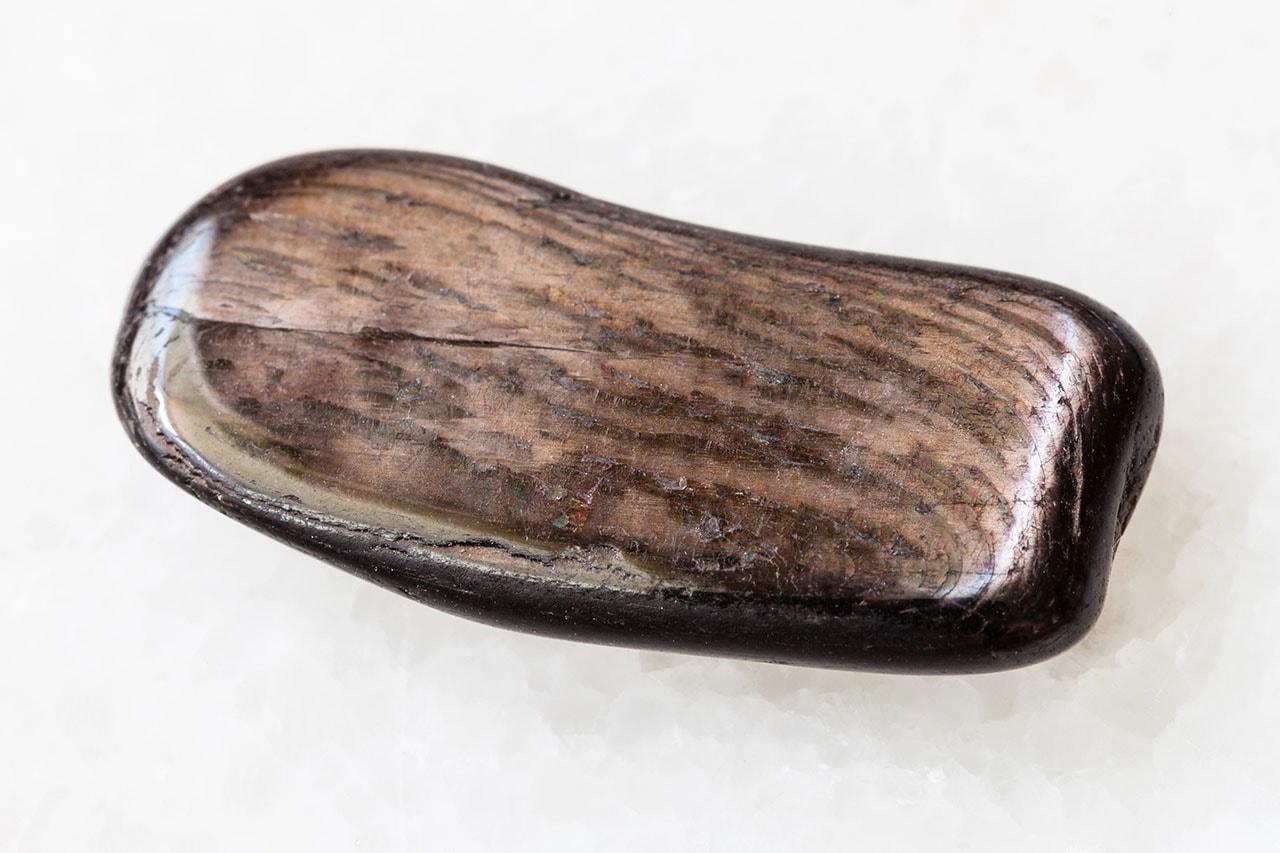
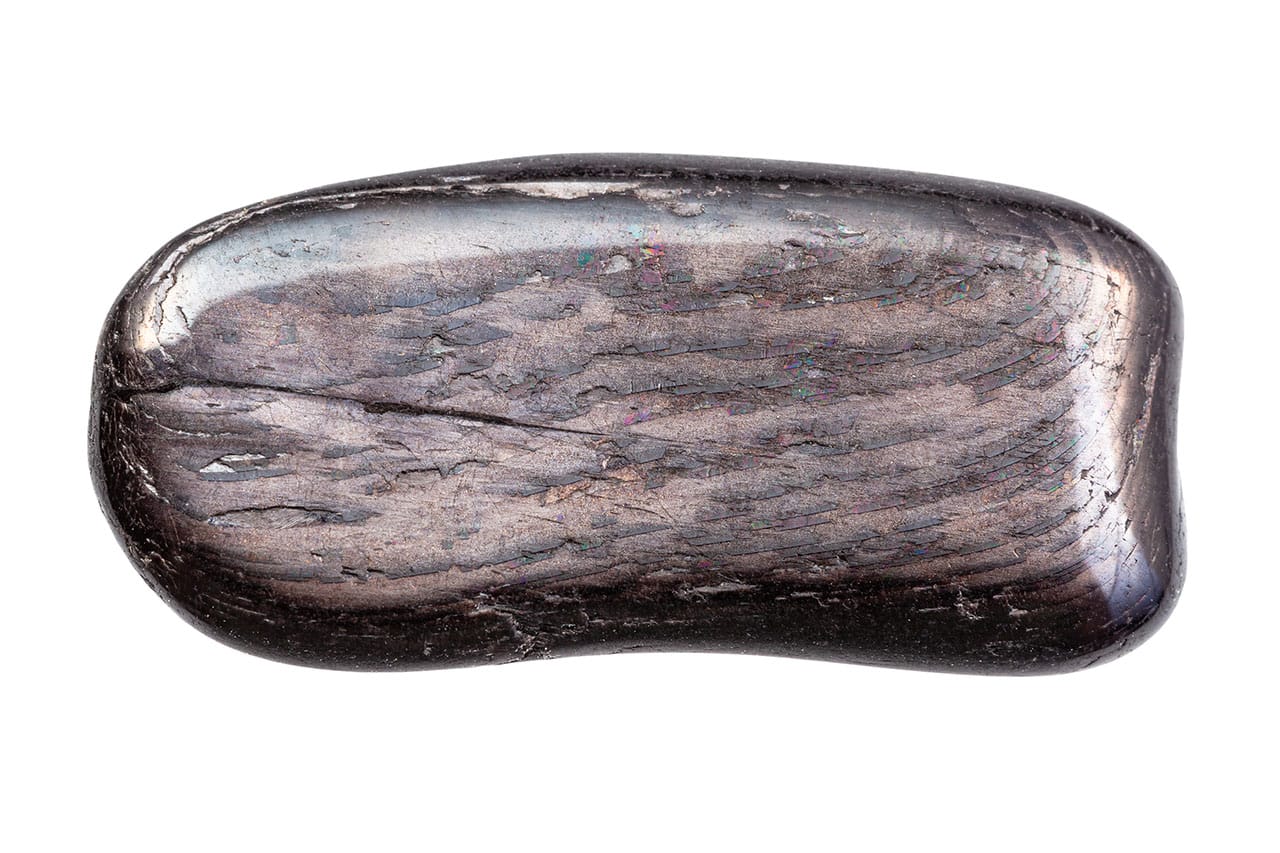
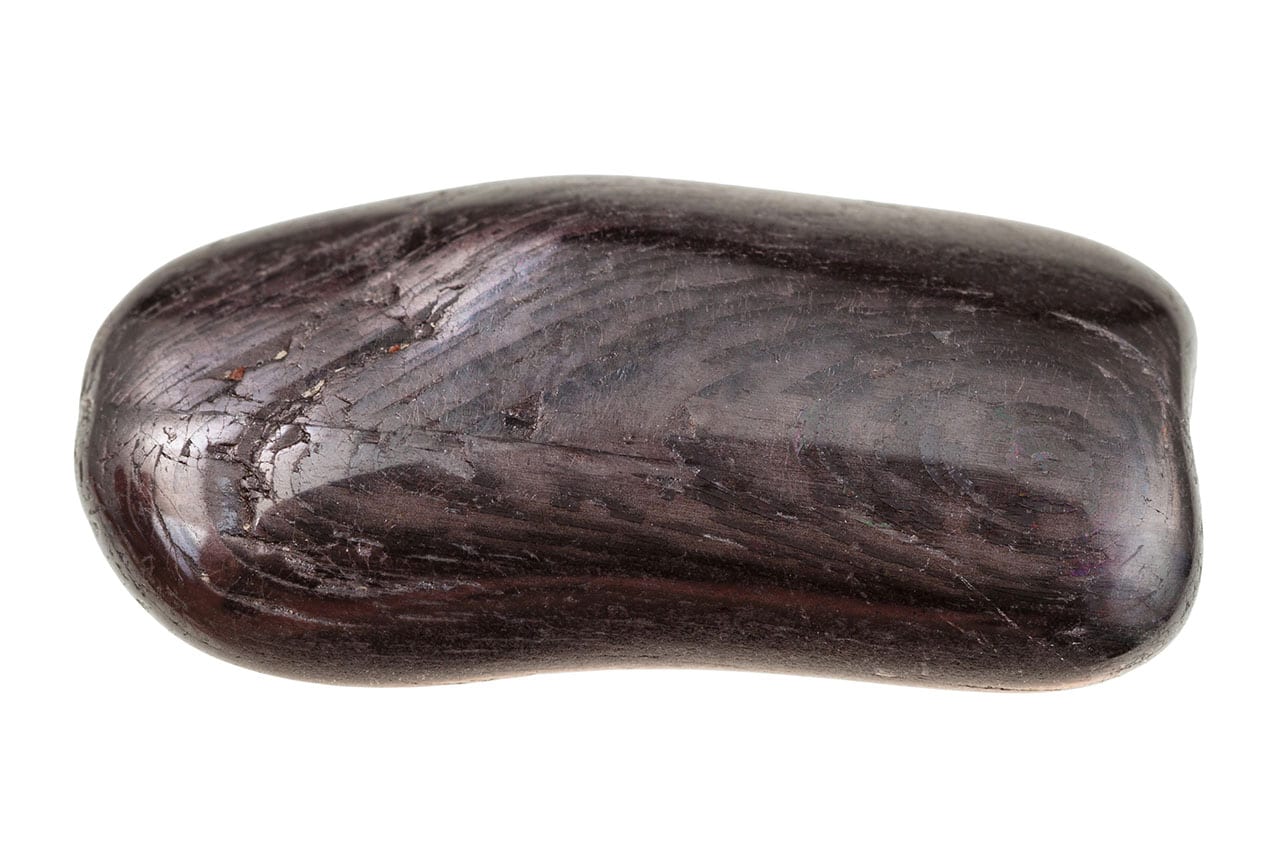
TABLE OF CONTENTS
Properties & Qualities
Physical Properties
Hypersthene captivates through its distinctive optical phenomenon—a coppery-red to golden schiller that seems to float beneath the dark surface like embers glowing in shadow. This effect, caused by microscopic plate-like inclusions oriented along crystal planes, creates dramatic flashes when the stone moves in light. The contrast between dark body color and bright schiller produces almost hypnotic visual effect.
The mineral typically occurs as massive or lamellar aggregates rather than distinct crystals, though prismatic crystals do form in some environments. The orthorhombic crystal system creates two directions of good cleavage intersecting at nearly 90 degrees, a characteristic of pyroxene minerals. This cleavage affects how hypersthene breaks and how it's cut for jewelry or specimens.
Color ranges from dark greenish-brown to nearly black, with the iron content determining exact shade. Higher iron specimens appear darker and display more intense coppery schiller, while lower iron varieties show more bronze or golden tones. This variation in iron content actually defines hypersthene's position in the enstatite-ferrosilite series.
The mineral's submetallic to silky luster creates surfaces that seem to absorb light rather than reflect it brightly. This light-absorbing quality contributes to hypersthene's metaphysical reputation as a stone that absorbs negativity. When polished, hypersthene displays its schiller most dramatically, making cabochons and palm stones the preferred forms for both aesthetic and energetic purposes.
Metaphysical properties
Within metaphysical circles, hypersthene stands as the premier stone of psychic shielding and deep self-reflection, its dark depths and hidden fire representing the inner strength that doesn't need external display. Practitioners describe its energy as "cloaking"—not blocking perception but making the wearer energetically invisible to those who would drain or harm.
The stone's primary resonance with the third eye and root chakras creates unusual combination—psychic perception grounded in physical stability. This dual activation allows clear seeing without the vulnerability that often accompanies opened intuition. Hypersthene allegedly keeps the third eye functional while protecting it from unwanted intrusion.
Ancient traditions apparently didn't distinguish hypersthene from similar dark stones, but modern practitioners have identified its unique properties. Its name meaning "above strength" proves apt—hypersthene provides strength that transcends ordinary power, the quiet confidence that needs no demonstration because it knows its own depth.
Modern energy workers particularly value hypersthene for empaths and highly sensitive individuals who absorb others' energies involuntarily. Unlike stones that simply block input, hypersthene allegedly helps distinguish between self and other, allowing empathic perception while maintaining clear boundaries. This discrimination proves essential for sensitive individuals navigating overwhelming environments.
Meaning & Symbolism
Physical meaning
In the physical realm, hypersthene embodies the principle of hidden strength—its dark exterior concealing the fire within, teaching that true power often remains invisible until needed. This makes hypersthene an ally for those whose strength isn't recognized, whose contributions go unseen, whose power operates beneath the surface.
The mineral's formation in igneous environments represents strength forged through heat and pressure. Just as hypersthene crystallizes from cooling magma, human strength often develops through challenging circumstances. This geological origin teaches that difficulty creates durability, that pressure produces power.
For those in supporting roles—caregivers, assistants, background workers—hypersthene validates the essential nature of unseen contribution. Its hidden schiller represents the beauty and value that exists regardless of recognition, the worth that doesn't depend on visibility.
The stone's light-absorbing quality carries meaning about taking in without being overwhelmed. Hypersthene teaches how to receive information, energy, and experience without being destabilized—essential skill for those in absorptive professions like counseling, healthcare, or customer service.
Spiritual meaning
Hypersthene's spiritual significance centers on its role as "The Silent Guardian," providing protection through presence rather than action, through stillness rather than confrontation. Its dark color represents the fertile void from which creation emerges, the darkness that holds potential rather than threatening harm.
The stone's schiller—light emerging from darkness—symbolizes spiritual illumination arising from shadow work. True spiritual light, hypersthene teaches, comes not from avoiding darkness but from integrating it. The fire within the dark stone represents the enlightenment that includes rather than excludes shadow aspects.
Different spiritual traditions might interpret hypersthene's protective qualities as cloaking, shielding, or invisibility—all variations on the theme of protection through non-engagement. Rather than fighting negativity, hypersthene allegedly helps practitioners become energetically neutral, simply not registering as targets for psychic interference.
The mineral's pyroxene family membership connects it to other protective stones like bronzite and enstatite, creating a system of related minerals for comprehensive shielding work. Hypersthene specifically addresses psychic and empathic vulnerability, completing protection that other stones might leave incomplete.
Healing Benefits
Physical healing
Traditional healing applications for hypersthene are limited due to its relatively recent distinction from similar minerals. Contemporary crystal healers use hypersthene primarily for stress-related conditions, believing its calming energy helps address physical symptoms rooted in anxiety or overwhelm.
Some practitioners work with hypersthene for what they term "adrenal support," placing stones on the lower back during sessions aimed at addressing exhaustion from chronic stress. The stone's grounding combined with its protective qualities allegedly helps the body recover from fight-or-flight depletion.
The mineral's iron content has led to theoretical connections with blood health and vitality, similar to other iron-bearing stones. Energy workers might include hypersthene in layouts for fatigue or recovery, believing its iron signature supports healthy energy production.
Hypersthene's calming properties have led to its use in addressing insomnia, particularly sleep disturbance caused by racing thoughts or psychic sensitivity. Placed under the pillow or on the nightstand, hypersthene allegedly creates quiet mental space conducive to restful sleep.
Emotional healing
The emotional healing properties of hypersthene center on developing healthy boundaries and clear self-knowledge. Therapists who incorporate crystals describe hypersthene as particularly effective for clients who lose themselves in relationships, who absorb others' emotions as their own, or who struggle to maintain identity in group settings.
For those dealing with codependency, hypersthene provides essential support for distinguishing self from other. Its energy allegedly helps identify which feelings, thoughts, and desires are genuinely one's own versus absorbed from others. This discrimination proves foundational for authentic relationship and self-development.
The stone excels at supporting what practitioners call "healthy introversion"—the ability to turn inward for renewal without isolation or avoidance. Hypersthene's dark, quiet energy creates space for self-reflection that doesn't require external validation, teaching that solitude can be nourishing rather than lonely.
Hypersthene's hidden schiller provides metaphor for emotional healing—the beauty and light that exist within even when not visible externally. For those whose inner richness goes unrecognized, hypersthene validates internal worth independent of external acknowledgment.
Spiritual healing
In spiritual healing contexts, hypersthene functions as what practitioners call a "psychic cloak," providing protection for sensitive individuals whose spiritual openness creates vulnerability. This makes it essential for empaths, mediums, and anyone whose spiritual gifts include heightened receptivity.
Advanced practitioners utilize hypersthene for what they term "energetic boundary repair"—healing damage to the aura or energy body that allows unwanted intrusion. The stone allegedly helps rebuild protective layers while maintaining permeability for desired connection, creating selective rather than total shielding.
For those experiencing psychic overwhelm—too much input, inability to filter, constant bombardment by others' energies—hypersthene provides relief through quiet rather than blocking. Its energy creates stillness in which unwanted input naturally settles, like sediment in still water.
The stone's connection to self-knowledge makes it valuable for shadow work and honest self-examination. Its dark color doesn't judge shadow aspects but provides safe container for exploring them. The schiller within represents the light that shadow work ultimately reveals—not despite the darkness but through it.
Use & Care
How to use
- Third eye placement: Place on forehead for psychic protection
- Meditation companion: Hold during introspective meditation
- Empath support: Carry daily for boundary maintenance
- Sleep aid: Place under pillow for restful sleep
- Shielding ritual: Hold while visualizing protective cloak
- Self-reflection: Gaze into polished surface for insight
- Grounding anchor: Hold during overwhelming situations
- Energy clearing: Sweep through aura to remove attachments
- Quiet space creation: Place in room for peaceful energy
- Boundary setting: Hold while establishing limits
- Shadow work: Include in practices exploring hidden aspects
- Daily protection: Wear jewelry for ongoing shielding
How to cleanse
- Moonlight bathing: Leave under dark or new moon
- Earth burial: Bury in soil for deep cleansing
- Sound clearing: Use low, deep tones—drums or bowls
- Smoke cleansing: Pass through sage or mugwort smoke
- Visualization: Imagine darkness absorbing all impurities
- Selenite charging: Rest on selenite for purification
- Brief water rinse: Quick rinse only—dry immediately
- Breath work: Slow, deep exhales while holding
- Salt burial: Cover in dry sea salt overnight
- Regular cleansing: Essential for protective stones
How to charge
- Dark moon charging: New moon for introspective power
- Earth contact: Place directly on soil overnight
- Starlight: Leave under clear night sky
- Quiet intention: Charge in silence with focused purpose
- Shadow work: Charge during introspective practices
- Iron proximity: Place near iron for resonance
- Cave energy: Charge in dark, enclosed spaces
- Winter solstice: Longest night for maximum power
- Meditation charging: Hold during deep meditation
- Minimal need: Hypersthene maintains charge well
Combining with other stones
- Black Tourmaline: Enhances protection and grounding
- Labradorite: Combines shielding with intuition
- Smoky Quartz: Deepens grounding and transmutation
- Amethyst: Adds spiritual protection to psychic shielding
- Obsidian: Intensifies shadow work and protection
- Hematite: Increases grounding and stability
- Bronzite: Fellow pyroxene for comprehensive shielding
- Black Moonstone: Enhances intuition with protection
- Nuummite: Deepens shadow work and self-discovery
- Shungite: Modern protective combination
Identification
Can be mistaken for
- Bronzite: Similar appearance, different iron content
- Enstatite: Same mineral series, less iron
- Black Moonstone: Similar dark color with sheen
- Nuummite: Similar dark color with iridescence
- Arfvedsonite: Dark with similar flash
- Astrophyllite: Golden flash in dark matrix
- Black Star Diopside: Four-rayed star versus schiller
- Spectrolite: Similar flash but different mineral
How to spot a fake
- Schiller examination: Look for characteristic coppery-red flash
- Cleavage check: Two directions at near 90 degrees
- Specific gravity: Should feel moderately heavy (3.4-3.9)
- Hardness test: Scratches glass with effort (5-6)
- Color depth: Natural shows deep greenish-black to brown
- Flash character: Schiller appears from within, not surface
- Price appropriate: Uncommon but not extremely expensive
- Natural variation: Real specimens show some inconsistency
- Matrix examination: Often found with feldspar or other minerals
- Source verification: Major sources include USA and Norway