
Tiger’s Eye
Oxide (Quartz family)
Golden-brown, red, blue, green
Silky, chatoyant
6.5 - 7
2.64 - 2.71
Trigonal
South Africa, Australia, India, USA, Mexico, Brazil
Common
SiO₂ (Silicon dioxide with iron oxide)
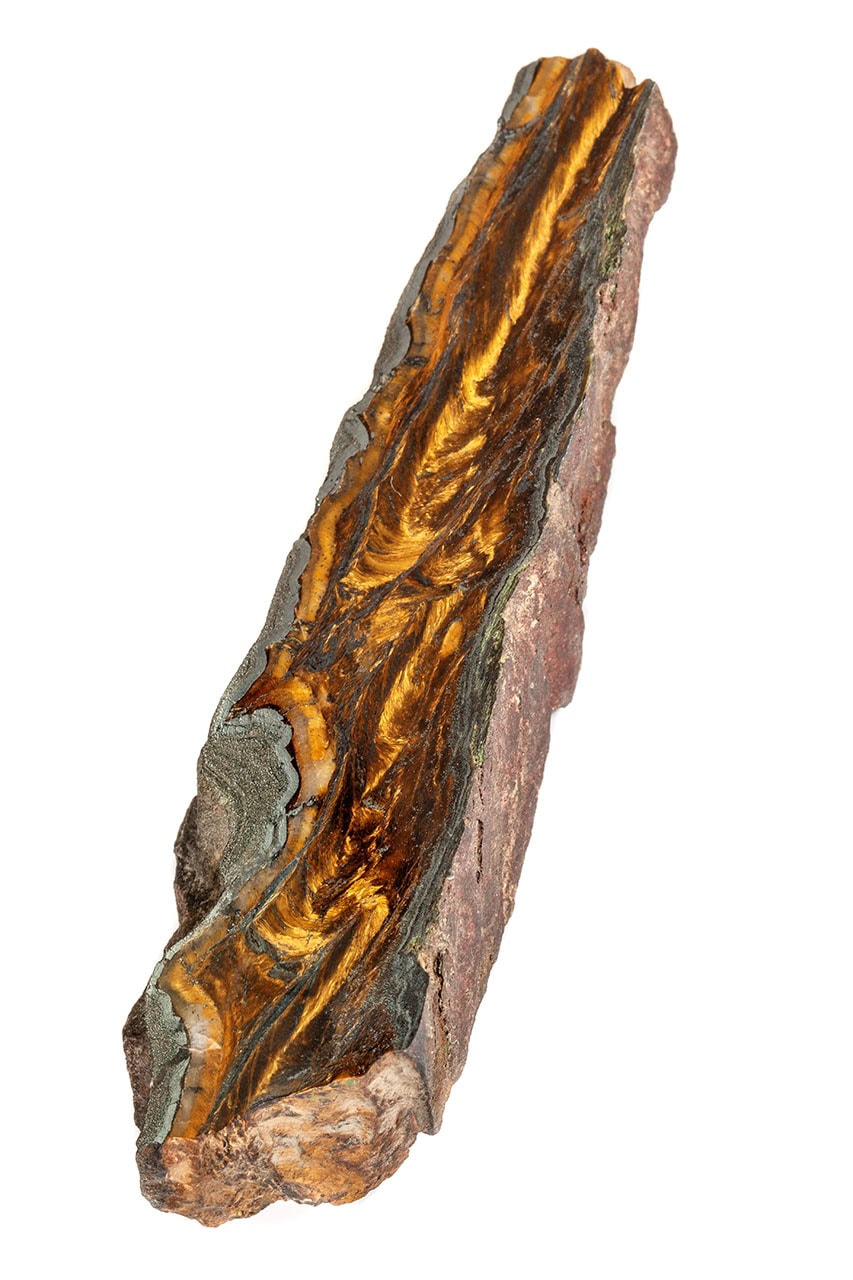
Tiger's eye is quartz threaded with fine fibers of a blue amphibole, the mineral known in its asbestos form as crocidolite, and its golden color comes from those fibers weathering to iron oxides. It is found in South Africa's Northern Cape and in Western Australia, among other places. This chatoyant quartz, with its distinctive bands that shift and shimmer like a great cat's eye, is carried today as a talisman of protection and power.
The stone takes its name from its uncanny resemblance to a tiger's eye—golden bands that seem to track movement with predatory focus. In crystal practice it is a stone of courage, protection and good fortune, and it is often carried to ward off the evil eye.
Today, tiger's eye continues its role as the "Stone of the Mind," prized by those who must make decisions under pressure and maintain focus amid chaos. How the quartz and the fibers came together is still argued by mineralogists, and practice takes the stone as a metaphor for transformation that preserves essential strength while the form changes.
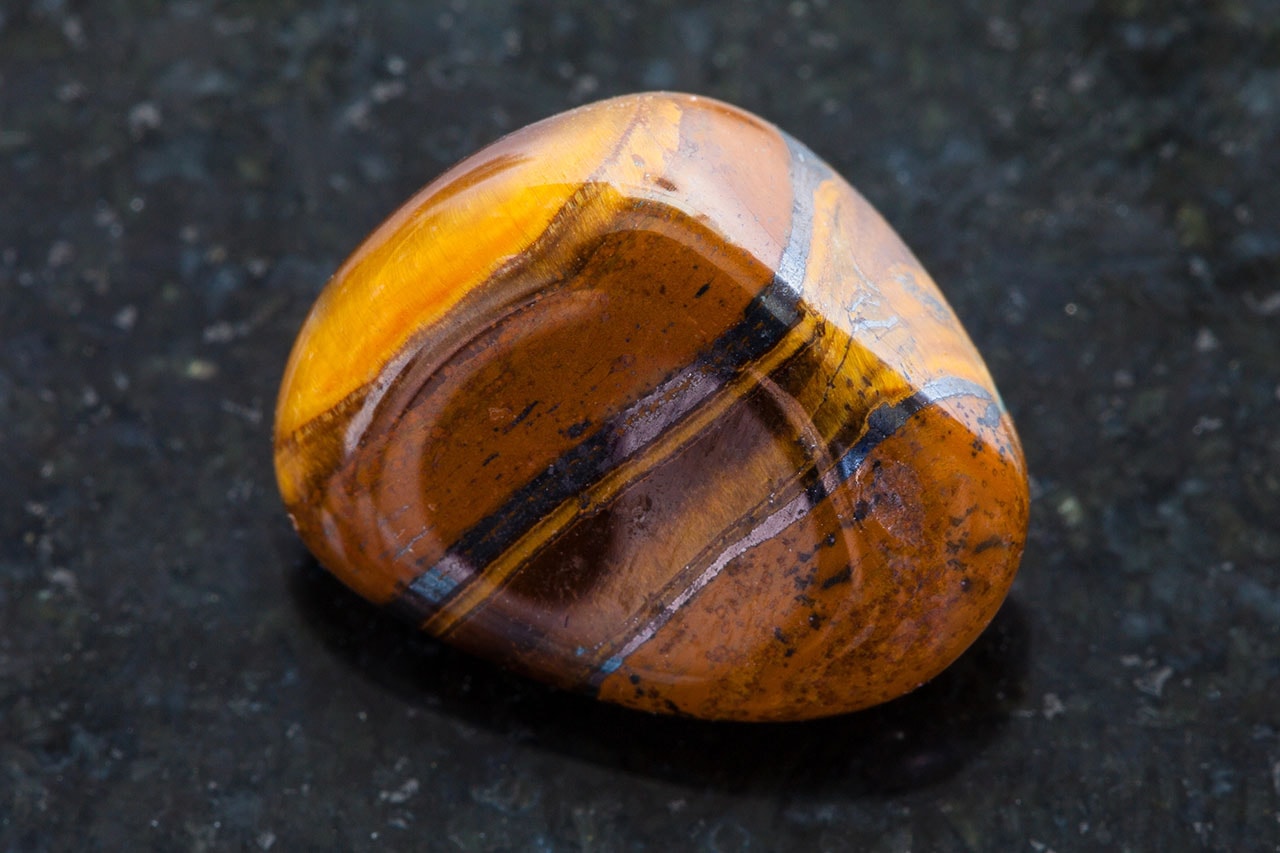
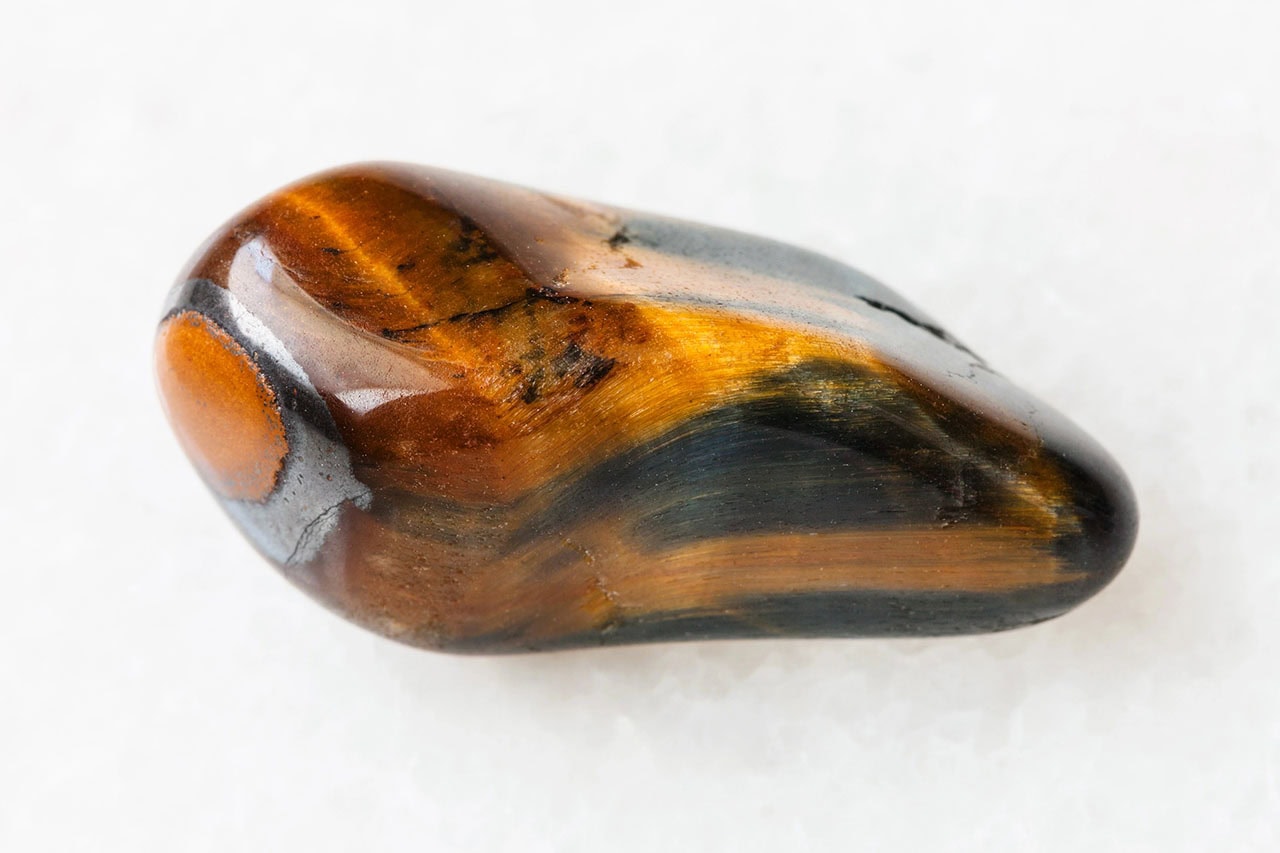
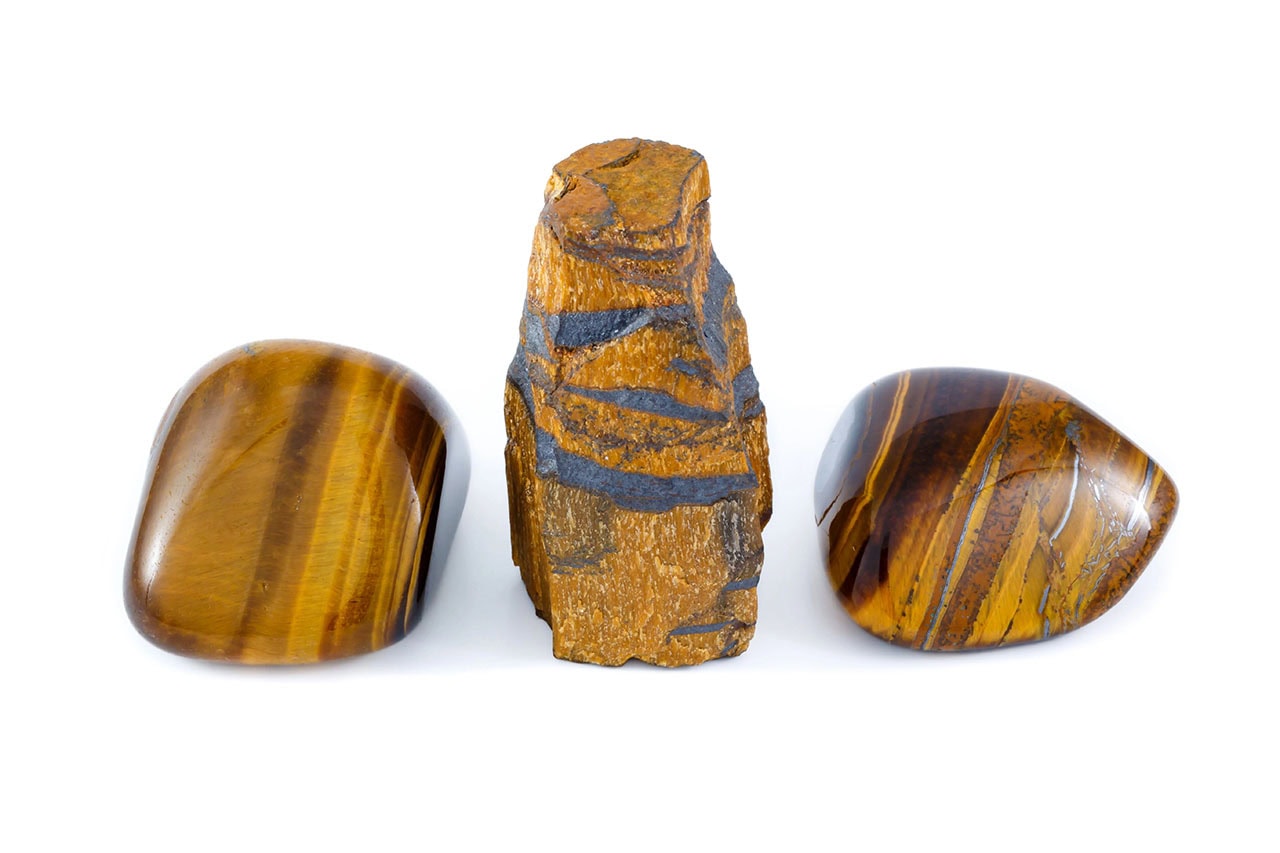
TABLE OF CONTENTS
Properties & Qualities
Physical Properties
Tiger's eye mesmerizes through its chatoyancy—a silky luster that creates a moving band of light across the stone's surface, reminiscent of a cat's slit pupil. This optical phenomenon comes from the parallel fibers inside the quartz, which gather reflected light into a band that shifts with the viewing angle.
The classic golden-brown color comes from the iron-rich fibers weathering to iron oxides and hydroxides, as GIA's 2025 review of phenomenal gems describes it. The older textbook account calls tiger's eye a pseudomorph, quartz replacing the fibers while keeping their shape. A 2003 study proposed instead that the quartz and the fibers grew together as the rock repeatedly cracked and resealed, and the question has not been settled. The result is parallel bands of golden yellow, rich brown, and sometimes metallic gray that create landscapes within each stone.
Variations in weathering create different colors. Blue tiger's eye, sold as hawk's eye, is the less altered material, its fibers still close to their original color. Red tiger's eye (ox eye) is also sold. The most prized specimens show sharp chatoyancy with high contrast between light and dark bands.
When properly oriented and cut en cabochon, tiger's eye displays a single bright band that moves across the surface as the stone rotates. This "eye" effect reaches perfection in spheres, where the band travels continuously around the circumference. Under magnification, the fibrous structure becomes visible, revealing the parallel fibers that make the eye.
Metaphysical properties
Within metaphysical traditions, tiger's eye stands as the premier stone of practical courage—not the reckless bravery of youth but the grounded confidence of a seasoned warrior who chooses battles wisely. Practitioners describe its energy as simultaneously protective and empowering, creating what many call a "shield of confidence" that deflects negativity while building inner strength.
The stone's primary resonance with the solar plexus chakra, combined with its grounding connection to the root chakra, creates balanced power. This dual activation distinguishes tiger's eye from purely grounding or purely energizing stones—it provides stable foundation while building the confidence to act, making it invaluable for those who know what needs doing but struggle with execution.
In folklore, tiger’s eye is a stone of prosperity, though not through luck or chance. Instead, it allegedly sharpens the mind's ability to see opportunities and the will's capacity to act on them. This practical magic appeals to modern practitioners who prefer earning success through clarity and courage rather than hoping for windfalls.
The chatoyant band is interpreted as an all-seeing eye that works in multiple directions—protecting from external harm while revealing internal patterns that sabotage success. This dual vision makes tiger's eye essential for shadow work related to power, success, and self-worth.
Meaning & Symbolism
Physical meaning
In the physical realm, tiger's eye embodies the principle of strategic action—its slow formation teaches that lasting transformation happens through persistent, focused effort rather than dramatic gestures. This makes it an ally for long-term projects requiring sustained will.
The stone's association with the tiger brings qualities of that apex predator: patience in stalking goals, explosive action when the moment arrives, and the confidence that comes from knowing one's power. These qualities translate directly to business and personal achievement, where timing and confidence often determine success.
For those in competitive fields, tiger's eye provides the "predator's advantage"—enhanced ability to read situations, spot weaknesses (in systems, not for exploitation), and act decisively when opportunities present. This strategic thinking support makes it popular among entrepreneurs, athletes, and negotiators.
The old pseudomorph story—quartz keeping the form of the fibers it replaced—has made tiger’s eye a symbol of resilience under pressure. Just as the stone was said to keep its form while changing substance, we can maintain core identity while adapting to new circumstances.
Spiritual meaning
Tiger's eye spiritual significance centers on its role as the "Stone of Balanced Power," teaching the integration of solar (masculine/active) and earth (feminine/receptive) energies. This balance prevents the corruption that often accompanies power by keeping it rooted in wisdom and service.
The stone’s story—fibers of an asbestos mineral locked safely inside stable quartz—carries a profound spiritual metaphor: our shadows and challenges, properly transformed, become sources of strength and beauty. This alchemical teaching makes tiger's eye valuable for those working to transform negative patterns into positive attributes.
Some practitioners read the moving eye as the watchful gaze of protective spirits or power animals. The tiger itself represents primal power under perfect control—ferocity available when needed but not randomly expressed. This teaches spiritual warriors the importance of controlling power rather than being controlled by it.
The bands within tiger's eye are read as records of transformation—each layer marking a phase of change from original form to final beauty. This positions tiger's eye as a teacher of patience with spiritual evolution, showing that genuine transformation happens in layers over time.
Healing Benefits
Physical healing
Tiger’s eye in crystal healing is a matter of practice and tradition, not medicine. Practitioners use it as a grounding, steadying stone and place it on the solar plexus during sessions aimed at steadiness and resolve.
A common practice is to hold a tiger’s eye sphere or palm stone during a few minutes of slow breathing, or to carry one as a reminder of a goal someone is working toward.
Tiger’s eye is not a substitute for medical care. If something in your body worries you, see a doctor.
Emotional healing
The emotional healing properties of tiger's eye center on building authentic confidence—not arrogance or false bravado but the quiet certainty that comes from knowing one's capabilities. Practitioners describe it as particularly helpful for people struggling with self-doubt or fear of success.
For those dealing with victim consciousness, tiger's eye provides gentle but firm redirection toward personal power. Its energy doesn't deny past wounds but refuses to let them define future possibilities. This makes it valuable for anyone ready to shift from "why me?" to "what now?"
The stone excels at healing what practitioners call "power wounds"—negative experiences with authority that create fear of one's own power. Tiger's eye helps differentiate between power over others (domination) and power with others (leadership), supporting healthy expression of personal authority.
Different colors address specific emotional patterns: golden tiger's eye builds confidence and willpower, red tiger's eye adds passion and motivation, blue hawk's eye provides calm clarity and eases worry about the future.
Spiritual healing
In spiritual healing contexts, tiger's eye functions as what practitioners call a "spiritual spine"—providing structure and support for those developing personal power in service to higher purpose. This prevents both spiritual bypassing and ego inflation that can accompany growth.
Advanced energy workers utilize tiger's eye for integrating spiritual insights into practical life. Its grounding influence ensures that expanded consciousness translates into improved daily functioning rather than creating disconnection from physical reality—a common challenge in spiritual development.
For those dealing with spiritual pride or teacher's disease (ego inflation from spiritual progress), tiger's eye provides necessary humbling without diminishing genuine accomplishment. It maintains connection to earth wisdom that recognizes all power as borrowed from and returning to source.
The stone's protective qualities in spiritual healing focus on maintaining integrity during expansion. As consciousness grows, so does sensitivity to negative influences; tiger's eye helps filter these while remaining open to beneficial energies.
Use & Care
How to use
- Power jewelry: Wear as ring or bracelet on dominant hand for confidence
- Pocket stone: Carry for protection and courage throughout day
- Desk placement: Keep on work desk for focus and opportunity recognition
- Meditation focus: Gaze into chatoyant band for mental clarity
- Solar plexus charging: Lie down with stone on abdomen for empowerment
- Decision making: Hold while contemplating important choices
- Protection grid: Place in home corners for protective energy
- Car talisman: Keep in vehicle for safe travel and alert driving
- Interview support: Carry to job interviews for confidence
- Study aid: Place on books while studying for better retention
- Exercise companion: Wear during workouts for endurance
- Manifestation tool: Hold while visualizing goals with focused will
How to cleanse
- Sunlight: Place in direct sun for 2-4 hours
- Running water: Hold under cool water while setting intention
- Earth burial: Bury in soil overnight for deep grounding
- Smoke cleansing: Pass through sage or cedar smoke
- Sound clearing: Use drums or rattles for activation
- Breath work: Exhale stagnant energy onto stone
- Salt water: Brief soak in mild salt solution
- Moonlight: Leave under full moon for balanced energy
- Selenite plate: Rest on selenite for purification
- Regular maintenance: Cleanse weekly with heavy use
How to charge
- Solar charging: Extended sun exposure for maximum power
- Fire proximity: Set beside a candle for will activation, never in the flame
- Earth grounding: Place directly on soil for stability
- Tiger imagery: Charge while visualizing tiger energy
- Success symbols: Surround with symbols of achievement
- Pyramid power: Place in pyramid for structured energy
- Gold contact: Charge with gold jewelry for prosperity
- Movement charging: Carry during physical exercise
- Intention setting: Program with specific courage goals
- Group power: Pass among circle focused on empowerment
Combining with other stones
- Black Tourmaline: Ultimate protection combination
- Citrine: Amplifies prosperity and confidence
- Carnelian: Adds creative fire and motivation
- Pyrite: Enhances manifestation and willpower
- Red Jasper: Increases physical stamina and courage
- Clear Quartz: Amplifies tiger's eye properties
- Hematite: Grounds power for practical application
- Sunstone: Enhances leadership qualities
- Garnet: Adds passion to focused will
- Obsidian: Provides shadow work support
Identification
Can be mistaken for
- Pietersite: Similar chatoyancy but more chaotic patterns
- Bronzite: Bronze color similar but different structure
- Cat's Eye Chrysoberyl: True cat's eye but much harder and rarer
- Synthetic fiber optic glass: Imitates chatoyancy artificially
- Dyed agate: Sometimes dyed to imitate tiger's eye
- Serpentine: Some varieties have similar coloring
- Jasper: Banded jaspers can look similar but lack chatoyancy
- Glass: Common imitation in costume jewelry
How to spot a fake
- Chatoyancy check: Real tiger's eye shows moving band of light
- Fiber structure: Look for natural parallel fibers under magnification
- Weight test: Natural stone has appropriate weight for quartz
- Temperature: Real tiger's eye stays cool longer than glass
- Pattern examination: Natural shows irregular banding, not perfect stripes
- Price point: Natural tiger's eye affordable—overpricing suspicious
- Edge inspection: Look for fibrous structure at edges
- Movement test: Band should move smoothly as stone rotates
- Source verification: Ask where it was mined; South Africa and Western Australia are both known sources