The safest crystals for water bottles are clear quartz, amethyst, rose quartz, smoky quartz, citrine, black tourmaline, and obsidian. These are all quartz-based or similarly water-stable minerals. Many popular crystals are not safe for direct water contact, and using the wrong stone in a water bottle can leach harmful compounds into what you’re drinking.
Crystal water bottles have become one of the more popular ways to work with crystals in daily life. The idea is straightforward: place a stone in or near the water you drink and carry that combination throughout the day. It’s practical, it’s continuous, and it doesn’t require remembering a separate ritual. But the safety question matters more here than in almost any other crystal practice, because you’re consuming the result.
Which Crystals Are Safe for Water Bottles
Safe crystals for direct water contact share a few characteristics: they’re hard enough that they don’t dissolve or erode in water, they don’t contain soluble minerals or toxic elements, and they have a relatively non-porous structure.
Clear quartz is the most commonly used crystal for water infusion. It’s hard (7 on the Mohs scale), chemically stable, non-toxic, and doesn’t dissolve. It’s a sensible default if you want a crystal in your water without worrying about compatibility.
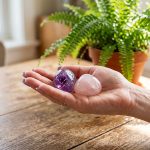
Rose quartz, smoky quartz, and amethyst are all quartz varieties and share the same safety profile as clear quartz. All three are appropriate for direct water contact.
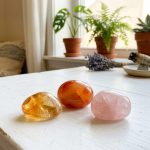
Citrine (natural or heat-treated) is also quartz and handles water well.
Black tourmaline and obsidian are both stable in water and considered safe for water bottle use.
The practical principle: if it’s a quartz variety or a comparably hard, chemically stable mineral, it’s generally safe for water contact.
Which Crystals Should Never Go in a Water Bottle
Malachite contains copper and should never be used in water you intend to drink. Copper compounds can leach into the water and are toxic in quantity. This is a hard no regardless of how popular malachite is in other crystal practices.
Selenite and calcite dissolve in water and will visibly degrade. Beyond the obvious problem of your stone disappearing, the dissolved mineral content in the water isn’t something you want to be drinking.
Pyrite contains iron and will oxidize in water, producing rust-like compounds.
Fluorite is softer and can be etched by prolonged water contact. Some fluorite varieties also contain fluorine compounds in their structure.
Labradorite, lapis lazuli, and malachite are all questionable to unsafe for drinking water. Lapis lazuli contains pyrite and lazurite, and while a brief rinse won’t hurt, using it as a water infusion stone over time is not recommended.
Any stone you’re unsure about: keep it out of drinking water. The consequences of getting it wrong are meaningfully different from getting it wrong with a placement stone.
How Crystal Water Bottles Work
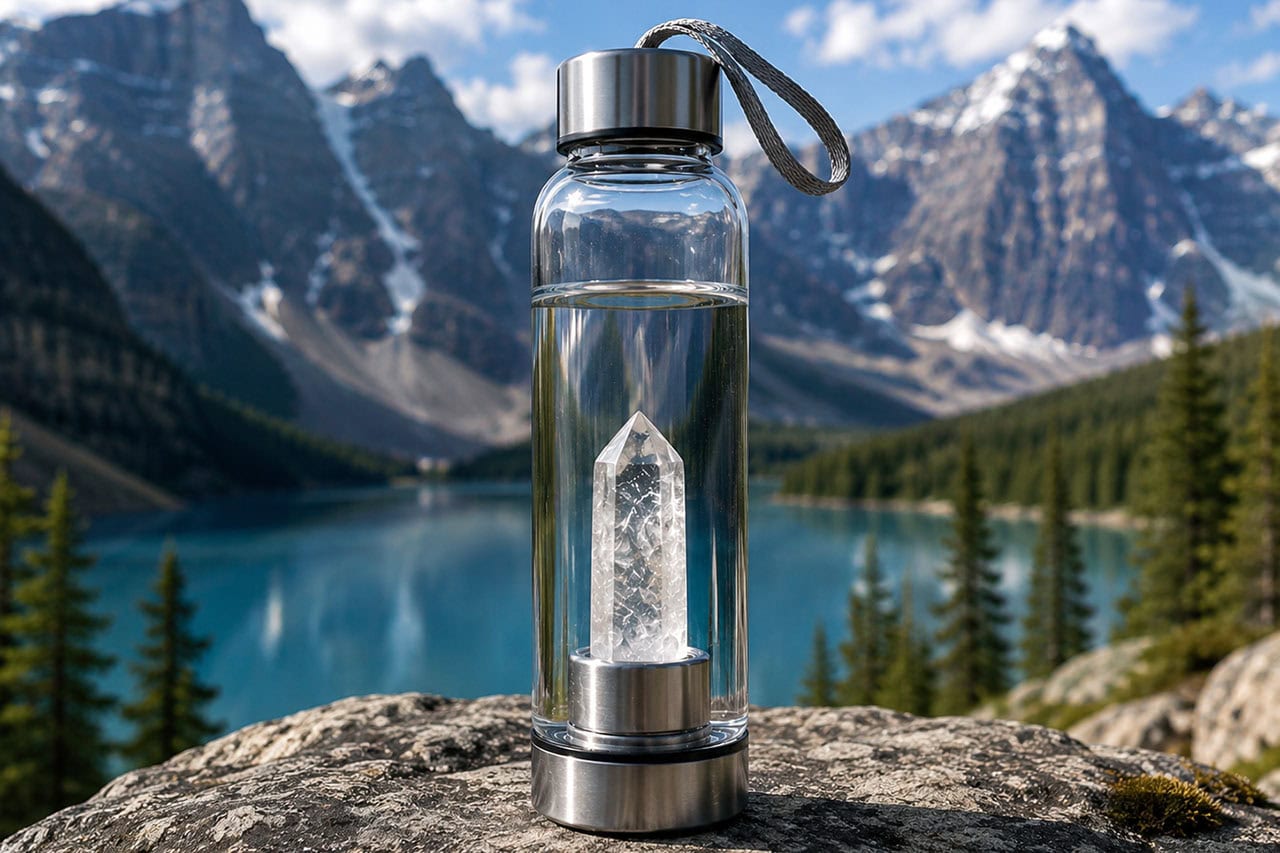
Most dedicated crystal water bottles are designed with the crystal in a separate sealed chamber that sits within the water rather than floating loose in it. This is the safest design: the water is in contact with the exterior of the stone but there’s no risk of the stone chipping or degrading into the water. For any crystal you’re uncertain about, a sealed-chamber bottle design reduces risk significantly.
Loose crystals in an open water bottle are the higher-risk approach. For this method, stick to well-established safe stones and use polished rather than raw specimens.
Which Crystal Water Bottle Is Best
The best crystal water bottle for a given person depends more on the crystal than the bottle itself. Choose the stone based on what you’re working with:
Clear quartz for mental clarity and amplifying intention. A versatile default.
Rose quartz for emotional softness, self-compassion, and heart-centered days.
Amethyst for calm and reducing anxious mental activity during the day.
Smoky quartz for grounding during stressful periods.
Citrine for abundance-oriented intention and uplifting energy throughout the day.
For the bottle itself: look for borosilicate glass (more durable and temperature-resistant than standard glass), a secure base that protects the crystal from impact, and a sealed crystal chamber if you want to use any stone beyond the standard safe list.
Common Questions About Crystal Water Bottles
What crystals are good for water bottles?
Clear quartz, rose quartz, amethyst, smoky quartz, citrine, and black tourmaline are all safe and widely used.
Which crystal water bottle is best?
The best combination depends on your intention. Clear quartz is the most versatile. Rose quartz for emotional wellbeing, amethyst for calm, citrine for abundance.
What crystals should I put in my water bottle?
Stick to quartz varieties unless you’re certain about a specific stone’s safety. Avoid malachite, selenite, calcite, pyrite, and fluorite in any water you’re drinking.
Can you put any crystal in water?
Can you put any crystal in water? No. Many popular crystals are unsafe for water contact, particularly for drinking water. Hardness and chemical composition both matter.
A practical note: even with safe crystals, clean the stone thoroughly before use and clean it regularly while using it. A stone sitting in water is a different environment from a stone on a shelf, and physical cleanliness matters here as much as energetic cleansing.
For a full breakdown of which individual stones are water-safe and which aren’t, the Crystalance Mineral Library has care and safety information for every stone in the collection.