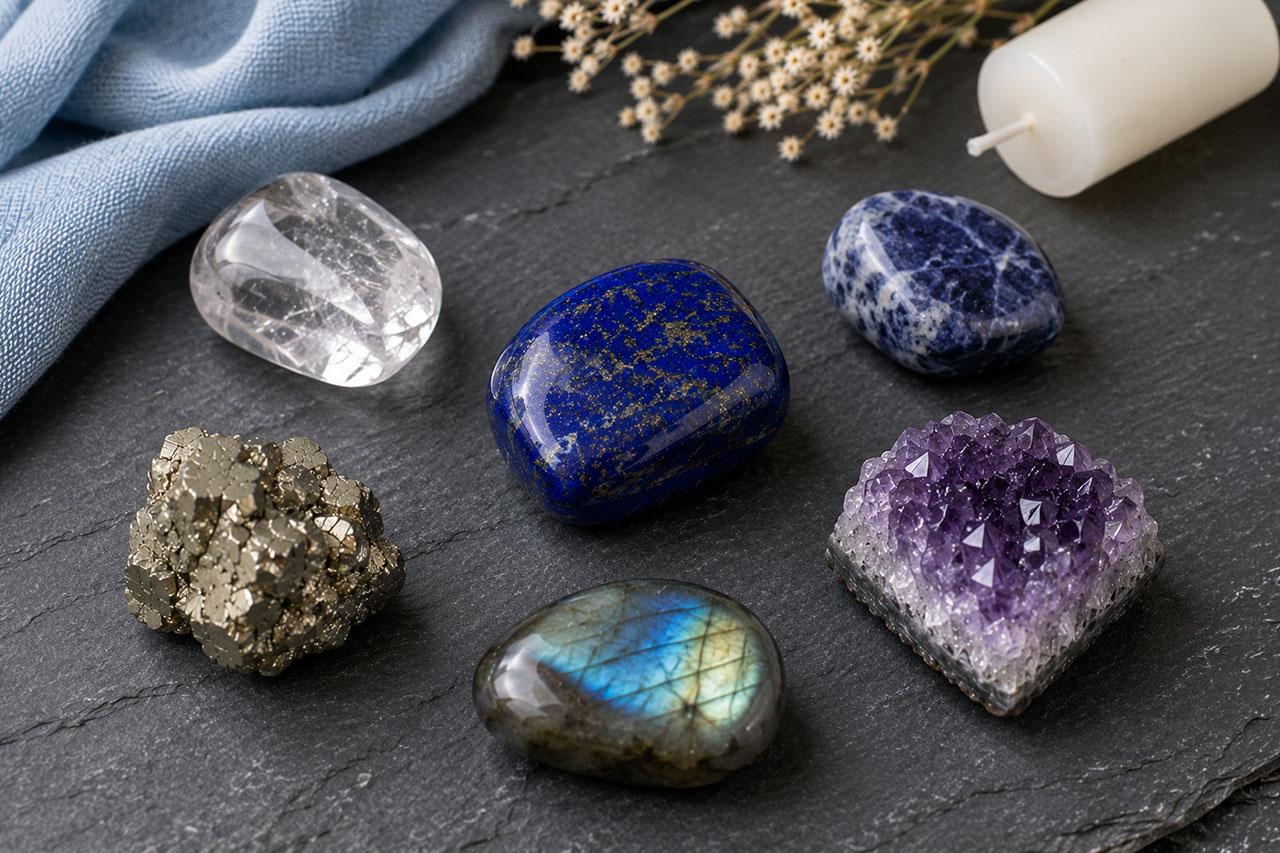
Lapis lazuli pairs well with pyrite for grounded confidence, sodalite for clear communication, and amethyst or clear quartz for reflective work. Its oldest partner is one it already holds, because the gold flecks running through lapis are pyrite.
Look closely at a good piece of lapis and you will see its most fitting pairing has been made for you. The flecks of gold scattered through the blue are not gold at all. They are pyrite, grown into the rock while it formed, which means the classic lapis-and-pyrite combination is one the stone arrived already wearing. Lapis is not even a single mineral. Geology.com describes it as a rock, a mix of the blue mineral lazurite with soft white calcite and those grains of pyrite, and it has to be at least a quarter lazurite before the trade will call it lapis at all.
That mixed makeup matters before you pair it, because it explains both what lapis brings to a combination and how carefully you have to treat it. This is also one of the oldest worked stones on earth. The same rock was ground into ultramarine, for centuries the most prized blue a painter could buy, and it was carried out of the mountains of what is now Afghanistan, where Geology.com dates the mining as far back as 7000 BC. A stone with that much history behind it has settled associations, and they are what shape its partners.
The pairing already inside the stone
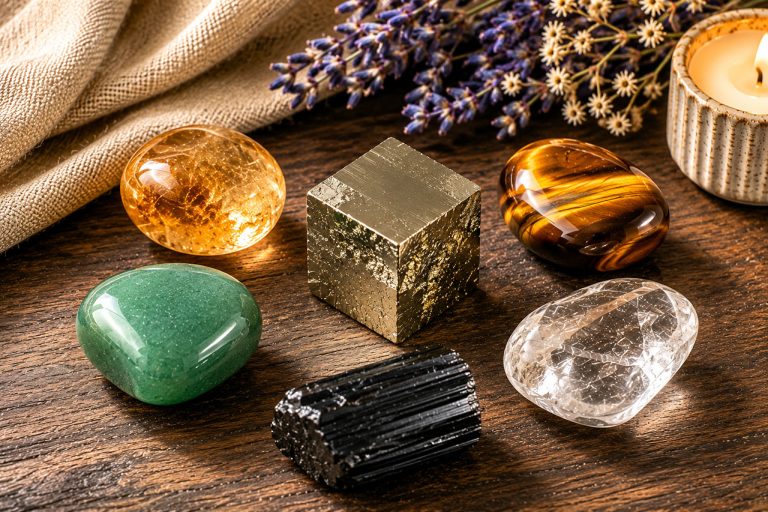
Since pyrite is part of lapis, pairing the two as separate stones only doubles down on something the rock already suggests. In practice the tradition reads pyrite as grounded confidence and material nerve, and lapis as inward wisdom and truth-telling, so together they join knowing what you think to the steadiness to act on it. That is the pairing for translating a clear idea into a move you go on to make, which is why it suits work decisions and the kind of resolve that has to survive contact with other people. If you want the pyrite side developed on its own, what goes well with pyrite takes it from there.
It is also a good corrective to a small myth. People sometimes assume the gold in a fine lapis is a sign of real precious metal, and it never is. Those flecks are iron sulphide, the same brassy mineral sold in chunks as fool’s gold, and in lapis they are a mark of the genuine rock rather than a flaw or a fake.
Pairings for communication
Lapis earns its reputation in the tradition as a throat-and-truth stone, tied to saying what you really mean, so its most natural partners work the same ground. Sodalite is the closest of them, another blue stone practice links to calm, logical communication, and the two sit together so easily that the harder job is often telling them apart on the shelf. That is a real problem worth heading off, and sodalite versus lapis lazuli sorts out which is which. Paired on purpose, they suit anyone who works with words, teaching, writing, or a conversation you have been putting off.
Clear quartz belongs here for the plain reason it belongs anywhere. The tradition treats it as an amplifier that strengthens its neighbour without redirecting it, so with lapis it simply gives you more of the same clarity, a clean choice when you want lapis turned up rather than turned toward something new.
Pairings for reflection and depth
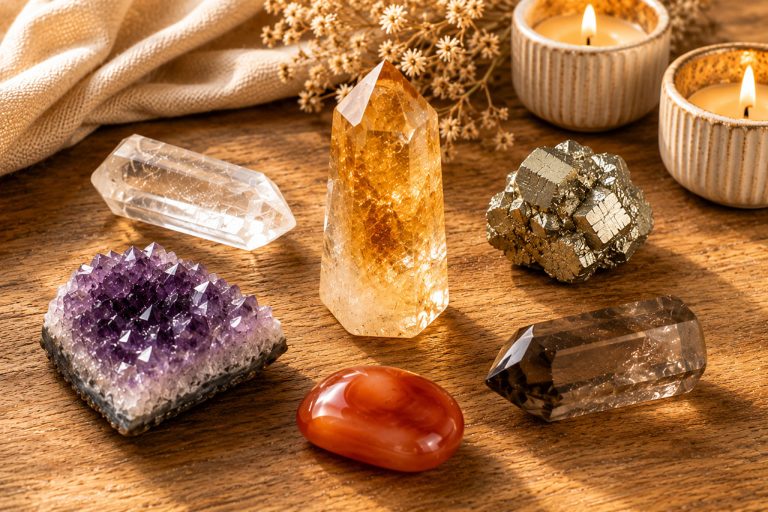
Not every use of lapis is about speaking out. Some of it is inward, and the stone has quieter partners for that. Amethyst is the steady one, read in practice as calming and clarifying, and beside lapis it suits meditation and the kind of study that needs both stillness and rigour. The pair leans toward the reflective, upper-chakra work the tradition associates with the third eye and crown, which in plain terms means the mental and intuitive rather than the physical.
Labradorite goes deeper still. Practice ties it to inner knowing and to weathering change, so with lapis it suits a genuine crossroads, the decision where being honest with yourself matters more than being comfortable. Where the sodalite pairing is about expression, this one is about the private reckoning that has to happen before you have anything to express.
What lapis is, and how to keep it
The mixed makeup that gives lapis its character also sets its limits. By Geology.com the rock runs to only about 5 on the Mohs scale of mineral hardness overall, dragged down by the soft calcite in it, which is well below the quartz-family stones it often shares a dish with. That softness means a harder tumble will scratch it, so keep lapis in its own pouch, away from your quartz and anything harder. Water is the other caution, and it comes straight from the composition rather than from folklore. The calcite in lapis is soft and reacts to acids, and the pyrite oxidises with moisture over time, so keep the stone out of long soaks, salt water and cleaning sprays. Moonlight, sound or a rest on a dry cloth cleanse it without any of that risk.
For placement, lapis has a traditional home near the throat, given its association with honest speech, so a pendant is the natural way to wear the communication pairings. On a desk it suits a stretch of writing or study, especially beside sodalite or clear quartz. However you use it, the stone rewards being worked with on purpose rather than left as an ornament, which fits a rock people have valued deliberately for nine thousand years. For the full profile, with formation and identification notes, the Crystalance Mineral Library covers lapis lazuli in depth.