
Aegirine
Inosilicate (Clinopyroxene group)
Dark green to black, brownish-green
Vitreous to resinous
5-6
3.5-3.6
Monoclinic
Norway (type locality), Russia, Greenland, Canada, USA, Kenya
Uncommon; fine crystal specimens moderately rare
NaFeSi₂O₆ (Sodium iron silicate)
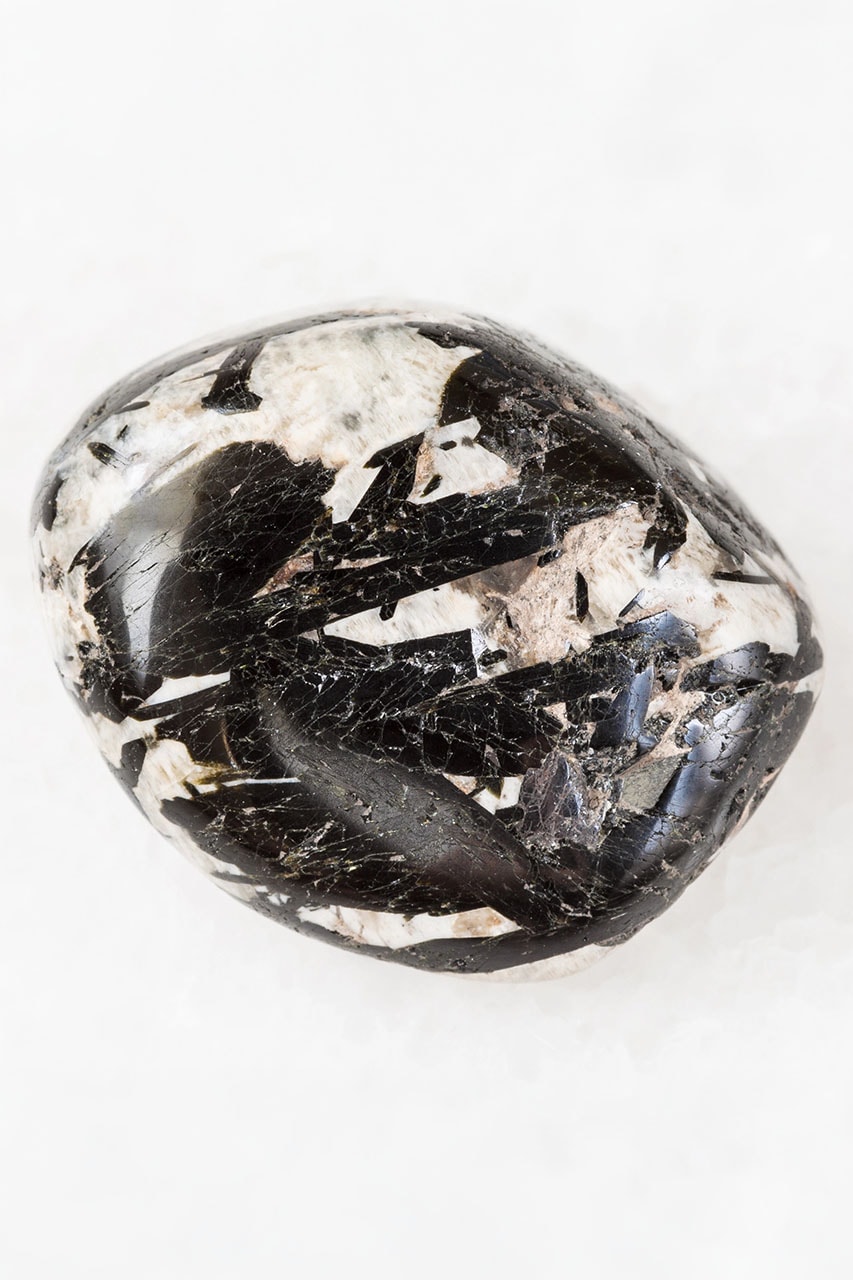
Aegirine or Acmite emerged into the scientific record in 1835 in Norway, where it was first discovered and named. The name carries Norse mythological weight—it derives from Aegir, the Scandinavian god of the sea, a fitting tribute for a mineral born of fire yet named for water. As a sodium iron silicate mineral, aegirine commonly forms in alkali-rich volcanic rock, crystallizing in environments where sodium concentrations reach the levels necessary for this distinctive pyroxene to develop.
The mineral carries a fascinating taxonomic history that reveals how mineralogy itself has evolved. Acmite and aegirine were first believed to be two separate species—one thought to belong to the amphiboles (acmite) and the other to the pyroxenes (aegirine). This early confusion was eventually resolved as mineralogists recognized that both names described the same fundamental mineral. Today, acmite is understood as a fibrous green-colored variety of aegirine, with the distinction lying in crystal habit rather than chemical identity.
As a member of the clinopyroxene group of inosilicate minerals, aegirine belongs to a family of chain silicates characterized by their distinctive crystal structures and formation in igneous and metamorphic environments. Its presence serves as an indicator of alkaline geological conditions, making it valuable to geologists studying volcanic and intrusive rock systems.
What makes aegirine immediately recognizable is its dramatic appearance. Aegirine is a striking, dark green to black pyroxene mineral known for its elongated, prismatic crystals with a sharp, spear-like appearance. These bladed, sword-like formations have made aegirine a favorite among mineral collectors, who prize specimens where the dark crystals contrast against lighter matrix materials. Specimens often show aegirine crystals associated with other minerals—dark green crystals of aegirine alongside white feldspar create particularly striking displays.
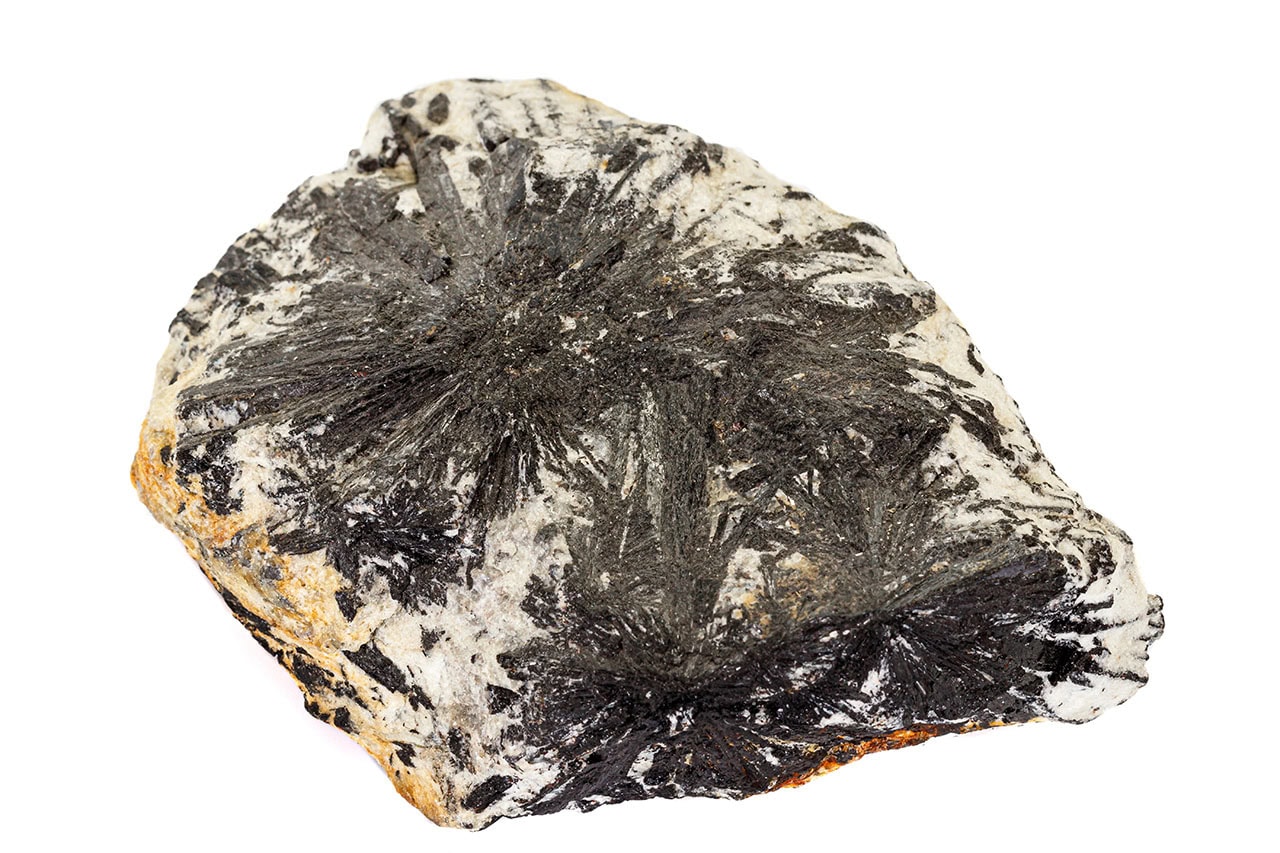
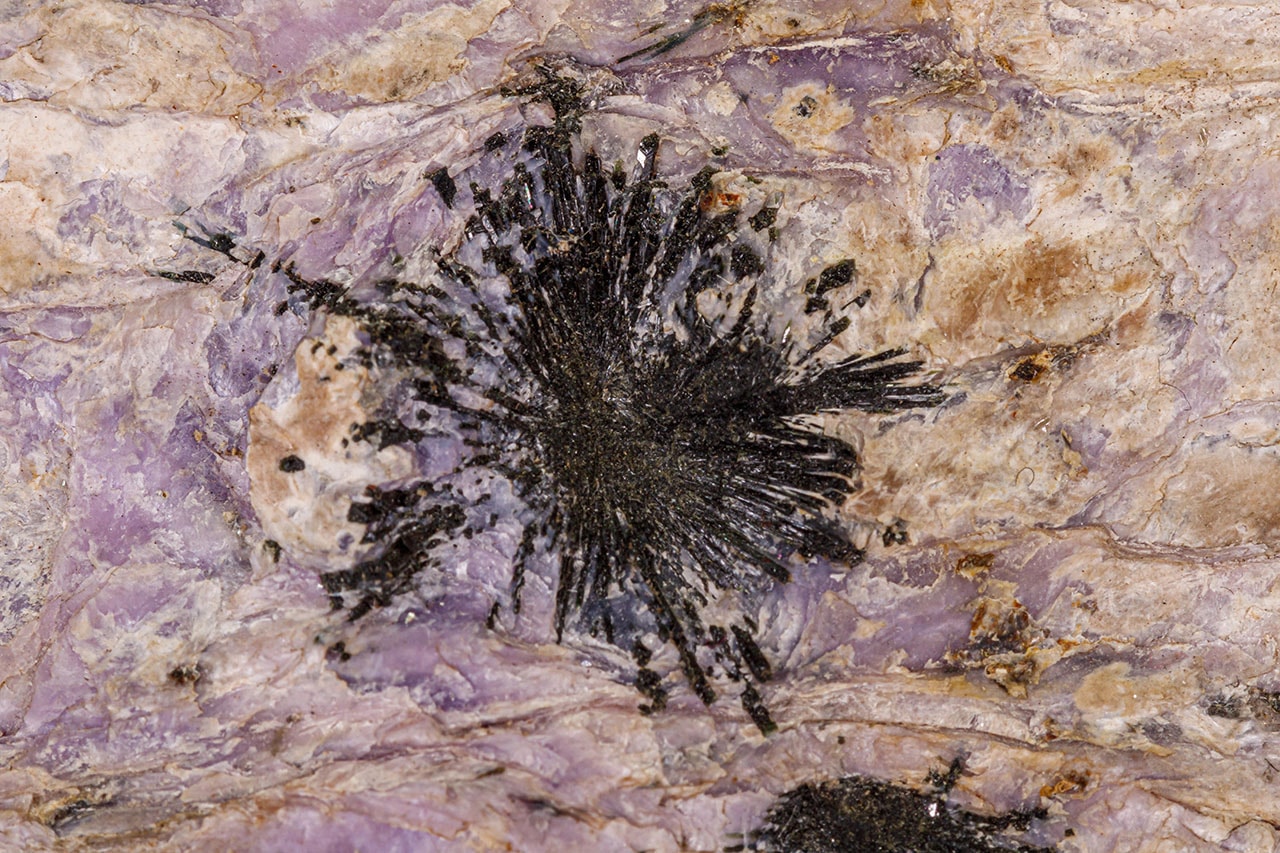
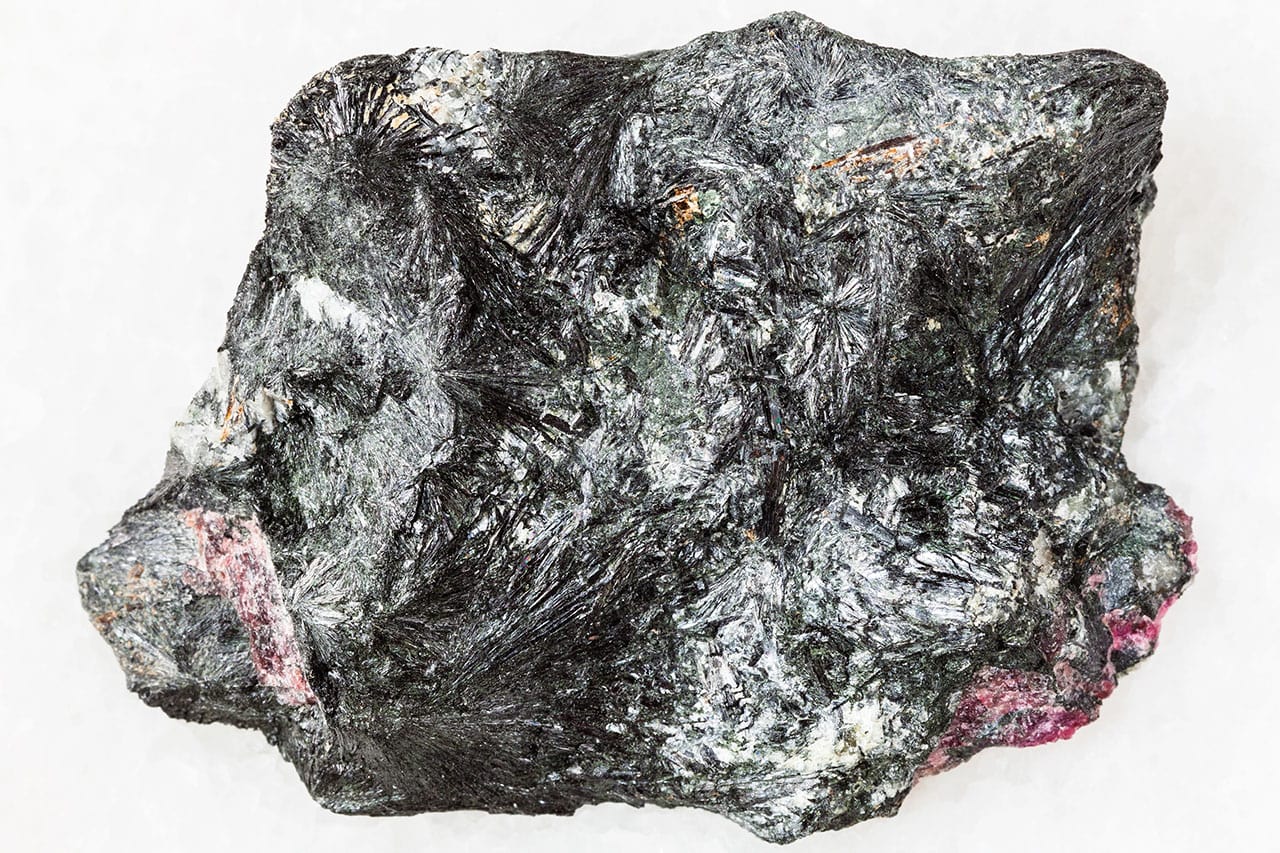
TABLE OF CONTENTS
Properties & Qualities
Physical Properties
Aegirine presents itself through its characteristic elongated, prismatic crystals that give the mineral its distinctive personality. These crystals display a sharp, spear-like appearance that immediately distinguishes aegirine from more rounded or blocky minerals. The blade-like terminations and slender, columnar form create specimens that seem almost weaponized in their geometric precision.
The color of aegirine ranges from dark green to black, with the depth of coloration relating to iron content within the crystal structure. The fibrous green variety known as acmite shows a somewhat different presentation than the typical dark crystals, though both share the same fundamental chemical composition. Some specimens display brownish-green tones, particularly where weathering or trace element variations affect the surface.
As a clinopyroxene, aegirine crystallizes in the monoclinic system, forming the elongated prisms that characterize the species. The crystals frequently appear in radiating or divergent groupings, and they may occur as isolated individuals embedded in matrix or as dramatic clusters that showcase their natural spear-like form.
Aegirine commonly occurs in association with other minerals characteristic of alkaline igneous environments. Specimens may show light brownish rosettes of lourenswalsite alongside the dark green aegirine crystals, often accompanied by white feldspar. These mineral associations not only create visually striking specimens but also provide important clues about the geological conditions under which the aegirine formed.
The mineral's formation in alkali-rich volcanic rock means it often appears in nepheline syenites, phonolites, and other sodium-rich igneous rocks. This specific formation environment makes aegirine an indicator mineral that geologists use to identify and characterize alkaline rock complexes.
Metaphysical properties
Within metaphysical traditions, aegirine has earned recognition as a powerful protective stone, often associated with its dark coloration and the warrior-like appearance of its spear-shaped crystals. Practitioners frequently describe it as one of the more potent stones for energetic protection and the clearing of negative influences.
The stone's primary resonance is typically associated with the root chakra, creating grounding energy that anchors the user firmly in physical reality. Some practitioners also connect aegirine to the higher chakras, viewing it as a stone that helps align all energy centers while maintaining strong grounding.
Aegirine's connection to Aegir, the Norse sea god, has inspired metaphysical associations with strength, power, and the ability to navigate turbulent circumstances. Just as the sea god commanded the powerful and unpredictable ocean, aegirine is said to help users maintain their power and integrity amid life's storms.
Contemporary energy workers often describe aegirine as particularly effective for those who feel drained by others or who struggle to maintain their energetic boundaries. Its protective qualities allegedly help users reclaim their personal power and resist external influences that might compromise their authenticity.
Meaning & Symbolism
Physical meaning
In physical symbolism, aegirine represents the principle of focused strength and directed energy. Its sharp, spear-like crystals symbolize the ability to cut through obstacles and maintain clear direction despite challenges. The mineral's formation under the intense conditions of volcanic activity reinforces this association with transformative power emerging from extreme circumstances.
The dark coloration and substantial density of aegirine connect it symbolically to physical grounding and stability. Its association with the root chakra extends to themes of survival, physical security, and the basic vitality needed to navigate the material world.
The mineral's formation in alkali-rich environments—conditions that produce relatively uncommon minerals—symbolizes the emergence of distinctive strength from specialized circumstances, suggesting that unique challenges can forge unique capabilities.
Spiritual meaning
Aegirine's spiritual significance centers on its reputation as a stone of integrity and authentic power. Many practitioners view it as helping users align with their true selves, resisting the temptation to compromise their values or surrender their power to external pressures.
The stone's mythological connection to Aegir, the sea god, adds layers of spiritual meaning related to navigating the depths of consciousness and mastering the powerful, sometimes turbulent forces of the inner world. Just as a skilled sailor works with rather than against the sea, aegirine allegedly helps users work skillfully with their own powerful spiritual energies.
For those engaged in spiritual protection work, aegirine is considered particularly valuable. Its warrior-like energy supposedly creates a strong energetic boundary that allows spiritual exploration while maintaining safety from negative influences or psychic intrusion.
Healing Benefits
Physical healing
Traditional healing applications of aegirine should be understood as energetic and folk practices rather than medical treatments. Crystal healers have valued aegirine for its perceived ability to support physical vitality and strengthen the body's natural defenses.
The stone is traditionally associated with supporting the immune system and helping the body recover from energetic depletion. Practitioners might use aegirine in layouts designed to restore vitality, particularly for those experiencing chronic fatigue or feeling drained by demanding circumstances.
Some alternative practitioners associate aegirine with supporting the body's metabolic and regenerative processes. Its iron content and grounding properties have led to associations with blood and circulation in folk healing traditions, though these applications remain in the realm of energy medicine.
Emotional healing
Aegirine's reputation in emotional healing centers on its ability to help users reclaim their personal power and emotional sovereignty. Those who struggle with feeling overwhelmed by others' emotions or who tend to lose themselves in relationships may find aegirine's grounding, protective energy supportive.
The stone is particularly valued for those recovering from situations of emotional manipulation or energy drain. Its protective qualities allegedly help establish and maintain healthy emotional boundaries, supporting users in protecting their emotional integrity.
For those dealing with feelings of being scattered or pulled in multiple directions, aegirine reportedly provides a centering, focusing influence that helps users reconnect with their core sense of self and emotional stability.
Spiritual healing
In spiritual healing contexts, aegirine addresses what practitioners identify as energetic vulnerability and the loss of personal power. Its protective properties allegedly help repair breaches in the energy field and restore the user's natural energetic boundaries.
Energy healers often use aegirine for clearing negative attachments and influences. The stone's reputation as a powerful protective ally makes it valuable for those who feel they've been affected by negative energies, psychic attack, or draining relationships.
The mineral's grounding force makes it valuable for those who feel disconnected from their physical body or earthly purpose. Aegirine reportedly helps anchor spiritual energy into the physical form, supporting integrated spiritual development that remains grounded and practical.
Use & Care
How to use
- Protective amulet:Carry or wear aegirine for energetic protection and maintaining personal power throughout the day.
- Root chakra work:Place at the base of the spine or at the feet during meditation to enhance grounding and stability.
- Energy boundary setting:Hold or wear when entering draining environments or interacting with energetically challenging people.
- Meditation focus:Hold during meditation to strengthen connection to authentic self and reinforce energetic boundaries.
- Space protection:Place specimens in the home or workspace to create a protective energetic field.
- Recovery work:Keep nearby during recovery from energetic depletion or emotionally draining situations.
- Specimen display:Display the striking spear-like crystals in living spaces for both beauty and protective energy.
- Shadow work:Use during inner work to maintain grounding while exploring deeper aspects of consciousness.
How to cleanse
- Running water:Hold under cool running water while visualizing accumulated energies washing away.
- Smudging:Pass through sage or palo santo smoke for energetic clearing—particularly suited to this protective stone.
- Earth burial:Bury in soil for 24-48 hours to discharge absorbed negativity and reground.
- Sound cleansing:Use drums or deep tones that resonate with the stone's grounding energy.
- Moonlight bathing:Leave under moonlight overnight for gentle cleansing.
- Breath work:Hold while doing grounding breaths, imagining negativity flowing into the earth.
- Regular cleansing:As a protective stone that absorbs negativity, aegirine benefits from frequent clearing.
How to charge
- Earth charging:Place directly on soil or stone to reconnect with grounding earth energy.
- Sunlight exposure:Charge in sunlight to activate protective and vitalizing properties.
- Intention setting:Hold while stating protective intentions clearly and firmly.
- Root chakra meditation:Charge during grounding meditation by visualizing red earth energy filling the stone.
- Iron proximity:Place near iron or other grounding materials to amplify protective qualities.
- Storm charging:Some practitioners charge during thunderstorms to enhance the stone's powerful energy.
- Crystal cluster:Place on quartz to amplify and recharge natural frequency.
Combining with other stones
- Black Tourmaline:Creates a powerful protective combination for psychic shielding and grounding.
- Hematite:Amplifies grounding and strengthens energetic boundaries.
- Smoky Quartz:Enhances transmutation of negative energy while deepening grounding.
- Clear Quartz:Amplifies aegirine's protective properties and helps direct its energy.
- Obsidian:Combines for shadow work and protection during inner exploration.
- Selenite:Adds high-vibration cleansing while aegirine maintains protective grounding.
- Labradorite:Pairs protective grounding with enhanced intuition and magical awareness.
- Carnelian:Balances aegirine's protective grounding with creative vitality and motivation.
Identification
Can be mistaken for
- Black Tourmaline (Schorl):Both dark and prismatic, but tourmaline shows vertical striations and triangular cross-section, while aegirine is a pyroxene with different cleavage.
- Hornblende:Another dark, elongated mineral, but hornblende belongs to the amphibole group with different cleavage angles.
- Augite:A related pyroxene that can appear similar but has different color tendencies and crystal habits.
- Aegirine-augite:An intermediate mineral between aegirine and augite that can be difficult to distinguish without testing.
- Arfvedsonite:A dark amphibole that occurs in similar alkaline environments and can resemble aegirine.
- Epidote:Green varieties may show some resemblance but have different crystal structure and properties.
How to spot a fake
- Crystal habit:Real aegirine shows characteristic elongated, prismatic, spear-like crystals—a distinctive form difficult to fake convincingly.
- Hardness test:Genuine aegirine has a hardness of 5-6 on the Mohs scale, distinguishing it from harder or softer imitations.
- Cleavage check:As a pyroxene, aegirine shows characteristic cleavage angles near 90 degrees, differing from amphiboles like hornblende.
- Mineral associations:Natural specimens often show characteristic associations with feldspar, nepheline, or other alkaline minerals.
- Color examination:Authentic aegirine displays its dark green to black coloration naturally; suspiciously uniform or painted-looking color warrants scrutiny.
- Specific gravity:Should feel appropriately heavy (3.5-3.6); significantly different density suggests imitation.
- Source verification:Purchase from reputable dealers who can specify locality—Norway, Russia, Greenland, and other alkaline rock localities are typical sources.
- Geological context:Genuine aegirine forms in alkali-rich volcanic and intrusive rocks; specimens claimed from inconsistent geological settings warrant caution.