Bronzite
Inosilicate (Pyroxene group)
Bronze-brown, greenish-brown, brown
Submetallic to pearly on cleavage surfaces
5-6
3.2-3.3
Orthorhombic
Brazil, USA, Austria, India, South Africa, Norway
Common; gem-quality material rare
(Mg,Fe²⁺)₂[SiO₃]₂
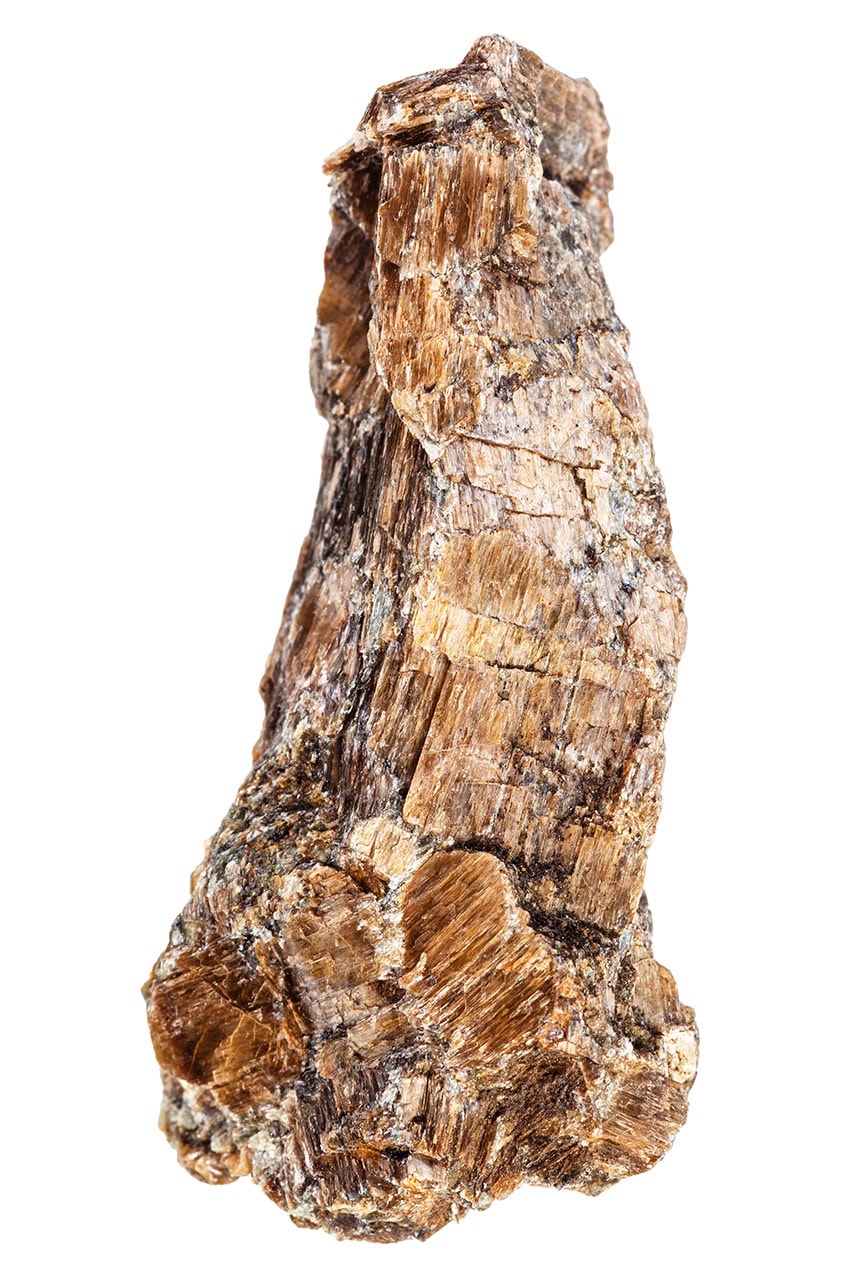
Named for its distinctive bronze-like submetallic luster that flashes across cleavage surfaces, bronzite occupies a unique position in the pyroxene family as an iron-bearing variety of enstatite. First described by Martin Heinrich Klaproth in 1810, this mineral bridges the compositional gap between magnesium-rich enstatite and iron-rich ferrosilite, containing just enough iron to create its characteristic bronzy sheen.
Bronzite forms in some of Earth's most extreme environments—from the depths of layered mafic intrusions to the alien landscapes of meteorites. Its presence in both terrestrial and extraterrestrial rocks makes it a key mineral for understanding planetary formation processes. The mineral's occurrence in numerous meteorites, including the Suizhou and Kerman meteorites, provides crucial insights into the composition of our early solar system.
From the ultramafic complexes of Brazil to the ancient ophiolites of Norway, from the Stillwater Complex of Montana to the meteorite-strewn plains of Kansas, bronzite tells the story of magmatic differentiation and planetary evolution. Its distinctive appearance—brown crystals with flashing bronze surfaces—makes it instantly recognizable to geologists and collectors alike.
Today, bronzite serves dual purposes: as an indicator mineral for geologists exploring for nickel-copper deposits and as a metaphysical stone valued for its grounding and protective properties. This intersection of scientific importance and spiritual significance makes bronzite a fascinating study in how minerals serve humanity on multiple levels.
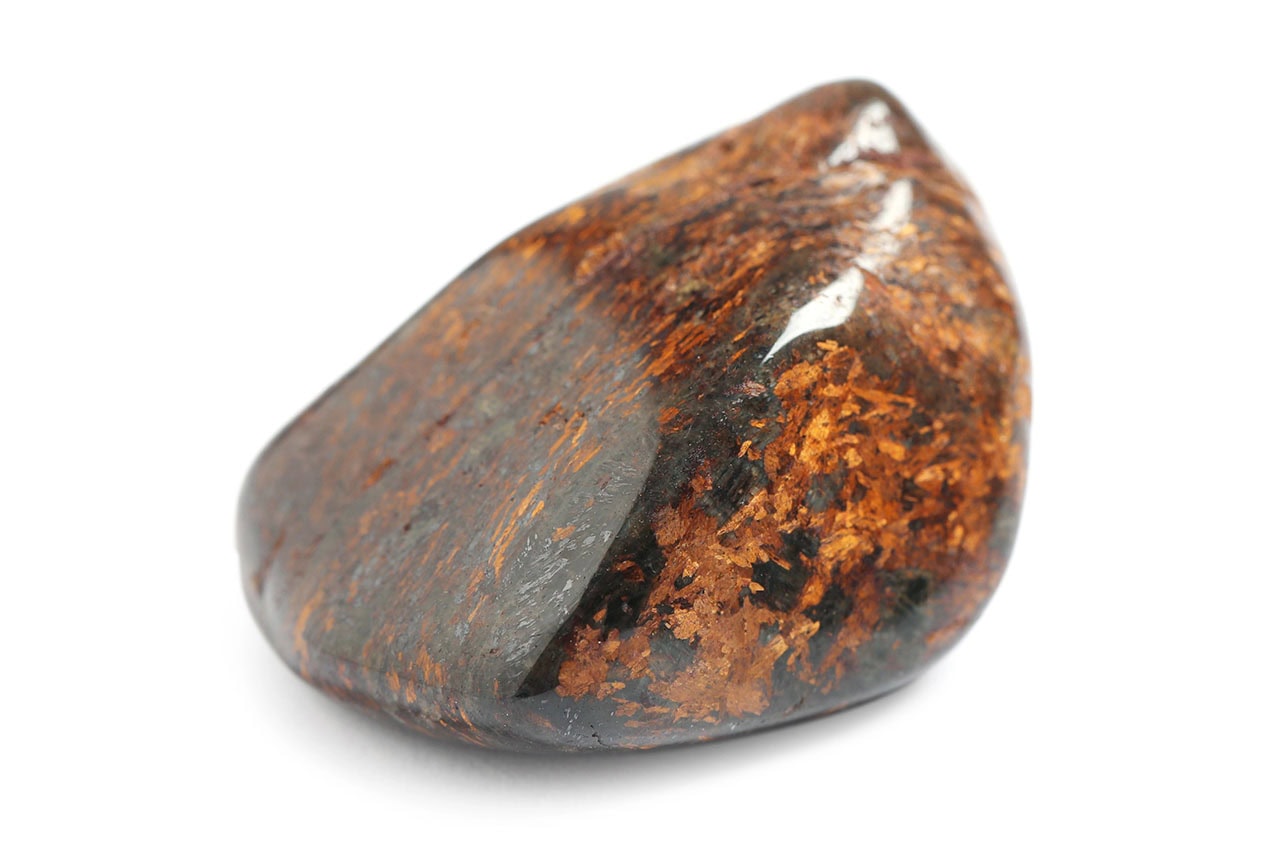
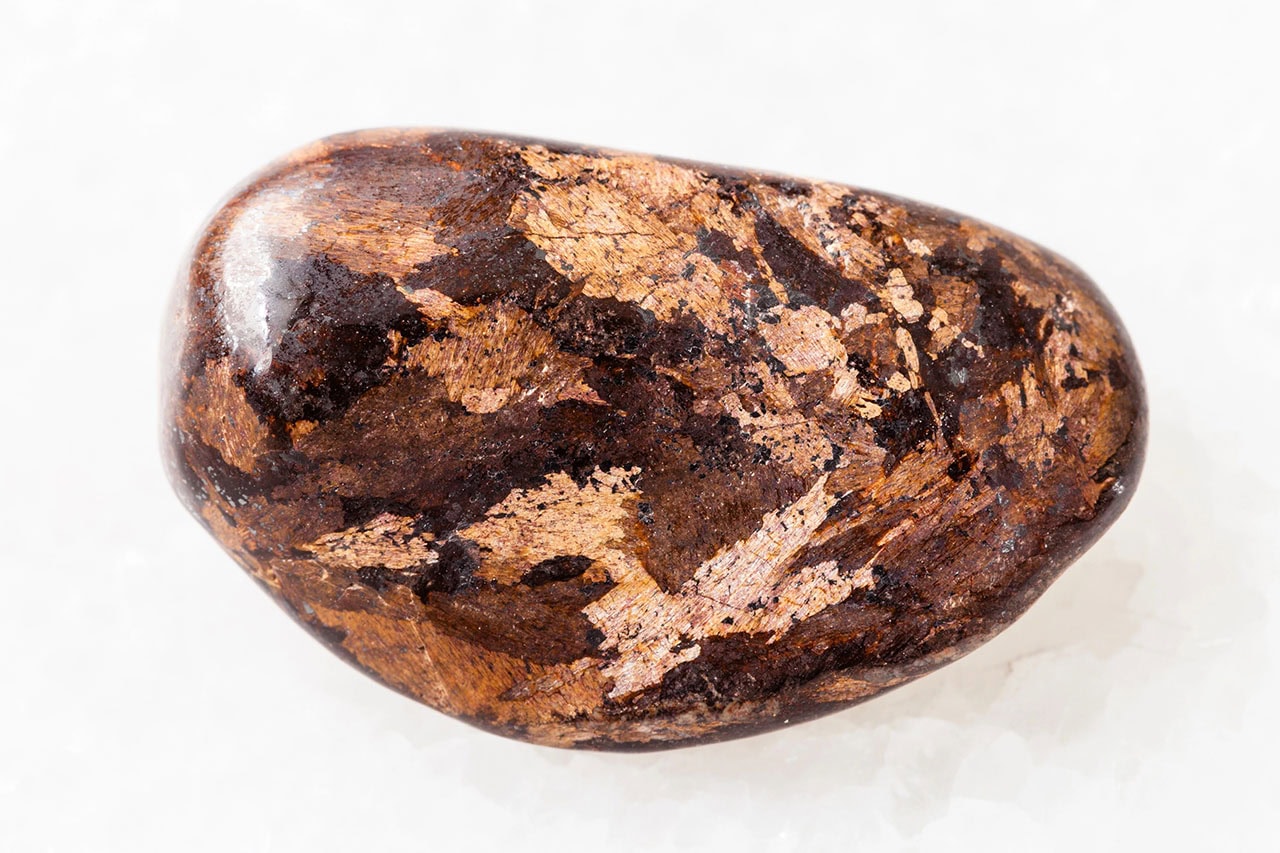
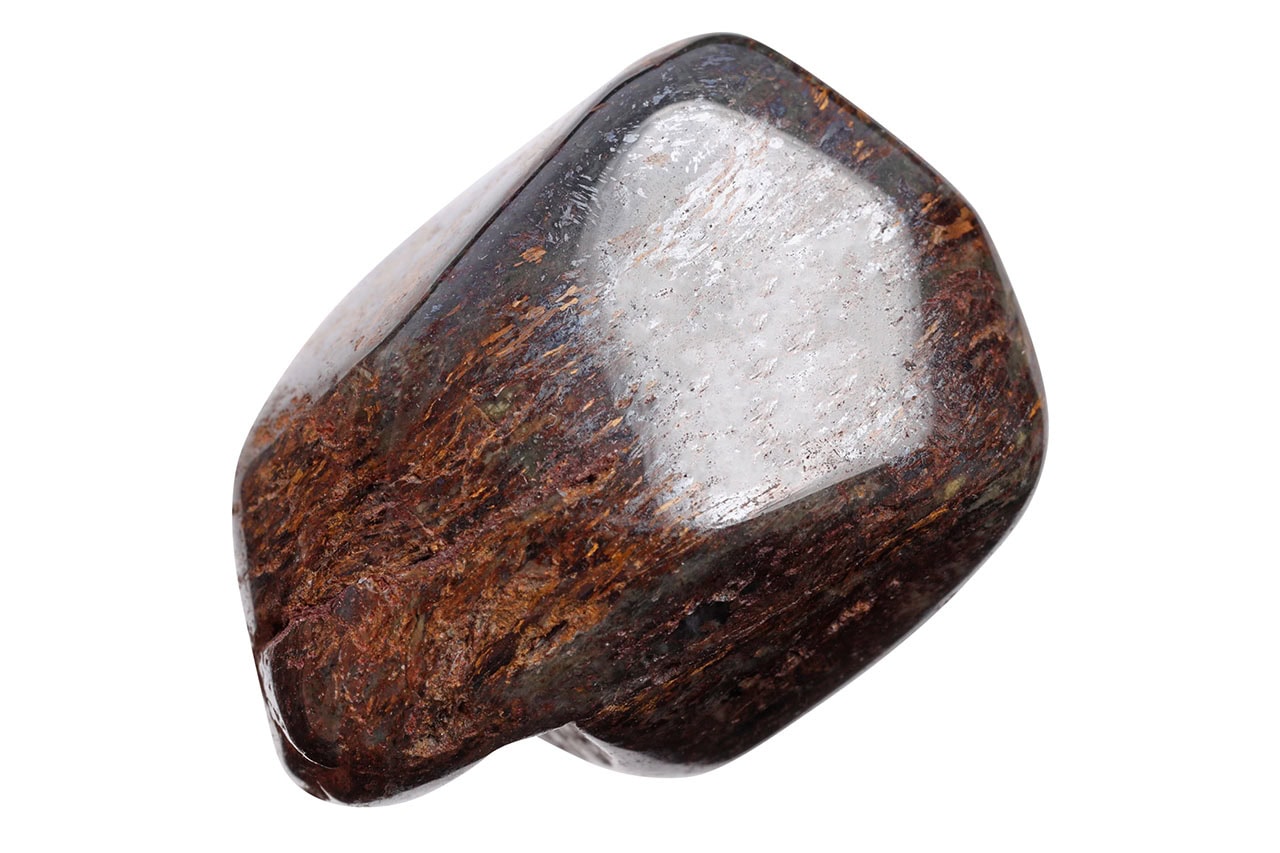
TABLE OF CONTENTS
Properties & Qualities
Physical Properties
Bronzite reveals itself through its namesake feature—a distinctive bronze-like schiller that plays across cleavage surfaces when the stone is turned in light. This optical effect, caused by oriented inclusions of iron oxides along cleavage planes, creates metallic flashes that range from golden-bronze to deep copper, giving the mineral an almost animated quality.
The color of bronzite typically ranges from brown to greenish-brown, with some specimens showing an olive-green cast. The intensity of the bronze schiller varies with iron content—specimens with higher iron show more pronounced metallic luster, while those closer to pure enstatite may display only subtle pearly reflections.
Crystal habits vary depending on formation environment. In igneous rocks, bronzite often forms stubby prismatic crystals or granular masses. The perfect prismatic cleavage at nearly 90-degree angles creates the characteristic "hackly" fracture pattern when broken. In metamorphic environments, bronzite may form fibrous or lamellar aggregates.
Under magnification, bronzite often reveals exsolution lamellae—thin plates of iron oxides that precipitated along cleavage planes as the mineral cooled. These microscopic inclusions are responsible for the bronze schiller and can create stunning patterns when viewed in thin section. Some specimens also show pleochroism, appearing different shades when viewed from different angles.
The mineral's association with ultramafic rocks means it often occurs with other mafic minerals like olivine, chromite, and magnetite. In meteorites, bronzite appears as chondrules—small, rounded grains that formed in the solar nebula before being incorporated into the meteorite parent body.
Metaphysical properties
Within metaphysical traditions, bronzite has earned recognition as a powerful grounding and protective stone, often called the "Stone of Courtesy" for its reputed ability to promote politeness and consideration in social interactions. Its bronze schiller is interpreted as creating an energetic mirror that reflects negative energy back to its source.
The stone's primary resonance occurs with the root and sacral chakras, creating what practitioners describe as a "protective anchor" that maintains energetic stability while navigating challenging situations. Unlike purely protective stones that create barriers, bronzite allegedly works by strengthening one's own energy field while deflecting negativity.
Bronzite's iron content creates interesting energetic interpretations. The iron is seen as providing warrior-like protection and strength, while the magnesium base maintains flexibility and flow. This combination reportedly helps users stand their ground without becoming rigid or aggressive.
The mineral's formation in high-temperature environments is viewed as imbuing it with transformative properties. Just as bronzite crystallized from molten rock, it allegedly helps users transform raw emotions or experiences into refined wisdom and strength.
Contemporary energy workers often describe bronzite as providing "energetic armor" that's particularly effective against psychic attacks, energy vampires, and environmental negativity. Its reflective properties supposedly create a boomerang effect, sending negative intentions back to their originators.
Meaning & Symbolism
Physical meaning
In physical symbolism, bronzite represents the principle of resilient strength—the ability to withstand pressure while maintaining integrity. Its formation in ultramafic environments symbolizes the strength that comes from enduring extreme conditions without losing essential nature.
The stone's bronze schiller symbolizes finding light within darkness, or discovering one's inner radiance even in challenging circumstances. Just as the metallic flashes appear when bronzite is turned to the right angle, personal strength often reveals itself when we shift perspective.
Its presence in both Earth rocks and meteorites connects bronzite to cosmic endurance—the ability to maintain structure and purpose whether on Earth or traveling through space. This makes it symbolically valuable for those feeling displaced or searching for their place in the world.
The mineral's association with mafic and ultramafic rocks—the deep, dark rocks of Earth's interior—connects it to primal strength and connection to Earth's core. Some practitioners view bronzite as helping access deep reserves of physical and emotional strength.
Athletes and martial artists sometimes work with bronzite for what they describe as "centered power"—strength that comes from groundedness rather than aggression. The stone allegedly helps maintain physical coordination under pressure.
Spiritual meaning
Bronzite's spiritual significance centers on its role as a stone of non-judgment and karmic justice. Many practitioners view it as teaching the spiritual principle of allowing natural consequences rather than seeking revenge or harboring resentment.
The stone's reflective properties extend to spiritual interpretation—bronzite allegedly helps users see their own shadows reflected in others' behavior, promoting self-awareness and spiritual growth through recognition of projections.
In meditation, bronzite serves as what many call a "spiritual stabilizer," helping maintain grounded awareness while exploring higher consciousness. Its earth element connection keeps spiritual work practical and integrated rather than escapist.
The mineral's occurrence in meteorites gives it associations with cosmic consciousness and stellar origins. Some practitioners work with meteoritic bronzite specifically to connect with off-planet wisdom or remember stellar heritage.
Different spiritual traditions emphasize various aspects. Some focus on bronzite's ability to break negative patterns through awareness, others on its capacity to transform discord into harmony through non-resistance.
Healing Benefits
Physical healing
Traditional healing applications of bronzite should be understood as energetic and folk practices rather than medical treatments. Crystal healers often focus on bronzite's high iron content, using it in layouts designed to support healthy blood and circulation.
Some alternative practitioners use bronzite for what they describe as "structural support"—helping the body maintain proper alignment and posture. They might place bronzite along the spine during sessions aimed at improving physical carriage and presence.
The stone's grounding properties have led to its use for anxiety and panic disorders in alternative healing. Practitioners claim it helps create a sense of physical stability that can interrupt the physical symptoms of anxiety attacks.
Historical uses include protection against confusion and mental fog. Contemporary energy healers sometimes use bronzite for those experiencing cognitive overload, claiming it helps sort and prioritize mental input.
The mineral's association with the root chakra has created connections to issues of physical security and survival. Energy healers might use bronzite in layouts designed to support the adrenal system and stress response.
Emotional healing
Bronzite's reputation in emotional healing centers on its ability to promote what practitioners call "emotional elasticity"—the capacity to bounce back from emotional challenges without becoming brittle or defensive.
The stone allegedly excels at breaking patterns of self-defeating behavior. Users report that bronzite helps them recognize when they're about to repeat destructive patterns, providing a moment of awareness that allows for different choices.
For those dealing with bullying or manipulation, bronzite reportedly provides energetic protection while teaching assertiveness without aggression. Its reflective properties allegedly help manipulative energy return to its source naturally.
The mineral is frequently recommended for those learning to set healthy boundaries. Rather than creating walls, bronzite supposedly helps users maintain flexibility while being clear about their limits.
Many practitioners report that bronzite helps with forgiveness—not by suppressing anger but by allowing natural consequences to unfold without personal investment in revenge or punishment.
Spiritual healing
In spiritual healing contexts, bronzite addresses what practitioners identify as "karmic entanglements"—situations where one is caught in cycles of action and reaction that perpetuate suffering. Its reflective properties allegedly help break these cycles through non-engagement.
Energy healers often use bronzite for clearing what they term "cords of discord"—energetic connections maintained by conflict or resentment. The stone's ability to reflect energy reportedly helps these cords dissolve naturally.
The mineral's grounding force makes it valuable for those experiencing "spiritual warriorship" challenges—standing for truth while maintaining peace. Bronzite allegedly helps navigate confrontation from a centered, grounded place.
For ancestral healing work, bronzite is used to break patterns of conflict or aggression in family lines. Practitioners describe it as helping transform warrior energy from destructive to protective expressions.
Some healers specialize in using bronzite for "shadow integration"—recognizing and accepting rejected aspects of self reflected in others' behavior. The stone's mirror-like schiller becomes a metaphor for this spiritual work.
Use & Care
How to use
- Pocket protection:Carry tumbled bronzite for all-day energetic protection and grounding
- Meditation anchor:Hold during meditation to maintain centered awareness and non-judgment
- Workplace shield:Keep on desk to deflect office politics and maintain professional boundaries
- Jewelry wearing:Wear as pendants or bracelets for continuous protective energy
- Conflict resolution:Hold during difficult conversations to maintain calm assertiveness
- Sleep protection:Place under pillow to process and release daily conflicts during sleep
- Exercise companion:Carry during physical training for grounded strength and endurance
- Study aid:Keep nearby while learning to maintain focus despite distractions
- Home protection:Place at entrances to deflect negative energy from entering living space
- Shadow work tool:Use in meditation to recognize projections and integrate shadow aspects
How to cleanse
- Earth burial:Bury in soil for 24-48 hours to discharge accumulated energies
- Smudging:Pass through sage or palo santo smoke for energetic clearing
- Sound cleansing:Use drums or deep tones that resonate with earth element
- Sunlight:Place in morning sun for 1-2 hours to burn off negative accumulations
- Breath work:Hold while doing grounding breaths, imagining negativity flowing into earth
- Avoid water:Prolonged water exposure can damage the schiller—use dry methods
- Regular cleansing:Bronzite actively deflects negativity and needs frequent clearing
- Visualization:Imagine bronze light restoring the stone's protective mirror
How to charge
- Earth charging:Place directly on soil to reconnect with earth element
- Sunlight activation:Charge in full sun to activate protective and reflective properties
- Iron proximity:Place near iron or magnetite to amplify protective qualities
- Intention setting:Hold while stating protective intentions clearly and firmly
- Root chakra toning:Use root chakra frequencies while holding stone
- Martial arts practice:Charge while practicing defensive movements
- Group grounding:Charge in grounding circles or earth-based ceremonies
- Storm charging:Some practitioners charge during thunderstorms for warrior energy
Combining with other stones
- Black Tourmaline:Creates powerful protective combination for psychic shielding
- Hematite:Amplifies grounding and strengthens energetic boundaries
- Tiger's Eye:Enhances protective reflection while adding solar confidence
- Smoky Quartz:Deepens grounding and transmutation of negative energy
- Jasper:Strengthens earth connection and physical endurance
- Pyrite:Adds protective shield while enhancing personal power
- Obsidian:Combines for shadow work and protection during inner exploration
- Carnelian:Balances bronzite's grounding with creative vitality
Identification
Can be mistaken for
- Hypersthene:Very similar appearance but different optical properties
- Enstatite:Bronzite is actually a variety of enstatite with higher iron content
- Augite:Another pyroxene that can look similar but has different crystal angles
- Hornblende:Can show similar bronze schiller but has different cleavage
- Biotite:Bronze-colored mica that flakes unlike bronzite's prismatic structure
- Tiger's Eye:When polished can look similar but has different structure
- Pietersite:Can show similar colors but has different patterns and properties
How to spot a fake
- Schiller check:Real bronzite shows bronze metallic schiller on cleavage surfaces
- Cleavage angles:Should show nearly 90-degree prismatic cleavage
- Hardness test:Real bronzite scratches glass (5-6 Mohs)
- Weight assessment:Should feel moderately heavy for its size
- Associated minerals:Natural specimens often show other mafic minerals
- Price evaluation:Very cheap bronzite may be mislabeled brown stones
- Surface examination:Look for natural cleavage planes, not painted effects
- Streak test:Should show white to gray-green streak
- Heat resistance:Real bronzite withstands moderate heat without change
- Source verification:Know typical appearance from claimed localities