
Calcite
Carbonate
Colorless, white, yellow, orange, blue, green, red, brown, gray, black
Vitreous to pearly
3
2.71
Trigonal (Rhombohedral)
Mexico, USA, Brazil, Iceland, Belgium, Czech Republic, England
Very common; exceptional specimens and rare colors moderately valuable
CaCO₃ (Calcium carbonate)
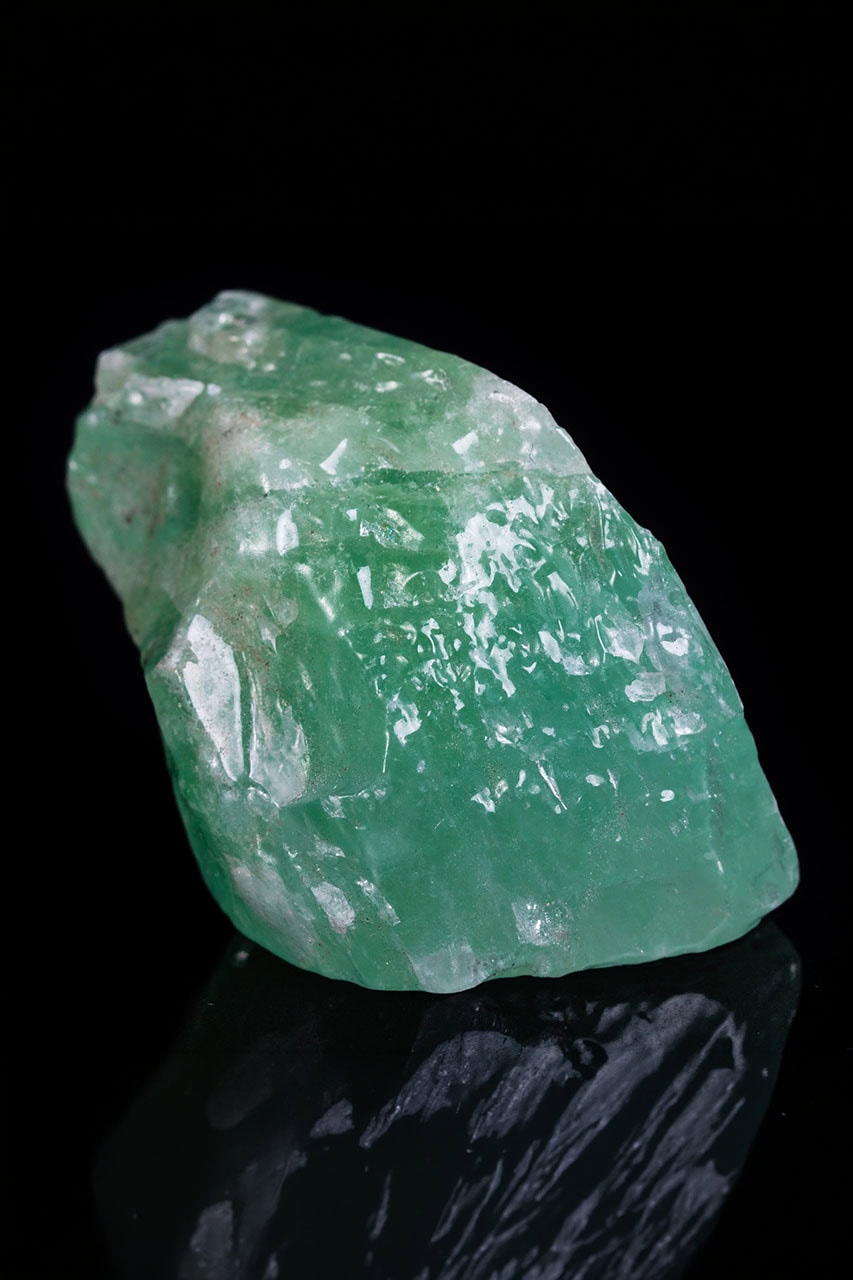
Calcite is the principal mineral of the rock group known as carbonates, and it stands as one of Earth's most abundant and versatile minerals. A very common and widespread mineral with highly variable forms and colours, calcite appears in virtually every geological environment on the planet—from the deepest ocean floors to the highest mountain peaks, from scalding hot springs to frozen cave systems.
As a major component in limestone and dolomite, calcite has literally shaped civilizations. The pyramids of Egypt, the marble temples of Greece, the limestone cathedrals of Europe—all owe their existence to this humble calcium carbonate. Yet calcite's influence extends far beyond architecture. It forms the shells of marine organisms, the stalactites of caves, and the veins that thread through countless rock types.
The mineral's name derives from the Latin "calx," meaning lime, reflecting its ancient use in producing quicklime for construction. But calcite's story begins long before human history. Billions of years of marine organisms living, dying, and settling to ocean floors created the vast limestone deposits that now cover roughly ten percent of Earth's surface.
Today, calcite serves humanity in countless ways—from the optical calcite (Iceland spar) that helped Vikings navigate the North Atlantic to the pharmaceutical-grade calcium carbonate in modern antacids. In metaphysical circles, calcite has earned recognition as a powerful amplifier and cleanser of energy, with different colors addressing different chakras and healing needs. Its accessibility and variety make it one of the most democratic healing stones—available to everyone, yet capable of extraordinary beauty and energetic depth.
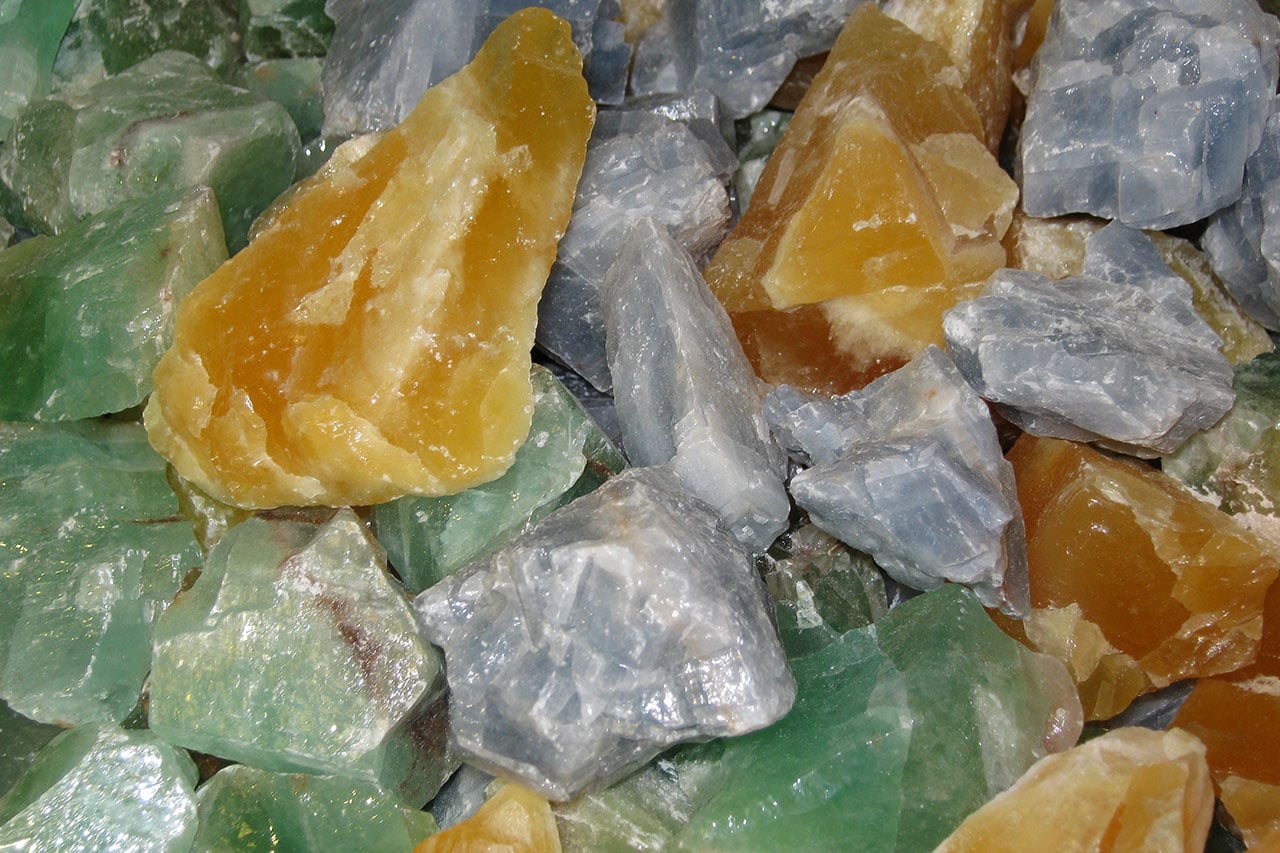
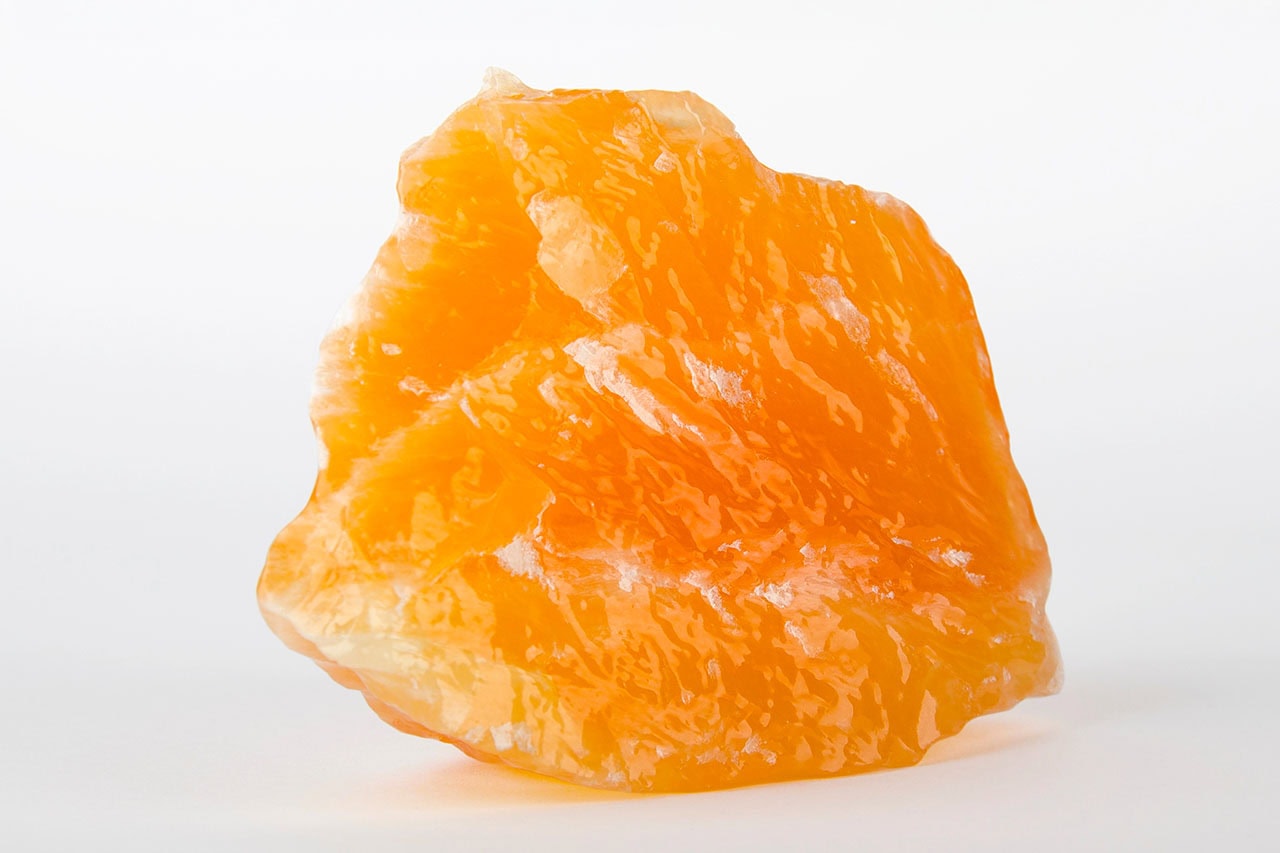
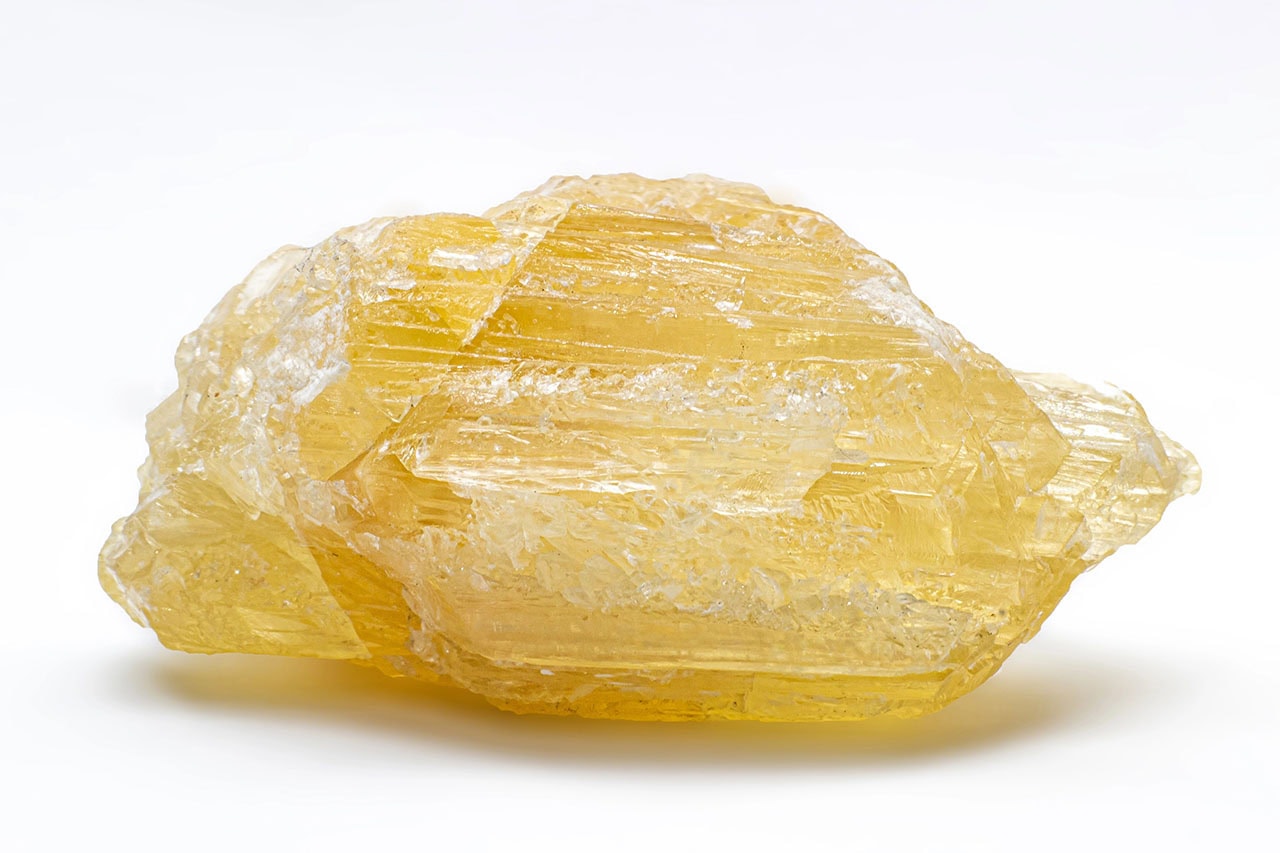
TABLE OF CONTENTS
Properties & Qualities
Physical Properties
Calcite presents itself as nature's most prolific shape-shifter, crystallizing in more than three hundred different forms—more than any other mineral. From perfect rhombohedrons that look like squashed cubes to scalenohedral "dogtooth" crystals that resemble canine teeth, from delicate needle-like prisms to massive stalactitic formations, calcite refuses to be confined to a single expression.
Calcite is best recognized by its relatively low Mohs hardness (3) and its high reactivity with dilute hydrochloric acid, which produces vigorous effervescence. This acid test remains the most reliable field identification method—a drop of dilute HCl on calcite produces immediate, visible bubbling as carbon dioxide gas is released. Calcite is number 3 on the Mohs hardness scale; thus, it can be scratched readily by a knife blade or geologic pick.
Color in calcite spans virtually the entire spectrum. Pure calcite is colorless or white, but trace impurities create an astonishing range. Iron produces yellows and oranges, manganese creates pinks and reds, copper generates greens and blues, and organic matter can produce browns and blacks. Some of the most spectacular specimens show multiple colors in banded or zoned patterns that map the crystal's growth history.
The mineral's optical properties are legendary. Iceland spar—transparent, colorless calcite—demonstrates double refraction so dramatically that text viewed through it appears doubled. This property, caused by calcite's extreme birefringence, fascinated early scientists and may have served as the "sunstone" that Viking navigators used to locate the sun on cloudy days.
Under ultraviolet light, many calcites fluoresce brilliantly. Red fluorescence from manganese-activated calcite is particularly spectacular, transforming ordinary-looking specimens into glowing embers. Some specimens also show phosphorescence, continuing to glow after the UV source is removed.
The chemical and physical characteristics of calcite make it relatively easy to distinguish from other minerals. It is relatively soft and can be scratched by common objects, it effervesces in acid, and it shows perfect rhombohedral cleavage in three directions. These three properties together make calcite one of the most identifiable minerals in the field.
Metaphysical properties
Within metaphysical traditions, calcite has earned recognition as a powerful amplifier of energy—a stone that doesn't just carry its own frequency but magnifies whatever energy it encounters. This amplification quality has made it popular for enhancing the effects of other stones in crystal grids and healing layouts.
Different colors of calcite resonate with different chakras, creating what practitioners describe as a "complete healing toolkit" within a single mineral species. Orange calcite connects to the sacral chakra, stimulating creativity and sexuality. Blue calcite soothes the throat chakra, enhancing communication. Green calcite opens the heart chakra for emotional healing. Clear calcite activates the crown chakra for spiritual connection. This color-chakra correspondence makes calcite one of the most versatile healing minerals available.
The stone's double refraction has profound metaphysical implications. Just as calcite splits a single ray of light into two, practitioners claim it helps users see situations from multiple perspectives simultaneously. This quality makes it valuable for those stuck in binary thinking or unable to see beyond their current viewpoint.
Calcite's formation in marine environments connects it to emotional fluidity and the wisdom of water. Many practitioners describe its energy as flowing and adaptable, helping rigid energy patterns soften and reorganize. This water wisdom makes calcite particularly effective for emotional healing work.
Contemporary energy workers often note calcite's ability to accelerate spiritual development. Its amplification properties reportedly speed up whatever process the user is engaged in—whether learning, healing, or growing. This acceleration quality requires awareness, as it can intensify both positive and negative experiences.
Meaning & Symbolism
Physical meaning
In physical symbolism, calcite represents the principle of foundation and structure. As the primary mineral in limestone and marble—materials that have supported human civilization for millennia—calcite embodies the importance of strong foundations in physical life.
The mineral's role in biological systems adds another dimension to its physical symbolism. Calcite forms the shells of countless marine organisms, the eggshells that protect developing life, and contributes to bone structure. This biological connection makes calcite symbolically linked to the body's own structural systems.
Its formation through both organic and inorganic processes symbolizes the integration of living and non-living aspects of physical existence. Just as calcite bridges the biological and geological worlds, it allegedly helps users integrate different aspects of their physical experience.
The stone's softness relative to many other minerals symbolizes the importance of flexibility within structure. Calcite teaches that strength doesn't require hardness—that adaptability and responsiveness can be more valuable than rigid resistance.
Students and learners often work with calcite for enhanced mental function. Its amplification properties allegedly help with information retention and processing, while its clarity-enhancing qualities support focused study and clear thinking.
Spiritual meaning
Calcite's spiritual significance centers on its role as a consciousness amplifier and spiritual accelerator. Many practitioners view it as helping speed up spiritual evolution by intensifying awareness and magnifying subtle energies that might otherwise go unnoticed.
The mineral's extraordinary variety of forms symbolizes the infinite expressions of consciousness. Just as calcite crystallizes in over three hundred forms while maintaining the same chemical composition, spiritual consciousness expresses through countless individual forms while remaining fundamentally unified.
Its double refraction carries deep spiritual meaning—the ability to see beyond surface reality to deeper truths. Working with optical calcite allegedly helps develop what mystics call "second sight"—the capacity to perceive spiritual dimensions overlaying physical reality.
In contemporary spirituality, calcite addresses what teachers call "spiritual stagnation"—periods when growth seems to plateau despite continued practice. Its amplification properties reportedly help break through these plateaus by intensifying the practitioner's existing spiritual momentum.
The stone's formation in caves and marine environments connects it to the spiritual mysteries of the deep—the hidden wisdom that lies beneath surface consciousness. Cave calcite formations, built drop by patient drop over millennia, symbolize the slow accumulation of spiritual wisdom through consistent practice.
Healing Benefits
Physical healing
Traditional healing applications of calcite should be understood as energetic and folk practices rather than medical treatments. Crystal healers often focus on calcite's calcium content, using it in layouts designed to support bone health, dental strength, and skeletal integrity.
Different colors are employed for different physical concerns. Orange calcite is traditionally used for reproductive and digestive issues, placed on the lower abdomen during healing sessions. Blue calcite is applied to the throat for thyroid support and respiratory conditions. Green calcite is used over the heart for cardiovascular support. These color-specific applications reflect the chakra correspondences that guide much crystal healing work.
The mineral's role in biological shell formation has created associations with the body's own protective structures—skin, bones, and immune barriers. Some energy healers use calcite in layouts designed to strengthen these protective systems, claiming it provides an energetic template for healthy structural maintenance.
Historical texts mention calcite being used for eye conditions, possibly inspired by Iceland spar's remarkable optical properties. Contemporary practitioners sometimes place clear calcite near the eyes during meditation, claiming it supports visual health and clarity.
Some alternative practitioners use calcite for what they describe as "energetic calcification"—not the harmful medical condition but rather the strengthening of weak energy structures. They claim calcite helps solidify and stabilize energy patterns that have become too diffuse or scattered.
Emotional healing
Calcite's reputation in emotional healing centers on its ability to amplify and clarify emotional experience. Users often report that calcite helps them feel emotions more fully while simultaneously understanding them more clearly—a combination that supports genuine emotional processing rather than either suppression or overwhelm.
Different colors address different emotional needs with remarkable specificity. Orange calcite helps with creative blocks and sexual shame, warming the emotional body and encouraging joyful expression. Blue calcite soothes anxiety and fear of speaking truth, creating calm space for honest communication. Pink calcite (mangano calcite) addresses deep grief and loss, providing gentle comfort during mourning. Green calcite helps release old emotional patterns held in the heart, creating space for new growth.
For those prone to emotional numbness or dissociation, calcite reportedly helps reconnect with feeling. Its amplification properties allegedly turn up the volume on emotions that have been muted by trauma or coping mechanisms, allowing them to be heard and processed.
The mineral is frequently recommended for those in therapy or counseling, as its clarifying properties supposedly help identify root causes of emotional patterns. Some therapists keep calcite in their offices, finding that clients access deeper emotional material more readily in its presence.
Children often respond well to calcite's gentle amplification. Parents report that giving children colored calcite helps them identify and express emotions they struggle to articulate, providing a tangible tool for emotional literacy development.
Spiritual healing
In spiritual healing contexts, calcite addresses what practitioners identify as "spiritual density"—the accumulation of heavy, stagnant energy that slows spiritual progress. Its cleansing and amplifying properties allegedly help dissolve these accumulations, restoring energetic flow and spiritual momentum.
Energy healers often use clear calcite for what they term "aura clarification"—clearing cloudiness or distortion in the energy field that prevents clear spiritual perception. The stone's optical clarity becomes a template for energetic clarity, helping the aura become more transparent and coherent.
The mineral's formation through precipitation—minerals coming out of solution to form solid crystals—has spiritual significance. It represents the process of spiritual insights crystallizing into permanent understanding, moving from fluid awareness to solid knowing.
For those experiencing spiritual confusion or information overload, calcite reportedly helps organize and integrate spiritual downloads. Its amplification works both ways—intensifying important messages while helping filter out noise, creating clearer spiritual communication.
Some healers specialize in using different calcite colors for specific dimensional work. Clear calcite for accessing higher dimensions, orange for working with creative and ancestral realms, blue for angelic communication, green for nature spirit connection. The mineral's variety becomes a toolkit for multi-dimensional spiritual exploration.
Use & Care
How to use
- Chakra-specific healing:Place appropriate color on corresponding chakra during meditation or healing sessions.
- Study enhancement:Keep clear or yellow calcite on desk while learning to amplify mental clarity and retention.
- Meditation amplifier:Hold during meditation to intensify the experience and deepen awareness.
- Grid component:Use in crystal grids to amplify the energy of other stones in the layout.
- Room energizer:Place large specimens in living spaces to amplify positive energy and clear stagnation.
- Bath companion:Place around bathtub (not in water for extended periods) during ritual baths for emotional clearing.
- Optical meditation:Use Iceland spar for double-refraction meditation, exploring dual perspectives.
- Sleep support:Place blue calcite near bed for calming energy and peaceful sleep.
- Creative catalyst:Keep orange calcite in creative spaces to stimulate inspiration and joyful expression.
- Emotional processing:Hold appropriate color during journaling or therapy to amplify emotional awareness.
How to cleanse
- Moonlight bathing:Leave under full moon overnight for gentle cleansing—calcite's preferred method.
- Sound cleansing:Use singing bowls or bells for vibrational clearing that won't damage soft crystal.
- Smudging:Pass through sage or palo santo smoke for quick energetic clearing.
- Breath work:Hold while doing conscious breathing, imagining light flowing through crystal.
- Selenite contact:Rest on selenite overnight for thorough but gentle cleansing.
- Visualization:Imagine white light dissolving accumulated energies and restoring clarity.
- Avoid water:Calcite is water-soluble over time—avoid prolonged water exposure.
- Avoid salt:Salt can damage calcite's soft surface—use other methods.
- Avoid acids:Even mild acids can dissolve calcite—keep away from vinegar and citrus.
- Gentle handling:Remember calcite's softness (3 Mohs) and perfect cleavage—handle with care.
How to charge
- Moonlight charging:Charge under full moon to enhance intuitive and emotional properties.
- Sunlight (brief):Morning sun for 10-15 minutes maximum—some colors fade with prolonged exposure.
- Crystal cluster:Place on clear quartz cluster to amplify and recharge.
- Color-specific charging:Charge orange calcite in sunlight, blue in moonlight, green in nature.
- Intention programming:Hold while stating purpose clearly, feeling energy anchor into crystal.
- Sound activation:Use specific frequencies corresponding to the calcite's color and chakra association.
- Earth charging:Place on soil briefly to reconnect with earth element.
- Group charging:Charge in healing circles or meditation groups for collective energy boost.
- Sacred geometry:Place in center of geometric patterns for structured charging.
Combining with other stones
- Clear Quartz:Amplifies calcite's already amplifying properties for maximum energy enhancement.
- Black Tourmaline:Grounds calcite's amplified energy while providing protection from overwhelm.
- Amethyst:Combines with purple or clear calcite for enhanced spiritual development.
- Rose Quartz:Pairs with pink calcite for deep heart healing and grief work.
- Citrine:Combines with orange calcite for powerful creativity and abundance activation.
- Selenite:Creates high-vibration cleansing combination for space clearing.
- Fluorite:Adds mental organization to calcite's amplification for structured learning.
- Lepidolite:Calms calcite's sometimes intense amplification for sensitive individuals.
- Carnelian:Enhances orange calcite's creative and sexual healing properties.
Identification
Can be mistaken for
- Aragonite:Same chemical formula but different crystal system—aragonite is orthorhombic.
- Quartz:Clear calcite resembles quartz but is much softer and shows double refraction.
- Fluorite:Can show similar colors but fluorite has different cleavage and doesn't effervesce in acid.
- Dolomite:Similar appearance but dolomite effervesces only in hot acid, not cold.
- Gypsum:Can look similar but gypsum is even softer (2 Mohs) with different cleavage.
- Halite:Clear cubic crystals might be confused but halite tastes salty and dissolves in water.
- Marble:Metamorphosed calcite that looks different but shares chemical composition.
- Selenite:Can resemble clear calcite but has different crystal system and cleavage.
How to spot a fake
- Acid test:Real calcite effervesces vigorously in dilute hydrochloric acid—the definitive test.
- Hardness test:Calcite scratches easily with a knife (3 Mohs)—harder materials are wrong.
- Cleavage check:Should show perfect rhombohedral cleavage in three directions.
- Double refraction:Clear calcite should show obvious doubling of images viewed through it.
- Weight assessment:Should feel moderately heavy with specific gravity around 2.71.
- Temperature feel:Natural calcite feels cool initially; plastic or resin warm quickly.
- UV test:Many calcites fluoresce—check for characteristic response under UV light.
- Price evaluation:Common calcite is affordable; very expensive specimens should show exceptional quality.
- Color uniformity:Natural calcite often shows color zoning; perfectly uniform color in rare colors is suspicious.
- Source verification:Know typical appearances from claimed localities for authenticity confirmation.