Chalcedony
Tectosilicate (Quartz family - Cryptocrystalline)
White, gray, blue, pink, red, brown, black, multicolored (varies by variety)
Waxy to vitreous
6.5-7
2.58-2.64
Trigonal (Cryptocrystalline/Microcrystalline)
Found worldwide; notably all 50 US states, Brazil, India, Madagascar, Uruguay
Very common; exceptional specimens and certain varieties valued
SiO₂ (Silicon dioxide)
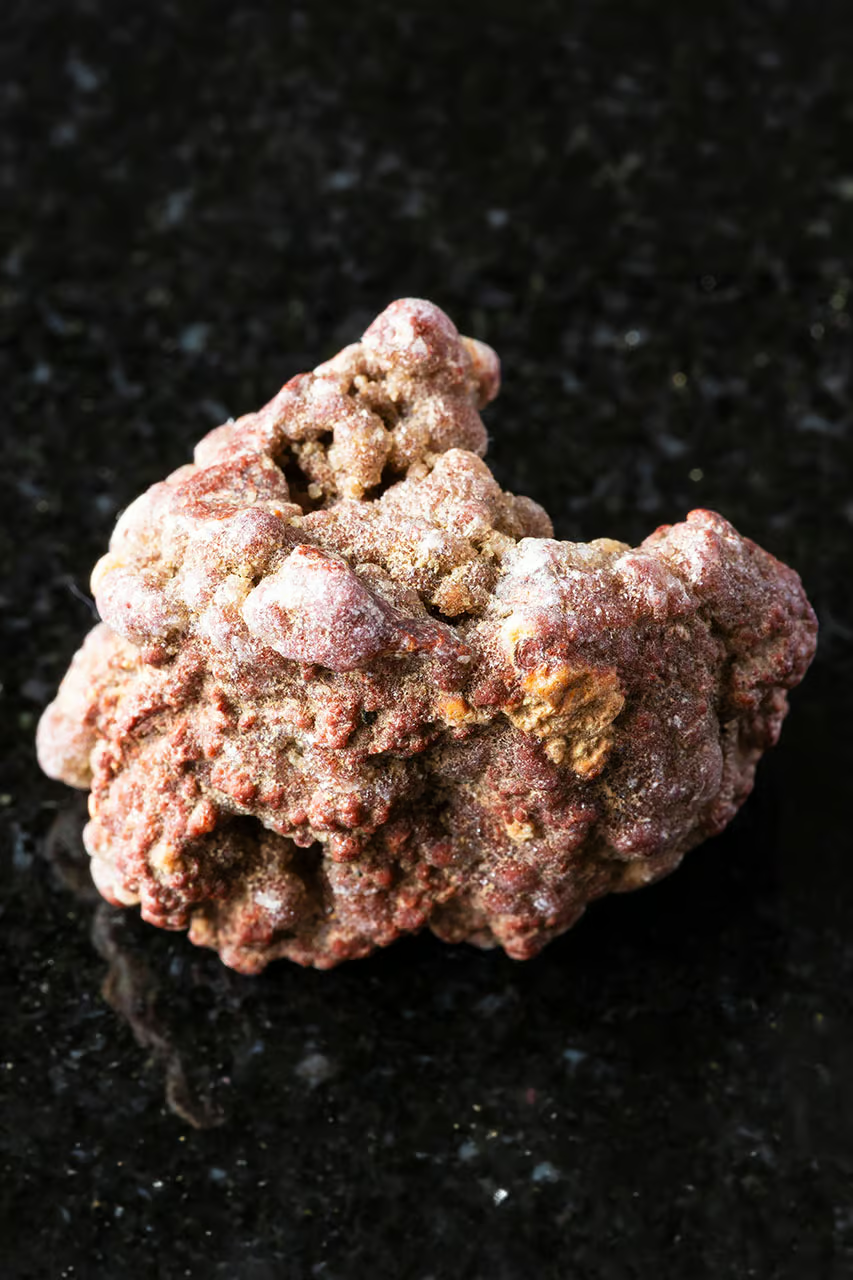
Chalcedony occupies a fascinating position in the mineral kingdom as one of nature's most versatile and abundant silica formations. At its core, chalcedony is an aggregate of cryptocrystalline or microcrystalline silica—or in simpler terms, a mass of individual silica crystals that are too small to be seen with the naked eye. This microscopic structure distinguishes it fundamentally from the visible crystals of ordinary quartz, even though both share the same basic chemical composition.
More precisely, chalcedony designates aggregates of parallelly grown "fibrous" quartz crystals of microscopic and sub-microscopic size. This fibrous internal structure, invisible without magnification, gives chalcedony its characteristic waxy luster and smooth, often translucent appearance. The mineral forms primarily when silica fills voids in host rock through hydrothermal processes—silica-rich solutions seeping into cavities and gradually depositing layer upon layer of microscopic crystals.
Understanding chalcedony requires grasping that it functions as an umbrella term. Chalcedony is basically the overlying mineralogical term for microcrystalline quartz—the material that fills voids in host rock by hydrothermal action. As a catch-all term, chalcedony includes many well-known varieties of cryptocrystalline quartz gemstones. These varieties are found in all 50 states and in many colors, making chalcedony one of the most accessible and geographically widespread gem materials on Earth.
The relationship between chalcedony and its famous variety, agate, illustrates this umbrella concept perfectly. As the saying goes among collectors: all agates are chalcedony, but not all chalcedony are agates. Chalcedony earns the name agate when it displays specific characteristics, particularly banding such as fortification lines—the concentric patterns that resemble aerial views of fortress walls. This distinction highlights how chalcedony serves as the parent category for an entire family of beloved gemstones.
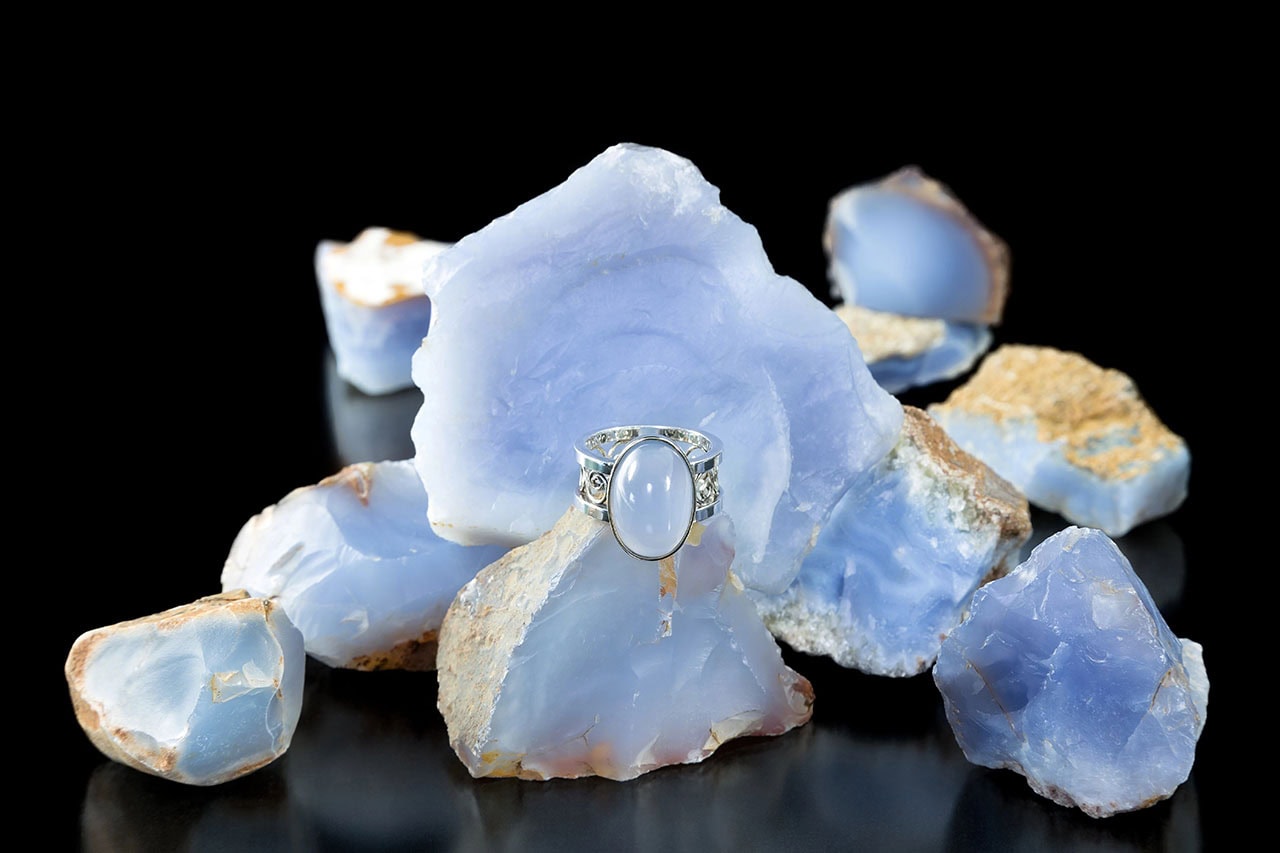
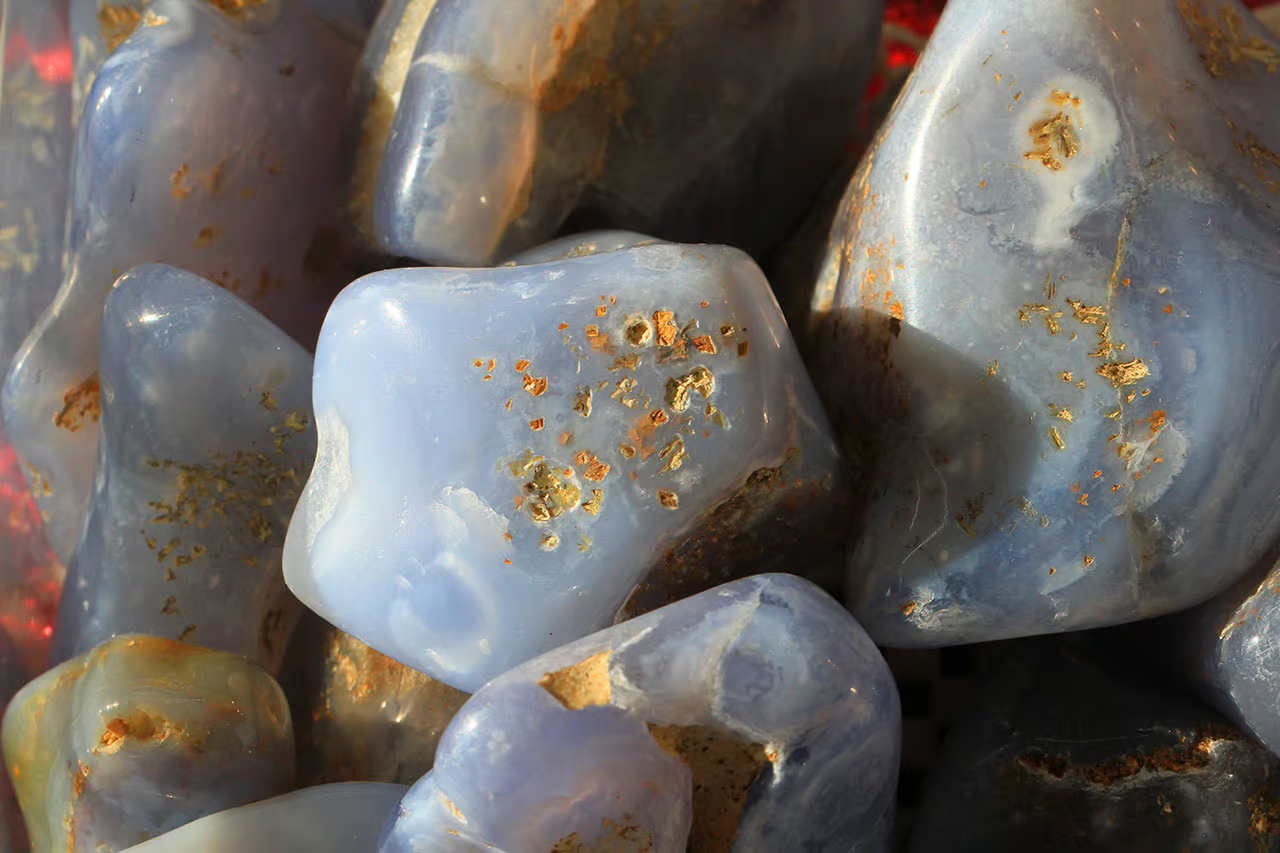
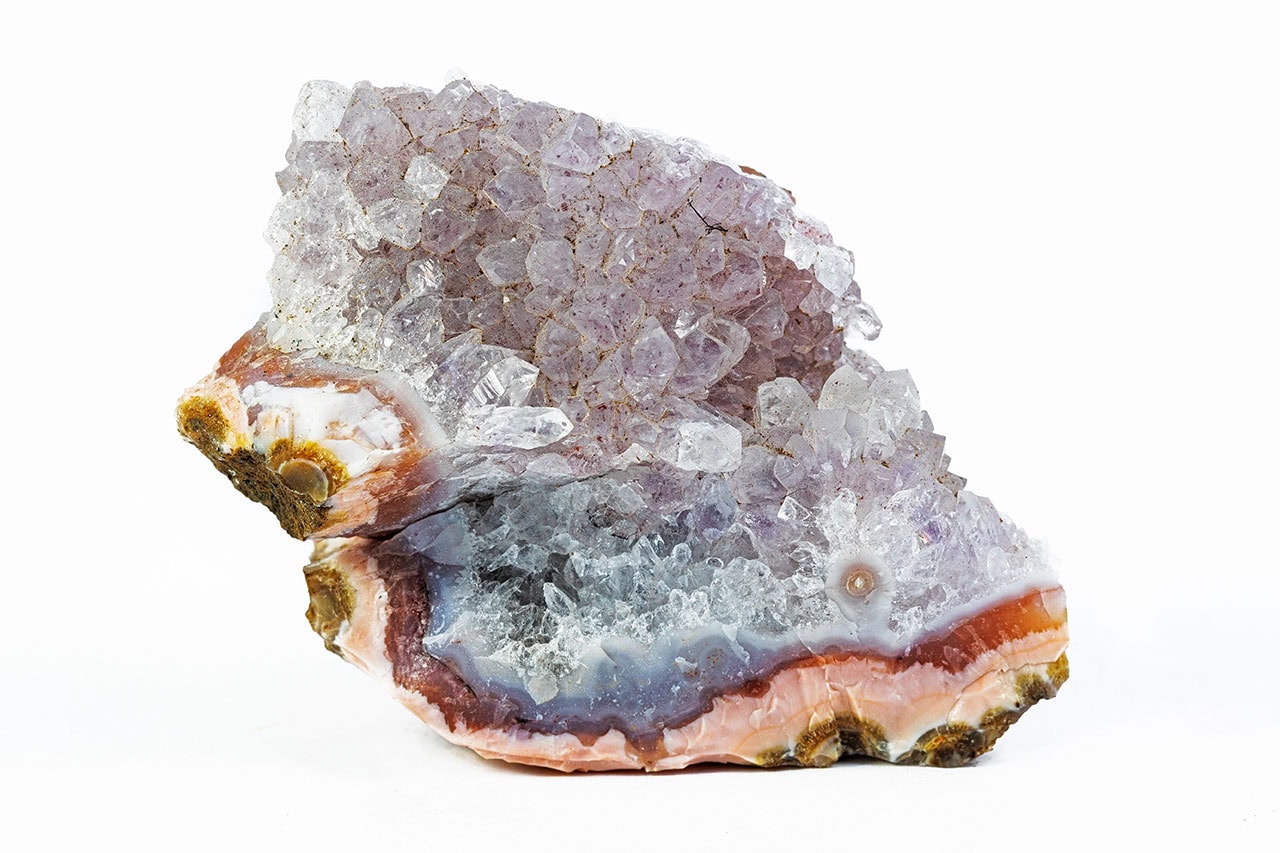
TABLE OF CONTENTS
Properties & Qualities
Physical Properties
Chalcedony presents itself through a distinctive combination of translucency and smooth texture that results directly from its cryptocrystalline structure. Because chalcedony consists of silica crystals too small to be seen individually, the material appears as a homogeneous mass rather than showing the distinct crystal faces characteristic of macrocrystalline quartz like amethyst or citrine.
The defining structural feature of chalcedony is its composition of parallelly grown fibrous quartz crystals of microscopic and sub-microscopic size. This fibrous arrangement, though invisible to the naked eye, influences how light interacts with the stone, creating the characteristic waxy to vitreous luster and the soft, glowing translucency that makes chalcedony so appealing for carving and jewelry.
Color in chalcedony spans an extraordinary range, reflecting its status as a catch-all term encompassing numerous varieties. The base material can be white, gray, or blue, while various impurities and inclusions create the full spectrum found in chalcedony's many named varieties. These varieties, found in all 50 states and in many colors, include some of the most recognized gemstones in human history.
The formation process leaves its signature in chalcedony's physical characteristics. As material that fills voids in host rock by hydrothermal action, chalcedony often shows banding, layering, or zoning that records the changing conditions during its deposition. When this banding takes the form of fortification lines—concentric patterns following the contours of the original cavity—the chalcedony qualifies as agate.
As a member of the quartz family, chalcedony shares quartz's excellent durability with a hardness of 6.5-7 on the Mohs scale. This hardness, combined with its lack of cleavage and its tough, compact structure, makes chalcedony resistant to chipping and excellent for carving. These properties explain why ancient civilizations prized chalcedony for everything from seals and signet rings to decorative objects and tools.
Metaphysical properties
Within metaphysical traditions, chalcedony as a family is recognized as a nurturing stone that promotes brotherhood, goodwill, and group harmony. Its smooth, flowing energy is described as gentle and supportive rather than intense or activating, making it valuable for those seeking calm, stabilizing influences.
The cryptocrystalline structure of chalcedony—countless tiny crystals working together as a unified whole—has been interpreted metaphysically as representing collective consciousness and community cooperation. Just as individual silica crystals too small to see combine to create a single beautiful stone, chalcedony allegedly helps individuals work together harmoniously toward shared goals.
Because chalcedony serves as an umbrella term encompassing many varieties, its metaphysical properties vary considerably by type. Blue chalcedony resonates with the throat chakra, enhancing communication. The various agates, as banded chalcedony, carry grounding and stabilizing energies. Carnelian, a reddish-orange chalcedony variety, stimulates creativity and vitality. This diversity means chalcedony offers metaphysical tools for nearly every healing need.
Contemporary energy workers often note chalcedony's reputation as a stone that absorbs negative energy and dissipates it, preventing its return. This protective yet gentle quality makes it popular for those seeking energetic cleansing without harsh or jarring effects.
Meaning & Symbolism
Physical meaning
In physical symbolism, chalcedony represents the principle of unity through multiplicity—how countless small components can combine to create something strong and beautiful. Its formation from microscopic crystals invisible to the eye yet collectively forming a solid mass symbolizes the power of small, consistent contributions building into substantial results.
The mineral's formation by filling voids in host rock through hydrothermal action symbolizes the healing of emptiness and the patient filling of what was once hollow. This makes chalcedony symbolically connected to processes of restoration and completion in physical life.
Its widespread distribution—found in all 50 states and across the globe—connects chalcedony to accessibility and abundance. Unlike rare gems that symbolize exclusivity, chalcedony's commonness makes it a symbol of the beauty and value available to everyone.
Spiritual meaning
Chalcedony's spiritual significance centers on its role as a stone of community and connection. Its nurturing energy is said to foster feelings of generosity, benevolence, and goodwill, supporting the spiritual development of compassion and selfless service to others.
The mineral's cryptocrystalline nature—a unified whole composed of countless individual crystals—carries deep spiritual symbolism about the relationship between the individual and the collective. This makes chalcedony valuable for those exploring their place within larger spiritual communities or working to balance individual spiritual development with service to the greater whole.
As an umbrella category containing many varieties, chalcedony also symbolizes the unity underlying apparent diversity. The recognition that all agates are chalcedony, that countless different-appearing stones share the same fundamental nature, teaches the spiritual lesson that diverse expressions can arise from a single source.
Healing Benefits
Physical healing
Traditional healing applications of chalcedony should be understood as energetic and folk practices rather than medical treatments. Crystal healers have valued chalcedony across its many varieties for various physical concerns, with specific applications often depending on the particular variety being used.
The chalcedony family is traditionally associated with supporting the body's fluid systems and promoting overall balance. Practitioners often use it in layouts designed to support general wellbeing, with different colored varieties addressing different bodily systems according to their chakra correspondences.
Because chalcedony encompasses such diverse varieties, its traditional healing uses span a wide range. Blue chalcedony has been associated with throat and respiratory health, carnelian with vitality and reproductive health, and various agates with digestive and grounding functions. These color-specific applications reflect the broader traditions of crystal healing.
Emotional healing
Chalcedony's reputation in emotional healing centers on its gentle, nurturing energy that promotes emotional stability and goodwill. Users often describe chalcedony as creating a sense of calm support, helping to ease feelings of hostility, irritability, and emotional turbulence.
The stone is particularly valued for its alleged ability to foster harmony in relationships and groups. Its energy of brotherhood and goodwill makes it popular for those working to improve their connections with others, whether in families, workplaces, or communities.
For those struggling with self-doubt or melancholy, chalcedony reportedly provides gentle emotional support, encouraging optimism and a more positive outlook. Its soothing nature makes it appropriate for those who find more intense stones overwhelming.
Spiritual healing
In spiritual healing contexts, chalcedony addresses feelings of isolation and disconnection from community. Its energy of brotherhood and goodwill allegedly helps heal the spiritual wounds of separation, fostering a renewed sense of belonging and connection.
Energy healers often use chalcedony for absorbing and dissipating negative energy. Its protective yet gentle properties make it valuable for clearing accumulated energetic debris without the intensity of more powerful protective stones.
The mineral's unifying nature—countless crystals forming one stone—makes it valuable for integration work, helping reconcile fragmented aspects of self into a harmonious whole.
Use & Care
How to use
- Group harmony:Place in shared spaces like family rooms or meeting areas to promote goodwill and cooperation.
- Throat chakra work:Use blue chalcedony varieties on the throat to enhance communication and self-expression.
- Jewelry wearing:Wear as pendants, rings, or beads—chalcedony's hardness (6.5-7) makes it durable for daily wear.
- Meditation aid:Hold during meditation for calming, stabilizing energy and connection to community consciousness.
- Carving and ornaments:Use carved chalcedony objects in living spaces for both beauty and gentle energetic support.
- Emotional support:Carry tumbled chalcedony for ongoing emotional stability and goodwill.
- Variety-specific use:Select specific varieties (carnelian, agate, etc.) for their particular properties.
- Negativity absorption:Place in areas needing energetic cleansing to absorb and dissipate negative energy.
How to cleanse
- Running water:Hold under cool running water—chalcedony's hardness and stability make this safe.
- Moonlight bathing:Leave under full moon overnight for gentle energetic cleansing.
- Smudging:Pass through sage or palo santo smoke for quick energetic clearing.
- Sound cleansing:Use singing bowls or bells for vibrational clearing.
- Earth burial:Bury briefly in soil for deep cleansing and grounding.
- Selenite contact:Rest on selenite for passive cleansing.
- Visualization:Imagine light flowing through the stone, clearing accumulated energies.
How to charge
- Sunlight (brief):Morning sun for short periods to energize—some colored varieties may fade with extended exposure.
- Moonlight charging:Charge under full moon for gentle, nurturing energy.
- Crystal cluster:Place on clear quartz cluster to amplify and recharge.
- Earth charging:Place on soil to reconnect with earth energy.
- Intention programming:Hold while stating intentions for harmony, communication, or healing.
- Group charging:Charge in community circles to align with its brotherhood energy.
- Variety-specific charging:Charge according to the specific variety's chakra and color associations.
Combining with other stones
- Clear Quartz:Amplifies chalcedony's gentle properties and broadcasts its harmonizing energy.
- Rose Quartz:Enhances chalcedony's nurturing qualities for heart-centered community work.
- Blue Lace Agate:A chalcedony variety itself, it deepens communication and throat chakra healing.
- Amethyst:Adds spiritual awareness to chalcedony's grounding community energy.
- Black Tourmaline:Provides stronger protection while chalcedony maintains gentle, harmonizing energy.
- Carnelian:As a chalcedony variety, combines vitality with the family's nurturing properties.
- Selenite:Keeps chalcedony cleansed while adding high-vibration spiritual energy.
- Moss Agate:Another chalcedony variety, enhances connection to nature and growth.
Identification
Can be mistaken for
- Agate:Actually a banded variety of chalcedony—all agates are chalcedony, but not all chalcedony are agates.
- Jasper:Opaque variety of chalcedony/quartz; distinguished by its lack of translucency.
- Opal:Can look similar but opal is amorphous (non-crystalline) and contains water.
- Glass:Manufactured glass can mimic chalcedony but lacks natural inclusions and structure.
- Jade:Some chalcedony is dyed green and sold as jade imitation.
- Carnelian:Reddish-orange chalcedony variety; the same material with different coloration.
- Onyx:Black or banded variety of chalcedony.
- Dyed chalcedony:Natural chalcedony dyed to imitate more valuable stones or enhance color.
How to spot a fake
- Structure examination:Real chalcedony shows the waxy luster and translucency characteristic of its cryptocrystalline structure.
- Hardness test:Genuine chalcedony scratches glass (6.5-7 Mohs); softer materials are imitations.
- Dye detection:Many chalcedony varieties are dyed—look for color concentrated in cracks or unnaturally vivid hues.
- Temperature feel:Natural chalcedony feels cool initially and warms slowly; glass warms quickly.
- Translucency check:Most chalcedony shows some translucency when held to light; completely opaque material may be different.
- Weight assessment:Should feel consistent with quartz density (2.58-2.64); significantly different weight suggests imitation.
- Inclusion inspection:Natural chalcedony often shows natural banding, color zoning, or inclusions; perfect uniformity may indicate synthetic material.
- Price evaluation:Common chalcedony is affordable; suspiciously expensive "rare" chalcedony warrants scrutiny.
- Source verification:Purchase from reputable dealers who can identify the specific variety and disclose any treatments or dyeing.