
Citrine
Tectosilicate (Quartz family)
Yellow to orange to orangy red
Vitreous
7
2.66 (+0.03/-0.02
Hexagonal (Trigonal)
Brazil, Madagascar, Spain, Russia, USA
Natural citrine is rare; most market citrine is heat-treated amethyst
SiO₂ (Silicon dioxide with iron impurities)
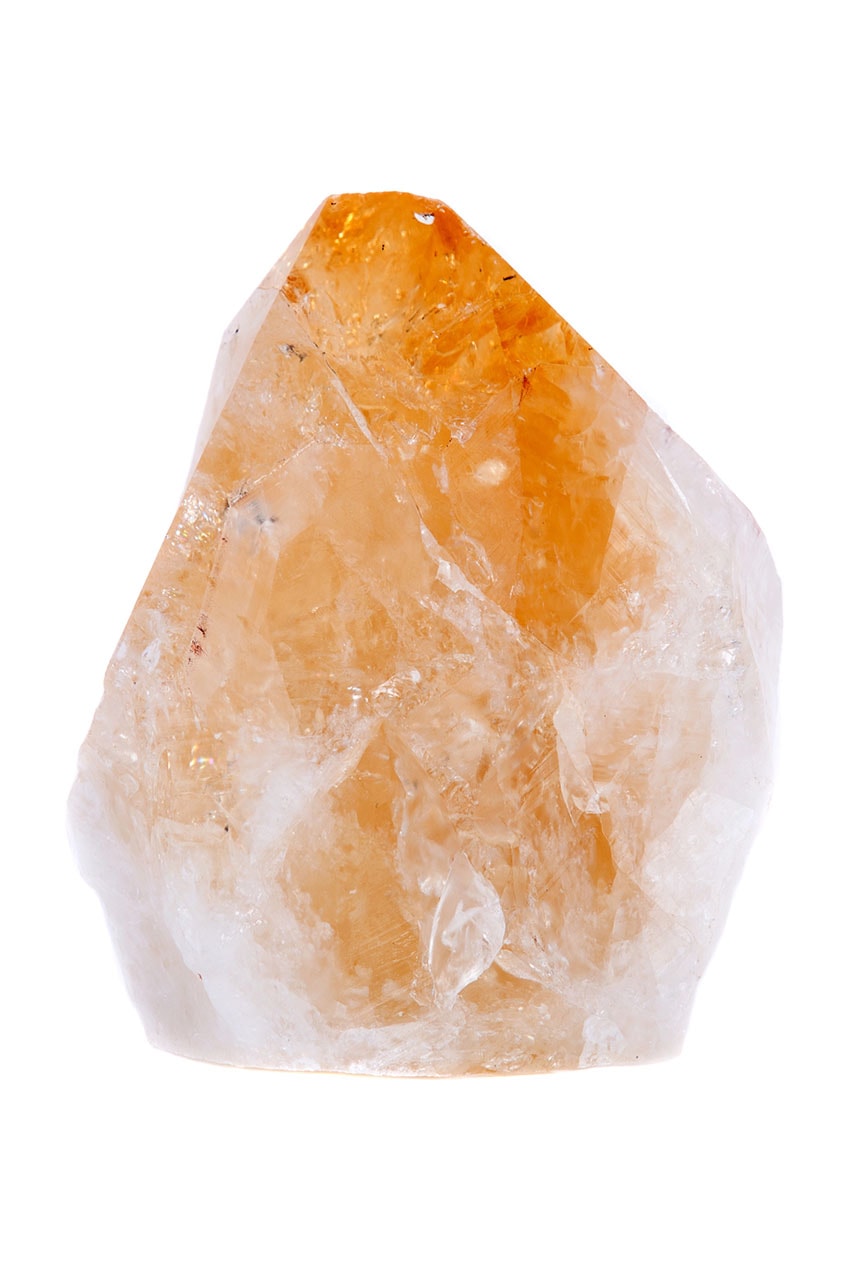
Citrine, the golden member of the quartz family, represents one of gemology's most intriguing paradoxes. While its warm honey to deep cognac hues make it one of the most popular yellow gemstones, true natural citrine is exceptionally rare in nature. This transparent, pale yellow to brownish orange variety of quartz has been treasured since ancient Egyptian times, though historically it was often confused with topaz due to its tawny color.
The name "citrine" derives from the French word "citron," meaning lemon, though the most sought-after shades in today's market lean toward earthy, deep brownish or reddish orange rather than pale yellow. What makes citrine particularly fascinating is that most specimens in the commercial market aren't naturally occurring but rather the result of heat-treating amethyst—a transformation that occurs rarely in nature but can be replicated in controlled conditions.
From the giant amethyst geodes of Brazil that are heated to become spectacular citrine "cathedrals" to the unique ametrine crystals of Bolivia where purple and yellow exist in the same stone, citrine demonstrates nature's alchemical abilities. A trace of iron in its crystalline structure is responsible for its sunny disposition, making it not just beautiful but scientifically intriguing.
Today, citrine stands as November's birthstone alongside topaz and commemorates the thirteenth anniversary. Its combination of durability, affordability, and attractive color has made it the top-selling yellow-to-orange gem, proving that rarity in nature doesn't diminish popularity in the marketplace.
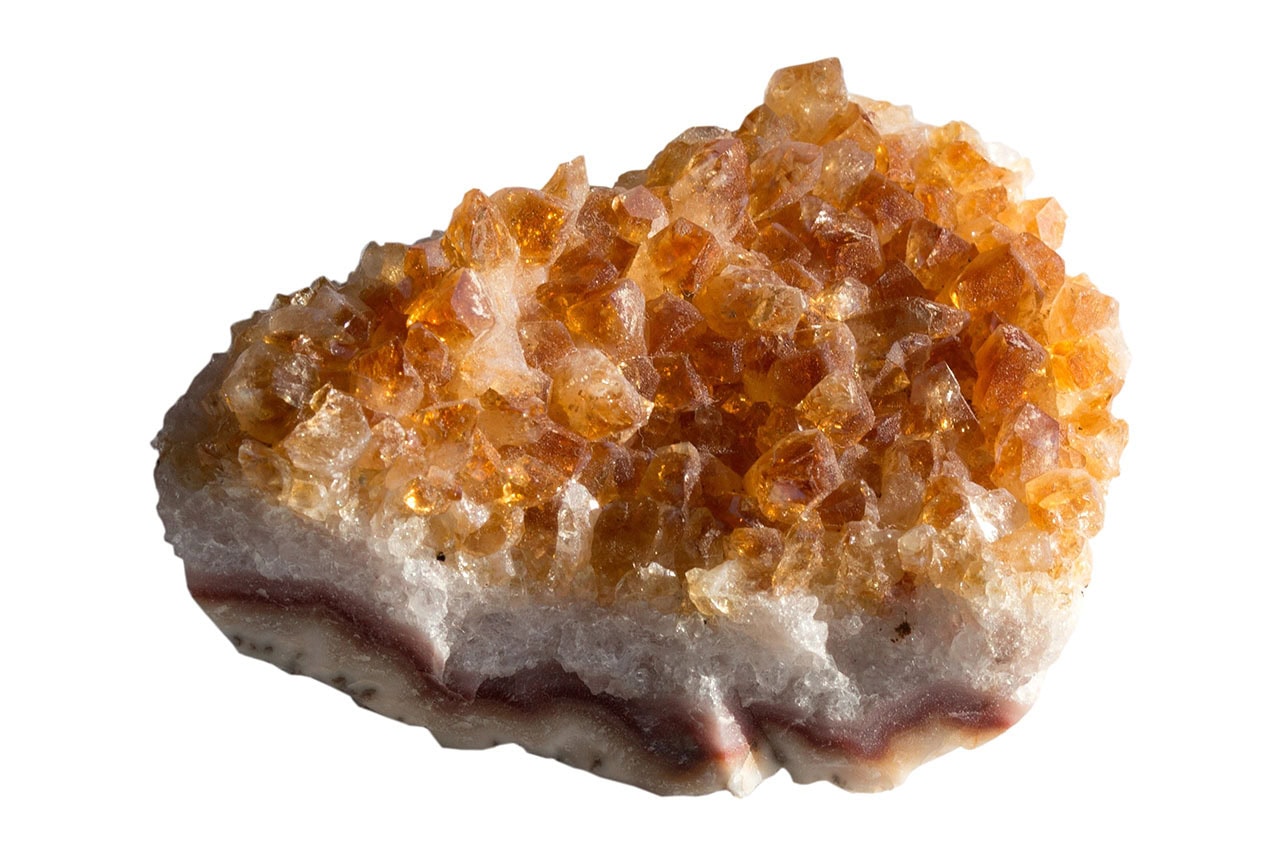
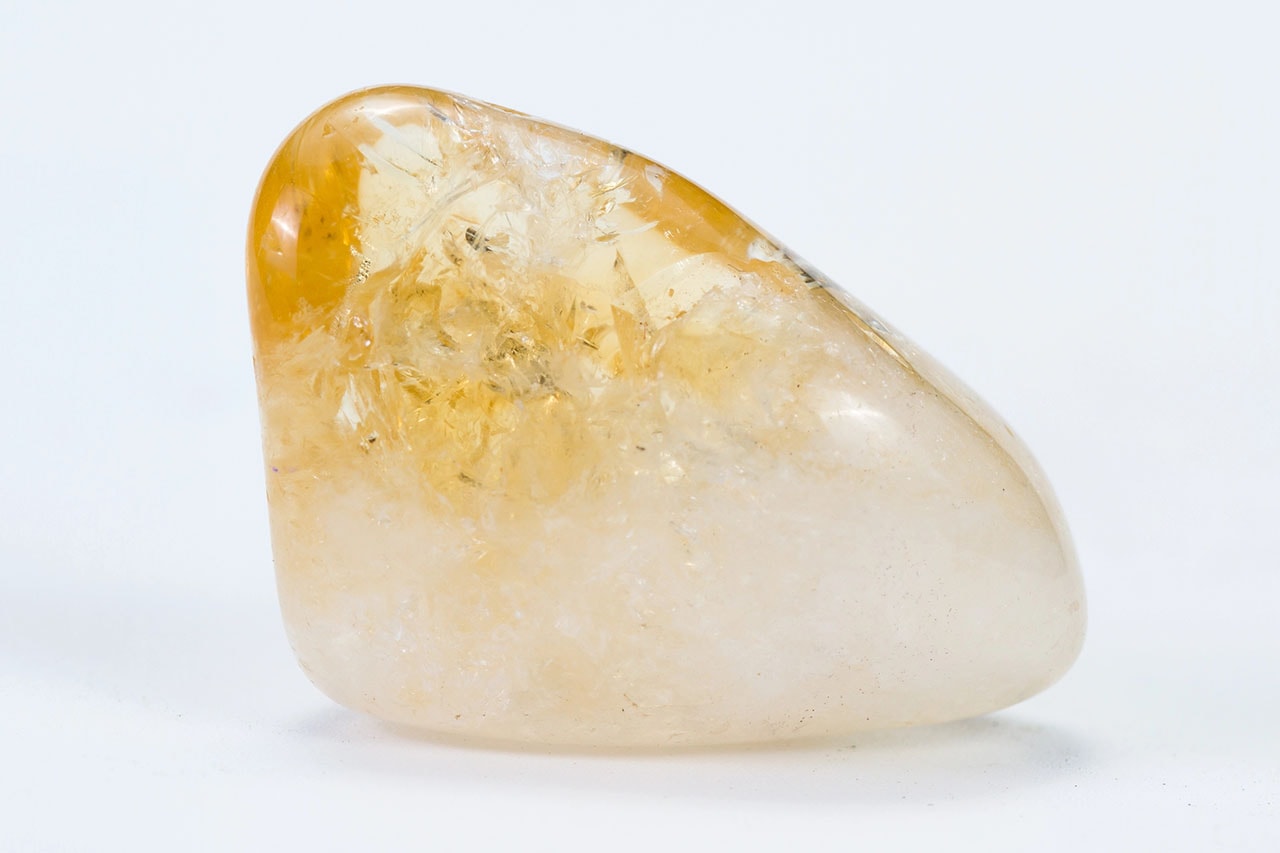
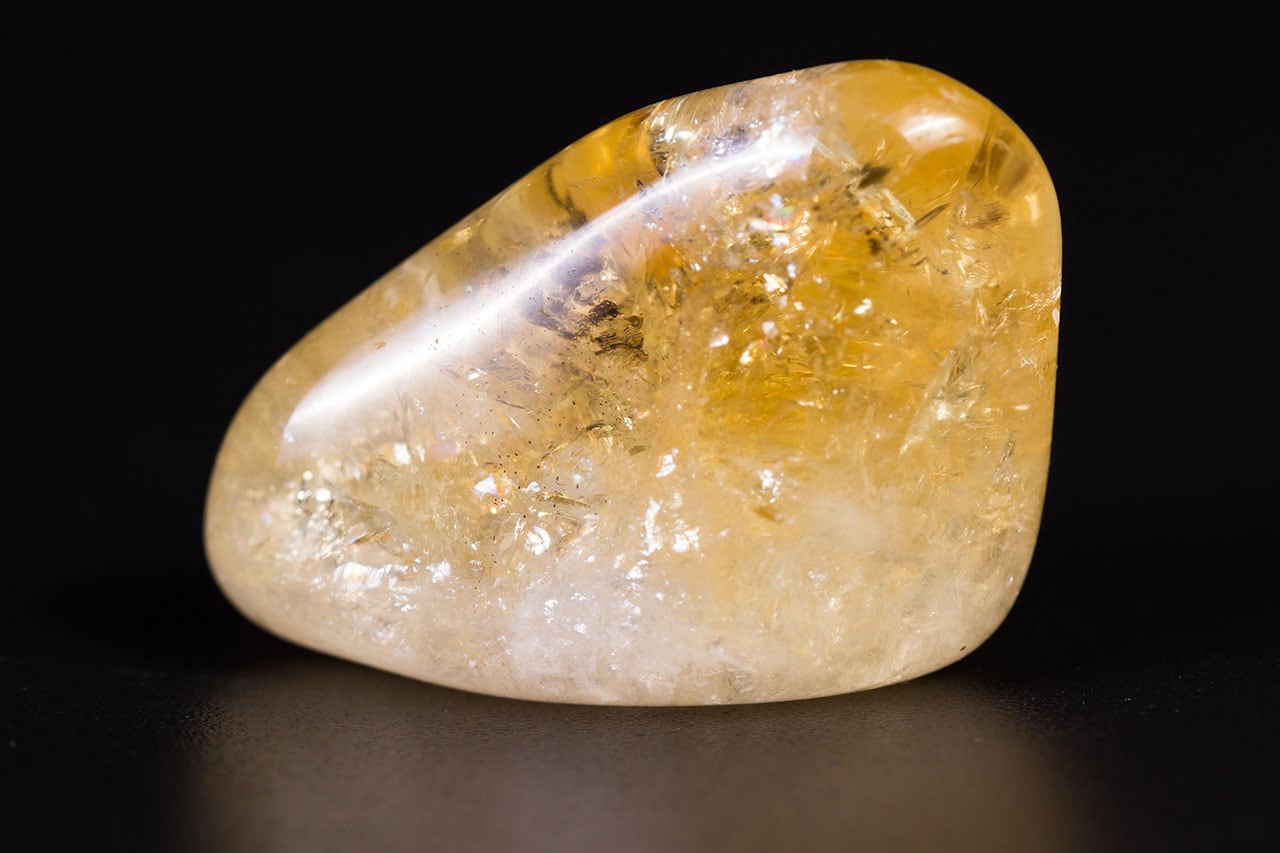
TABLE OF CONTENTS
Properties & Qualities
Physical Properties
Citrine reveals itself through a spectrum of warm hues that capture every shade of autumn sunlight. The color range spans from pale yellow reminiscent of morning light to deep brownish orange that rivals the richest cognac. The most popular shade in contemporary markets is an earthy, deep brownish or reddish orange that seems to glow with inner warmth.
The iron content responsible for citrine's color creates interesting variations depending on its concentration and oxidation state. Natural citrine typically shows paler yellows, while heat-treated amethyst-turned-citrine often displays deeper, more saturated oranges and browns. This color can be quite uniform in treated stones but may show subtle zoning in natural specimens.
As a member of the quartz family, citrine shares quartz's excellent physical properties. With a hardness of 7 on the Mohs scale, it's durable enough for all types of jewelry while remaining workable for lapidaries. Its refractive index of 1.544 to 1.553 gives it a bright, lively appearance when properly cut.
Crystal habits follow typical quartz patterns—hexagonal prisms terminated by pyramids. However, much commercial citrine comes from massive formations or geodes rather than individual crystals. The famous Brazilian citrine "cathedrals" are actually enormous amethyst geodes that have been heated, creating spectacular displays where thousands of golden points line hollow chambers.
One of citrine's most appealing qualities is its typical lack of eye-visible inclusions. This clarity, combined with its availability in large sizes, makes it an affordable alternative to more expensive yellow gems. When inclusions do occur, they might include tiny fluid inclusions, rutile needles, or color zoning that reveals the stone's thermal history.
Metaphysical properties
Within metaphysical traditions, citrine has earned the title of "The Merchant's Stone" or "Success Stone" for its reputed ability to attract abundance and prosperity. Its primary resonance occurs with the solar plexus chakra, the energy center associated with personal power, will, and manifestation.
Unlike many crystals that require regular cleansing, citrine is said to be one of the few stones that doesn't absorb negative energy but rather transmutes it. This self-cleansing property has made it popular for continuous wear and placement in businesses or cash registers to attract success.
The stone's sunny color creates natural associations with optimism, creativity, and mental clarity. Practitioners often describe citrine's energy as bringing the power of the sun into one's life—dispelling darkness, warming cold spots, and energizing sluggish areas.
Different shades carry slightly different energetic properties. Pale yellow citrine is associated with new beginnings and mental clarity, while deeper orange varieties are linked to creative and sexual energy. The highly prized Madeira citrine (deep orange-red) is considered the most powerful for manifestation work.
Contemporary energy workers often note citrine's ability to enhance self-esteem and personal power without creating ego inflation. Its energy is described as confident but generous, successful but sharing—qualities that align with sustainable abundance.
Meaning & Symbolism
Physical meaning
In physical symbolism, citrine represents the principle of transformation and value creation. Its formation—whether through natural heating in the earth or human intervention—demonstrates how pressure and heat can transform the common into the precious.
The stone's association with the solar plexus connects it to digestive fire and metabolic function. This has led to citrine being symbolically linked to the body's ability to transform food into energy, ideas into action, and potential into manifestation.
Its golden color naturally associates it with vitality and life force. Many users report feeling more energetic and motivated when working with citrine, as if it helps activate their inner sun. This makes it popular among those dealing with seasonal affective disorder or chronic fatigue.
The affordability of citrine despite its beauty carries its own symbolism—that abundance doesn't require rarity, that beauty can be accessible, and that value exists in many forms. This makes citrine particularly meaningful for those working to shift scarcity mindsets.
Spiritual meaning
Citrine's spiritual significance centers on its role as a manifestation catalyst. Many practitioners view it as helping align personal will with divine will, ensuring that manifestations serve the highest good rather than ego desires alone.
The stone's connection to solar energy links it to masculine/yang spiritual principles—action, clarity, rational thought, and outward expression. Yet its quartz base maintains receptivity, creating balanced spiritual energy that can both receive and project.
In meditation, citrine is said to help access the "golden ray" of spiritual wisdom—the frequency of enlightened action and wise leadership. This makes it popular among those in positions of spiritual teaching or guidance.
The transformation of amethyst to citrine through heating has deep spiritual symbolism. It represents the alchemical process of turning spiritual insights (purple/crown chakra) into practical wisdom and action (yellow/solar plexus), making citrine valuable for grounding spiritual work.
Healing Benefits
Physical healing
Traditional healing applications of citrine should be understood as energetic and folk practices rather than medical treatments. Crystal healers often focus on citrine's connection to the solar plexus and its associations with digestive health and metabolism.
Some alternative practitioners use citrine for supporting healthy digestion, claiming its golden energy stimulates digestive fire. They might place citrine on the solar plexus during healing sessions aimed at improving nutrient absorption or metabolism.
The stone's sunny energy has led to its use for depression and seasonal affective disorder in energy healing. While not a replacement for medical treatment, many users report mood improvement when working with citrine, possibly due to its bright color and positive associations.
Historical uses include supporting the endocrine system and hormonal balance. Contemporary energy healers sometimes use citrine in layouts designed to support thyroid function and metabolic regulation.
Emotional healing
Citrine's reputation in emotional healing centers on its ability to transform negative emotions into positive ones. Users often report that it helps shift perspective from lack to abundance, from fear to confidence, from depression to joy.
The stone allegedly excels at clearing emotional debris from the solar plexus chakra—old fears about personal power, success, or self-worth. Many practitioners describe citrine as helping them claim their right to take up space and shine their light.
For those struggling with depression or low energy, citrine reportedly provides gentle uplift without the anxiety that some find with more stimulating stones. Its warm energy is described as comforting like sunshine, naturally raising spirits.
The mineral is frequently recommended for those working through issues of self-esteem or personal power. Its energy allegedly helps build genuine confidence based on self-knowledge rather than ego inflation.
Spiritual healing
In spiritual healing contexts, citrine addresses blockages to abundance and success on all levels. These might manifest as poverty consciousness, unworthiness of success, or fear of personal power.
Energy healers often use citrine for clearing what they term "success blocks"—unconscious patterns that sabotage achievement. The stone's energy allegedly helps identify and transform these patterns into supportive beliefs.
For those on a spiritual path who struggle with material concerns, citrine reportedly helps integrate spiritual and material abundance. It teaches that spirituality and prosperity can coexist harmoniously.
Use & Care
How to use
- Cash register/wallet:Place in cash register or wallet to attract financial abundance
- Workspace placement:Keep on desk to enhance creativity and business success
- Jewelry wearing:Wear as rings or pendants to maintain confident, abundant energy
- Meditation focus:Hold during abundance meditations or visualization practices
- Grid centerpiece:Use in prosperity grids or manifestation layouts
- Morning energizer:Hold upon waking to set positive tone for the day
- Business entrance:Place near business entrance to attract customers and success
- Study aid:Keep nearby while studying to enhance mental clarity and retention
How to cleanse
- Self-cleansing:Citrine is said to be self-cleansing, requiring minimal energetic clearing
- Sunlight:Can be charged in sunlight without color fading (unlike amethyst)
- Smudging:Pass through sage smoke for occasional deep clearing
- Sound cleansing:Use bells or singing bowls for vibrational clearing
- Avoid water:While quartz is water-safe, some treated citrines may be affected
How to charge
- Sunlight charging:Place in direct sunlight to enhance solar properties
- Gold proximity:Place near gold jewelry to amplify abundance frequency
- Intention programming:Hold while visualizing specific abundance goals
- Prosperity herbs:Charge near cinnamon, basil, or other prosperity herbs
- Full moon:Charge under full moon for maximum manifestation power
Combining with other stones
- Clear Quartz:Amplifies citrine's manifestation properties
- Pyrite:Creates powerful abundance combination
- Green Aventurine:Adds luck to citrine's success energy
- Tiger's Eye:Enhances business acumen and practical manifestation
- Amethyst:Natural combination (as in ametrine) balancing spiritual and material
Identification
Can be mistaken for
- Yellow Topaz:Historically confused due to similar color
- Heat-treated Amethyst:Most market citrine is actually heated amethyst
- Yellow Sapphire:Much harder and more valuable
- Golden Beryl:Different crystal system and properties
- Glass:Yellow glass often sold as citrine to unsuspecting buyers
How to spot a fake
- Color inspection:Natural citrine tends toward pale yellow; deep orange often indicates heat treatment
- Price check:Natural citrine commands higher prices than heat-treated
- Inclusion study:Natural citrine may show different inclusion patterns than heated amethyst
- Source verification:Ask specifically if it's natural or heat-treated citrine
- Professional testing:Gemological testing can sometimes distinguish natural from treated