Eudialyte
Silicate (Cyclosilicate)
Pink, red, brown, yellow, violet
Vitreous to greasy
5 - 5.5
2.8 - 3.1
Trigonal
Russia (Kola Peninsula), Greenland, Canada, Norway
Rare
Na₁₅Ca₆(Fe,Mn)₃Zr₃Si(Si₂₅O₇₃)(O,OH,H₂O)₃(OH,Cl)₂
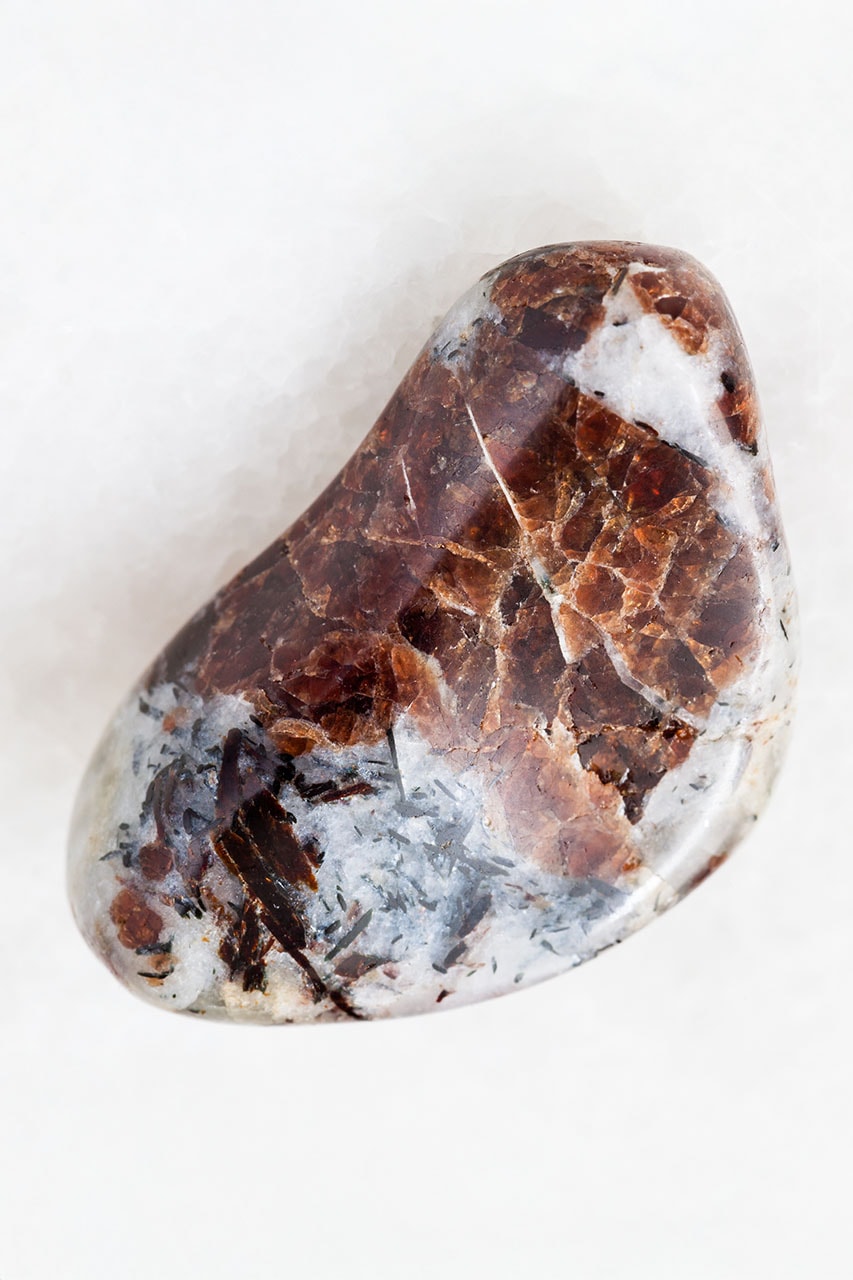
In the remote Kola Peninsula of Arctic Russia, where ancient alkaline intrusions breach Earth's surface, miners uncover one of the planet's most complex minerals—eudialyte, whose name from Greek means "readily decomposable," belying its reputation as one of the most emotionally powerful stones in the mineral kingdom. This rare cyclosilicate, one of the most chemically complex minerals known, creates patterns of pink and red that seem to pulse with life force itself.
First described in 1819 in Greenland, eudialyte remained a mineralogical curiosity until crystal practitioners took an interest in its reported effects on emotional healing and life force activation. Unlike gentle heart stones that comfort, eudialyte breaks through emotional walls with the force of spring breaking winter's grip—sudden, inevitable, and ultimately life-giving. This intensity has earned it the title "Stone of the Heartland" among those who understand its power.
Today, eudialyte from the Kola Peninsula is a favourite among crystal healers. Its ability to activate multiple chakras simultaneously while opening the heart to both joy and sorrow makes it essential for those ready to embrace life fully. In modern emotional breakthrough work, practitioners count it among the strongest stones for hearts that have forgotten how to feel.
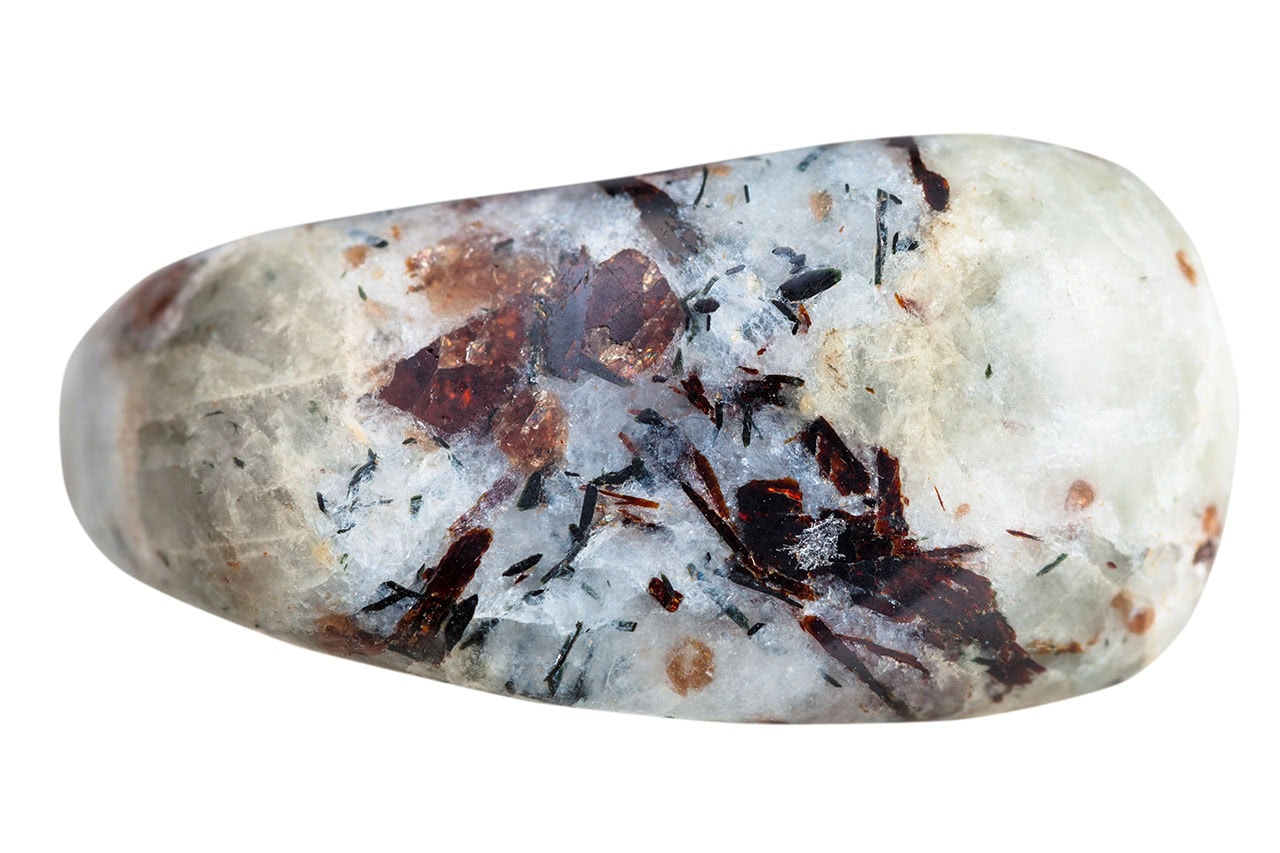
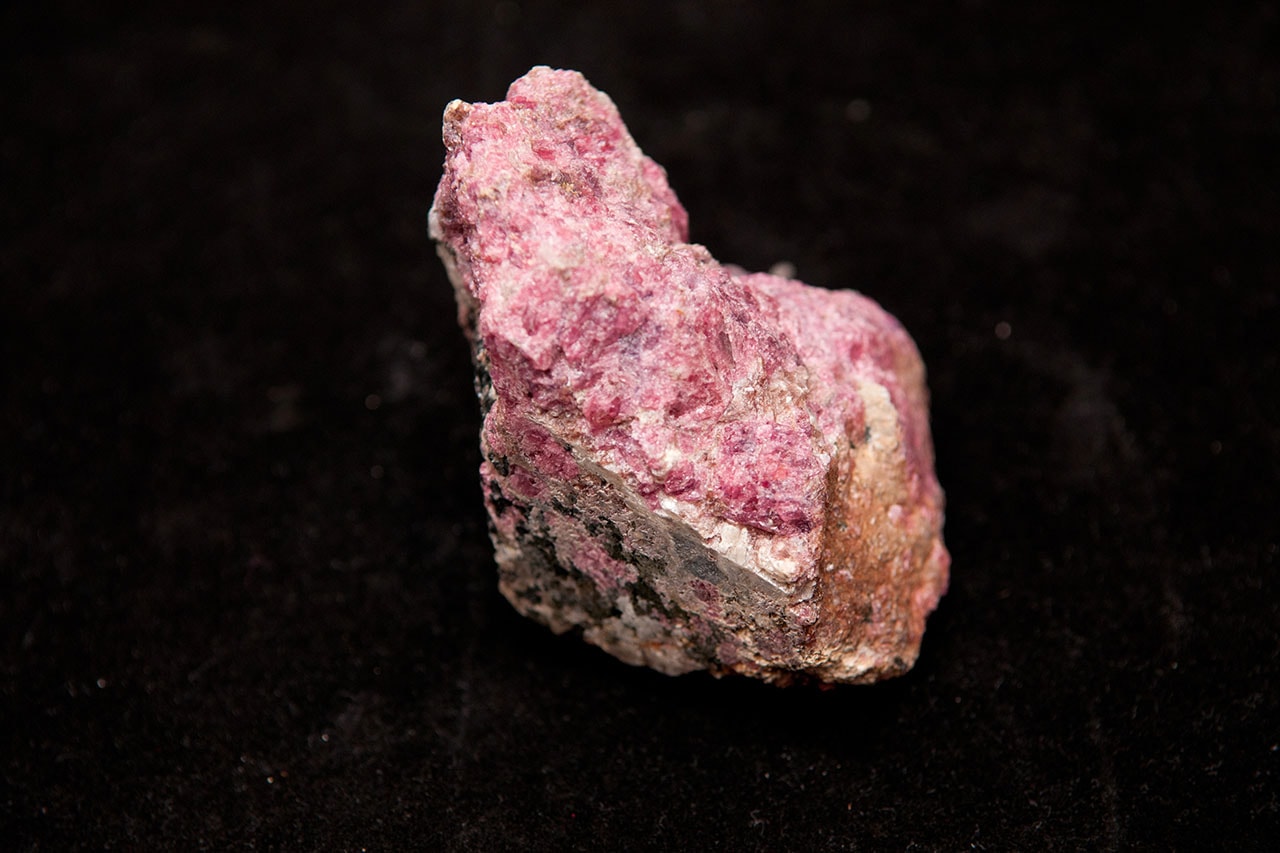
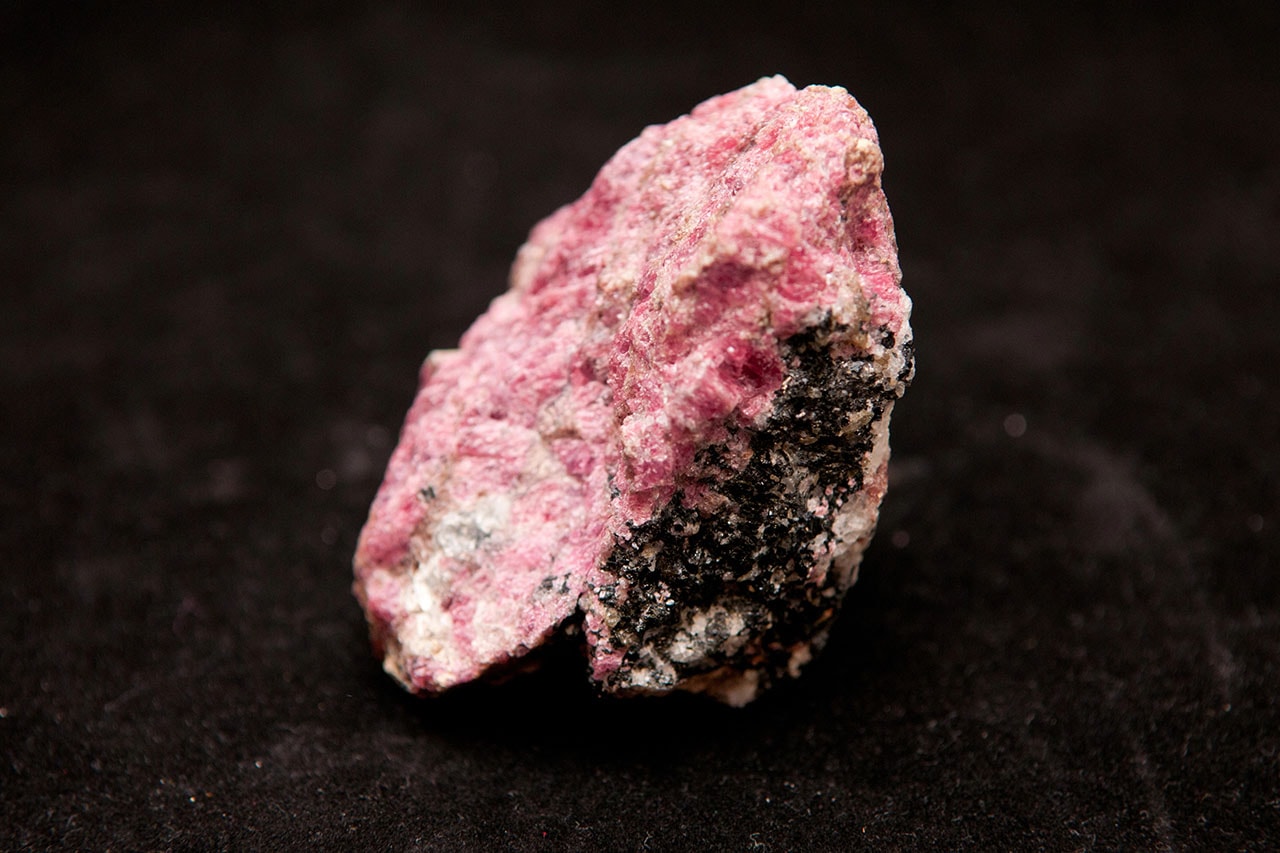
TABLE OF CONTENTS
Properties & Qualities
Physical Properties
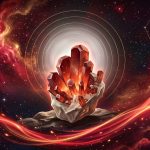
Eudialyte mesmerizes through its complex patterns of pink, red, and magenta interspersed with black, white, and brown matrix minerals. No two specimens look alike—some display solid masses of rose-pink, others show intricate patterns resembling abstract paintings or cellular structures under microscope. The finest specimens from Russia's Lovozero Massif exhibit deep raspberry red with almost fluorescent intensity.
The mineral typically forms as irregular masses or grains within nepheline syenite and other alkaline igneous rocks. Well-formed crystals remain extremely rare, usually appearing as tabular or rhombohedral forms when found. More commonly, eudialyte creates anhedral grains that reveal their true beauty only when polished, displaying depths and patterns invisible in rough form.
Eudialyte's complex chemistry—containing elements from sodium to zirconium—creates its unique properties. Some specimens carry traces of rare earth elements and are very weakly radioactive, at levels of no concern for normal display and handling. Its chemistry makes eudialyte one of the most intricate minerals known.
The stone's relative softness and tendency to decompose in acids (hence its name) require careful handling. However, when properly polished and sealed, eudialyte reveals extraordinary beauty—patterns that seem organic rather than mineral, as if viewing tissue samples from some cosmic organism. Under UV light, some specimens fluoresce orange or red, adding another dimension to their visual appeal.
Metaphysical properties
Within metaphysical circles, eudialyte reigns as one of the most powerful emotional activators available, its energy described as "life force crystallized into tangible form." Practitioners report that eudialyte doesn't gently open the heart but rather breaks it open—in the best possible way—allowing suppressed emotions to flow freely after years or lifetimes of stagnation.
The stone's primary resonance creates unusual simultaneous activation of the root, sacral, and heart chakras, generating what energy workers call the "life force trinity." This configuration reconnects primal life energy with emotional expression and heart wisdom, making eudialyte invaluable for those who've become disconnected from their vital essence through trauma or societal conditioning.
In modern lore eudialyte is a stone of fulfilled wishes, but not in the sense of magical manifestation. Rather, it helps identify and release unconscious blocks preventing natural fulfillment. By clearing emotional debris and reconnecting to authentic desire, eudialyte allows life force to flow toward genuine fulfillment rather than conditioned wants.
Modern practitioners particularly value eudialyte for its ability to break through emotional numbness, the flat, empty feeling that is different from sadness. Its activation is often dramatic—practitioners describe emotional releases, vivid dreams and a sense of things shifting, so it suits times when someone wants change more than comfort.
Meaning & Symbolism
Physical meaning
In the physical realm, eudialyte embodies the principle of complexity creating beauty—its many elements combining in precise ratios to create patterns impossible for any single element. This teaches that life's complexity, rather than being overwhelming, creates the rich tapestry of experience that makes existence beautiful.
The mineral's formation in rare alkaline environments represents the value of unique conditions creating exceptional results. Just as eudialyte requires specific geological circumstances, breakthrough success often requires stepping outside conventional environments into spaces where different rules apply.
For those feeling stuck in any life area, eudialyte's name meaning "readily decomposable" offers profound teaching. Sometimes structures must decompose for new growth to occur. Eudialyte supports conscious decomposition of outdated life structures, relationships, or careers that no longer serve growth.
The stone's rarity combined with its powerful effects teaches discernment about when to use intense interventions versus gentle approaches. Like eudialyte itself, some tools are too powerful for everyday use but invaluable when breakthrough is genuinely needed.
Spiritual meaning
Eudialyte's spiritual significance centers on its role as "The Awakener of Sleeping Hearts," resurrecting the capacity for joy and sorrow in those who've become spiritually numb through protection mechanisms. Its complex chemistry mirrors the complexity of incarnate existence—teaching that spiritual awakening includes rather than transcends human emotion.
The stone’s hidden trace elements carry spiritual symbolism about change through unseen forces. Practitioners say eudialyte works on subtle levels to shift emotional and spiritual patterns, which makes it an ally for deep inner transformation.
Practitioners are still exploring eudialyte's properties, but consistent themes emerge around soul retrieval and emotional resurrection. The stone allegedly helps recover soul parts lost through trauma, particularly those carrying capacity for joy, wonder, and innocent trust—qualities often first to be sacrificed for survival.
The mineral's pink-red coloration connects it to the life-blood of Earth herself. Working with eudialyte reportedly strengthens connection to planetary life force, helping those who feel alienated from physical existence to re-embrace incarnation as spiritual path rather than punishment.
Healing Benefits
Physical healing
Eudialyte in crystal healing is a matter of practice and tradition, not medicine. Its pink-red colour links it with the root, sacral and heart chakras, and practice centres on vitality and emotional openness.
Practitioners often place eudialyte briefly on the heart or lower belly during layouts, or hold it during movement practices such as dance or walking meditation. Many start with short sessions of a few minutes.
Eudialyte is not a substitute for medical care. If something in your body worries you, see a doctor.
Emotional healing
The emotional healing properties of eudialyte center on its reputation for breaking through emotional permafrost, the frozen state where feelings have been held back so long that numbness seems normal. Practitioners describe it as one of the strongest stones for this work.
For those whose hearts shut down after betrayal or loss, eudialyte is said to help restart emotional circulation. The process can bring tears and strong feelings as old emotions thaw, so many people pair it with gentle routines, rest and time with people they trust.
The stone is also used to explore what practitioners call “the original wound,” the first experience that taught the heart to close. Working gently with that memory, they say, lets healing reach the root rather than only the surface.
Eudialyte's particular gift lies in restoring capacity for joy alongside ability to grieve. Many heart-opening stones focus on one or the other; eudialyte insists that full emotional health includes the entire spectrum. This makes it invaluable for those ready to embrace life fully rather than seeking only comfortable emotions.
Spiritual healing
In spiritual healing contexts, eudialyte functions as what practitioners call a "soul defibrillator," shocking stagnant spiritual energy back into circulation. This makes it invaluable for those experiencing soul loss, spiritual heaviness, or disconnection from life purpose so profound that gentler methods prove ineffective.
Advanced practitioners utilize eudialyte for retrieving soul parts lost through very hard experiences, particularly those carrying life force and capacity for joy. The stone's complex chemistry allegedly provides a template for reintegrating complex soul fragments that simpler stones cannot address.
Practitioners link eudialyte with "dark night of the soul" themes, reading its energy as a reminder that the way out is through—that spiritual rebirth means letting old spiritual identities fall away rather than bypassing the process. Anyone going through a spiritual crisis deserves real support, and a stone is no replacement for it.
Because it is linked with several chakras at once, some practitioners use eudialyte in kundalini work, to help energy that feels stuck move more freely.
Use & Care
How to use
- Brief exposure: Start with 5-10 minutes maximum
- Heart activation: Place on heart chakra for breakthrough
- Emotional release: Hold during journaling or quiet emotional work
- Life force ritual: Include in rebirth ceremonies
- Dream activation: Place near bed for processing dreams
- Meditation catalyst: Use for breaking through blocks
- Support system: Have kind people or calming routines nearby
- Integration time: Allow days between sessions
- Journaling: Document emotional releases
- Movement: Combine with dance or exercise
- Gentle pace: Take breaks and go at your own speed
- Sacred space: Create safe container for work
How to cleanse
- Smoke cleansing: Sage or palo santo thoroughly
- Sound clearing: Deep drums or rattles
- Earth burial: Bury for 24-48 hours after intense use
- Water: A brief rinse is fine; keep it away from acids and cleaners
- Moonlight: Dark moon for release, full for renewal
- Breath work: Forceful exhale to clear energies
- Crystal cluster: Rest on quartz or amethyst
- Regular cleansing: Essential after each use
- Storage: Keep wrapped separately
- Professional cleaning: Avoid ultrasonic or chemical
How to charge
- Earth charging: Direct contact with soil
- Fire ceremony: Keep it beside you during transformation rituals, never in or near the flames
- Storm energy: Near window during thunderstorms
- Sunrise: Dawn light for new beginnings
- Life force visualization: Imagine red vitality filling stone
- Heart breathing: Breathe life force into stone
- Spring charging: Powerful during spring equinox
- Group ritual: Collective life force activation
- Movement charging: Dance or exercise while holding
- Minimal need: Maintains strong charge naturally
Combining with other stones
- Rose Quartz: Softens eudialyte's intensity
- Black Tourmaline: Adds steady grounding
- Rhodochrosite: Supports emotional integration
- Garnet: Amplifies life force activation
- Smoky Quartz: Helps process released emotions
- Lepidolite: Calms worry from breakthrough
- Green Aventurine: Adds heart healing support
- Carnelian: Enhances creative life force
- Rhodonite: Helps heal emotional wounds revealed
- Clear Quartz: Amplifies but use cautiously
Identification
Can be mistaken for
- Rhodonite: Pink color similar but different patterns
- Thulite: Pink zoisite can look similar
- Pink Tourmaline: Different crystal structure
- Rhodochrosite: Banded pink mineral
- Bustamite: Similar pink coloration
- Pink Feldspar: Can have similar appearance
- Tugtupite: Another rare pink mineral from similar locations
- Sodalite: Hackmanite variety can be pink
How to spot a fake
- Complexity: Natural eudialyte shows complex patterns
- Weight: Moderate specific gravity (2.8-3.1)
- Pattern variety: No two pieces look identical
- Matrix minerals: Usually found with other minerals
- Source verification: Limited to specific localities
- Price indicator: Genuine eudialyte expensive due to rarity
- Polish quality: Takes good polish but shows complexity
- Color depth: Natural color varies within specimen
- Expert verification: Rare stone benefits from certification