Graphite
Native element
Steel gray to black
Metallic to dull earthy
1 - 2
2.09 - 2.23
Hexagonal
China, Brazil, Canada, Madagascar, Sri Lanka, North Korea
Common
C
Deep within the Earth's crust, under crushing pressure and searing heat, ordinary carbon transforms into one of humanity's most paradoxical minerals—graphite, the soft sister of diamond. This metamorphic marvel shares the exact same chemical composition as Earth's hardest natural substance, yet it crumbles at the slightest touch, leaving its signature dark mark on everything it encounters.
From Borrowdale in England’s Lake District, where a famous deposit of unusually pure graphite was found in the 1500s, to the modern graphene laboratories where scientists unlock its two-dimensional secrets, graphite has shaped human civilization in ways both humble and revolutionary. Tudor-era foundries used it to line moulds for cannonballs, while Renaissance artists wielded it to capture light and shadow on paper.
Today, this unassuming mineral powers our digital age—conducting electricity in batteries, moderating nuclear reactions, and forming the basis of graphene, one of the strongest materials ever tested. Yet for all its industrial importance, graphite remains deeply connected to human creativity and spiritual grounding, earning its place as the "stone of deep earth wisdom" among crystal practitioners.
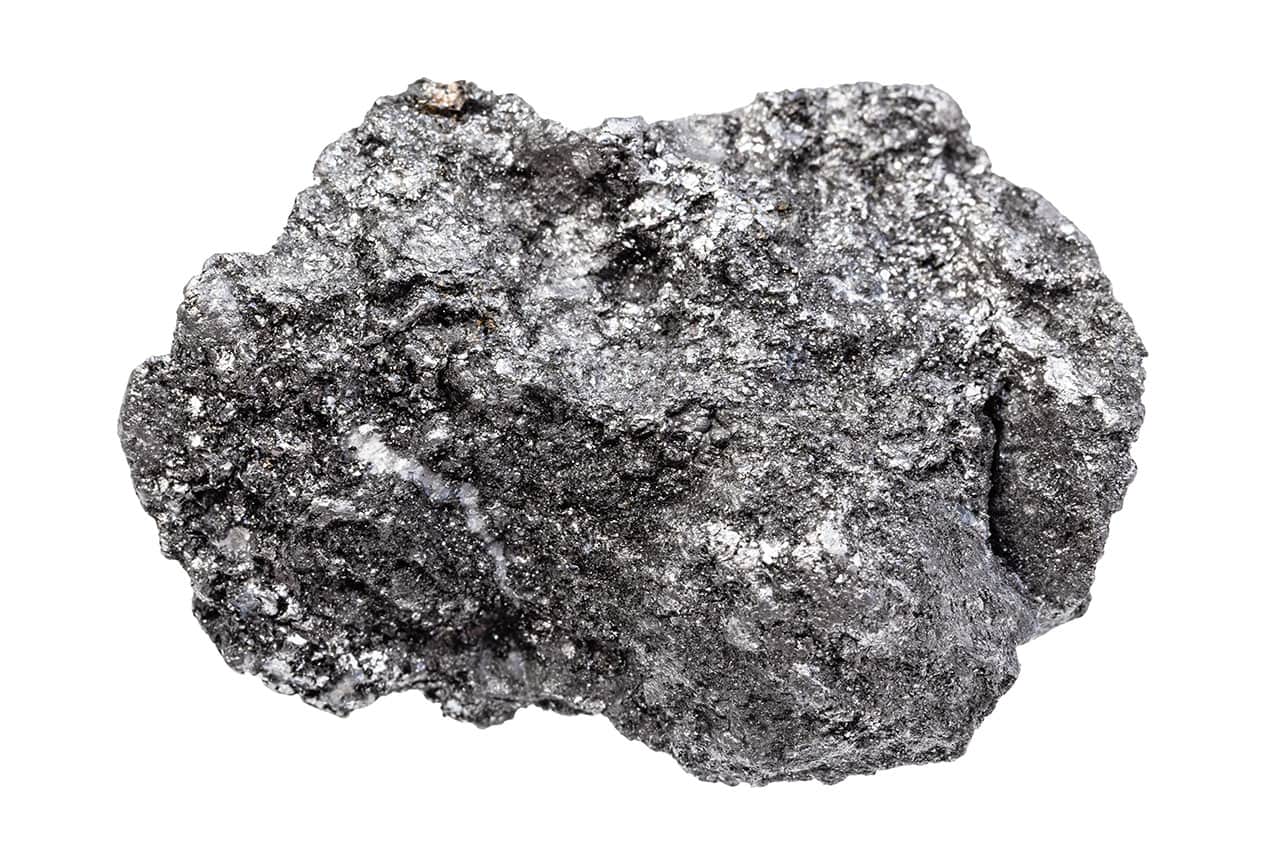

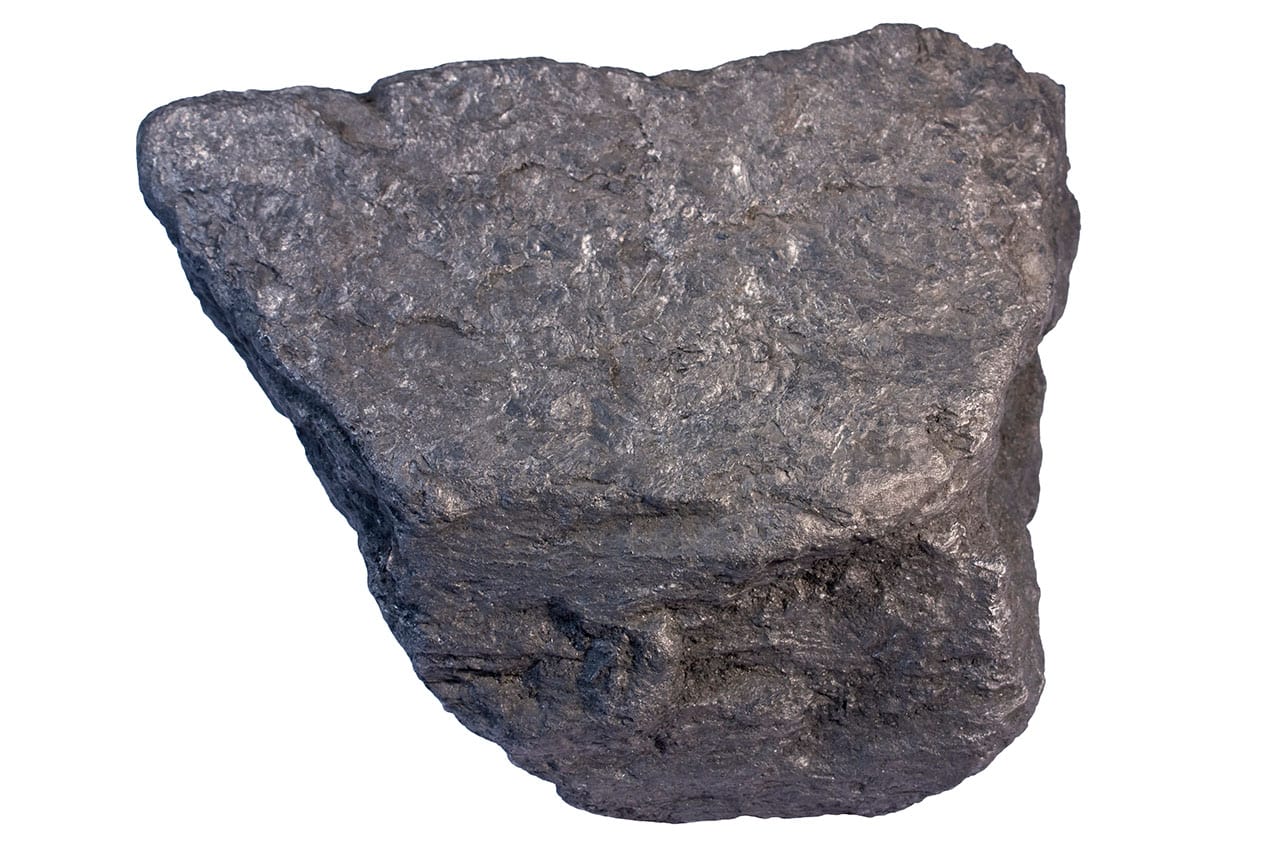
TABLE OF CONTENTS
Properties & Qualities
Physical Properties
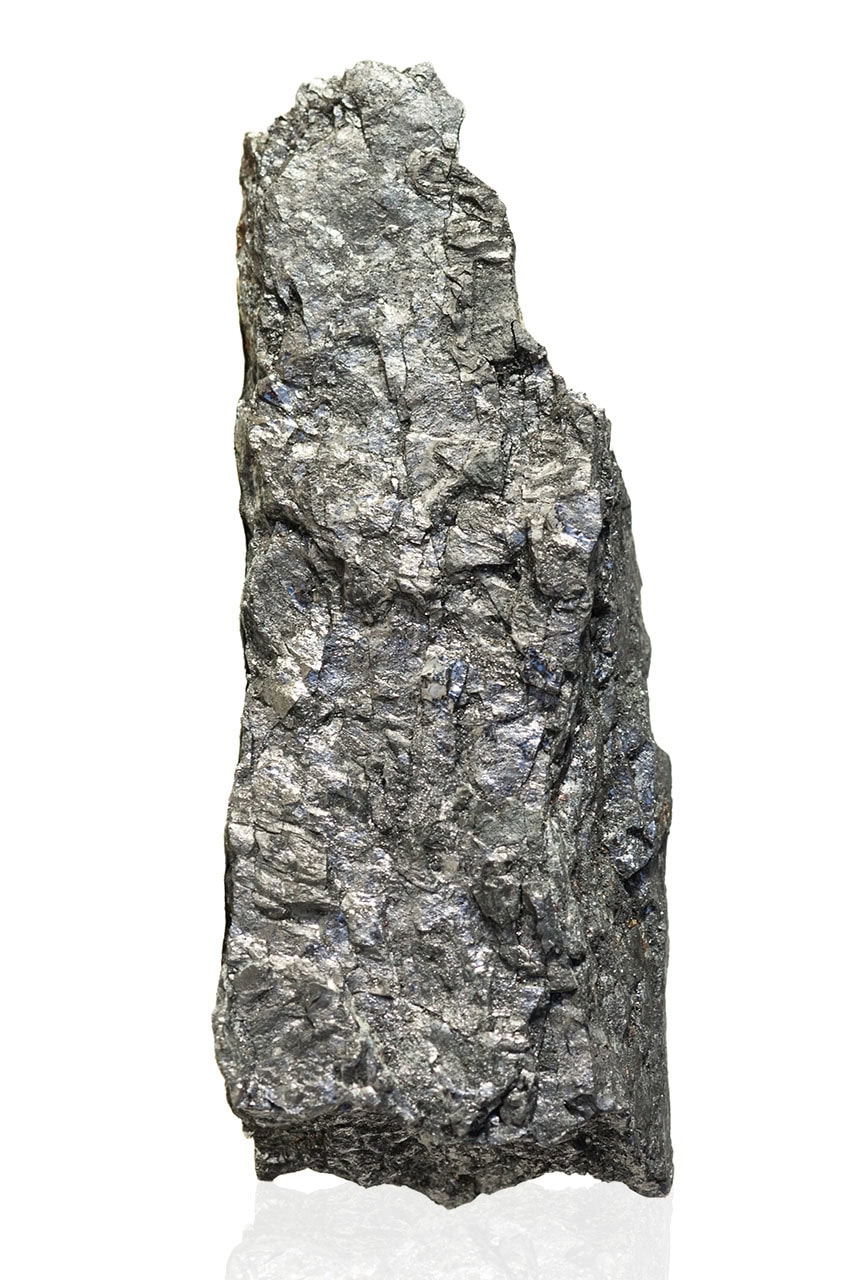
Graphite presents itself as nature's writing instrument, its layered structure creating one of the most distinctive minerals in the geological kingdom. Each crystal consists of carbon atoms arranged in hexagonal sheets, stacked like infinite pages of atomic paper held together by weak van der Waals forces—a structure that explains its extraordinary softness despite being pure carbon.
The mineral's metallic luster can be deceptive, shifting from bright silver on fresh cleavage surfaces to a dull, sooty black when weathered or handled. This happens quickly, as graphite’s loosely bonded layers shed microscopic flakes at the slightest provocation, coating fingers and surfaces with its characteristic gray-black residue.
Temperature plays a fascinating role in graphite's behavior. It withstands extreme heat where there is no oxygen, but in air it slowly burns to carbon dioxide once strongly heated. This heat resistance, combined with its electrical conductivity, sets it apart among minerals: it conducts electricity well along its layers and about a thousand times less across them.
Under magnification, graphite reveals its true nature as a mineral of layers and secrets. Natural crystals often show hexagonal plates and triangular markings, while massive varieties display a foliated structure reminiscent of metamorphic rocks. Some specimens contain inclusions of other minerals, creating patterns that practitioners read like geological tea leaves.
Metaphysical properties
Within metaphysical traditions, graphite occupies a unique position as the "recorder stone," its layered structure believed to store and transmit information across time and space. Energy workers describe its vibration as deeply grounding yet electrically active—a combination that mirrors its physical properties of conducting energy while maintaining structural stability.
Some modern practitioners link graphite with old ideas about joining heaven and earth energies. Its ability to leave marks is read as the power to inscribe one’s will upon reality, which makes it a favored tool for manifestation rituals.
The mineral's association with the root chakra stems from its carbon composition—the fundamental element of organic life. However, practitioners note that graphite's conductivity creates an unusual energetic signature that can activate all chakras simultaneously when used with focused intention, creating what some describe as a "lightning rod" effect for spiritual energy.
Modern crystal workers use graphite’s electrical associations for grounding high-frequency spiritual downloads into practical understanding. Its ability to create energetic boundaries that allow selective permeability has earned it recognition as a powerful tool for empaths and energy-sensitive individuals. The stone's connection to both earth and electricity has earned it the nickname “shaman’s pencil” among modern practitioners who use it to draw protective symbols and power sigils.
Meaning & Symbolism
Physical meaning
In the physical realm, graphite embodies the principle of potential energy awaiting release. Its structure—identical to diamond in composition but opposite in properties—speaks to how arrangement, not just substance, determines manifestation. This teaches that success often lies not in acquiring new resources but in reorganizing existing ones.
The mineral's role as humanity's writing tool for centuries imbues it with deep symbolic meaning around communication, creativity, and leaving one's mark on the world. Every graphite crystal contains the potential for countless words, drawings, and ideas—a crystallized reminder that we all carry unlimited creative potential within our carbon-based forms.
Its industrial applications further expand its physical symbolism. As a lubricant, it represents smooth progress and reduced friction in life's mechanisms. Its electrical conductivity symbolizes the flow of energy and information through systems. In nuclear reactors, it moderates powerful forces, suggesting our ability to control and channel intense energies safely. Its engineered cousin, carbon fibre, demonstrates how apparent softness can hide incredible structural strength.
For those focused on material success, graphite represents the paradox of gentle persistence—how soft, consistent pressure can leave more lasting marks than violent force.
Spiritual meaning
Graphite's spiritual significance transcends its humble appearance, representing the alchemical process of transformation through pressure and time. Some mystics read its formation from ancient organic matter as a symbol of consciousness surviving apparent death, transformed but not destroyed—a mineral testament to the eternal nature of energy.
The stone's ability to conduct electricity while maintaining its own structure serves as a powerful metaphor for spiritual mediumship. Just as graphite channels electrical current without being consumed by it, spiritual practitioners use it as a tool for channeling higher wisdom while maintaining personal boundaries and grounding.
Practitioners read graphite's message in different ways. Some practitioners with a Hermetic bent read it as the Mercury principle, the medium between realms. Others see its layers as levels of consciousness to be explored one by one, or use it to sketch the pathways of inner journeys.
Contemporary spirituality interprets graphite as a bridge between digital and organic consciousness, recognizing carbon’s role in biological life and graphite’s place in modern technology. This positions it as a teacher for the current age, helping humanity navigate the integration of artificial and natural intelligence. The mineral's presence in both ancient pottery paint and modern technology suggests its role as a constant companion in humanity's spiritual evolution, adapting its expression to each era's needs while maintaining its essential function as a recorder and transmitter of wisdom.
Healing Benefits
Physical healing
Graphite in crystal healing is a matter of practice and tradition, not medicine. Its dark, earthy feel links it with the root chakra, and most practice centres on grounding and creative expression.
Practitioners often hold raw graphite during grounding meditations, or keep a piece on the desk while drawing or writing. Because it leaves grey marks on skin and fabric, many hold it wrapped in a cloth or keep it in a small dish.
Graphite is not a substitute for medical care. If something in your body worries you, see a doctor.
Emotional healing
The emotional healing attributes of graphite center on helping people “write their own story,” turning painful narratives into wisdom. Practitioners often choose it for people who struggle with self-expression, especially those who feel their voices have been silenced or dismissed.
The mineral’s tendency to leave marks becomes a useful image in inner work, where practitioners use it to explore how experiences leave imprints without defining who we are. This “marking without scarring” idea helps people see painful memories as information rather than damage.
Graphite’s grounding reputation makes it a favourite for days when people feel scattered or disconnected from their body. Its conductive nature is said to help emotional static discharge before it builds into overwhelm.
Practitioners often turn to graphite for creative blocks, as its association with writing and drawing connects directly to expression channels. Practitioners report that holding graphite while journaling or making art can unlock suppressed emotions and facilitate their healthy expression. The stone's softness reminds us that vulnerability—often seen as weakness—is actually the quality that allows us to leave our mark on the world.
Spiritual healing
In spiritual healing contexts, graphite functions as what practitioners call an "interdimensional translator," helping to decode and ground high-frequency spiritual information into usable wisdom. Practitioners use this bridging quality as a grounding focus in kundalini practice and periods of spiritual emergence; anyone overwhelmed by intense spiritual experiences deserves real support, and a stone is no replacement for it.
Advanced energy workers utilize graphite for accessing the Akashic records, using its layered structure as a metaphysical filing system to navigate timeline information. The stone's recording properties are believed to help in soul retrieval work, drawing back what they describe as fragmented aspects of self scattered across dimensions.
The mineral's unique position as both grounder and conductor makes it essential for healing electrical disruptions in the aura. Practitioners describe graphite as creating a "translation matrix" that converts cosmic downloads into practical guidance, symbolic visions into actionable insights, and multidimensional experiences into linear understanding that the human mind can process.
For those working with entity attachments or psychic interference, graphite is said to create selective boundaries—allowing beneficial energies while filtering out parasitic ones. This discriminating quality extends to its use in updating outdated energetic patterns, where practitioners visualize graphite literally rewriting the energetic scripts that no longer serve the individual's highest good.
Use & Care
How to use
- Meditation enhancement: Hold raw graphite during grounding meditations to deepen Earth connection
- Creative catalyst: Keep specimens in art studio or writing space to enhance creative flow
- Dream work: Place under pillow to stimulate problem-solving dreams and remember insights
- Energy layouts: Position at base of spine during healing sessions for grounding
- Tech-day grounding: Carry a piece on long screen days
- Communication aid: Carry in pocket during important conversations or presentations
- Manifestation tool: Write intentions with graphite pencil for earth-based magic
- Chakra work: Place on root chakra while lying down to stabilize entire energy system
- Protection circles: Draw protective boundaries with graphite before ritual work
- Meridian tracing: Use tumbled pieces to trace energy pathways on body
- Study support: Keep on desk while learning to improve focus and retention
- Psychic development: Hold during channeling practice to maintain grounding
How to cleanse
- Sound cleansing: Use bells, singing bowls, or tuning forks—most recommended for graphite
- Smoke cleansing: Pass through sage, cedar, or palo santo smoke for 30-60 seconds
- Moonlight bathing: Leave under any moon phase overnight for gentle clearing
- Breath work: Hold stone and exhale forcefully with cleansing intention
- Visualization: Imagine white or violet light flowing through and around stone
- Selenite plate: Rest on selenite plates or wands overnight
- Earth burial: Bury in dry soil for 24-48 hours for deep cleansing
- Reiki symbols: Draw clearing symbols over stone if attuned
- Keep dry: Water won’t harm it but gets messy and can loosen flakes
- Avoid salt: Direct salt contact may cause surface deterioration
How to charge
- Earth charging: Bury in mineral-rich soil for strongest natural charge
- Lightning storms: Place safely indoors near window during electrical storms
- Magnetite contact: Rest on magnetite or lodestone for electromagnetic charging
- Crystal clusters: Place on clear quartz or amethyst clusters for amplification
- Sacred geometry: Set on printed Metatron's Cube or Sri Yantra patterns
- Pyramid power: Position inside copper or orgone pyramids for 24-72 hours
- Intentional programming: Hold during meditation while stating specific purpose
- Group charging: Pass among circle participants to build collective energy
- Copper charging: Place on copper plates or within copper coils
- Ley line exposure: Take to natural power spots for earth energy infusion
Combining with other stones
- Hematite: Strong grounding pair for feeling scattered or spacey
- Black Tourmaline: Adds psychic shielding and protection
- Clear Quartz: Amplifies conductivity while adding clarity to insights
- Moldavite: Grounds intense transformation energies—use very cautiously
- Shungite: Adds grounding and protection
- Smoky Quartz: Transmutes negative energy while maintaining earth connection
- Pyrite: Powerful manifestation combination linking ideas to material reality
- Jet: A protective pairing for journey work
- Copper: Enhances electrical conductivity for advanced energy healing
- Magnetite: Deepens grounding and earth connection
Identification
Can be mistaken for
- Molybdenite: Nearly identical appearance and softness—molybdenite has bluish tinge and higher specific gravity
- Galena: Similar metallic luster—galena is much heavier and forms cubic crystals
- Anthracite coal: Comparable color and feel—coal is lighter and lacks metallic luster
- Hematite: Massive varieties look similar—hematite is harder with red streak
- Stibnite: Metallic gray appearance—stibnite forms distinctive needle-like crystals
- Pyrolusite: Black color similar—pyrolusite is harder with different crystal structure
- Magnetite: Dark appearance—magnetite is magnetic and significantly harder
- Synthetic graphite: Industrial versions lack natural crystal patterns and impurities
How to spot a fake
- Softness check: Real graphite marks paper easily and feels greasy or slippery
- Conductivity test: Use multimeter—authentic graphite conducts electricity well
- Weight assessment: Natural graphite is surprisingly light for its size
- Magnification: Look for natural layered structure and hexagonal patterns
- Price red flags: Suspiciously cheap "rare" specimens likely synthetic
- Source verification: Industrial graphite often mislabeled as natural specimens
- Impurity presence: Natural graphite contains minor impurities—pure synthetic doesn't