Hematite
Oxide
Steel gray, black, red-brown, red
Metallic to earthy
5 - 6.5
4.9 - 5.3
Trigonal
Brazil, Australia, USA, Canada, India, Russia
Very common
Fe₂O₃ (Iron oxide)
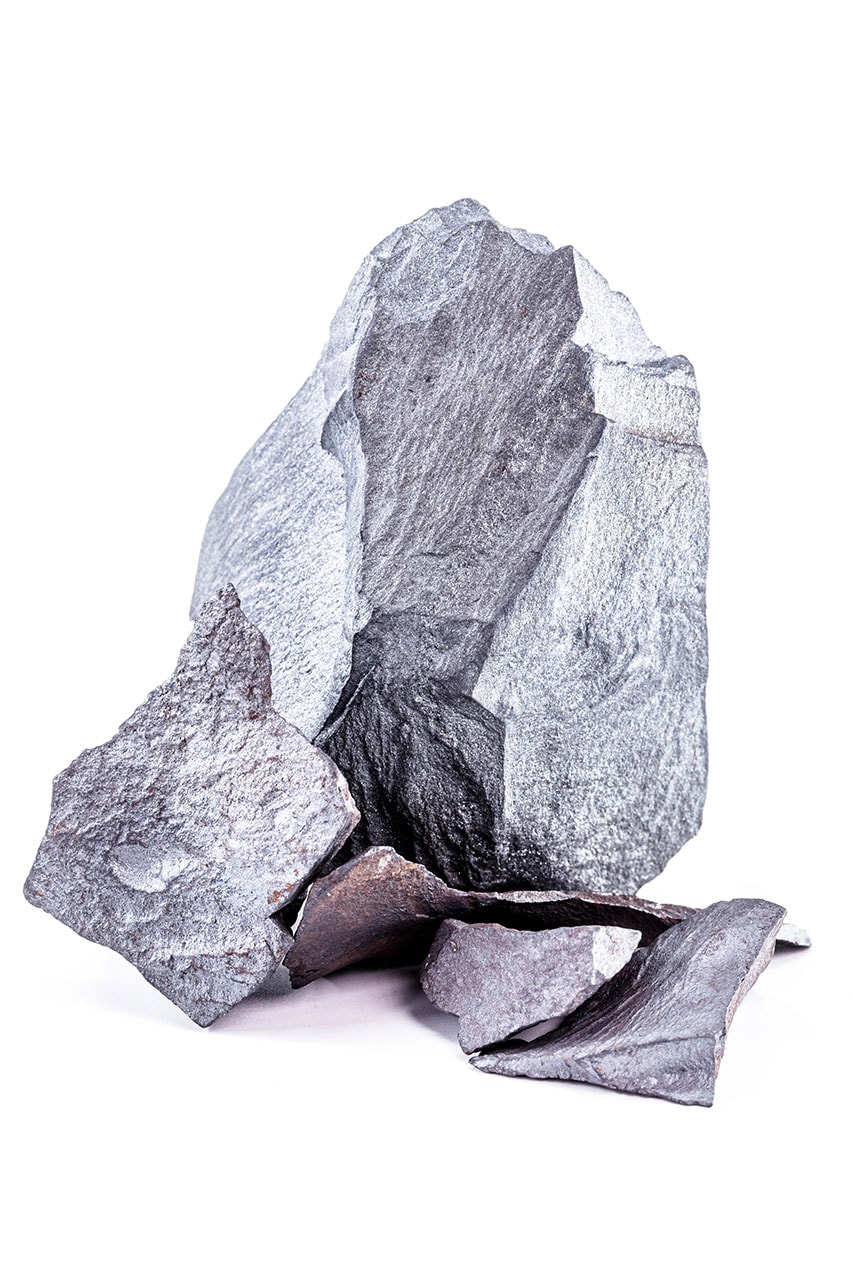
From the red ochre that Paleolithic artists used to paint cave walls to polished mirrors in the ancient world, hematite has served humanity longer than almost any other mineral. This iron oxide, whose name derives from the Greek "haima" meaning blood—for the red streak it leaves when scratched—is one of Earth’s most important iron ores and one of humanity's oldest companions in the journey toward civilization.
Red ochre has been used in burials and body decoration since the Stone Age, ancient Egyptians carved small amulets from hematite, and later lore made it a warrior’s stone linked with Mars. Modern practitioners keep that link with blood, courage and the grounding force that keeps people present in hard moments.
Today, as humanity faces different battles—against stress, disconnection, and scattered attention—hematite emerges as an essential ally. Practitioners say its weight gives grounding so steady that even the most unanchored people feel stabilized. From the polished specimens that reflect like dark mirrors to the rounded masses miners call “kidney ore,” this ancient mineral continues its role as humanity's anchor to Earth.
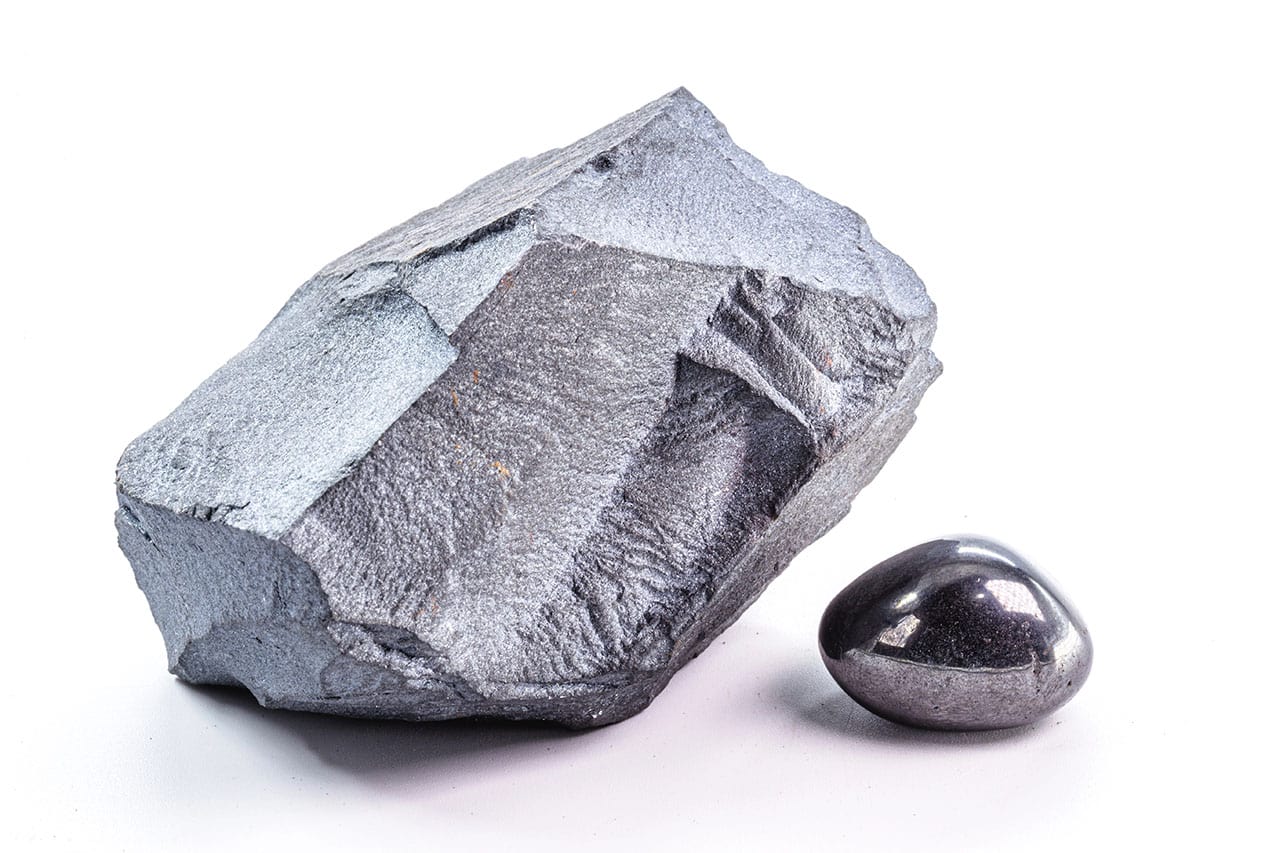
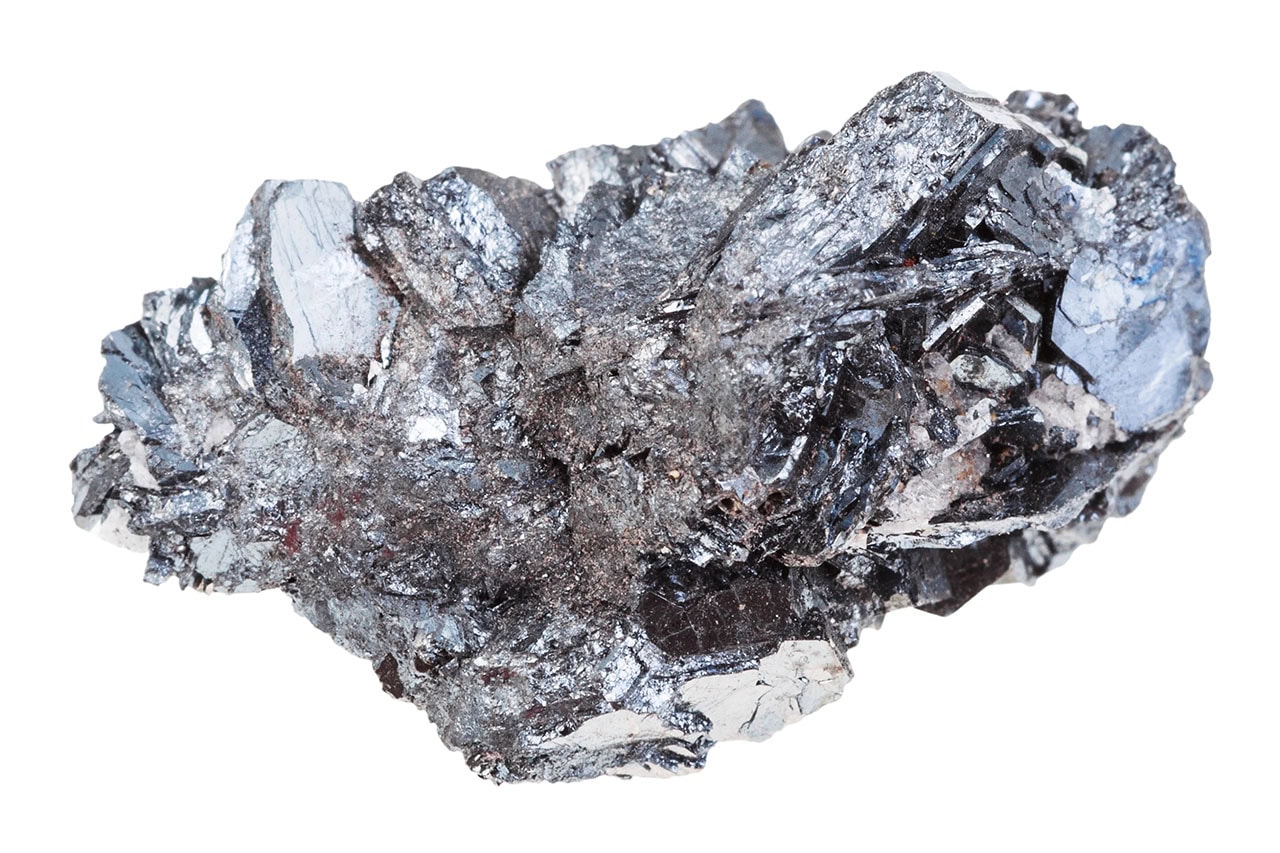
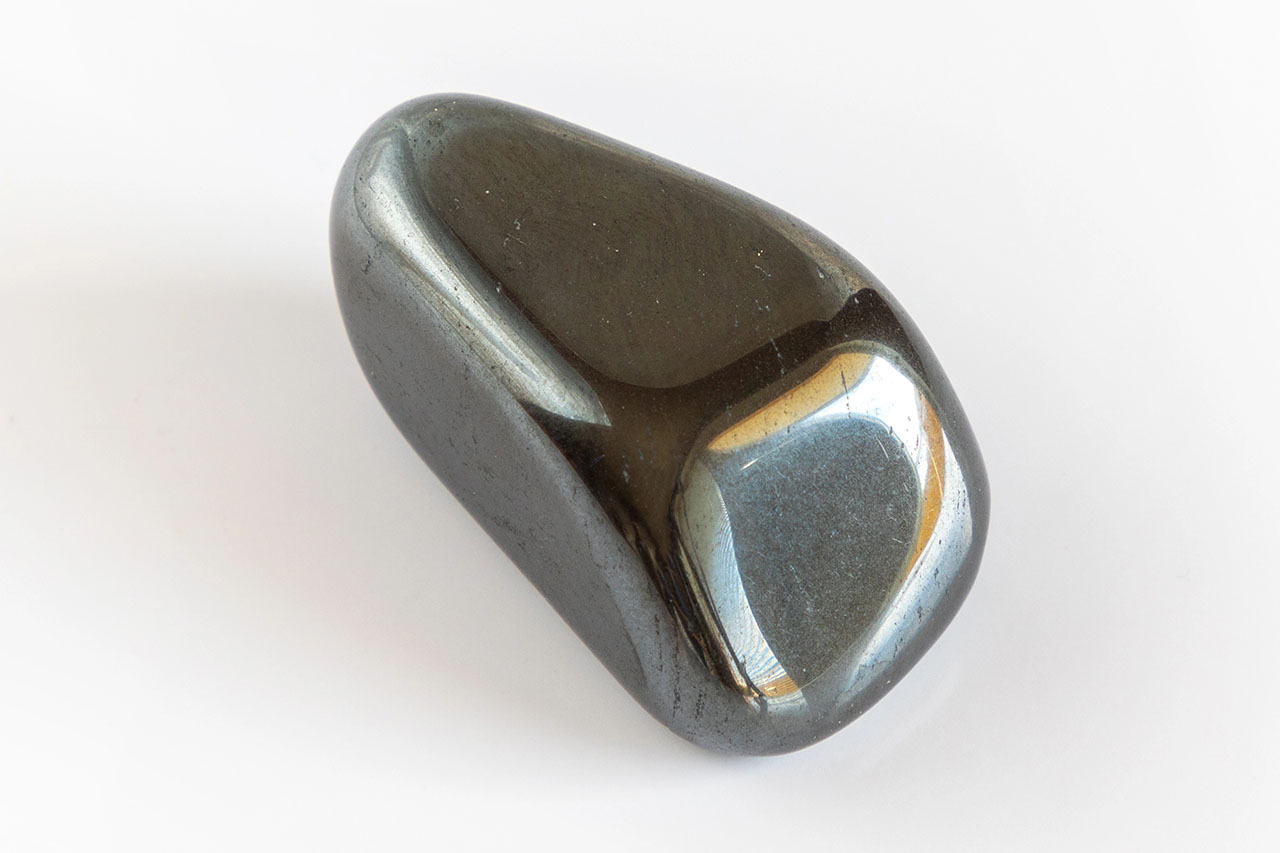
TABLE OF CONTENTS
Properties & Qualities
Physical Properties
Hematite presents itself through remarkable diversity of form, from mirror-bright metallic crystals to earthy red masses. The most prized specimens display steel-gray surfaces with metallic luster so perfect they were used as mirrors in ancient times. This reflective quality, combined with hematite's weight, creates specimens that feel both visually and physically substantial.
Crystal formation produces various habits: tabular crystals, rhombohedrons, and the distinctive "iron roses"—circular arrangements of flat crystals resembling metallic flowers. Botryoidal masses with kidney-like surfaces give hematite its alternate name "kidney ore." Specular hematite displays brilliant metallic flakes that sparkle dramatically, while massive varieties show the earthy red color that reveals hematite's true nature.
The mineral's most distinctive property is its red streak—regardless of surface color, hematite always leaves a red-brown mark when scratched across unglazed porcelain. This blood-red streak, combined with the red powder produced when hematite is ground, explains both its name and its ancient associations with blood and life force.
Hematite's high specific gravity makes it immediately recognizable—specimens feel remarkably heavy for their size, creating a grounding sensation even before metaphysical properties are considered. This density results from iron's high atomic weight, making hematite one of the heaviest common minerals and contributing to its reputation as the ultimate grounding stone.
Metaphysical properties
Within metaphysical circles, hematite reigns as the supreme grounding stone, its iron content and extreme density creating what practitioners describe as "magnetic anchoring" to Earth's core. Unlike lighter grounding stones that stabilize, hematite actively pulls scattered energy downward, making it invaluable for those who feel chronically ungrounded despite other efforts.
The stone's primary resonance with the root chakra extends deep into what energy workers call the "earth star chakra" below the feet, creating connection not just to ground but to planetary consciousness itself. This deep anchoring provides stability for all other spiritual work, making hematite essential foundation for advanced practices.
Later lore made hematite a warrior's stone, providing courage and protection in battle. Modern practitioners extend this to everyday battles: stress, overwhelm and situations where staying grounded helps. Hematite's energy doesn't fight for us but keeps us present and functional when fight-or-flight threatens to overwhelm.
The mineral's reflective surface carries metaphysical significance—like a mirror, hematite allegedly reflects negativity back to its source while revealing truth to its wearer. This dual function of protection and revelation makes it valuable for those navigating deceptive or hostile environments.
Meaning & Symbolism
Physical meaning
In the physical realm, hematite embodies the principle of density creating stability—its weight and iron content represent the commitment to staying grounded regardless of circumstances. This teaches that true stability comes from internal substance rather than external support.
The mineral's role as primary iron ore connects it to civilization's foundation. Iron tools and weapons transformed human capability, and hematite provided much of this transformative metal. This historical significance positions hematite as a stone of practical power—the ability to shape reality through sustained effort.
For those in demanding physical professions, hematite's iron associations provide symbolic support. Iron’s role in blood links hematite symbolically to vitality and endurance, while its grounding properties help maintain focus during exhausting work.
The stone's mirror-like polish in fine specimens represents self-reflection and honest self-assessment. Just as hematite mirrors show true reflections, working with hematite allegedly helps see ourselves clearly, without the distortions of ego or wishful thinking.
Spiritual meaning
Hematite's spiritual significance centers on its role as "The Anchor Stone," providing the stable foundation from which all spiritual exploration safely proceeds. Its iron content connects to Mars energy and the spiritual warrior archetype, but hematite's grounding influence ensures this warrior energy serves rather than destroys.
Practitioners give the stone's blood associations deep spiritual meaning. Blood represents life force, sacrifice, and the covenant between physical and spiritual realms. Hematite's red streak—blood revealed through friction—symbolizes the life force released through spiritual effort and the sacrifices required for genuine growth.
Some modern practitioners read hematite's reflective surface as a portal or scrying tool, its dark mirror revealing hidden truths or providing glimpses into other realms. This positions hematite as both anchor and window—grounding consciousness while allowing perception of subtle realities.
The mineral's formation through oxidation—iron combining with oxygen—represents the spiritual breath that transforms base matter. This alchemical association connects hematite to transformation through conscious breathing and the integration of spirit (air) with matter (iron).
Healing Benefits
Physical healing
Hematite in crystal healing is a matter of practice and tradition, not medicine. Its weight and iron content link it with the root chakra, and most practice centres on grounding.
Practitioners often hold a piece of hematite in the palm during grounding meditations, place it near the feet in layouts, or carry a tumbled stone to hold on stressful days. Many find its weight in the hand a simple, steadying cue to slow their breathing.
Hematite is not a substitute for medical care. If something in your body worries you, see a doctor.
Emotional healing
The emotional healing properties of hematite center on providing stability during emotional storms and building resilience for ongoing challenges. Practitioners often choose it for people who drift away from their body or struggle to stay present when feelings intensify.
On stressful, racing days, hematite offers simple grounding. Its weight in the hand gives a physical anchor point, and many people carry it as a pocket stone for moments when everything feels like too much.
Practitioners also turn to hematite for what they call "scattered self"—the fragmentation that occurs when stress or overstimulation disperses energy and attention. Hematite's magnetic-like pull helps consolidate scattered aspects, restoring sense of wholeness and presence.
Hematite's reflective surface supports emotional self-awareness, helping identify patterns and triggers that might otherwise remain unconscious. This mirror quality, combined with grounding stability, creates safe conditions for honest self-examination without becoming overwhelmed by what's revealed.
Spiritual healing
In spiritual healing contexts, hematite functions as what practitioners call a "spiritual anchor," providing the stable foundation necessary for safe exploration of non-ordinary states. This makes it essential for shamanic journeying, deep meditation, and any practice involving altered consciousness.
Advanced practitioners utilize hematite for what they term "soul retrieval grounding"—ensuring that recovered soul parts integrate fully into the body rather than remaining partially attached. The stone's density allegedly helps anchor subtle energies into physical form, completing healing processes.
For ungrounded spiritual states, such as a sense of excessive upper chakra activation, practitioners reach for hematite as a grounding focus, reading its earth energy as a call back to the body. Anyone struggling to function day to day, or overwhelmed by intense spiritual experiences, deserves real support, and a stone is no replacement for it.
The stone's iron content connects it to blood mysteries and life force traditions across cultures. Working with hematite in spiritual contexts allegedly strengthens the connection between physical blood and spiritual life force, integrating body and soul more completely.
Use & Care
How to use
- Grounding meditation: Hold in both hands for deep anchoring
- Calm carry: Keep in your pocket for grounding on stressful days
- Root chakra placement: Lie down with hematite at base of spine
- Foot placement: Place at feet during meditation for earth connection
- Protection wearing: Wear continuously for energetic shielding
- Sleep grounding: Place under bed for stable rest
- Work focus: Keep on desk for mental clarity
- Mirror scrying: Use polished surface for divination
- Body scanning: Move over body to locate energy blocks
- Steadying hold: Hold it in your palm when feelings run high
- Grounding grid: Place in room corners for space anchoring
- Daily carry: Keep in pocket for ongoing stability
How to cleanse
- Earth burial: Bury in soil for 24-48 hours
- Dry salt: Place in dry sea salt overnight
- Sound clearing: Use deep drums or Tibetan bowls
- Smoke cleansing: Pass through sage or cedar smoke
- Moonlight: Leave under dark moon for release
- Keep it dry: Natural hematite is already iron oxide and won’t rust; many polished “hematite” beads are man-made, so wipe them dry
- Breath work: Exhale forcefully while holding
- Visualization: Imagine earth absorbing negativity
- Magnetic clearing: Pass near magnet to reset
- Regular cleansing: Clean weekly with heavy use
How to charge
- Earth charging: Direct contact with soil overnight
- Root vegetables: Bury with potatoes or beets
- Iron contact: Place near iron objects for resonance
- Magnetic charging: Brief exposure to magnetic field
- Physical activity: Carry during exercise to charge
- Mars timing: Charge on Tuesdays for warrior energy
- Dark moon: New moon for grounding energy
- Mountain stone: Charge with other grounding minerals
- Drumming: Charge during rhythmic drumming
- Minimal need: Hematite maintains charge well
Combining with other stones
- Black Tourmaline: Ultimate grounding and protection
- Smoky Quartz: Enhances transmutation of negativity
- Red Jasper: Increases physical vitality and stamina
- Obsidian: Deepens grounding and shadow work
- Garnet: Adds passion to grounded stability
- Tiger's Eye: Combines grounding with discernment
- Clear Quartz: Amplifies grounding properties
- Shungite: Modern grounding combination
- Black Onyx: Enhances strength and protection
- Jet: Traditional mourning and protection pairing
Identification
Can be mistaken for
- Magnetite: Similar appearance but magnetic
- Ilmenite: Iron titanium oxide, similar look
- Goethite: Related iron mineral, different structure
- Pyrite: Metallic but brass-colored
- Galena: Similar metallic luster but lead ore
- Black Tourmaline: Different structure and properties
- Obsidian: Volcanic glass, much lighter
- Magnetic Hematite: Almost always man-made and strongly magnetic
How to spot a fake
- Weight check: Genuine hematite very heavy (SG 4.9-5.3)
- Magnetic test: Natural hematite weakly magnetic at most
- Temperature: Natural stays cool longer than synthetics
- Surface examination: Look for natural variations
- Price appropriate: Common mineral, should be affordable
- "Magnetic hematite": Usually synthetic—real hematite barely magnetic
- Source verification: Abundant worldwide, verify claims