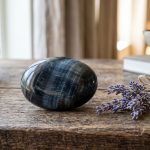
Vesuvianite
Sorosilicate
Green, brown, yellow, or blue
Vitreous to resinous
6-7
3.32-3.47
Tetragonal
Mount Vesuvius region of Italy (type locality, reflected in the name), and various skarn deposits and metamorphic environments worldwide
Common in appropriate geological settings; gem-quality material moderately rare
Complex calcium aluminum magnesium silicate; general formula Ca₁₀(Mg,Fe)₂Al₄(SiO₄)₅(Si₂O₇)₂(OH)₄
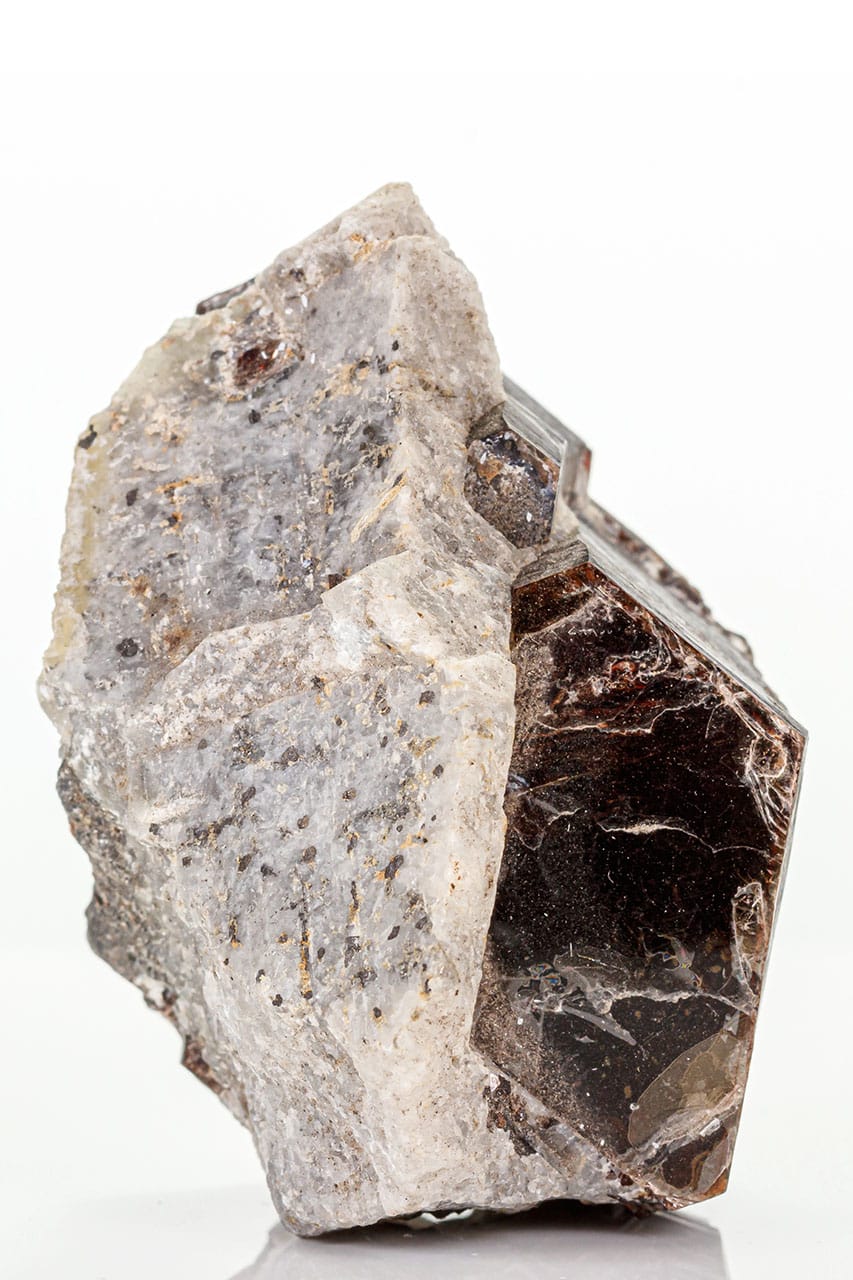
Vesuvianite also known as Idocrase carries within its very name a piece of geological history. Named for Mount Vesuvius in Italy—the volcano famous for burying Pompeii—the mineral was first described from specimens found in the ejected blocks and metamorphic rocks associated with this legendary volcano. This connection to one of the most historically significant volcanic sites gives vesuvianite a heritage few other minerals can claim.
The mineral is also widely known by an alternative name: idocrase. This dual naming reflects the historical development of mineralogy, where the same species sometimes received different names in different scientific traditions or contexts. Today, vesuvianite is the officially recognized name, though idocrase remains in common use, particularly in gemological contexts.
As a silicate mineral, vesuvianite belongs to a broad and diverse chemical family, but its specific formation environment sets it apart. Vesuvianite is a common mineral in skarns formed during contact or regional metamorphism of limestones. Skarns are distinctive metamorphic rocks that form where hot fluids interact with carbonate rocks, creating unique mineral assemblages rich in calcium, magnesium, and silicate minerals. This specific formation environment makes vesuvianite an indicator mineral for these metamorphic contexts.
Beyond limestone-derived skarns, vesuvianite also occurs in garnetized gabbros and in mafic and ultramafic rocks—dark, iron and magnesium-rich igneous rocks that have been altered through metamorphic processes. This range of formation environments demonstrates vesuvianite's chemical adaptability and its association with rocks that have undergone significant chemical transformation.
The mineral occasionally displays unusual compositional variations. A notable variety contains substantial beryllium (BeO), with analyses varying up to 9% BeO. This beryllium-bearing vesuvianite, sometimes called "beryllium vesuvianite," represents an unexpected compositional variant that captures the interest of mineralogists studying the range of substitutions possible within the vesuvianite structure.
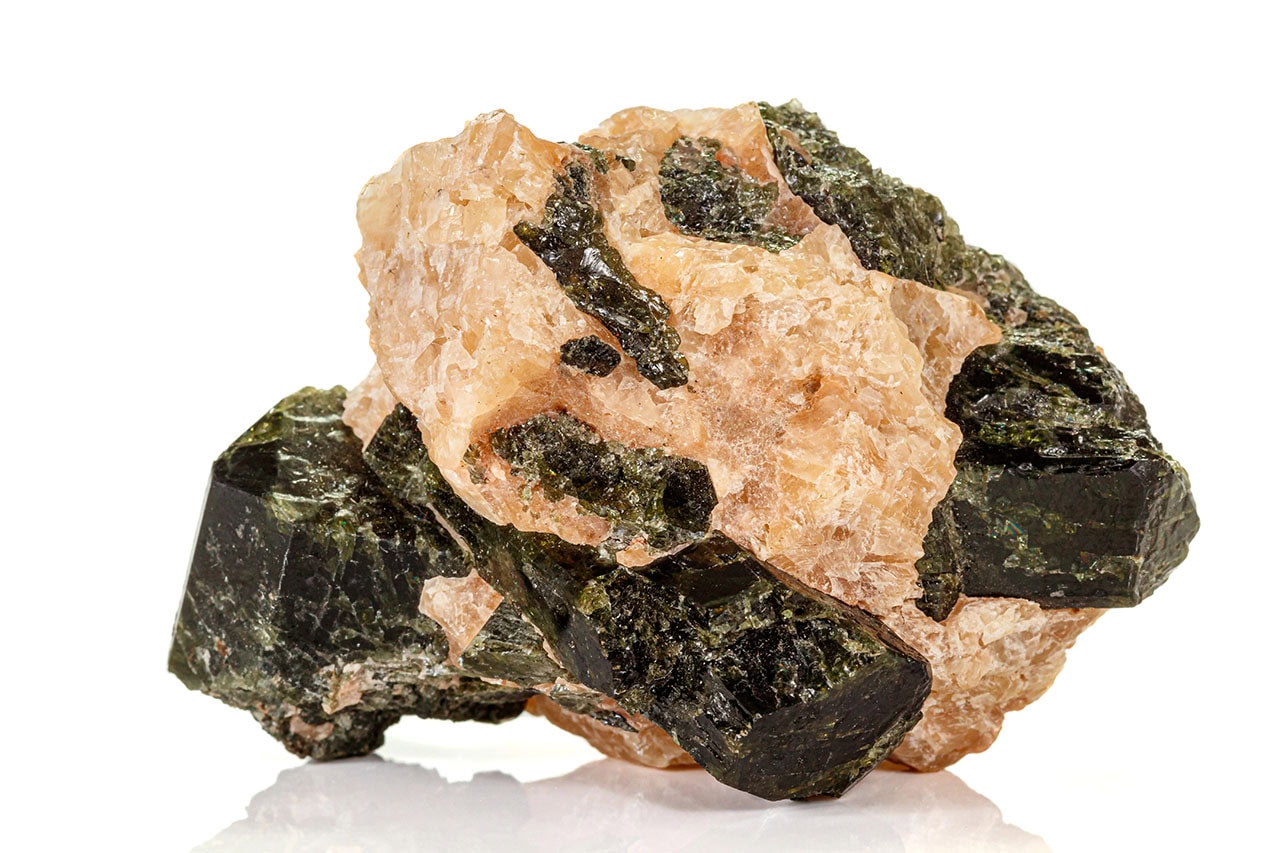
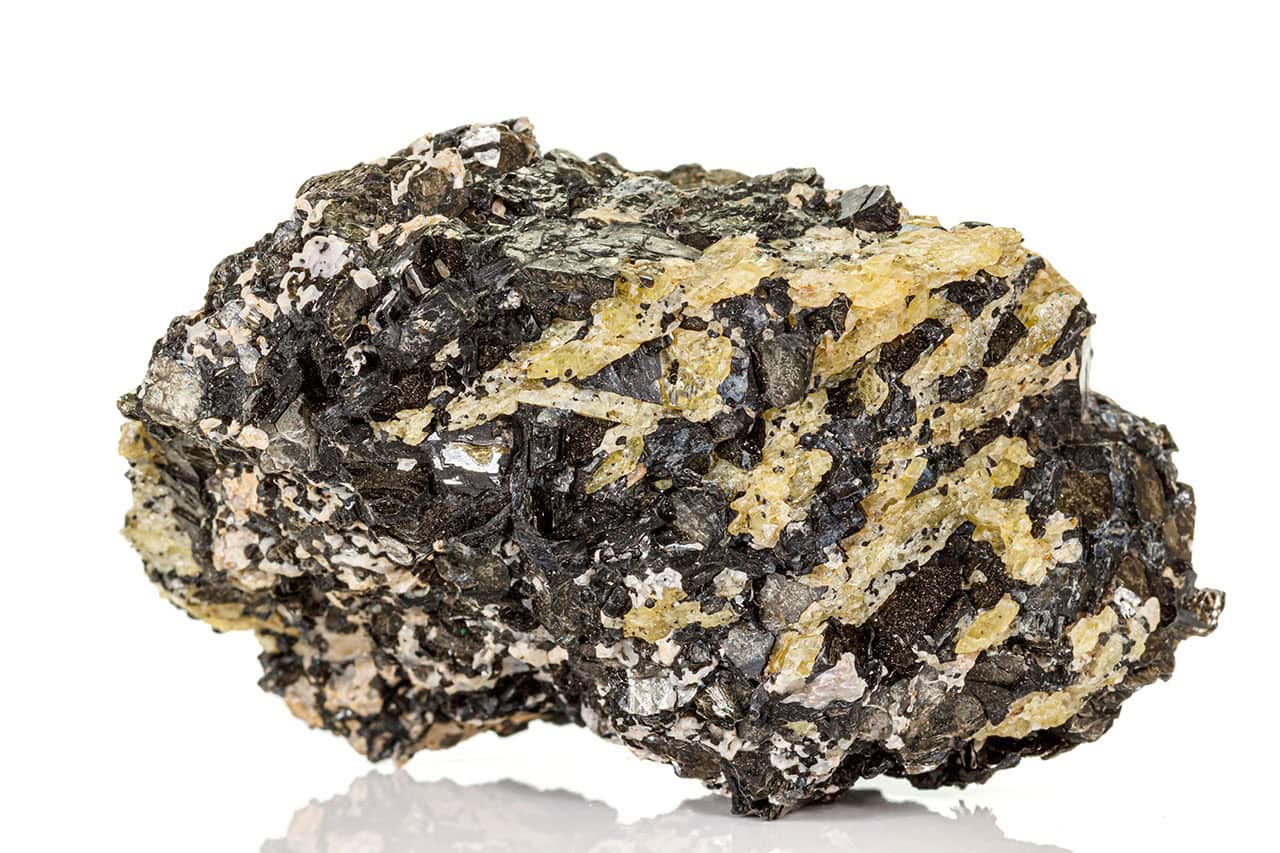
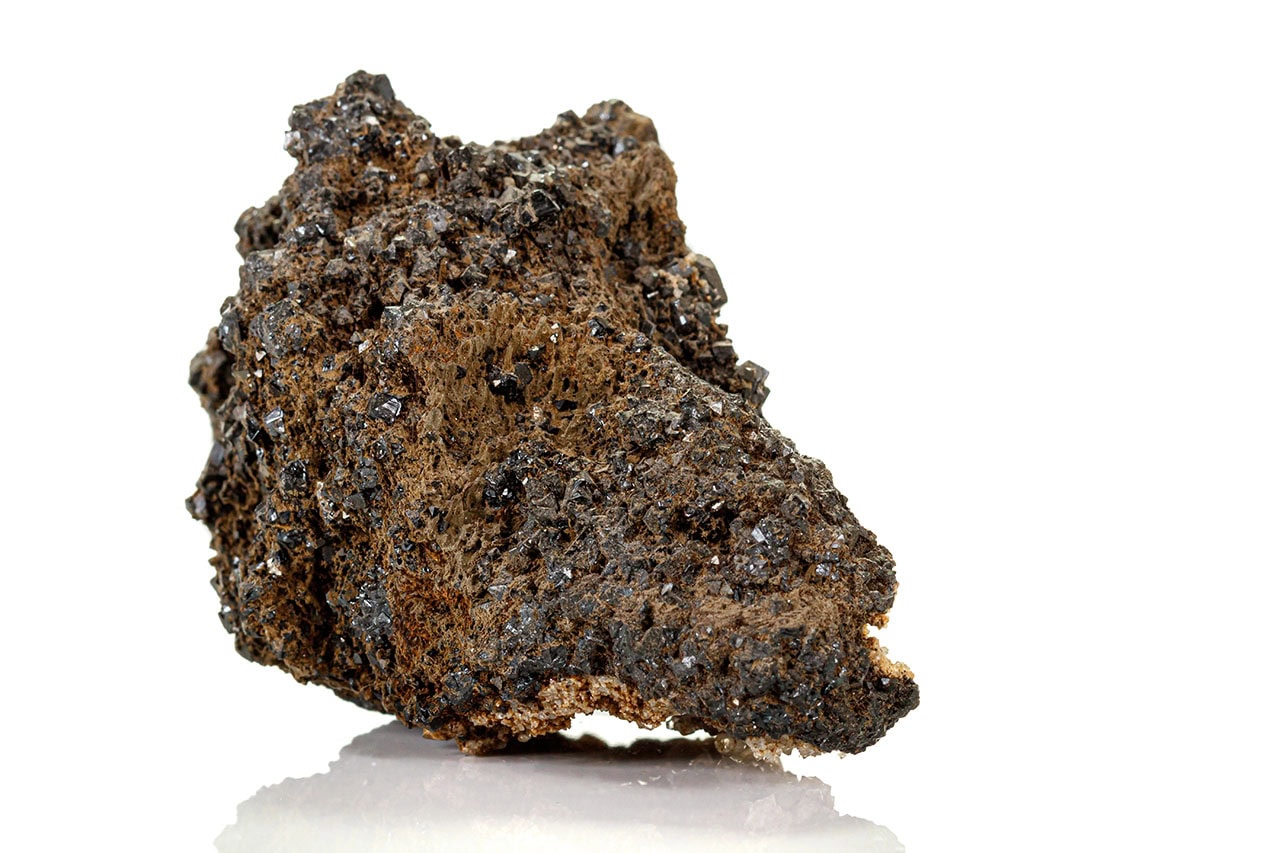
TABLE OF CONTENTS
Properties & Qualities
Physical Properties
Vesuvianite presents itself as tetragonal crystals, meaning it crystallizes in the tetragonal system—a crystallographic arrangement characterized by three axes at right angles, with two of equal length and one of different length. This crystal system produces distinctive prismatic crystals, often with square or rectangular cross-sections, that make well-formed vesuvianite specimens instantly recognizable to trained observers.
The color range of vesuvianite spans green, brown, yellow, or blue, reflecting the various trace elements and compositional variations possible within its crystal structure. Green varieties, which can rival jade in appearance and are sometimes called "californite" when they occur in massive form resembling jade, are particularly prized in the gem trade. Brown and yellow varieties are more common, while blue vesuvianite (sometimes called "cyprine" when colored by copper) is comparatively rare and valued for its unusual coloration.
The mineral's classification as a silicate places it in Earth's most abundant mineral group—the silicates—which form the majority of rocks in the Earth's crust. Within this broad family, vesuvianite belongs to the sorosilicate subgroup, characterized by paired silicon-oxygen tetrahedra sharing one oxygen atom.
Vesuvianite's occurrence in specific formation environments—particularly skarns formed during contact or regional metamorphism of limestones—gives it distinctive associations with other minerals typical of these settings. Common companion minerals include garnets (especially grossular), diopside, wollastonite, and various calcium silicate minerals that form under similar conditions.
The beryllium-bearing variety deserves special mention. With BeO content ranging up to 9%, this variant represents a significant substitution within the vesuvianite structure. Beryllium, a light element with distinctive geochemical behavior, doesn't typically substitute into calcium silicate structures in such quantities, making this variety geochemically interesting.
Metaphysical properties
According to metaphysical traditions, vesuvianite is described as an ancient Earthen amulet bearing healing properties that resonate directly with one's soul center. This characterization positions the mineral within traditions that value certain stones as connections to primal Earth energies and to the deepest aspects of individual consciousness.
The description of vesuvianite as an "ancient Earthen amulet" carries several implications for metaphysical practice. The word "ancient" connects the mineral to the deep geological time required for its formation—vesuvianite crystals that formed during metamorphic events millions of years ago carry, in metaphysical interpretation, the wisdom of that vast time period. The term "Earthen" emphasizes the mineral's fundamental grounding in earth energies rather than celestial or ethereal frequencies.
The claim that vesuvianite resonates directly with one's soul center suggests its use for deep, essential spiritual work rather than surface-level or peripheral energy work. This distinguishes vesuvianite from stones associated primarily with specific chakras or particular emotional states, positioning it instead as a stone connecting to core identity and essential being.
Contemporary practitioners working with vesuvianite may draw on these traditional characterizations while adapting them to modern metaphysical frameworks. The specific applications and protocols for such work go beyond what the provided sources directly document.
Meaning & Symbolism
Physical meaning
Vesuvianite's physical symbolism can be interpreted through its formation environment and geological associations. Forming primarily in skarns—rocks born from the intense chemical interaction between different materials under metamorphic conditions—vesuvianite embodies the principle of transformation through interaction. Just as skarns form when hot fluids penetrate and chemically transform limestone, vesuvianite symbolizes the transformative power of engagement and exchange.
The mineral's connection to Mount Vesuvius adds another layer of physical symbolism. Named for one of history's most famous volcanoes, vesuvianite carries associations with volcanic power, dramatic transformation, and the creative-destructive forces that shape Earth's surface. This connection to volcanic environments suggests physical themes of intense change, powerful natural forces, and the emergence of beauty from cataclysm.
Its occurrence in garnetized gabbros and mafic and ultramafic rocks—the dark, iron-rich rocks that make up much of Earth's oceanic crust and mantle—connects vesuvianite to the deep, foundational rocks of the planet. This association reinforces themes of fundamental strength and connection to Earth's deepest physical structures.
Spiritual meaning
The characterization of vesuvianite as an ancient Earthen amulet whose healing properties resonate directly with one's soul center points to its spiritual significance as a stone of core identity and essential being. In spiritual interpretation, the "soul center" represents the deepest aspect of individual consciousness—the essential self that persists through changing external circumstances.
A stone that resonates directly with this soul center serves spiritual functions different from those addressed by stones working with peripheral energy centers or specific spiritual concerns. Vesuvianite's traditional association suggests work with fundamental questions of identity, life purpose, and connection to essential self.
The description of vesuvianite as an "amulet" carries specific spiritual implications. Amulets, throughout human cultural history, have served as objects believed to provide protection, blessing, or connection to spiritual forces through their continuous presence with the wearer or possessor. This traditional framing suggests vesuvianite may be particularly suited to protective and connective spiritual work rather than active or manipulative practices.
The volcanic origin implied by vesuvianite's name adds spiritual dimensions related to transformation, rebirth from destruction, and the emergence of new forms from apparent endings—themes that recur throughout human spiritual traditions relating to volcanic phenomena.
Healing Benefits
Physical healing
The sources describe vesuvianite as bearing healing properties that resonate with one's soul center, positioning it primarily as a spiritual and energetic healing stone rather than one associated with specific physical conditions. Traditional applications documented in the provided sources don't detail particular physical healing protocols.
Given this limited source material regarding physical healing applications, any specific claims about vesuvianite treating particular physical conditions would go beyond what the sources support. Practitioners interested in vesuvianite for physical healing purposes generally do so based on general beliefs about the mineral's earth-connected healing properties rather than documented traditional applications.
Safety consideration: Given that beryllium-bearing varieties of vesuvianite exist (with BeO content up to 9%), and that beryllium compounds can pose health concerns in certain forms, vesuvianite should never be used in elixirs, ingested, or applied in ways that could result in exposure to any beryllium content. Direct handling of specimens is safe, but any application involving water infusion or ingestion should be avoided.
Emotional healing
Vesuvianite's reputation in emotional healing rests almost entirely on anger—specifically, anger that was never permitted expression. Users consistently report that it does not calm or dissolve the feeling but makes it accessible, surfacing irritation and resentment that had been held out of awareness for years. Practitioners recommend it particularly for people raised in households where anger was unsafe, dangerous or simply not allowed, and for those who describe themselves as never getting angry. It is valued precisely because it works in the opposite direction to soothing stones: the aim is not relief but restored access to a feeling that had been edited out.
The stone is most strongly associated with the flat, deadened form of depression that practitioners link to long-suppressed rage. Many describe vesuvianite as helping distinguish genuine sadness from the numbness that settles over unexpressed anger, and users frequently report that the first noticeable effect is increased irritability rather than improvement. Teachers generally frame this as expected and treat it as the point of the work, while advising that the surfacing be paced. Those working with it are commonly encouraged to have somewhere for the anger to go—movement, writing, or therapeutic support—rather than simply letting it rise with nowhere to land.
A second and more distinctive application derives from the mineral's alternative name, idocrase, from the Greek for mixed form, given because its crystals appeared to borrow the shapes of other minerals. Practitioners read this directly: vesuvianite is worked with by people who have taken their shape from others. It is recommended for chronic accommodation and people-pleasing, for those who answer questions about their own preferences by consulting what others want, and for anyone recovering a sense of desire after years of adapting. Users describe its help as unglamorous and slow—less a revelation than the gradual return of ordinary opinions and preferences.
Vesuvianite is also widely used with the feeling of being trapped. Practitioners suggest it for people constrained by obligation rather than circumstance—unwanted caregiving roles, work continued out of duty, family expectations, and situations sustained by guilt. It is described as helping separate genuine constraints from those that are chosen and merely feel compulsory, and users often report increased willingness to name a situation accurately before deciding whether to change it. Green material is generally worked with at the heart for this purpose, yellow and brown at the solar plexus for personal will, and the rarer blue cyprine for putting long-withheld anger into words.
Practically, vesuvianite suits sustained daily work in a way many emotional healing stones do not. At 6 to 7 on the Mohs scale it is durable enough for rings, pendants and everyday carrying, and practitioners commonly recommend continuous wear over weeks rather than occasional sessions, since the material it addresses tends to surface gradually. It is generally not suggested during acute crisis, in unsafe living or relationship situations where anger cannot be expressed safely, or for those already struggling to contain rage—in these cases teachers usually advise grounding and calming stones first, with vesuvianite introduced once there is capacity and safety to work with what it brings up.
Spiritual healing
Vesuvianite's most clearly articulated function in the source material relates to spiritual healing at the deepest level. As an ancient Earthen amulet with properties resonating directly with the soul center, the mineral is positioned as a tool for fundamental spiritual work.
The concept of "soul center" resonance suggests vesuvianite's spiritual healing applications might include:
- Core identity restoration: Supporting the reconnection with essential self after spiritual crisis or displacement.
- Soul purpose clarification: Assisting those seeking greater clarity about their fundamental spiritual purpose.
- Ancestral connection: The "ancient" quality attributed to the mineral may support work involving connection to ancestral wisdom and lineage.
- Earth-soul integration: The specifically "Earthen" nature of the mineral suggests its role in integrating spiritual aspects of self with grounded, earthly existence.
The volcanic origin implied by the name adds potential applications related to spiritual transformation, particularly after periods of dramatic personal upheaval.
Use & Care
How to use
- As an amulet: Consistent with the source's characterization of vesuvianite as an "ancient Earthen amulet," carrying or wearing the stone allows for continuous connection to its energies. This can be as a pendant, in a pouch, or as a pocket stone.
- Meditation focus: Holding vesuvianite during meditation to work with its reputed connection to the soul center, particularly for deep spiritual work involving core identity.
- Jewelry: Green vesuvianite in particular has been used in jewelry, sometimes as a substitute for jade due to visual similarity.
- Specimen display: Well-formed tetragonal crystals from classic localities are valued as mineral specimens.
- Spiritual practice: Incorporating vesuvianite into personal spiritual practice as a tool for soul-level work.
- Collector specimens: The beryllium-bearing variety and other unusual compositional variants are of interest to mineral collectors specifically for their geochemical uniqueness.
How to cleanse
- Smudging: Passing through sage, palo santo, or other sacred smoke provides gentle energetic clearing suitable for most stones.
- Sound cleansing: Using singing bowls, bells, or tuning forks for vibrational clearing without physical risk to specimens.
- Moonlight bathing: Leaving under moonlight for gentle energetic cleansing.
- Selenite contact: Resting on selenite plates for passive cleansing.
- Visualization: Using intentional visualization to clear accumulated energies from the stone.
- Water considerations: While vesuvianite's hardness allows for brief water exposure, prolonged soaking is best avoided, and specimens with beryllium content should not be used in water intended for other purposes.
How to charge
Combining with other stones
- Rhodonite: Meets the anger and old wounding vesuvianite surfaces, softening resentment without pushing it back down.
- Black Tourmaline: Grounds rising anger safely into the body, widely recommended for the early weeks of this work.
- Smoky Quartz: Steadies the surfacing process for those who feel destabilised when suppressed feeling returns.
- Red Jasper: Supports anger that needs somewhere physical to go, favoured for movement, exercise and manual work.
- Carnelian: Restores desire and appetite in people who have adapted away their own preferences.
- Citrine: Reinforces solar plexus will, useful when the difficulty is not identifying wants but acting on them.
- Tiger's Eye: Adds practical courage for naming a situation accurately before deciding whether to change it.
- Blue Lace Agate: Gently opens the throat for those learning to voice anger for the first time.
- Blue Kyanite: Sharpens direct speech when accommodation has become the default response.
- Sodalite: Supports the distinction between genuine constraint and obligation that only feels compulsory.
- Malachite: Amplifies the emotional excavation considerably, generally reserved for experienced practitioners rather than the early stages.
- Green Aventurine: Offers a far gentler heart pairing for those who find vesuvianite's directness too much at first.
- Rose Quartz: Balances self-directed anger with self-compassion, often paired for those turning blame inward.
- Chrysocolla: Supports women in caregiving roles who are recovering the right to their own needs.
- Amethyst: Steadies sleep and dreaming while long-held material is being processed.
- Peridot: Shares vesuvianite's association with releasing burden and outgrown obligation, reinforcing the theme of letting go without guilt.
- Garnet: Restores vitality and forward motion once anger has moved, commonly introduced in the later stages of the work.
- Jade: A close visual and energetic companion to californite in particular, adding steadiness and long-term endurance to sustained inner work.
Identification
Can be mistaken for
- Jade: The massive green variety californite is widely sold as "California jade" or "American jade"; jade is far tougher, while vesuvianite is brittle and chips at the edges, and nephrite has a notably lower specific gravity (around 2.9–3.0 against vesuvianite's 3.3–3.4).
- Grossular Garnet: The most frequent mineralogical confusion, as both form in the same skarn deposits and often in the same specimen; garnet is singly refractive and forms dodecahedral or trapezohedral crystals, while vesuvianite is doubly refractive and forms square-sectioned prisms.
- Epidote: Similar green colour and metamorphic occurrence, but epidote is monoclinic with strong pleochroism, shifting visibly between green, yellow and brown as it is turned, whereas vesuvianite shows only weak colour change.
- Diopside: Shares the same contact-metamorphic environment and green colouring; diopside is softer at 5.5–6.5, has two directions of good cleavage meeting at roughly 90 degrees, and forms flatter, more bladed crystals.
- Peridot: Overlaps closely in yellow-green material and hardness, but peridot has dramatically higher birefringence, showing obvious doubling of back facets under magnification; vesuvianite's is very low.
- Green Tourmaline: Both form elongated prisms, but tourmaline has a rounded triangular cross-section with striations running along its length, while vesuvianite's cross-section is square.
- Serpentine and Bowenite: Common substitutes in the massive green jade market; serpentine is much softer at 2.5–4 and can be scratched by a steel blade, which vesuvianite resists.
- Prehnite: Similar pale green and comparable hardness, but prehnite typically occurs as botryoidal or globular aggregates with a radiating fibrous interior rather than as distinct prisms.
- Chrysoprase: Resembles fine californite in colour and translucency; chrysoprase is chalcedony, with a noticeably lower specific gravity of about 2.6 and no crystal faces.
- Zircon: Brown and reddish-brown vesuvianite can resemble zircon, and both are tetragonal; zircon is far denser at 4.6–4.7 and has much higher refractive indices and dispersion.
- Hydrogrossular: Massive pinkish or green hydrogrossular from South Africa competes in the same jade-substitute market and is likewise granular, but it is isotropic and often shows small dark inclusions.
- Idocrase: Not a different mineral at all but the older name for the same species, still used in gemmological and lapidary contexts; material sold under both names is identical.
- Wiluite: A genuinely distinct boron-bearing species from the Wilui River in Siberia, closely related and visually near-identical, frequently sold as vesuvianite without distinction.
- Blue Apatite and Indicolite: The rare blue copper-bearing variety cyprine is often mislabelled as one of these; apatite is much softer at 5, and tourmaline again has the triangular cross-section.
How to spot a fake
- Check the weight first: Vesuvianite has a specific gravity of roughly 3.3–3.4 and feels distinctly heavy for its size, while glass sits near 2.5, quartzite near 2.65, and plastic far lower.
- Test the hardness: At 6–7 on the Mohs scale it resists a steel blade and will scratch glass; anything marked by a knife point is likely serpentine, calcite or a resin composite.
- Look for gas bubbles: Round or elongated bubbles visible under a 10x loupe are conclusive evidence of glass, as no natural mineral contains them.
- Watch for swirl lines: Glass imitations often show flowing, streaky colour patterns and mould seams along the edges, particularly on cabochons and tumbled shapes.
- Examine the fractures: Dye concentrates in cracks and along grain boundaries, appearing as darker green threading through a paler body — a common sign of dyed serpentine or quartzite.
- Distrust perfect uniformity: Natural vesuvianite almost always shows colour zoning, inclusions or variation across a piece; an entire batch of identically coloured tumbled stones suggests dyeing.
- Feel the temperature: Genuine vesuvianite stays cool against the skin for several seconds, while plastic and resin warm almost immediately.
- Inspect the crystal form: Specimens should show square-sectioned prisms with striations running lengthwise, a habit that is difficult to imitate convincingly.
- Look for matrix and companions: Authentic specimens frequently retain grossular garnet, diopside, calcite or wollastonite from the skarn they formed in, and their absence on a supposedly natural specimen is worth questioning.
- Be sceptical of cheap cyprine: The blue copper-bearing variety is genuinely rare and priced accordingly, so inexpensive blue material is usually dyed stone, apatite or fluorite sold under the name.
- Reject any "lab-created" claim: Vesuvianite is not commercially synthesised, so material advertised as synthetic or lab-grown is a different substance entirely.
- Question composites: Reconstituted stone made from mineral powder in resin binder shows a uniform speckled texture, feels light, and gives a dull rather than sharp sound when tapped.
- Check for surface coating: Colour that appears concentrated on the outside and shows wear or paler patches at edges and drill holes indicates a coated pale stone.
- Ask for the locality: Reputable sellers can name the source — Jeffrey Mine in Quebec, Val d'Aosta and Vesuvius in Italy, Siskiyou County in California, Telemark in Norway — and vagueness here is a meaningful warning sign.
- Treat "vesuvianite jade" with caution: This marketing term usually signals californite being positioned as jade, or the reverse, and often accompanies inflated pricing.