Vivianite
Phosphate
Green to blue-green, deepening to dark blue and nearly black with oxidation; colorless when freshly exposed
Vitreous to pearly
1.5-2
2.68-2.69
Monoclinic
Brazil, Bolivia, and various sedimentary and hydrothermal environments worldwide
Uncommon; well-formed crystal specimens moderately rare
Fe₃(PO₄)₂·8H₂O (Hydrated iron(II) phosphate, with possible trace substitutions)
Vivianite occupies a distinctive niche in the mineral kingdom as a hydrated iron(II) phosphate mineral found in a number of geological environments. Its chemical composition, based on iron and phosphate combined with water molecules, places it among a specialized group of secondary minerals that form under specific chemical conditions—typically requiring iron, phosphorus, and moderate reducing environments.
The mineral's compositional flexibility adds to its geological interest. Small amounts of manganese (Mn²⁺) and magnesium (Mg²⁺), along with other elements, can substitute into vivianite's crystal structure, creating subtle variations that mineralogists study to understand the environments where the mineral formed. This substitutional behavior makes vivianite a useful indicator of the geochemical conditions present during its crystallization.
Vivianite has emerged in unexpected contexts in modern science. Research has demonstrated that vivianite is the major iron phosphorus compound in sewage treatment plants with moderate iron dosing—a finding that has significant implications for wastewater management and phosphorus recovery.
Further studies have shown that vivianite scaling is widely occurring in wastewater treatment plants (WWTPs) even though it is rarely reported, with iron reduction appearing to be the cause of vivianite scaling in anaerobic conditions. This unexpected industrial relevance transforms vivianite from a geological curiosity into a material of practical importance in environmental engineering.
Perhaps most remarkably, vivianite has been detected beyond Earth. NASA's Perseverance Mars rover generated a mineral map showing the presence of vivianite (mapped in purple and pink) alongside greigite on the Martian surface. This extraterrestrial occurrence gives vivianite cosmic significance, as its presence on Mars provides clues about the planet's geochemical history and potential past environmental conditions.
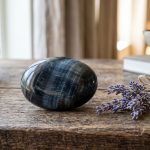
In the collector's market, vivianite has gained appreciation for its distinctive appearance. Vibrant vivianite crystals are sought by collectors and used for decorative purposes, with notable specimens including unique green sprays and tumbled specimens sourced from Brazil and Bolivia.
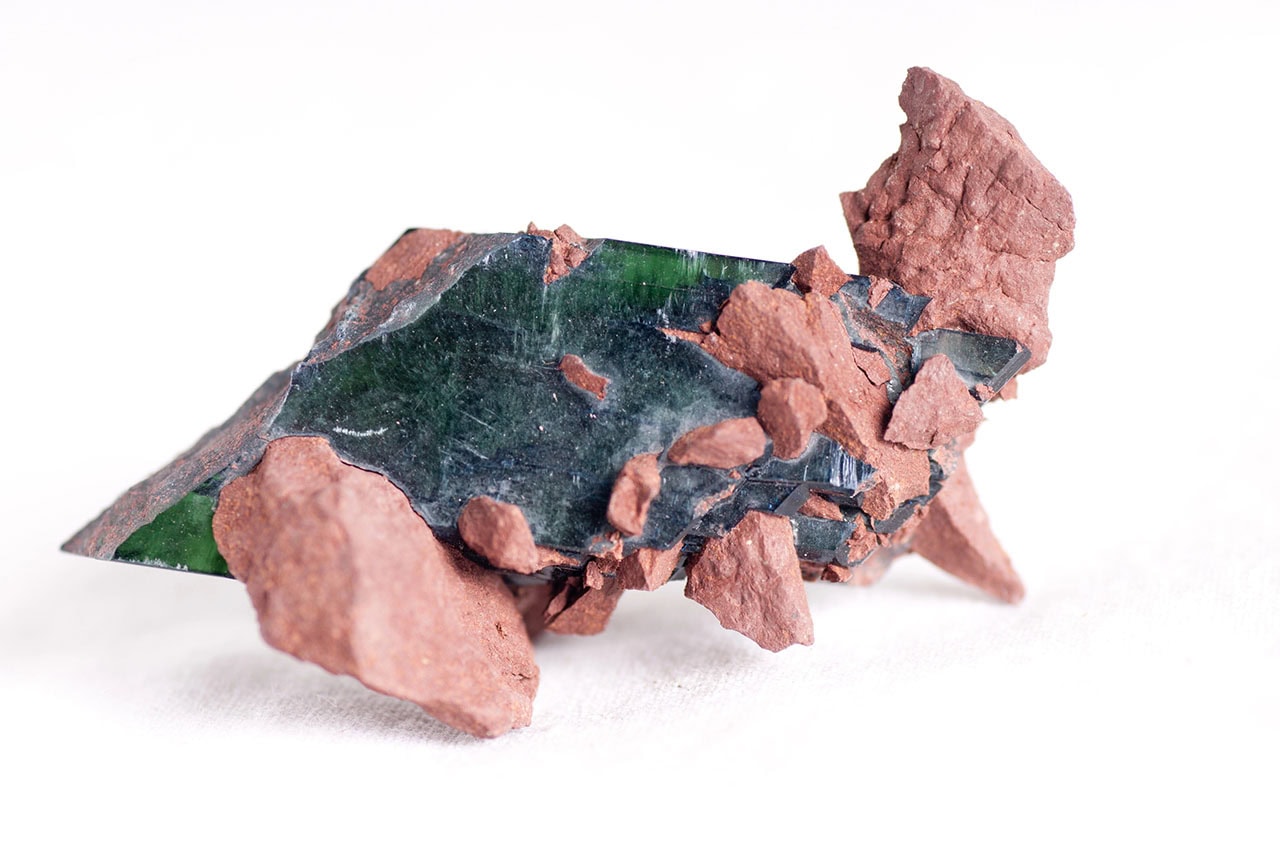
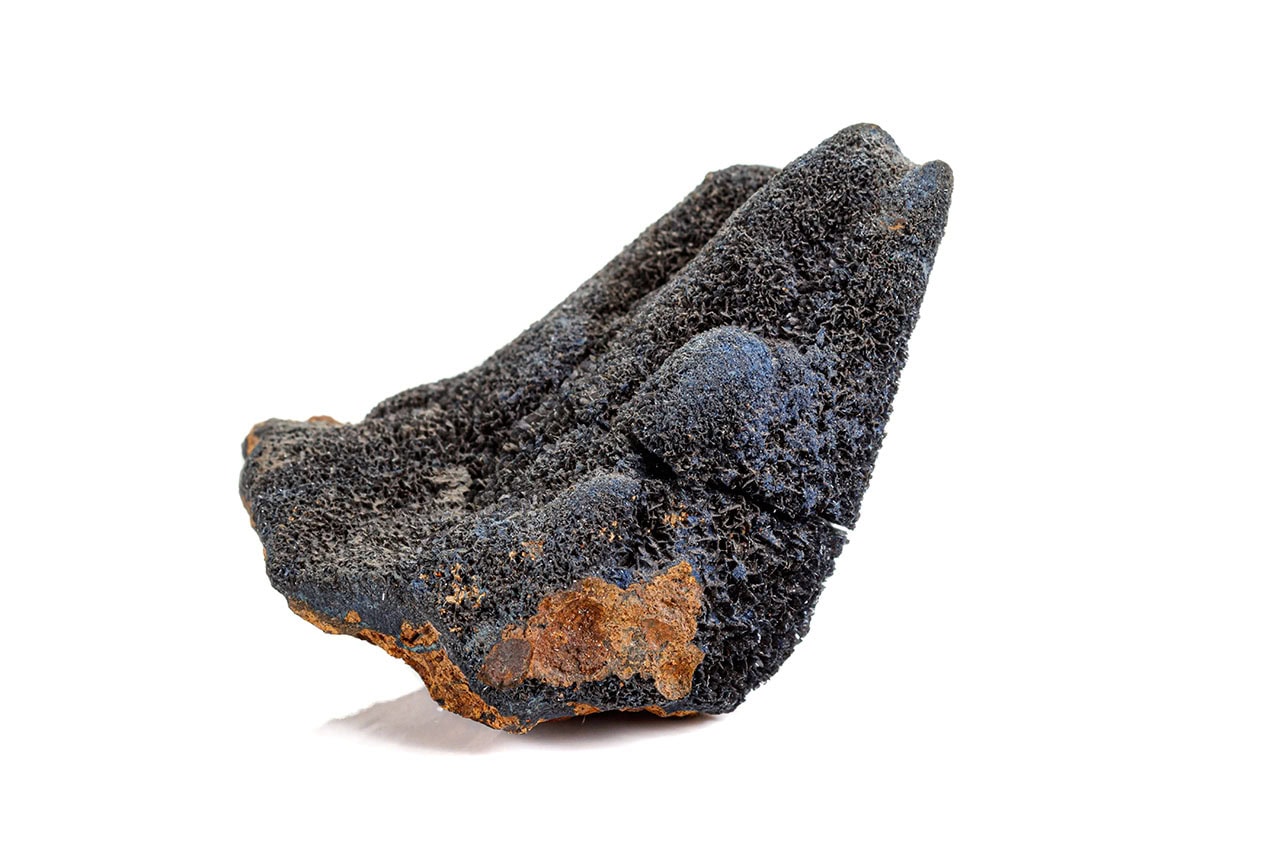
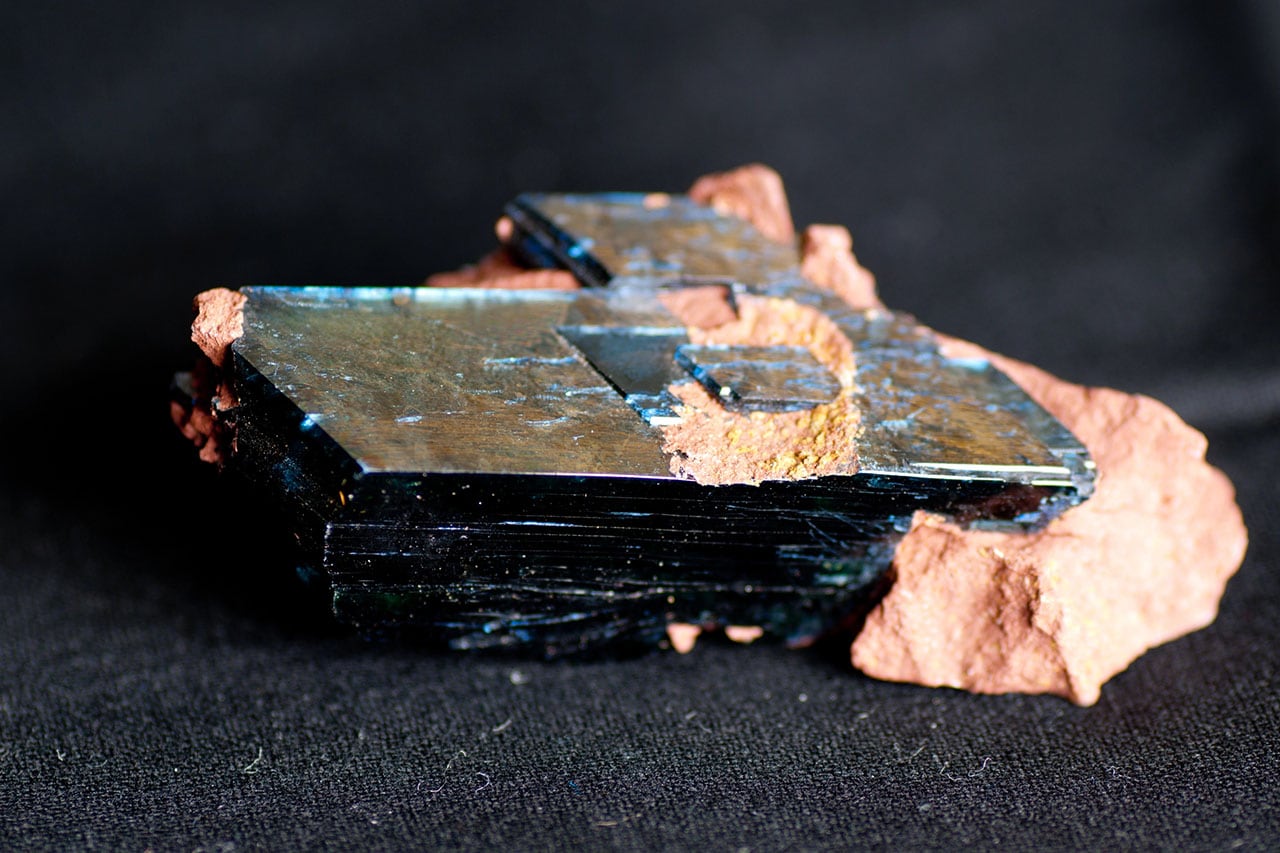
TABLE OF CONTENTS
Properties & Qualities
Physical Properties
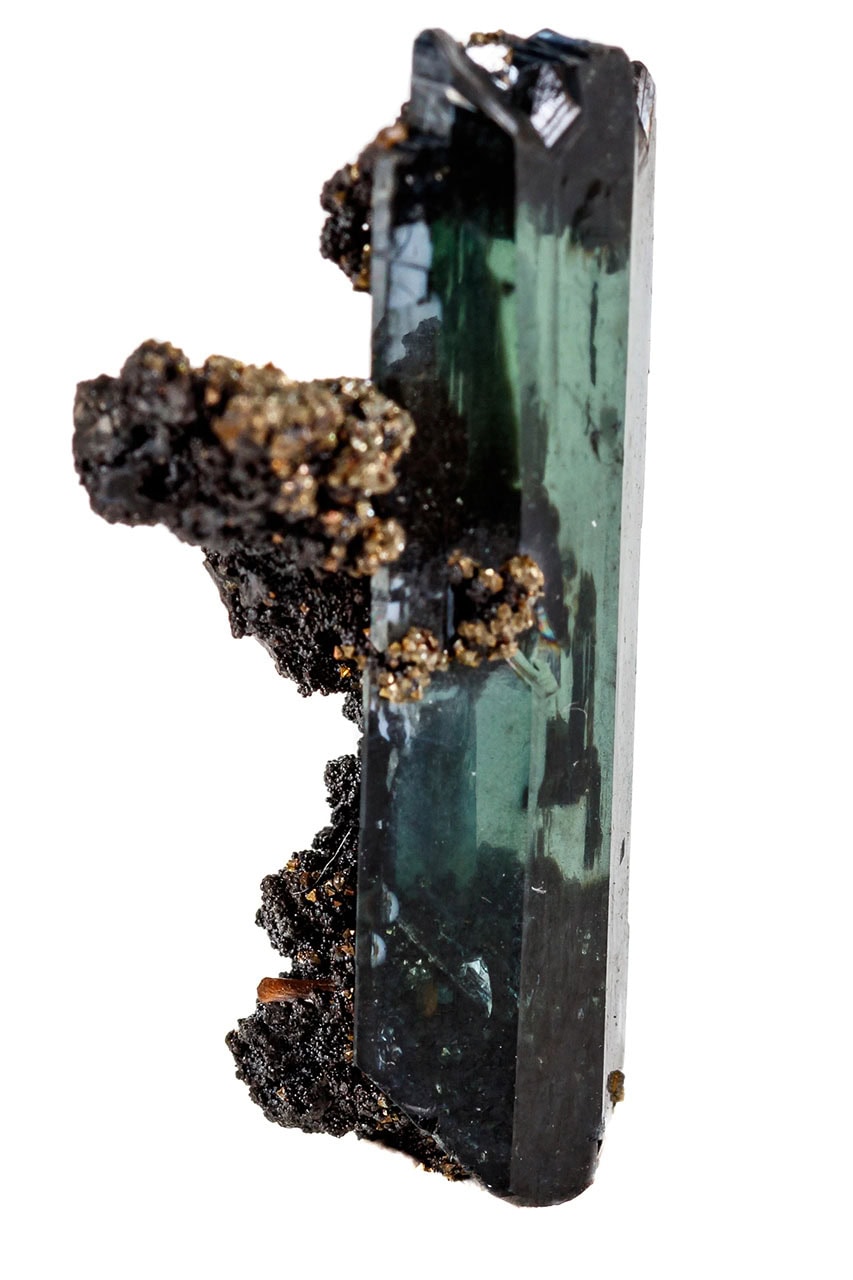
Vivianite presents itself through a distinctive appearance that sets it apart from most other minerals. The mineral forms in the monoclinic crystal system, typically producing elongated prismatic to bladed crystals that can occur individually or in the "sprays" that collectors particularly prize—radiating clusters of blade-like crystals emerging from a common point.
The color behavior of vivianite is one of its most fascinating characteristics. Freshly exposed vivianite may appear nearly colorless or pale, but the mineral rapidly develops its characteristic green to blue-green coloration upon exposure to light and air. Continued oxidation deepens this color through darker blues to nearly black in heavily altered specimens. This progressive darkening results from the oxidation of iron within the crystal structure, transforming Fe²⁺ (ferrous iron) toward Fe³⁺ (ferric iron) states.
This oxidation sensitivity makes vivianite unique among gem and specimen materials—it's essentially a mineral in slow visual transformation. Specimens in collections continue to change over years and decades, with the once-vibrant green or blue crystals gradually darkening. This ongoing chemical evolution challenges collectors who must balance display against preservation.
The mineral is notably soft, with a hardness of only 1.5-2 on the Mohs scale, making it easily scratched by fingernails. This softness reflects vivianite's molecular structure, which includes substantial water content bound within the crystal lattice. The mineral shows perfect cleavage in one direction, allowing crystals to be split into thin, flexible sheets—a property that adds to both its interest and its fragility.
The formation environments for vivianite are varied but share common conditions: the availability of iron and phosphorus, moderate to reducing chemical conditions, and typically the presence of water. These conditions occur naturally in sedimentary deposits, particularly those associated with organic material, in some hydrothermal veins, and in weathering zones of certain ore deposits. The industrial occurrence in wastewater treatment plants reflects these same chemical requirements being met in engineered environments.
Metaphysical properties
Within metaphysical traditions, vivianite occupies an unusual position: it is a genuinely modern stone, adopted into practice largely within the past few decades as fine specimens reached collectors. Its standing rests almost entirely on two verifiable physical traits. The crystal forms nearly colourless in darkness and darkens irreversibly through green and teal into indigo on exposure to light, and it grows in oxygen-poor, phosphate-rich settings—peat bogs, clay beds, and directly upon fossilised bone, teeth and shell. Practitioners regard this combination as giving vivianite rare credibility: unlike stones assigned meaning by tradition alone, its symbolism of revelation and of beauty emerging from decay can be observed rather than asserted.
The stone's primary resonance is with the third eye, extending into the throat and, in green specimens, the heart. Energy workers commonly describe its character as slow, dense and weighted rather than uplifting—the opposite of what is usually meant by a high-vibration stone. Many report that it works downward and inward, drawing material up into awareness rather than transmuting or dispersing it. For this reason vivianite is rarely recommended as a beginner's stone; practitioners often describe it as requiring some existing capacity to sit with what surfaces, and advise pairing it with grounding minerals during extended work.
Varietal differences are unusually pronounced and are treated as energetically meaningful. Bladed, crystalline sprays—the striking specimens from Huanuni in Bolivia and Morro Velho in Brazil—are associated with visionary and dream work, while the earthy massive form historically called blue iron earth or bog iron blue is described as markedly more grounding and better suited to slow emotional processing. Deep green material is said to lean toward heart-centred grief work, indigo and near-black toward the third eye and shadow work, and rare pale or fresh specimens toward potential and unformed knowing. Vivianite grown on fossil bone, shell or ammonite matrix, and the well-known crystals from Cameroon and the Kerch bog deposits, are singled out for ancestral practice specifically.
Historical use is largely absent from the magical record, and honest practitioners acknowledge this. Vivianite was described scientifically in 1817 and named for the Cornish mineralogist John Henry Vivian; its documented earlier uses were practical rather than ceremonial, chiefly as a blue earth pigment. Its most persistent historical association is archaeological rather than occult—vivianite is frequently encountered coating bones and grave goods in waterlogged burials, a fact that contemporary practitioners have adopted as the foundation of its ancestral reputation. Modern protocols have therefore been built recently and deliberately, drawing meaning from the mineral's formation conditions rather than from inherited lore.
Energy workers often describe vivianite as carrying witness energy—the quality of the presence that stays without speaking, fixing or consoling. This characterisation has made it particularly valued in end-of-life work, and it appears with increasing frequency among death doulas, hospice volunteers, funeral celebrants and those in the wider death-positive movement. Practitioners in this field commonly note that its extreme fragility, light sensitivity and inability to be cleansed by force are read as part of its meaning rather than as inconveniences: a stone that cannot be handled roughly, kept on display, or hurried is understood to teach the same restraint that accompanying the dying and the grieving requires.
Meaning & Symbolism
Physical meaning
In physical symbolism, vivianite represents the body's hidden interior and the elements that build it. Its chemistry is unusually literal: vivianite is an iron phosphate, composed of the element that carries oxygen through the blood and the element that gives bone and teeth their mineral structure. It then grows, in the ground, directly upon bone, teeth and shell. Practitioners regard this as making vivianite the most physically embodied of the visionary stones—a mineral built from blood's element and bone's element, crystallising on the very tissues those elements form. Where other third eye stones are described as drawing awareness upward and out of the body, vivianite is understood to keep it anchored in flesh.
The mineral's structure carries its own reading. Vivianite forms in flattened blades with perfect cleavage in a single direction, meaning it bears pressure along one axis and splits readily along another. This is commonly interpreted as symbolising the body's directional tolerance—the way a spine, a joint or a healing tissue can carry considerable load when properly aligned and fail under comparatively little force when it is not. Practitioners use it symbolically in work concerning posture, alignment and the skeletal frame, and as a reminder that strength in the body is a matter of direction rather than sheer resilience.
Its associations with the blood and the skeleton follow directly from its composition. Vivianite is symbolically linked to circulation, oxygenation and the deep interior processes that continue unseen, and equally to bone density, teeth and the slow mineral economy of the skeleton—systems that renew over years rather than days. Some practitioners extend this to the marrow, where blood and bone meet, describing vivianite as representing the body's most hidden manufacturing sites. These associations are understood as symbolic and contemplative, concerning how the body is thought about rather than how it is treated.
The stone's light-driven darkening is read as the body making its interior visible. Just as vivianite's colour is present before it can be seen and emerges only on exposure, symptoms are frequently interpreted through this stone as revelation rather than malfunction—the surfacing of processes that were already underway. The irreversibility of the change carries a second meaning: the body keeps its record. Scars, old injuries, accumulated strain and the physical residue of grief are treated as permanent alterations to be integrated rather than erased, and vivianite is described as supporting acceptance of a body that no longer matches its earlier form.
Vivianite is particularly associated with convalescence—the long, unfashionable middle of recovery. Practitioners recommend it for those healing slowly from serious illness, injury or surgery, for people living with chronic conditions, and for those resisting pressure to return to full capacity before their body is ready. It also appears among bodyworkers, massage therapists and palliative care nurses, who describe it as reinforcing patience with tissue that heals at its own rate. Because the stone is far too soft and light-sensitive to be worn against the skin, it is kept nearby rather than carried—a limitation practitioners read as fitting, since the recovery it represents is likewise something to be lived alongside rather than pushed through.
Spiritual meaning
Vivianite's spiritual significance centres on the principle of disclosure rather than acquisition. The crystal forms colourless in darkness and deepens into indigo only when exposed, yet nothing is added in that transformation—the colour was present the entire time. Practitioners read this as the stone's central teaching about the soul: that spiritual development is not the accumulation of new qualities but the gradual becoming-visible of what was always latent. Many teachers therefore describe vivianite as a stone of recognition rather than attainment, working with it during periods when a person is not becoming someone new but finally admitting who they have been.
The conditions the mineral requires carry their own spiritual reading. Vivianite can only crystallise where oxygen is absent—in waterlogged, airless, reducing environments—and it is undone by exposure to the very element that sustains breathing life. Practitioners interpret this as the stone of necessary absence: the understanding that certain interior developments occur only in conditions that feel like deprivation, in seasons of withdrawal, silence, or the suspension of ordinary vitality. Its formation is frequently cited as symbolic proof that the airless periods of a spiritual life are generative rather than merely endured.
In contemporary spirituality, vivianite is widely discussed as a corrective to what teachers call spiritual bypassing—the use of spiritual language to avoid unprocessed grief, anger or shame. Because the stone is associated with surfacing rather than transcending, it is described as refusing the shortcut: it does not lift a practitioner above difficulty but insists that the way onward runs through it. Teachers working with descent traditions frequently pair it with underworld and katabasis mythologies, in which the soul must go down before it can return, and treat vivianite as the mineral emblem of that descent.
Its association with the third eye combined with its formation in mud, bog and bone makes vivianite valuable for what some describe as embodied mysticism—vision that remains rooted in matter, mortality and ordinary life. Unlike stones said to lift awareness away from the physical, vivianite is understood to hold insight inside the body and inside time, which has made it valued by practitioners wary of spirituality that becomes disembodied or escapist. This quality also underlies its reputation as a stone for people whose spiritual life is conducted amid caregiving, illness or bereavement rather than in retreat from them.
Different traditions emphasise different aspects. Some focus on the indigo ray and its associations with inner sight and prophetic knowing. Ancestor-venerating practices emphasise the mineral's growth upon human and animal remains, treating it as evidence of ongoing relationship between the living and the dead rather than of severance. Others read its bladed, mica-like structure as representing the veils between states of awareness, with vivianite parting them slowly and only as far as the seeker can bear. Contemplative and death-positive practitioners, meanwhile, emphasise what they describe as its witnessing quality—a model of the sacred that accompanies without rescuing, and stays present to suffering it does not intend to remove.
Healing Benefits
Physical healing
Traditional healing applications of vivianite should be understood as energetic and folk practices rather than medical treatments. Unlike stones with centuries of documented therapeutic use, vivianite has almost no inherited healing tradition—its historical applications were industrial, chiefly as a blue earth pigment—so contemporary practice has been built recently and derives almost entirely from the mineral's chemistry and formation. Crystal healers most often work with it in layouts addressing the physical residue of grief, placing it at the chest or throat during sessions for bereavement-related tension, appetite disruption and disturbed sleep. These are among the more defensible applications, since bereavement does produce measurable physical effects, though any benefit from the stone itself is generally attributed to relaxation and the structured attention of a healing session rather than to the mineral.
The stone's iron content has created natural associations with blood, circulation and oxygenation, though it is essential to state that vivianite is not a source of dietary iron and cannot address anaemia in any form. Practitioners sometimes place it over the sternum or at the sacrum in sessions framed around energetic support for the blood, particularly during recovery from illness or blood loss. Users often report a sensation of settling or heaviness, effects that most likely stem from placebo response and from lying still in a quiet room. Iron deficiency requires diagnosis and treatment by a physician, and no crystal practice should delay that.
Its phosphate composition, chemically echoing the mineral matrix of bone and teeth, underlies a second cluster of applications. Energy healers use vivianite in layouts concerned with the skeleton—fracture recovery, dental work, and conditions involving bone density—typically placing it near rather than upon the affected area, since the crystal is far too fragile to bear contact. Practitioners claim it supports the body's slower structural processes, those measured in months rather than days. These applications remain entirely within the realm of energy medicine and are unsupported by clinical evidence.
Vivianite is most consistently employed in work around convalescence and chronic illness. Alternative practitioners recommend it for long recoveries, post-viral fatigue, and conditions in which improvement is gradual and non-linear, describing it as helping the body's pace be tolerated rather than fought. It appears with some frequency in palliative and hospice settings, where it is used not as a treatment but as an object of presence at the bedside. Users in these contexts report that its value lies in what it represents rather than in any claimed physiological effect.
Two practical cautions apply specifically to this mineral and matter more than they do for most stones. Vivianite must never be used to prepare gem elixirs, crystal waters or any preparation intended for drinking or topical use—it is water-sensitive, chemically unstable in solution, and frequently occurs alongside other minerals of unknown composition. It should also be handled with dry hands and kept away from small children, as its soft, cleaving blades shed flakes that should not be ingested. For anyone working with a diagnosed condition, vivianite practice is best treated as accompaniment to medical care and never as an alternative to it.
Emotional healing
Vivianite's reputation in emotional healing rests on something unusual: it is not described as a comforting stone. Users consistently characterise it as a companion rather than a soother—something that sits with difficult feeling without attempting to lift or resolve it. Practitioners frequently recommend it to people who find reassurance intrusive, who have grown tired of being told that things happen for a reason, or who need their pain acknowledged before it can be eased. This quality makes it valued precisely where gentler stones are experienced as dismissive.
Its primary application is grief, particularly grief that has outlasted the patience of those around the mourner. The stone is often suggested for the long middle stretch of bereavement—the months after the funeral when practical support has faded and the loss has not—and for anniversary reactions, birthdays, and the dates that reliably reopen sorrow. Users describe it as helping them stop performing recovery, allowing grief to take the time it actually needs rather than the time others expect of it.
Vivianite is also frequently recommended for what practitioners call frozen or numbed grief: loss that was never fully felt because circumstances did not permit it. This includes bereavements survived while caring for others, deaths that occurred alongside practical crises, and losses from childhood processed only in adulthood. The stone is described as thawing feeling gradually rather than releasing it all at once, which many report as its most distinctive quality—emotion returning in tolerable increments instead of overwhelming waves.
The mineral has a particular association with unacknowledged and disenfranchised loss—grief that receives no ritual and little social recognition. Practitioners commonly suggest it for miscarriage and pregnancy loss, estrangement, the death of someone the mourner was not supposed to be close to, the loss of a former self after illness or major change, and the ending of relationships that were never publicly named. Users report that vivianite helps them treat these losses as legitimate rather than something to be minimised or explained away.
Because it works by surfacing rather than soothing, vivianite is generally recommended with attention to pacing. Practitioners often advise short sessions at first, keeping it wrapped and away between uses, and pairing it with grounding or comforting stones when material rises faster than expected. It is not usually suggested for children, for acute crisis, or as a first stone during the earliest raw days of loss—many teachers describe it as more suited to grief that is ready to be looked at than to grief that is still simply being survived. Those working with heavy or long-buried material are frequently encouraged to use it alongside, not instead of, human support.
Spiritual healing
Vivianite is worked with primarily in grief. Practitioners turn to it during mourning, in the months after a loss, and in ancestral or generational healing—not to lift sorrow but to make it bearable enough to move through. The stone is said to hold steady presence rather than offer comfort, which is why it is often recommended for people who find consolation intrusive. Many keep it nearby during anniversaries, memorial dates, or the slow stretch after a funeral when outside support has faded.
Its second and best-known application is bringing buried material into awareness. Vivianite is used in shadow work, in therapy-adjacent practice, and by those sitting with something long unacknowledged—an unspoken truth, a suppressed knowing, a part of the self kept out of view. It is described as making revelation feel survivable rather than forcing it, and is therefore favoured by practitioners who find more confrontational stones destabilising. A common practice is to hold it during journalling or quiet sitting, with no goal beyond letting what surfaces surface.
For dream and intuitive work, vivianite is placed at the bedside or under the pillow to support recall and night-time processing. Those working through grief or unresolved material often report that the stone is used less for vivid dreaming than for remembering what the dreaming mind was already sorting. In meditation it is held at the brow, where its third eye association is said to steady inner sight without flooding the practitioner with imagery.
Vivianite is also used for the throat—for people who habitually silence themselves, who minimise their own pain, or who cannot yet name what happened to them. Practitioners describe pairing it with spoken practice: saying something aloud in private before saying it to another person. Where green tones appear in the specimen, the stone is additionally worked with at the heart, addressing the physical tightness that grief settles into the chest.
Finally, the way vivianite must be handled is treated as part of the healing itself. It is soft, cleaves easily, and darkens irreversibly in light, so it cannot be scrubbed, cleansed in water or salt, or left on a sunny windowsill. It is cleansed instead with sound, smoke, or brief moonlight, and stored wrapped in soft cloth. Many practitioners describe this care as the stone's real teaching—that some things heal only at their own pace, and only when handled gently.
Use & Care
How to use
Based on the source material, vivianite's uses fall primarily into these categories:
- Collector specimens: Vibrant vivianite crystals from Brazil and Bolivia are collected for their distinctive appearance, particularly the characteristic green sprays that showcase the mineral's radiating crystal habit.
- Decorative pieces: Vivianite specimens are used for decor purposes, displayed for their aesthetic value.
- Tumbled stones: Tumbled specimens are available, offering polished versions of the mineral suitable for display or handling.
- Scientific study: Vivianite serves important scientific purposes in understanding sedimentary geochemistry, sewage treatment processes, and potentially Martian geological history.
Display precautions: Given vivianite's tendency to darken through oxidation and light exposure, specimens intended for long-term display should be protected from prolonged bright light. Storage in darker conditions helps preserve the vibrant green and blue colors that make the mineral visually appealing. Some collectors keep prized specimens in opaque containers, revealing them only occasionally for viewing.
Handling precautions: With a hardness of only 1.5-2, vivianite is exceptionally soft and prone to damage from scratching, pressure, or rough handling. Specimens should be handled minimally and stored with care to prevent physical damage.
How to cleanse
Given the mineral's specific properties, physical cleaning requires exceptional care:
- Avoid water: As a hydrated mineral that alters through chemical interactions, vivianite should not be soaked or extensively wetted, which could accelerate chemical changes.
- Avoid acids: Vivianite's phosphate composition may react with acidic solutions.
- Avoid abrasion: The mineral's extreme softness (1.5-2 Mohs) means it can be scratched by almost any material, including fingernails and most cleaning tools.
- Gentle handling: Any physical cleaning should be minimal, using only soft, dry brushes if absolutely necessary.
- Protective storage: The most effective preservation involves protecting specimens from light exposure and physical contact rather than active cleaning.
How to charge
- Moonlight charging: Charge under the new moon for revelation work, placing the stone indoors on a dry cloth rather than outdoors.
- Amethyst geode: Place inside an amethyst geode to deepen third eye receptivity and dream clarity.
- Intention setting: Hold while naming aloud the truth you are ready to see, letting the words settle into the stone.
- Reiki charging: Use Reiki symbols, particularly Sei He Ki, to strengthen the stone's grief and emotional healing work.
- Ancestral altar: Charge on an altar with photographs, names, or objects belonging to those you are grieving.
- Sound bath: Charge beside crystal bowls tuned to heart or third eye frequencies, never placed on the bowl itself.
- Rosemary proximity: Place near dried rosemary, long associated with remembrance, to support memorial and ancestral work.
- Smoke cleansing: Pass briefly through mugwort or cedar smoke to prepare the stone for dream and vision work.
- Darkness rest: Return the stone to complete darkness in soft cloth between uses, allowing it to restore in the conditions it formed in.
Combining with other stones
- Jet: Shares vivianite's organic origin and centuries of use in mourning practice, deepening grief work; both are soft enough to rest together safely.
- Petrified Wood: Extends vivianite's ancestral timeline, supporting work with lineage, inherited patterns, and very old grief.
- Amber: Brings warmth and vitality to vivianite's coolness, easing mourning that has become numbness; similar softness makes them safe companions.
- Apache Tear: Meets grief that is still raw, holding space for tears without pressing the wearer to move on before they are ready.
- Smoky Quartz: Grounds vivianite's revelatory work into the body, preventing emotional processing from becoming untethered.
- Black Obsidian: Sharpens shadow work considerably, with vivianite tempering obsidian's confrontational edge into something survivable.
- Labradorite: Reinforces the theme of veils thinning, supporting insight that arrives gradually rather than all at once.
- Lapis Lazuli: Strengthens the third eye and throat axis, helping a recognised truth travel from knowing into speech.
- Azurite: A natural partner in both energy and care, as azurite is likewise deep blue, third eye oriented, and damaged by prolonged light.
- Blue Lace Agate: Softens throat work for those who habitually silence themselves, making honest speech feel less exposing.
- Mangano Calcite: Addresses grief held physically in the chest, offering comfort where vivianite offers presence; its softness makes direct contact safe.
- Rhodonite: Supports emotional wounds carried over years, particularly those involving betrayal or unfinished reconciliation.
- Lepidolite: Aids the sleep and dream processing that grief demands, easing the transition between one stage of mourning and the next.
- Moonstone: Enhances dream recall and attunement to cycles, useful when vivianite is worked with at the bedside.
Placement note: Vivianite is exceptionally soft (Mohs 1.5–2) and cleaves easily, so it should never sit in direct contact with quartz-family stones such as smoky quartz, amethyst, clear quartz, or labradorite. In grids and pouches, separate it on its own soft cloth or in a small dish. Avoid shared grids with stones charged in sunlight, and never include vivianite in combinations cleansed with water or salt.
Identification
Can be mistaken for
- Ludlamite: Another iron phosphate mineral that can occur in similar green colors and formation environments.
- Chlorite minerals: Various green minerals in the chlorite group might visually resemble vivianite, though they have different chemical compositions and properties.
- Green apatite: Another phosphate mineral that can appear in similar colors but is significantly harder and more stable.
- Malachite: A copper carbonate that shares some green coloration but has different structure, higher hardness, and distinctive banding.
- Altered vivianite specimens: Heavily oxidized vivianite can appear nearly black, potentially being confused with other dark minerals when its origin isn't documented.
How to spot a fake
- Color examination: Genuine vivianite shows the characteristic progression from pale colors through greens and blues; specimens showing suspiciously stable, vivid colors without any oxidation signs might warrant scrutiny.
- Hardness verification: Real vivianite is exceptionally soft (1.5-2 Mohs), easily scratched by fingernails; harder materials sold as vivianite are imitations.
- Crystal habit: Authentic vivianite forms distinctive bladed or prismatic crystals, often in radiating sprays; specimens with wrong crystal habits suggest misidentification.
- Cleavage inspection: Vivianite shows perfect cleavage in one direction, allowing crystals to be split into thin sheets—a diagnostic feature.
- Source verification: Purchase from reputable mineral dealers who can specify locality (Brazil and Bolivia are noted sources) and provide information about specimen history and any treatments.
- Appropriate pricing: Understanding market pricing for vivianite specimens helps identify suspiciously cheap material that might be misrepresented.
- Physical properties testing: For serious authentication, gemological testing including specific gravity measurement (should be around 2.68-2.69) and other diagnostic tests can confirm identity.