Smoky quartz is the stone crystal practice hands you for an ending. Use it in two ways: a small nightly version at the bedside for the day just finished, and a one-off version held through a specific ending, a last shift or a handover. Both are short.
Crystal practice tends to assign a stone to a state. Rose quartz gets self-compassion, amethyst gets calm, and you keep them around for as long as you want the state. Smoky quartz gets assigned to a moment instead. The last day of a job. The hour after a conversation that ended something.
That difference changes how you use it. A stone for a state suits a habit, and you build the habit by wearing or carrying the thing until it is unremarkable. A stone for a moment does not want a habit. It wants to be brought out, used once with attention, and then dealt with, and the dealing-with is the part the instructions tend to stop before.
What practice asks it to do
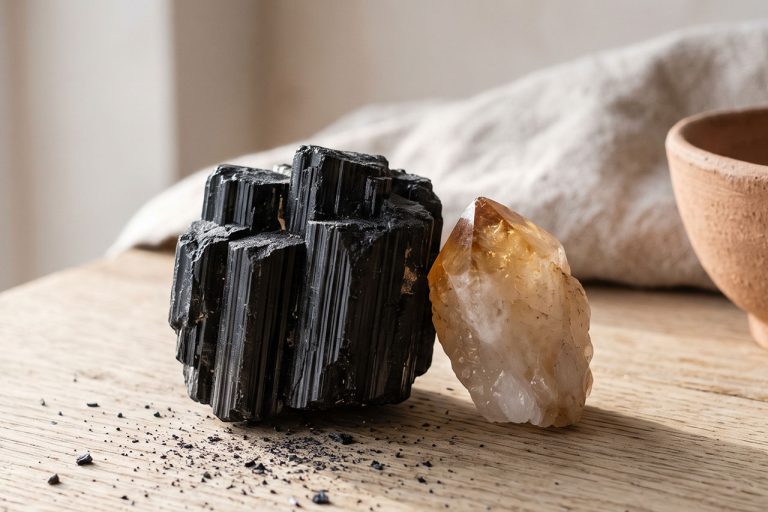
The tradition puts smoky quartz in two overlapping places, grounding and release. Grounding is the plainer of the two: the brown-to-black colour is read as earthy, and the stone is used to come back into the body after a stretch of anxiety or scattered attention. Release is the more specific claim, and it is the one that makes smoky quartz different from every other grounding stone. Practice describes the difficult thing moving out of the person and into the stone, where the colour is read as absorbing or transmuting it.
Take that as a description of the practice, in the practice’s own terms. What the framing gives a person is a direction to push in, and a direction is a useful thing to have during an ending, which is why this is the stone that gets handed over at those moments rather than during ordinary weeks.
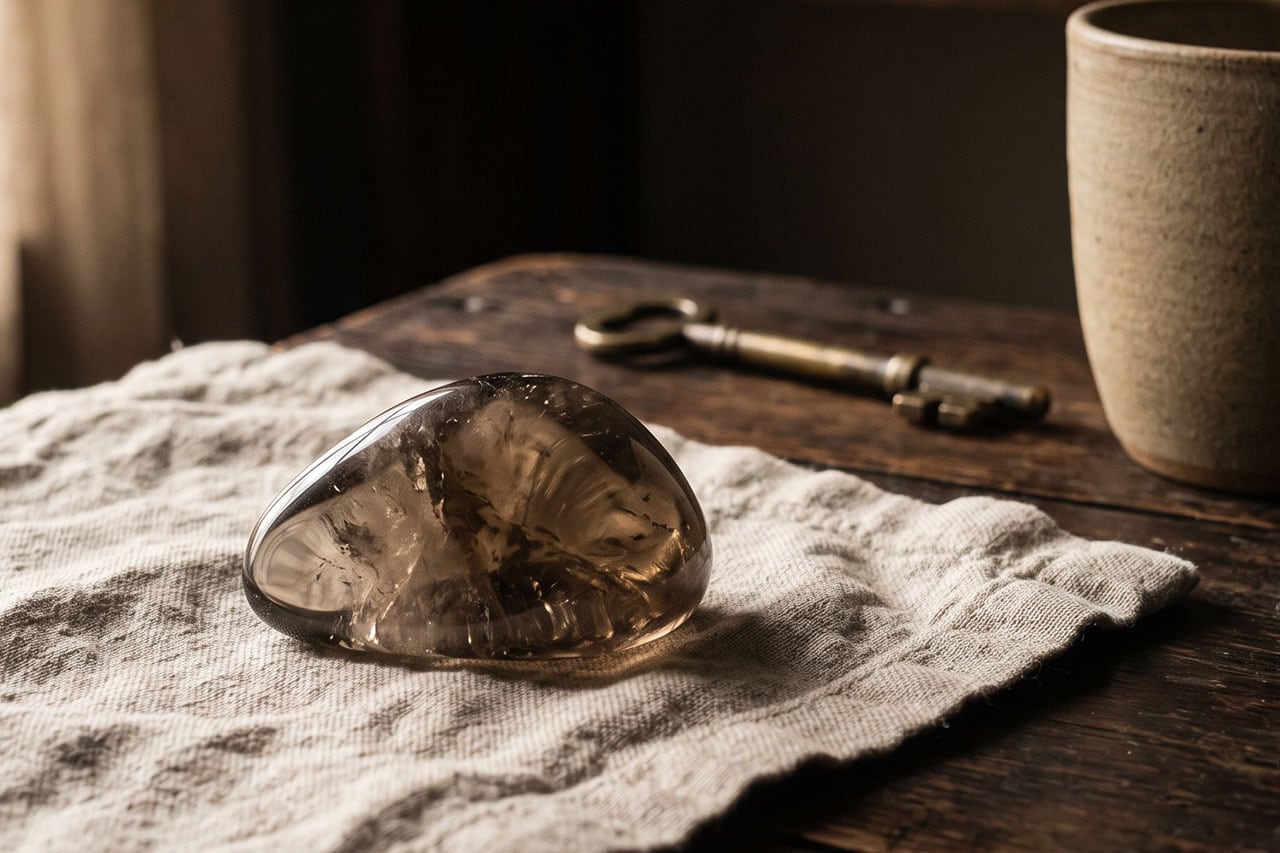
Smoky quartz is quartz, silicon dioxide, hardness 7 on the Mohs scale with no usable cleavage, so it puts up with being gripped hard and carried in a pocket with keys. The colour comes from aluminium sitting in the lattice where silicon should be, and from radiation knocking electrons about to leave colour centres that absorb light. It is a durable and forgiving stone, which matters here, because the way it gets used involves holding it tightly at times when you are not paying attention to your hands.
The nightly version
This one takes about a minute and it is the version worth starting with.
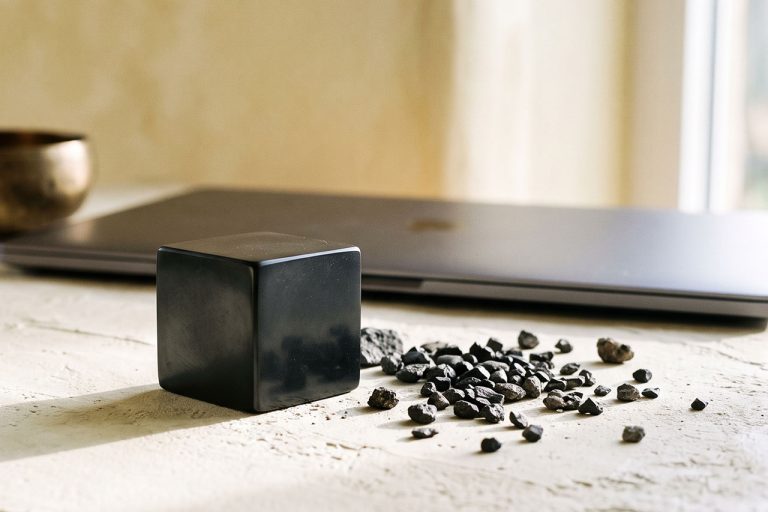
Keep a tumbled piece on the bedside table where you will see it as you put your phone down. Pick it up, hold it in a closed hand, and take a few slow breaths. On each out-breath, name one thing from the day you are finished with. Not resolving it, not planning what to do about it. Just naming it and putting it down. Then set the stone back on the table and leave it there.
The naming is what gives the minute its shape. Saying “that email” or “the thing with my sister” under your breath is more specific than a general intention to relax, and a specific thing is easier to put down than a vague one. If nothing comes to mind on a given night, set the stone back and go to sleep. Permission to skip it is part of the design.
Some people pair this with a second stone for the morning, on the grounds that the evening one closes and the morning one opens. That works, and the general rules about wearing or holding more than one stone at a time are in can you wear multiple crystals at once if you want to go further with it.
The one-off version
This is the use smoky quartz is known for, and it takes more setting up.
Choose the piece before the day arrives, not on the day. A palm stone or a large tumble is better than a point, because you want something that sits in a closed fist without corners. Decide in advance what the ending is, in one sentence, and say the sentence to yourself while you are holding the stone the night before. “This is the last day at the shop.” “This is the end of the lease.”
On the day, keep it in a pocket where you can reach it without an audience, and hold it at the moment itself. The signature, or the door closing behind you. Hold it hard if you want to; the stone does not care and quartz does not chip from a grip.
Afterwards, and this is the step that gets left out, do something deliberate with it. Rinsing it under a tap and returning it to ordinary rotation is the standard cleansing move, and it treats the ending as finished. Setting it aside somewhere specific and leaving it there suits an ending that is still raw. Giving it away is the third option, and it sounds sentimental until you try it.
What you should not do is put it straight back in the pocket you use every day and forget which stone it was. The whole point of the one-off version is that the object gets attached to the event. Leaving it in general circulation quietly undoes that. If the ending you are working with is more of a slow letting go than a single moment, what crystals help with letting go covers the stones practice uses for that shape of thing instead.
Buying and looking after it
Almost any smoky quartz will do for either version, and there is one distinction worth knowing at the counter. Some commercial smoky quartz is artificially irradiated, often clear or pale quartz darkened deliberately, and the practice does not distinguish between that and naturally coloured material. The colour behaves slightly differently, though. Naturally coloured smoky quartz is described as very stable, while artificially irradiated material is the kind reported to fade under UV, so a windowsill is a better place for a piece you know is natural than for one you do not.
Beyond that it is quartz, and quartz is easy. Water is fine. Prolonged sunlight is the one thing to watch, and only on a piece whose origin you do not know. In a bowl of mixed stones it will scratch the softer ones rather than the other way round. The Crystalance Mineral Library places the smoky variety within the wider quartz family, and that is the quickest way to find out what else on your shelf is the same mineral wearing a different colour.
The bedside version costs you a minute tonight. Start there.
Sources
- Minerals.net, Quartz (SiO2, Mohs 7, cleavage indiscernible, brittle; smoky quartz listed as the brown to black variety)
- Geology Science, The Impact of Radiation on Smoky Quartz (aluminium substitutes for silicon; radiation creates colour centres; artificial irradiation used on clear or pale quartz; natural colour very stable, irradiated material may fade with UV exposure)