Yes. Jade is one of the oldest healing stones in continuous use, valued for luck, prosperity, protection, and emotional calm. It’s a heart chakra stone, tied to the energy centre associated with love and balance, and it has been treasured across cultures for thousands of years.
Few stones carry as much history as jade. It was carved into tools, ornaments, and burial pieces long before most of today’s popular crystals were fashionable, and in parts of East Asia it has never gone out of favour. That staying power is its own kind of endorsement.
There’s one thing worth clearing up before we go further, though, because “jade” is quietly two stones, not one.
Is Jade a Healing Crystal? What It’s Good For
Jade earns the “healing crystal” label through a cluster of long-standing associations.
Luck and prosperity. This is jade’s most famous thread. It’s the classic stone of good fortune and abundance, which is why it turns up so often in jewellery meant to attract wealth. If prosperity is your aim, jade sits alongside the wider set covered in crystals for wealth and money.
Calm and emotional balance. Jade is associated with a steady, harmonising energy, soothing irritability and encouraging a level head. As a heart-chakra stone, it supports emotional equilibrium rather than drama.
Protection. Traditionally, jade was worn as a protective amulet, believed to guard the wearer and ward off harm. That protective reputation is ancient and cross-cultural.
Steady, patient growth. There’s a slow, grounded quality to jade, a stone for building something lasting rather than chasing quick wins.
Heart healing and harmony. Beyond luck, jade’s heart-chakra link ties it to gentle emotional healing and harmonious relationships, which is part of why it’s so often given as a gift between family members.
The Two Jades: Jadeite and Nephrite
Here’s the part most people don’t know. The name “jade” covers two genuinely different minerals.
Jadeite is the rarer, harder, more valuable one. The intense emerald-green “imperial jade” that commands high prices is jadeite.
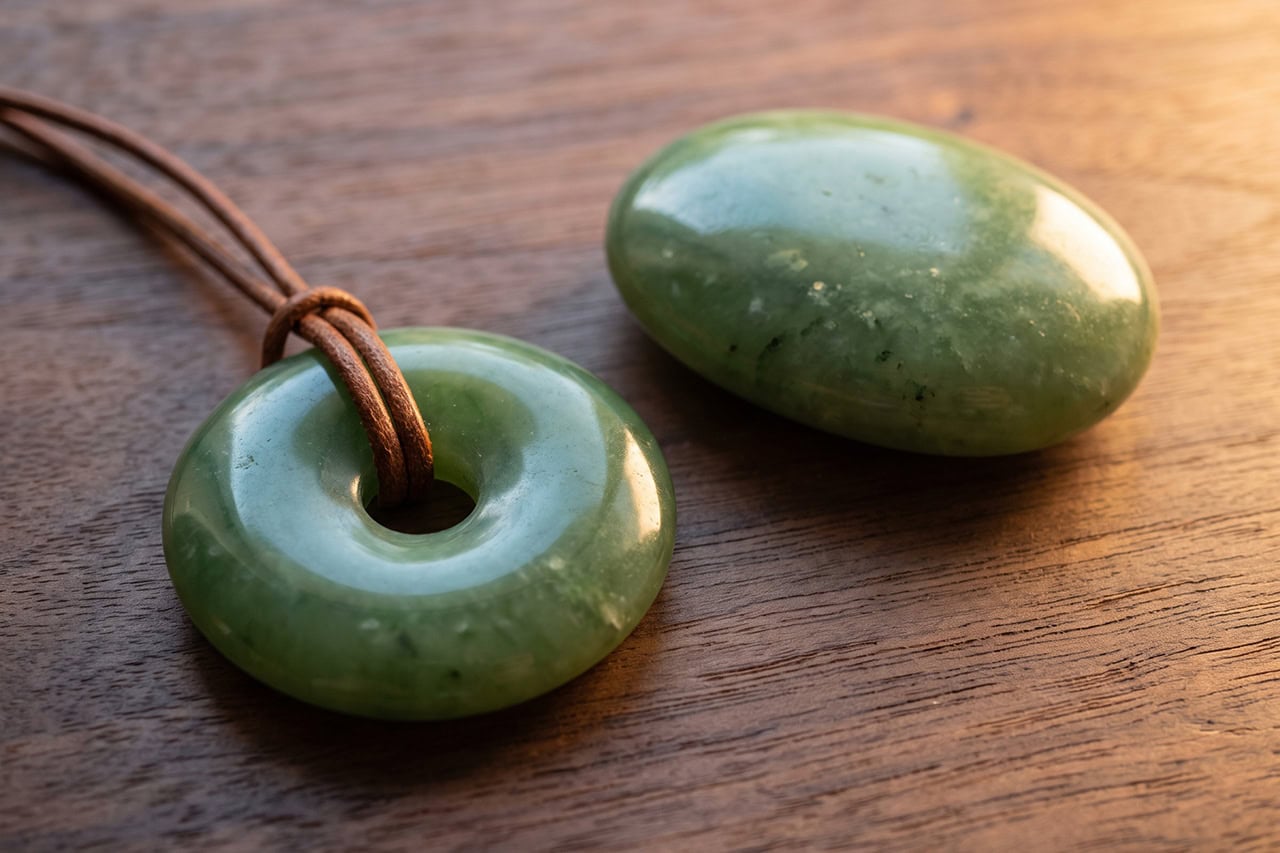
Nephrite is more common, slightly softer, and usually a milkier or spinach green. Most affordable jade jewellery and carving is nephrite.
Both are real jade, and both carry the same healing associations, so you don’t need to fret about which you have for that purpose. It mainly matters for value and appearance. If a green stone is being sold as jade at a suspiciously low price, it may be neither, and worth a closer look.
The distinction only became clear relatively recently in the stone’s long history. For most of the thousands of years people carved and wore jade, the two minerals were used side by side under the same name, prized for the same qualities. That’s a useful reminder that the healing reputation attached to “jade” was built on both stones together, not on one specific mineral.
How to Use Jade
Jade is a hardy, everyday stone, which is part of why it has been worn constantly for millennia.
-
As jewellery. A jade pendant, bangle, or ring is the traditional way to carry its luck and protection through the day. The bangle in particular is a classic prosperity piece.
-
Carried for luck. A small tumbled jade in a pocket or bag works as a portable good-fortune token, especially before something that matters.
-
In the home or workspace. Kept where you work or handle money, jade suits spaces where you’re building toward a goal.
-
Held during calm practice. Its steady energy makes it a pleasant stone to hold while settling the mind.
Common Questions About Jade
Is jade good for luck specifically? Yes, it’s arguably the classic luck-and-prosperity stone, especially in East Asian tradition. A jade bangle or a jade coin is a common good-fortune piece, and the association is one of the strongest and oldest in all of crystal lore.
How can I tell if jade is real? Real jade is dense and cool to the touch, and it doesn’t scratch easily. A lot of cheap “jade” is actually dyed quartz, serpentine, or glass. If the price is very low and the colour is a flat, even green, be cautious, and buy from a seller who names the stone as jadeite or nephrite rather than just “jade.”
Which jade is better for healing, jadeite or nephrite? Neither. Both carry the same healing associations, so choose on colour, budget, and what you connect with. Jadeite costs more; nephrite is the everyday workhorse.
Can jade go in water? Jade is reasonably hard and tolerates brief contact, but it’s still best cleansed dry or with quick rinsing rather than long soaks, particularly if it’s dyed or treated.
For more on jade and the stones of luck and abundance, see the Crystalance Mineral Library. Few stones have earned their reputation over such a long stretch of time, which is a decent reason to take this one seriously.