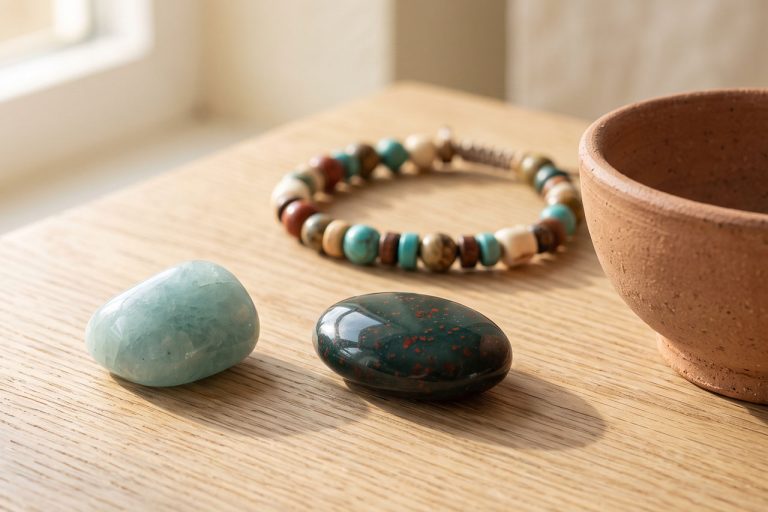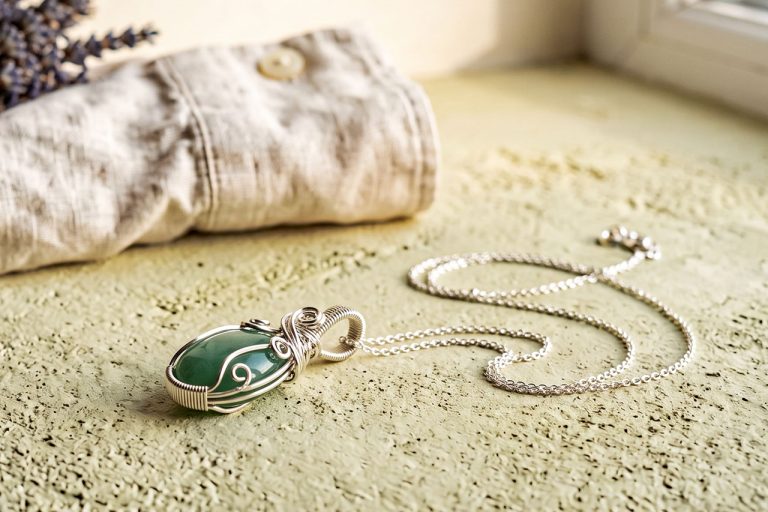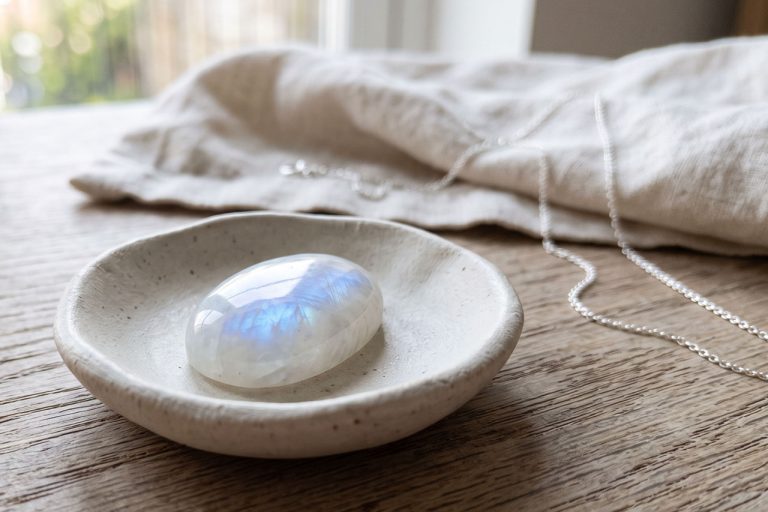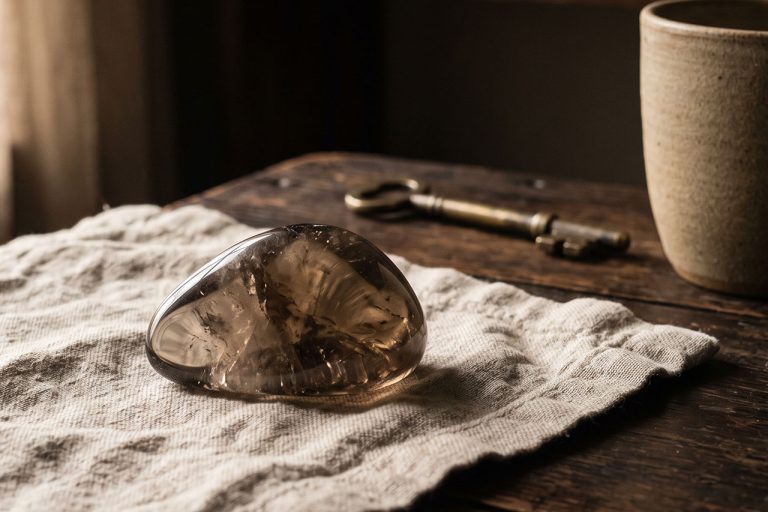
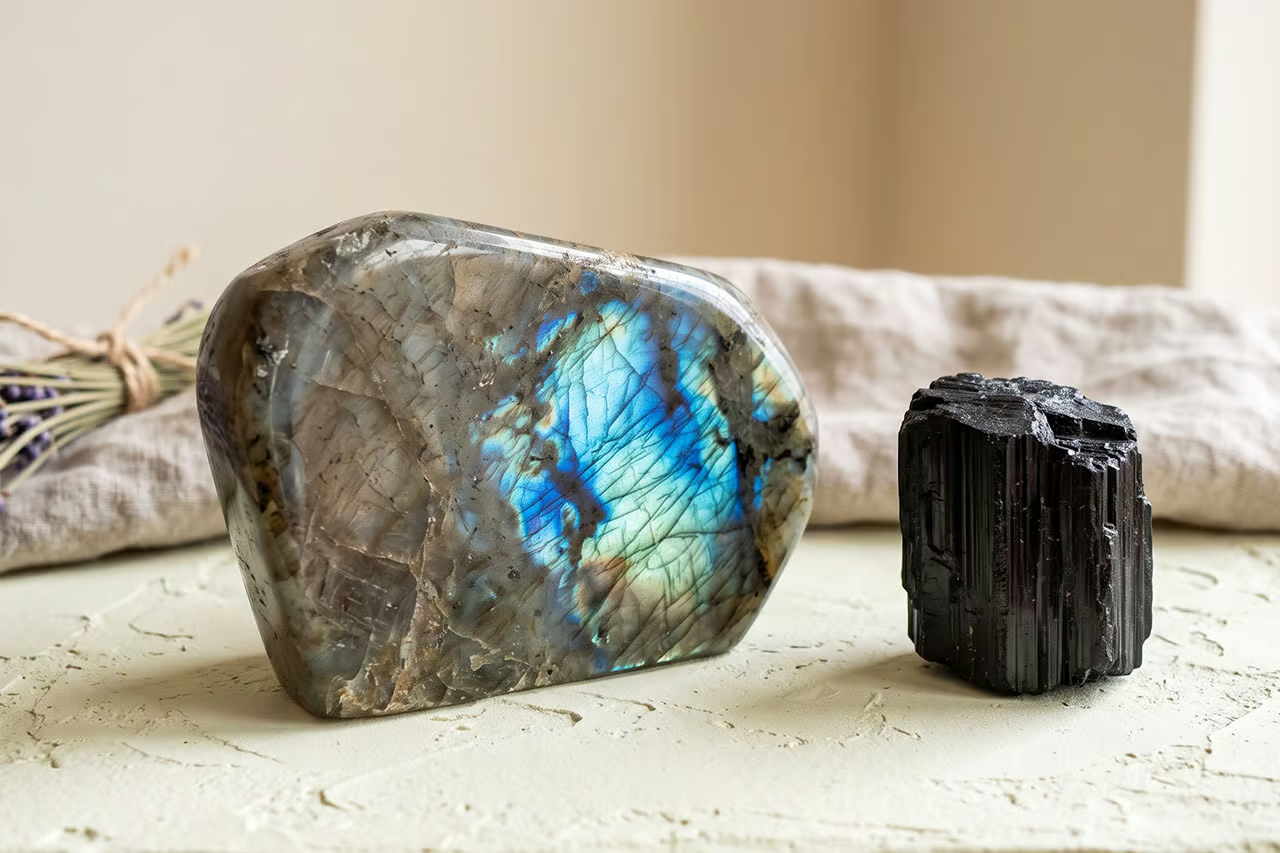
Labradorite, black tourmaline, smoky quartz, amethyst, rose quartz and carnelian are the stones crystal practice assigns to empaths. Half of them are for holding other people’s feelings at arm’s length. The other half are for getting yourself back once you have gone home.
Merriam-Webster dates the first known use of the word empath to 1956. Every stone on the list above is older than that by a wide margin, and the thing they are being asked to do is older still.
That gap makes empath crystal work one of the few pieces of practice whose assembly is still in view. Older parts of the tradition arrive as inherited lists with the reasoning stripped out. This one postdates its own vocabulary, and the reasoning behind each choice can still be read off what the stone was already being used for.
The word is new and the move is old
Wearing a stone on the body to keep something out is a documented ancient use. The Roman magical gems in museum collections, described by National Museums Liverpool as beginning in the late Hellenistic period and peaking in the second and third centuries AD, were carved and worn for protection and for health, and the museum makes a point of saying they were very rarely used to harm anyone. They were defensive objects. Somebody wore one because the world came at them and they wanted something between it and them.
That is the same posture the empath list takes. What changed is the thing being kept out. The Roman wearer named indigestion, or a difficult birth, or infertility. The modern wearer names other people’s moods in an open-plan office. The object and the gesture are unchanged, and so is the business of wearing it on the skin rather than keeping it on a shelf.
Labradorite makes the dating point on its own. Britannica names it for its occurrence near Nain on the coast of Labrador in Canada, which makes it a late arrival by the standards of the old European lapidaries, and it still ended up the stone most closely tied to empath practice. Nothing about that weakens the association. What it does mean is that nobody can call it ancient, and that the tie was made on what the stone does in the hand rather than on inherited authority.
The stones for keeping distance
Labradorite leads this half. Crystal practice gives it the job of putting a boundary around the aura, the field of energy the tradition places around the body, while leaving your perception of other people intact. That distinction is the whole reason for its reputation, because the complaint being brought is not usually that you notice too much. It is that noticing costs too much. A stone framed as filtering rather than dulling answers the complaint in the terms it was made.
Black tourmaline sits underneath labradorite, doing the coarser work. The practice calls it grounding, which here means sending what you have picked up down and out rather than holding on to it. The two get worn together often enough to count as a pairing in their own right, and what black tourmaline is good for covers the wider set of things it gets asked to do.
Smoky quartz belongs here as well, described in the practice as clearing rather than blocking. It gets placed at the end of the day rather than the start, on the reasoning that something has to be done with whatever got through.
The stones for coming back
The other half of the list has nothing to do with barriers. Amethyst is given the job of quieting the mental replay that follows a heavy day, the going over of a conversation for the fourth time at eleven at night. Rose quartz is pointed inward, at the person doing all this noticing, and in the practice it is the reminder to spend some of the same attention on yourself. Carnelian is for the flatness that arrives after a long stretch of running on empty, and the practice treats it as a stone of ordinary appetite and drive rather than of protection.
The two halves get used differently. A barrier stone gets put on and then stops being noticed. A recovery stone is picked up deliberately, at a moment you have decided you need it, and the deciding is a good part of what the practice is.
How people run it in practice
Wear the labradorite and the black tourmaline on ordinary days as well as braced-for-it days, because a stone reserved for emergencies is a stone you will not have on you when one arrives.
One practical note on the material, since it decides what survives daily wear. Labradorite runs 6 to 6.5 on the Mohs scale of hardness, softer than quartz at 7, so a labradorite pendant that lives in the same pocket as a quartz tumble will pick up fine scratches from it and lose some of its flash. Keep them apart, or keep the labradorite on a chain where nothing rubs against it. If you want the pairings that work with it and the ones that fight it, what crystals go well with labradorite sorts that out.
Cleansing comes up more around this half of the practice than the other, because the tradition holds that a stone doing protective work accumulates what it deflects. Whether you find that convincing or not, a weekly reset is a small habit and it gives you a moment to notice how the week has gone.
Where the stones stop
Two honest things. Sensitivity to other people is not a diagnosis and it is not a fixed category, whatever the internet quizzes suggest, and a stone that helps you manage a crowded room is not evidence one way or the other about what you are. Use the word if it is useful to you and put it down if it stops being.
The second is more practical. If a situation is grinding you down week after week, a stone in your pocket can make the day survivable, and making a day survivable is sometimes exactly how a bad situation gets to continue. The tradition has nothing to say about that, and keeping half an eye on yourself for it is part of using any of this well. The Crystalance Mineral Library holds the composition and care notes for all six.
Two stones will carry this, one for the day and one for the evening. A few weeks of noticing which one you keep picking up will settle the choice better than any list.
Sources
- Merriam-Webster, empath (first known use 1956)
- National Museums Liverpool, magical gem stones (production beginning in the late Hellenistic period, peaking in the 2nd and 3rd centuries AD, worn for protection and health)
- Encyclopaedia Britannica, labradorite (plagioclase feldspar, named for its occurrence near Nain, on the coast of Labrador, Canada)
- Minerals.net, labradorite (Mohs 6 to 6.5, triclinic, labradorescence from internal reflection)
- Minerals.net, quartz (SiO2, Mohs 7, cleavage indiscernible, brittle)