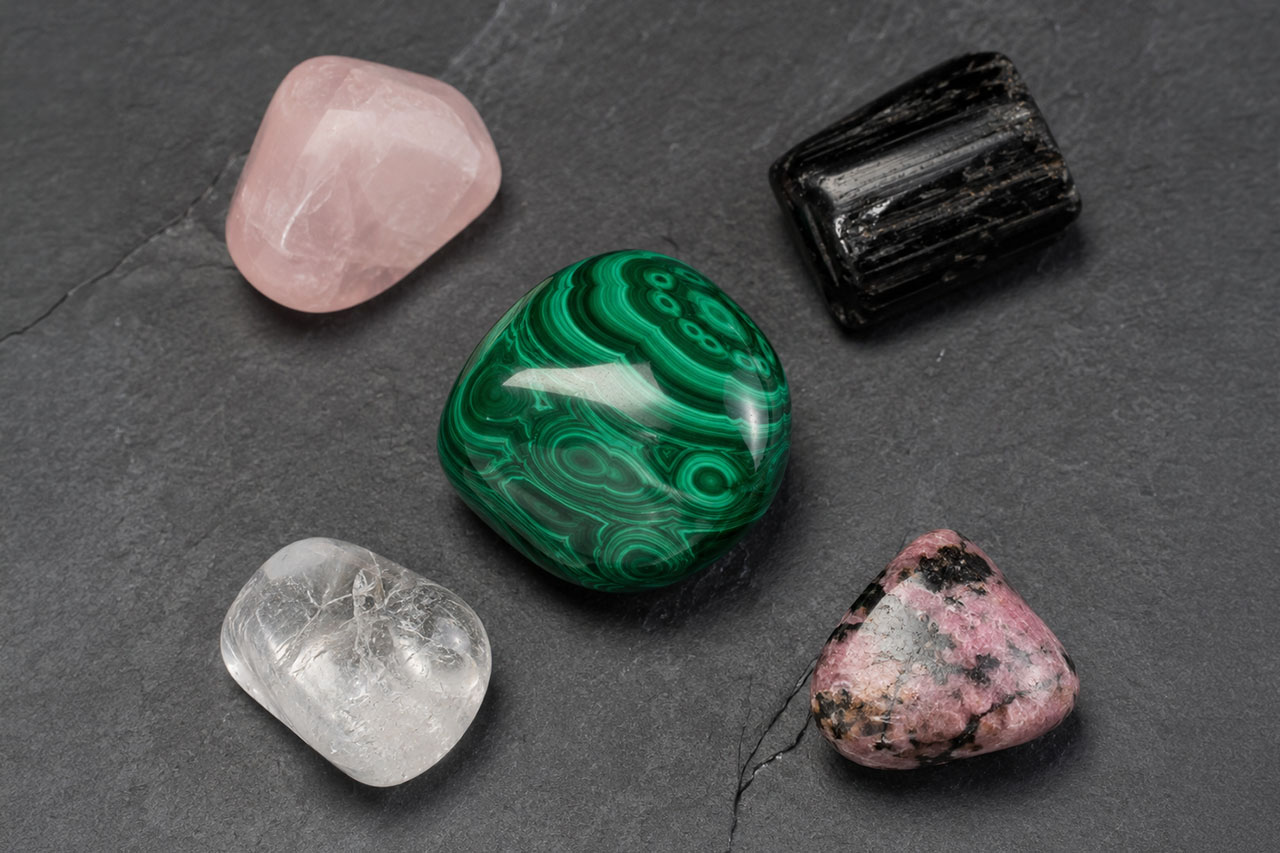
Malachite pairs best with stones that steady or soften it: rose quartz and rhodonite to cushion the emotional side, black tourmaline or smoky quartz to ground it. The one common pairing to hold off on is clear quartz, which turns malachite up rather than calming it.
With almost any other stone, the reflexive thing to add is clear quartz. Crystal practice treats it as an amplifier, a stone held to strengthen whatever sits beside it, so reaching for it gives you more of what you already had. Malachite is the one popular pairing where that instinct works against you. Its whole reputation in crystal work is intensity, which means the partners that suit it are the ones that take the edge off rather than the ones that turn it up.
People who work with malachite seriously tend to describe it the same way, as the stone that brings up what they had been steering around, on its own timing rather than theirs. Whether that lands as useful or as too much depends on what is sitting next to it. That is really what a malachite pairing is for. It manages intensity. Not to add an effect, but to set how much of malachite’s own effect you have to sit with at once.
Partners that soften the emotional side
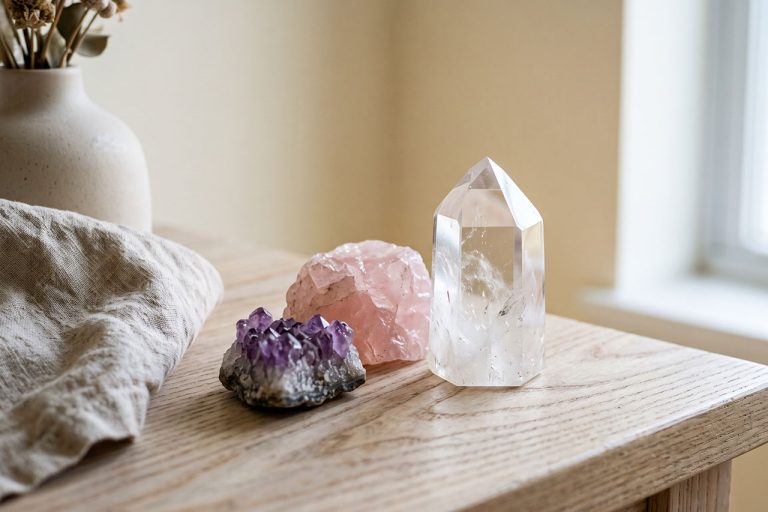
The gentlest place to start is rose quartz, and it is the pairing most often recommended for anyone new to malachite. Practice reads rose quartz as the stone of self-compassion and emotional warmth, so beside malachite it works like a cushion under the harder edges, keeping the emotional surfacing from tipping into more than you wanted. If you are curious about malachite but wary of it, this is the forgiving way in.
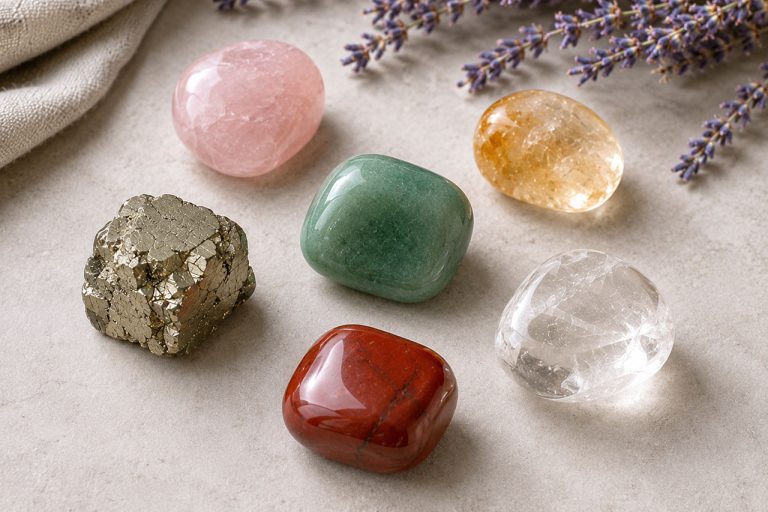
Rhodonite does something close but aimed deeper. The tradition ties it to healing after hurt, the old relationship kind and long-carried grief, so pairing it with malachite suits deliberate work on something specific you are ready to look at rather than a general softening. Green aventurine is the lightest of the three, keeping the pairing in the same heart-centred family while bringing an easier, more optimistic tone. Where rose quartz cushions and rhodonite goes deep, aventurine simply keeps things bright, which makes it the choice when you want malachite’s forward movement without a heavy mood around it.
Partners that keep it grounded
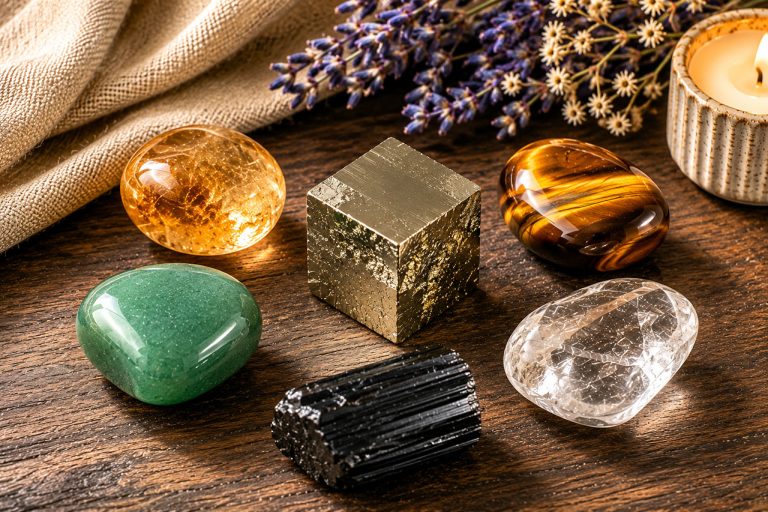
The other job a malachite partner can do is anchor the experience so it stays steady underfoot. Black tourmaline is the usual stone for that. Practice places it at the root, the energy centre it associates with stability and feeling safe in your own body, and beside malachite that translates to a floor under the emotional work, something solid holding while the rest moves. It suits the sessions where you want the depth malachite offers and a firm base at the same time.
Smoky quartz grounds in a slightly different way, and the difference matters. Rather than blocking difficult feeling, the tradition treats smoky quartz as a stone that takes it in and settles it, so next to malachite it helps move through what surfaces instead of only holding it down. People who have found malachite on its own too much sometimes find that a smoky quartz beside it makes the same stone workable.
Two things to know before you pair it
Now the pairing to be careful with, and it is the one your instinct will reach for first. Clear quartz will amplify malachite exactly the way it amplifies anything, which here means more surfacing, more intensity, more of the thing malachite already does without much encouragement. There is a real use for that, if you are working with malachite deliberately and want to go further into it. As a casual addition it is the opposite of what most people need. If you are still finding your feet with the stone, leave the quartz out and let malachite set its own pace.
The second thing is physical rather than energetic. Malachite is a copper carbonate, Cu2(CO3)(OH)2, and by the Handbook of Mineralogy it sits at only 3.5 to 4 on the Mohs scale of mineral hardness, well below the quartz-family stones it often gets stored with. That softness means a harder tumble will scratch it, so keep malachite in its own pouch or apart from your quartz. Being a copper carbonate is also why malachite carries the safety caution you will see repeated everywhere: handle polished pieces freely, but keep raw or powdered malachite out of any water you mean to drink, and skip it entirely for direct-immersion crystal waters.
Because of that intensity, malachite tends to work better as a placed stone than one carried through a busy day without context. An altar, a windowsill, a corner you sit with often, somewhere you engage it on purpose rather than passively. For the emotional pairings, setting malachite beside rose quartz during a defined stretch of reflection or journaling gives the work a shape, which most people find easier to manage than wearing the stone and hoping.
Malachite rewards patience more than any approach that tries to hurry it. Give a pairing time, and choose the partner for how much you want to feel rather than how much you want to add. If rose quartz turns out to be the steadying partner you keep reaching for, what goes well with rose quartz picks that thread up, and the Crystalance Mineral Library has malachite’s full profile, formation and safety notes included.