Vanadinite
Vanadate
Bright red, orange-red, brown, yellow
Adamantine to resinous
3 - 4
6.7 - 7.1
Hexagonal
Morocco, USA (Arizona, New Mexico), Mexico, Namibia
Common to uncommon (fine crystals rare)
Pb₅(VO₄)₃Cl
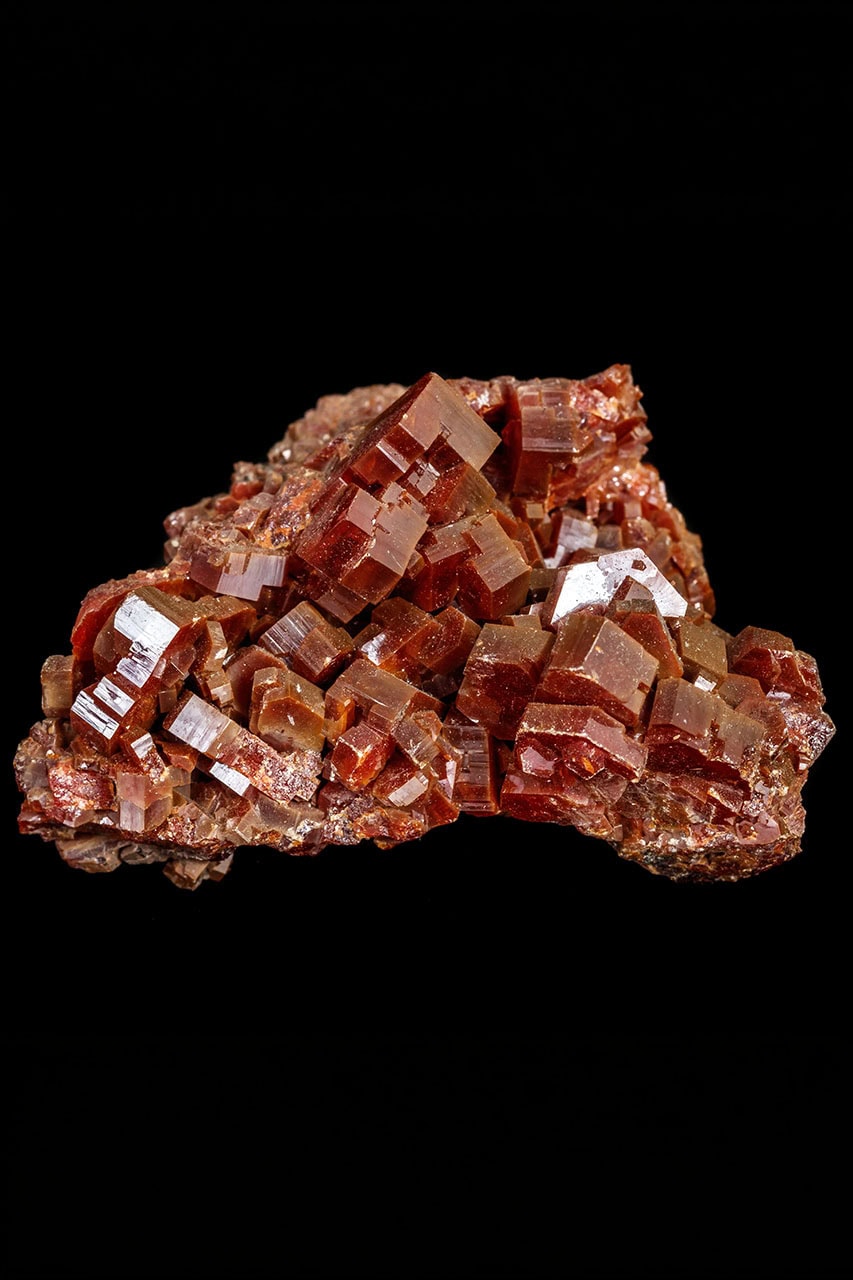
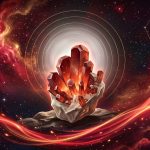
In the sun-baked deposits of Morocco's Mibladen mines, crystals emerge like frozen fire—hexagonal prisms of vanadinite so brilliantly red they seem to pulse with inner heat. This lead vanadate mineral, discovered in 1801 in Mexico, creates some of nature's most perfectly formed crystals, their six-sided columns often terminating in flat faces that gleam like polished gems.
Named for its vanadium content, an element that itself takes its name from Vanadis, the Old Norse name for the Scandinavian goddess Freyja, vanadinite carries the creative fire of that goddess. Its formation in the oxidation zones of lead deposits—where groundwater transforms galena into brilliant crystals—mirrors its metaphysical reputation for transmuting dense energy into creative power. The presence of vanadium, an element essential to some life forms and used in strengthening steel, adds another layer to its symbolism of vitality and endurance.
Today, from the specimen markets of Tucson to the meditation spaces of energy workers, vanadinite serves dual purposes. While industry values it as a vanadium ore, spiritual practitioners prize it as the ultimate stone of creative manifestation and grounded action. Its ability to form perfect crystals from lead ore teaches that even the densest materials can transform into geometric beauty when conditions align—a powerful metaphor for human potential.
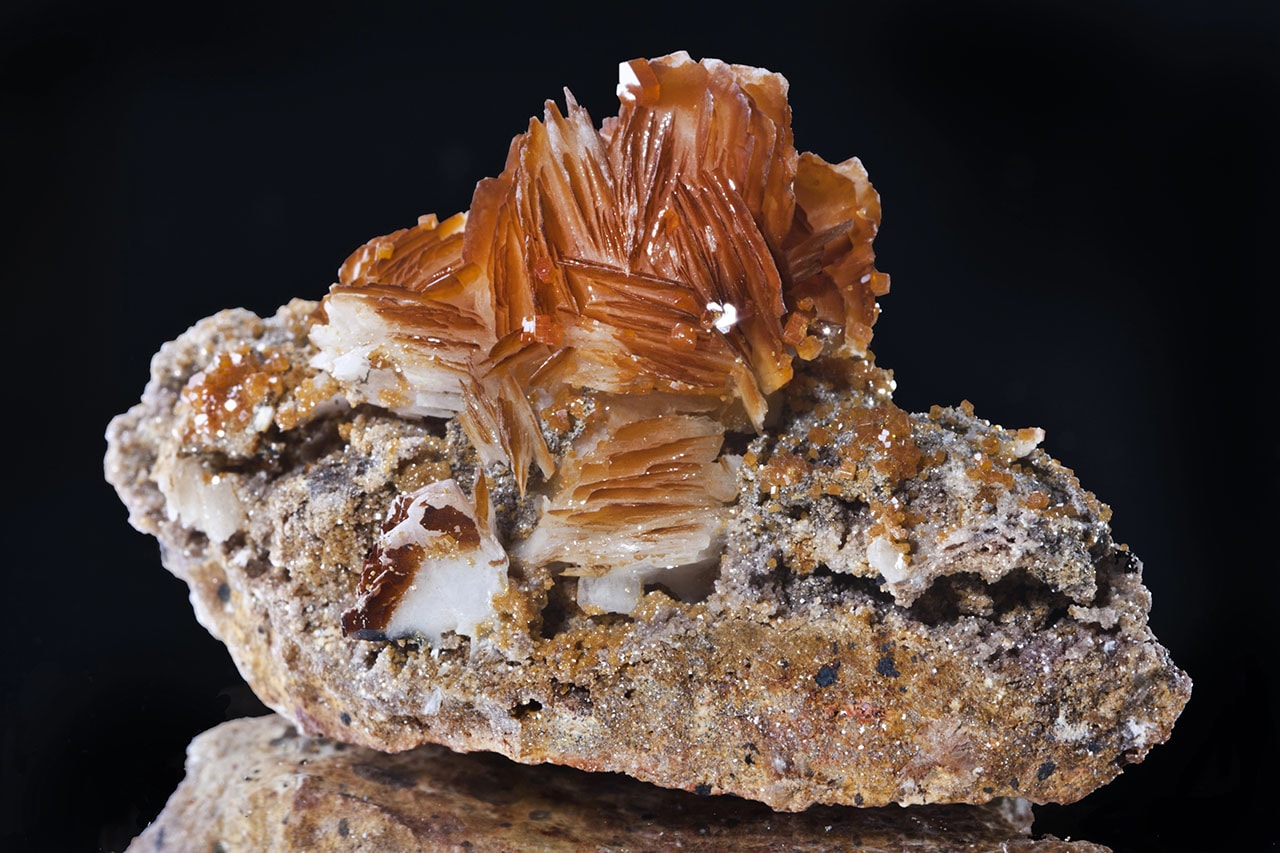
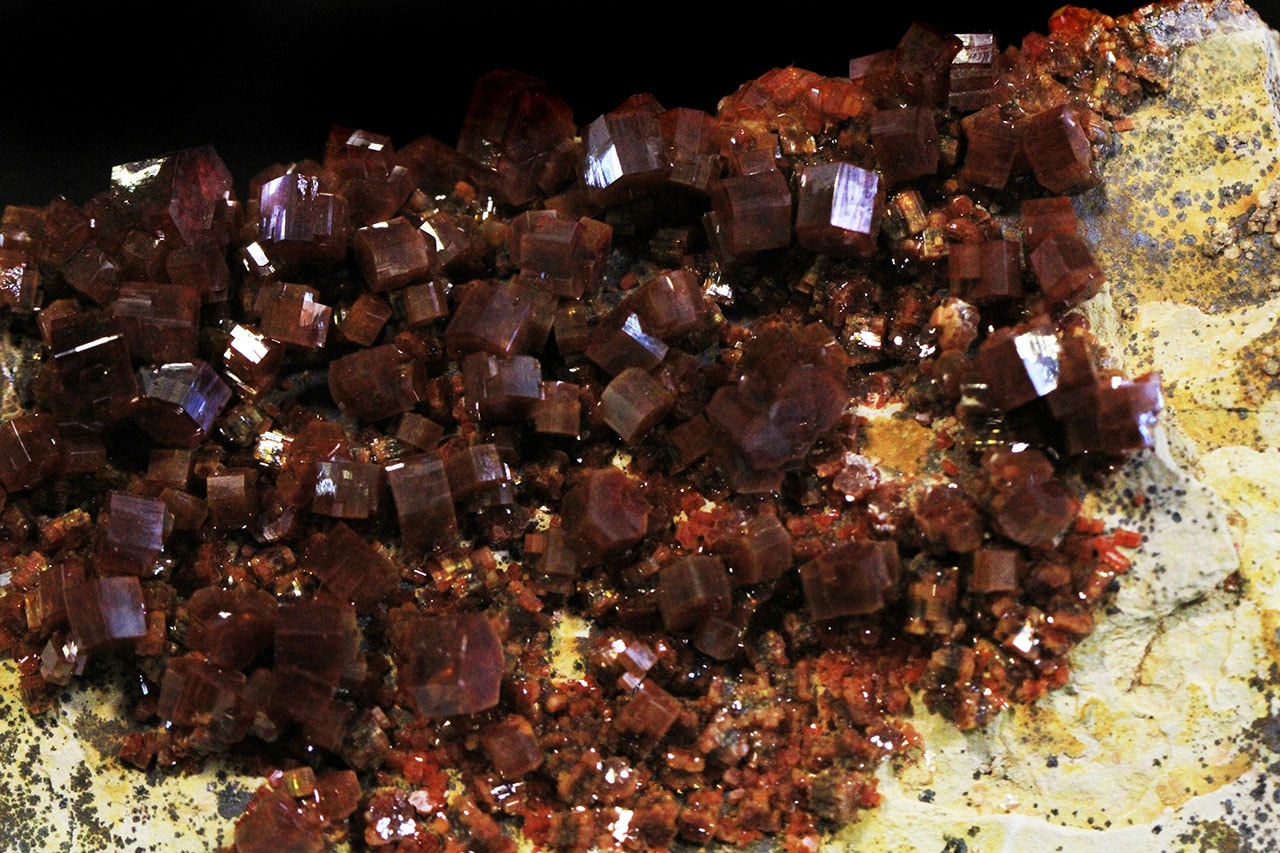
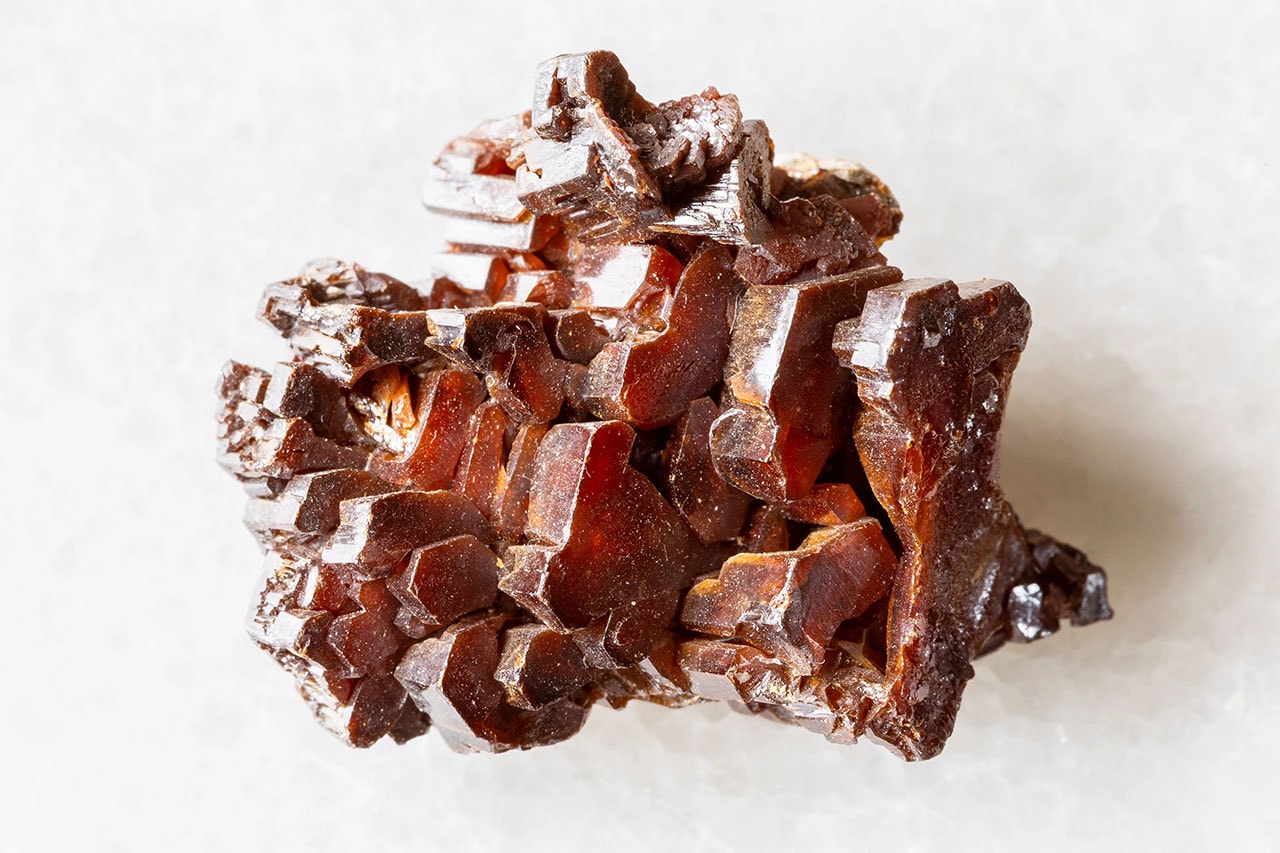
TABLE OF CONTENTS
Properties & Qualities
Physical Properties
Vanadinite announces itself through spectacular crystal formations that seem almost artificially perfect. The hexagonal prisms, sometimes hollow and skeletal, can range from microscopic needles to thick barrels over an inch across. The finest specimens from Morocco display crystals so geometrically precise they appear machine-cut, often growing in parallel groups or radiating clusters.
Color intensity varies with chemical composition and formation conditions. Most vanadinite is bright red to orange-red; brown, yellow and grey crystals also occur, and arsenic-rich material is known as endlichite. The most prized specimens combine intense red color with high luster and perfect crystal form.
The mineral's adamantine to resinous luster creates surfaces that seem to glow with inner light, particularly striking when crystals are backlit. This luster, combined with vanadinite's high specific gravity, gives specimens surprising heft—a small piece feels notably heavy, adding to its impression of concentrated power.
Despite its beauty, vanadinite requires careful handling. Its lead content makes it toxic if ingested or inhaled as dust, and its relative softness means crystals can be damaged by careless handling. The best specimens are often left on matrix rock, where white barite or brown limonite provides stunning contrast to the red crystals while offering structural support.
Metaphysical properties
Within metaphysical circles, vanadinite reigns as the premier stone of creative fire and productive action, its energy described as pure life force crystallized into geometric form. Practitioners report its vibration as intensely energizing yet grounding—like a lightning rod that channels cosmic creative energy directly into earth plane manifestation.
The stone's primary resonance with the root and sacral chakras creates what energy workers call "embodied creativity"—inspiration that moves beyond mental concepts into physical creation. This distinguishes vanadinite from high-vibration stones that can leave users ungrounded; instead, it insists that visions become reality through disciplined action.
In alchemical symbolism, vanadinite's red recalls the rubedo, the red phase where spiritual insights take physical form. Modern practitioners draw on this image, using vanadinite specifically for projects requiring sustained energy and focus rather than brief inspiration.
The hexagonal crystal system connects vanadinite to sacred geometry and natural order, teaching that creative chaos must organize into structure to manifest. This makes it invaluable for artists, writers, and entrepreneurs who have plenty of ideas but struggle with completion and implementation.
Meaning & Symbolism
Physical meaning
In the physical realm, vanadinite embodies the principle of concentrated power—its formation from dispersed lead minerals into perfect crystals demonstrates how focused intention creates form from formlessness. This mirrors the creative process where scattered thoughts must crystallize into completed works.
The mineral's weight and density symbolize gravitas and substance in creative endeavors. Just as vanadinite feels heavier than expected, it teaches that meaningful creations carry weight—they matter, they last, they impact the world. This distinguishes substantial work from superficial production.
For those in creative fields, vanadinite's perfection despite (or because of) its toxic components offers profound teaching. Many powerful creations emerge from transforming difficult experiences—lead into crystal, pain into art, challenge into innovation. The stone reminds us that our shadows often fuel our greatest contributions.
The stone's industrial use in strengthening steel parallels its metaphysical property of strengthening will and determination. Just as vanadium creates stronger alloys, working with vanadinite allegedly creates stronger resolve to see projects through despite obstacles.
Spiritual meaning
Vanadinite's spiritual significance centers on its role as "sacred fire keeper"—maintaining the flame of spiritual passion while ensuring it serves practical purposes rather than burning without direction. This controlled fire distinguishes mature spirituality from unfocused seeking.
The stone's formation in oxidation zones—where oxygen transforms base metals—represents spiritual transformation through conscious breathing and life force cultivation. Many traditions recognize breath as the bridge between spirit and matter, and vanadinite embodies this bridge in crystalline form.
The hexagonal structure connects vanadinite to the six directions honored in many ceremonial traditions, making it a centering stone for ceremony and ritual. Its ability to form perfect crystals from chaotic conditions demonstrates sacred geometry emerging from apparent disorder—cosmos from chaos.
Some modern practitioners read vanadinite's red color as the blood of the earth, connecting practitioners to planetary life force. This makes it valuable for earth-based spirituality and practices aimed at healing humanity's disconnection from natural cycles and rhythms.
Healing Benefits
Physical healing
Vanadinite in crystal healing is a matter of practice and tradition, not medicine. Practitioners use it as an energising stone for creative drive and place a specimen near the body, rather than on it, during sessions focused on motivation.
Vanadinite is a lead mineral, so it is kept as a display or meditation piece: not worn, not used in water or elixirs, handled briefly with hands washed afterwards, and kept away from small children and pets.
Vanadinite is not a substitute for medical care. If something in your body worries you, see a doctor.
Emotional healing
The emotional healing properties of vanadinite center on transforming creative frustration into productive action. Practitioners describe it as particularly helpful for people whose emotional blocks manifest as creative paralysis or procrastination.
For those dealing with feelings of stagnation or life force depletion, vanadinite's fiery energy provides activation—not the gentle awakening of some stones but an insistent call to action. This makes it a favorite for periods of lethargy and stuck energy; anyone dealing with persistent low mood deserves real support, and a stone is no replacement for it.
The stone excels at revealing where we leak creative energy through doubt, comparison, or perfectionism. Its perfect crystal forms paradoxically teach that perfection comes through doing, not planning—that the act of creation itself refines and perfects rather than waiting for perfect conditions.
Vanadinite's grounding aspect prevents creative fire from becoming frantic or scattered. It teaches sustainable creativity—maintaining steady output rather than boom-bust cycles of inspiration and burnout that plague many creative individuals.
Spiritual healing
In spiritual healing contexts, vanadinite functions as what practitioners call a "kundalini stabilizer"—not awakening the serpent fire but providing safe channel for its expression once activated. Practitioners use it as a grounding focus in kundalini practice; anyone overwhelmed by intense spiritual experiences deserves real support, and a stone is no replacement for it.
Advanced practitioners utilize vanadinite for clearing creative blocks at the soul level—patterns of self-sabotage or creative denial that persist across lifetimes. The stone's ability to crystallize from chaos mirrors its capacity to organize scattered soul fragments into coherent creative expression.
For those experiencing spiritual burnout from excessive upper chakra activation, vanadinite provides grounding without diminishing spiritual connection. It teaches that enlightenment includes embodiment—that we incarnated to create, not just to transcend.
The stone's hexagonal structure makes it valuable for creating energetic containers for deep work. Practitioners place specimens at six points around healing spaces (out of reach of small children and pets) to maintain stable energy fields during intense transformational work.
Use & Care
How to use
- Display piece: Keep a specimen on a shelf or desk where you can see it while working
- Creative space: Place in your studio or workspace as a focus for creative drive
- Meditation focus: Gaze at the crystals during creative visualization
- Altar piece: Include on an altar for creative or grounding rituals
- Brief holding: Hold a specimen briefly during meditation, then wash your hands
- Grounding meditation: Set a specimen beside you, not on the body, during root chakra work
- Project talisman: Keep beside current projects as a reminder to finish them
- Visualization: Picture vanadinite's red glow when you need momentum
- Not for wearing: Not used as jewelry, in water or in elixirs
- Safe storage: Keep away from small children and pets
How to cleanse
- Sound clearing: Use bells or singing bowls near the stone
- Smoke cleansing: Pass incense or sage smoke around it in a ventilated room
- Moonlight: Place in moonlight overnight
- Visualization: Cleanse through focused intention
- Selenite nearby: Set beside selenite for clearing
- No water: Keep dry; water is not used with lead minerals
- No salt: Avoid salt, which can damage the surface
- Limited sun: Keep out of strong, prolonged sun to protect its color
- Gentle dusting: Use a soft brush or air puffer to remove dust
- Wash hands: Wash your hands after handling
How to charge
- Visual charging: Charge through focused intention
- Candlelight: Place near a candle during creative rituals
- Earth connection: Set on a stone or wooden surface outdoors briefly
- Creative visualization: Imagine creative fire flowing into the stone
- Sacred geometry: Place on hexagonal patterns
- Sound activation: Use drums or rattles nearby
- Pyramid energy: Place in a pyramid structure
- Group intention: Several people focus their intention together
- Sunrise: Brief morning light for activation
- Minimal charging: The stone is said to hold its energy naturally
Combining with other stones
- Black Tourmaline: Provides grounding and protection during use
- Carnelian: Enhances creative aspects
- Garnet: Amplifies life force and manifestation power
- Red Jasper: Adds stable grounding to creative fire
- Hematite: Grounds excessive energy and provides protection
- Smoky Quartz: Transmutes any negative energy during work
- Clear Quartz: Amplifies vanadinite's creative fire
- Pyrite: Enhances manifestation and creative confidence
- Tiger's Eye: Adds focus and determination to creative work
- Obsidian: Provides psychic protection during intense work
Identification
Can be mistaken for
- Crocoite: Similar red crystals but different crystal system
- Wulfenite: Can be red-orange but forms square tablets
- Realgar: Red-orange but different crystal structure and more toxic
- Red Beryl: Similar color and also hexagonal prisms, but much harder and far lighter in the hand
- Proustite: Red crystals but darkens in light
- Cuprite: Deep red but different crystal system
- Cinnabar: Red but usually granular or massive rather than in distinct crystals
How to spot a fake
- Weight test: Real vanadinite very heavy due to lead content
- Matrix examination: Usually found on natural rock matrix
- Color consistency: Natural shows slight color variations
- Price consideration: Fine specimens expensive due to rarity
- Locality information: Legitimate dealers provide specific location
- Surface texture: Natural has adamantine to resinous luster
- Crystal grouping: Natural crystals grow in characteristic patterns
- Documentation: Quality pieces should have collection data