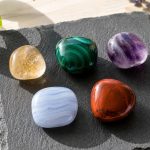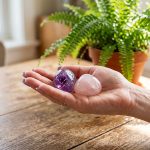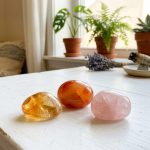
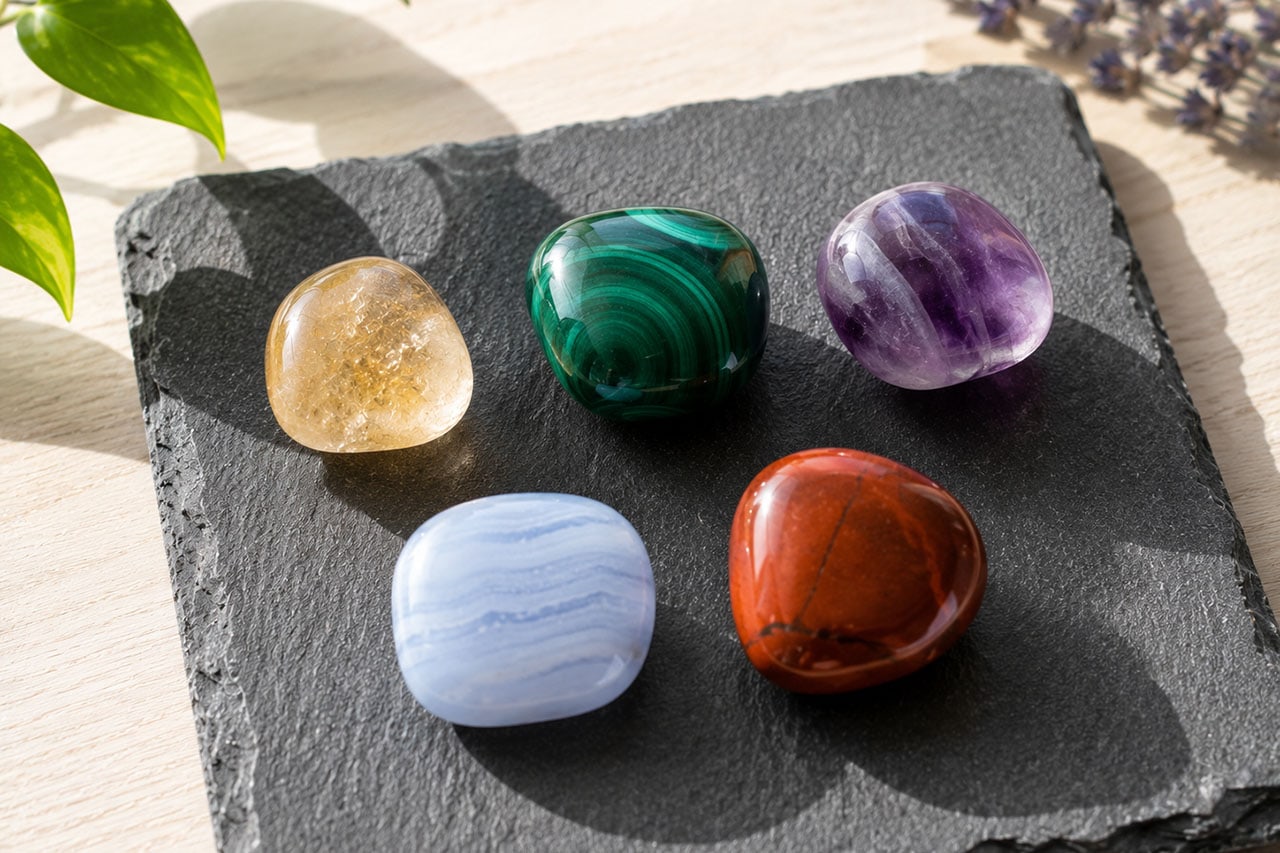
A working reference to what specific stones symbolize in modern crystal practice. Citrine for abundance and confidence. Fluorite for clarity and mental focus. Malachite for transformation. Smoky quartz for grounding and release. Blue lace agate for gentle communication. Ocean Jasper for emotional flow. Celestite for high-vibration calm. Green calcite for heart-and-growth. Red stones for vitality and grounding. The symbolism in each case is a layered combination of colour-correspondence, mineralogical properties, traditional folklore, and modern crystal-practice convention.
The “what does [stone] symbolize?” question family comes up across many specific cases. Each answer benefits from the broader frame of how stone symbolism actually works (colour first, mineralogy second, tradition third). Here is the working stone-by-stone version covering the most-asked specific cases.
How Stone Symbolism Actually Works
Three threads contribute to the modern symbolism of any specific stone.
Colour correspondence. Each colour carries broad symbolic associations across most cultural traditions: red for vitality and grounding, green for growth and heart, blue for calm and communication, purple for spiritual and contemplative work, yellow and gold for abundance and confidence, black for protection and shadow work. The stone inherits the broad lane of its dominant colour.
Mineralogical properties. Hardness, transparency, formation context, and chemical composition all contribute symbolic associations. Hard stones (quartz family) often carry amplifying or clarifying symbolism. Soft stones (selenite, calcite) often carry gentler or more receptive associations. Reactive stones (sulphides, copper carbonates) often carry transformation associations because they visibly change with exposure.
Traditional folklore and modern convention. Specific stones carry traditions that go back centuries (lapis lazuli’s wisdom association, jade’s prosperity association, amber’s protection association). Other stones (K2 Stone, Ocean Jasper, larimar) have shorter traditions because they entered the modern crystal market more recently.
The honest version is that stone symbolism is layered. The colour gives the broad lane. The mineralogy refines it. The tradition (long or short) shapes the specific associations in modern practice.
Citrine: Abundance, Confidence, Openness to Opportunity
Citrine represents abundance, confidence, openness to opportunity, and warmth in modern crystal practice. The golden-yellow colour is the primary driver of the symbolism (gold, sun, light), with the quartz-family amplification quality reinforcing the practice element. Citrine is one of the most consistently-recommended stones for financial intention work, daily confidence anchoring, and any practice oriented toward receiving rather than releasing.
A note on commercial citrine: most “citrine” in the market is heat-treated amethyst rather than natural citrine. Both are structurally identical and carry the same symbolism in practice. For more, see should you wear citrine every day.
Fluorite: Clarity, Mental Focus, Decision-Making
Fluorite symbolises mental clarity, focused thinking, and clean decision-making. The crystal structure (cubic and octahedral forms) is unusually geometric and reads symbolically as order and structure. The colour ranges (purple, green, blue, yellow, clear, often banded together in a single stone) each contribute their own associations: purple for spiritual clarity, green for heart-mind integration, blue for calm communication, yellow for confidence in decision-making.
Fluorite is a common workspace and study stone for this reason. Useful when the practice involves clear thinking, complex decisions, or work that requires sustained focus. Hardness is Mohs 4, so fluorite is more fragile than most quartz-family stones and benefits from careful placement.
Malachite: Transformation, Boundaries, Released Patterns
Why is malachite known as the stone of transformation? Three reasons. First, the visible swirling banded patterns in malachite (light and dark green concentric bands and eye-shapes) read symbolically as movement, change, and patterns within patterns. Second, malachite is a copper carbonate that visibly changes with exposure (it can dull, develop patina, or change surface texture over time), which reinforces the transformation association. Third, malachite has a strong protective and boundary-setting tradition in modern practice, and “transformation” in this context often means the release of patterns that no longer serve (toxic dynamics, old habits, energetic absorption from others).
Used for practices around personal transformation, releasing old patterns, and setting protective boundaries. Hardness around Mohs 3.5 to 4; never used in water-based practices because malachite leaches copper. Soft and reactive; treat as a placement piece rather than a daily-handling stone.
Smoky Quartz: What It Is the Stone Of
Smoky quartz is the stone of grounding and release in modern practice. The brown-to-black colour ranges from light champagne to nearly opaque morion, with the symbolism consistent across the colour range. Used for end-of-day release, transitional work, anxiety management, and emotional processing of difficult experiences. The grounding-and-release lane is the combination that distinguishes smoky quartz from other dark stones (which often emphasise one or the other but not both).
For the full working guide, see how to use smoky quartz.
Blue Lace Agate: Gentle Communication, Soft Calm
Blue lace agate symbolises gentle communication, soft emotional calm, and the easing of anxiety around expression. The pale blue colour with delicate white banding makes it visually quieting; the agate family’s general grounding quality adds steadiness to the calm. Used in practices around difficult-but-gentle conversations, public speaking that requires warmth rather than authority, and anxiety management in communication contexts. The pale colour and the throat-chakra association make it one of the most-recommended stones for sensitive expression work.
Ocean Jasper: Emotional Flow, Joy, Release of Stuck Patterns
Ocean Jasper represents emotional flow, joy, and the movement through difficult emotional periods. The orbicular patterns (the small circular orbs across the surface) are read symbolically as “circles of completion” and the oceanic name reinforces the flow association. The original Madagascan deposit at Marovato has been functionally depleted; commercial Ocean Jasper now often comes from related deposits sold under the same name.
Used for periods of emotional transition, processing of long-held patterns, and intentions around moving through (rather than around) difficult feeling. For more, see how to use Aventurine, K2 Stone, Ocean Jasper, and Sea Jasper.
What Is the Crystal of the Ocean
The “crystal of the ocean” question is fuzzy enough to deserve more than one answer. Three stones get this association in different framings.
Ocean Jasper. The most direct linguistic match. The orbicular patterns and the Madagascan oceanic origin make it the literal “ocean” jasper.
Aquamarine. A traditional ocean stone since Roman times, associated with sea travel and the sea’s symbolic qualities (calm, depth, endless horizon). The Latin name (aqua marina, sea water) is the source.
Larimar. A pale blue-green stone found only in the Dominican Republic, often called “the Atlantis stone” or “the Caribbean stone”. The Caribbean-sea visual association is strong.
If the question is about a specific stone, the answer depends on which framing was meant. Ocean Jasper for the literal name. Aquamarine for the long tradition. Larimar for the modern Caribbean-sea association. All three carry oceanic symbolism.
Celestite: High-Vibration Calm, Angelic Communication
Celestite symbolises high-vibration calm, peaceful sleep, and (in some practices) angelic communication. The pale blue cluster crystals are visually distinctive; the Mohs 3 to 3.5 hardness makes celestite fragile and reserved mostly for placement use rather than carrying. The angelic-communication association is specific to certain modern crystal traditions and is not universal; the calm-and-peaceful-sleep association is more consistent across practice. For more, see can you sleep with celestite.
Green Calcite: Heart, Growth, Gentle Emotional Healing
Green calcite represents heart-chakra work, gentle emotional healing, and growth in modern practice. The pale-to-medium green colour matches the heart-chakra association in the modern Western chakra system; the calcite family’s general gentle quality reinforces the soft-emotional lane. Used for emotional healing that is less intense than rose quartz or rhodonite work, and for practices around growth (creative growth, relationship growth, personal development). Hardness around Mohs 3; never used in water and easily scratched.
What Does a Red Stone Symbolize
Red stones in modern crystal practice symbolise vitality, grounding, action, courage, and the root chakra. The colour-correspondence is consistent across traditions: red as the colour of blood, fire, and immediate physical aliveness.
Specific red stones carry refinements of this broad lane.
Red jasper. Stability, endurance, grounded action. The classic root-chakra stone.
Carnelian. Courage, initiative, creative action. More active than red jasper; often used for starting new ventures.
Garnet. Vitality, energising root work, sexual and creative energy. Deeper red than the jaspers and carries a more activating quality.
Ruby. Passion, courage, life-force. The most intense of the red stones, often associated with vitality at the extreme.
Bloodstone. Green with red flecks, sometimes counted as a red stone. Used for circulation, stamina, and physical vitality.
Used in practices around physical energy, grounded action, courage in difficult situations, and the felt sense of being alive in the body. For more on root-chakra and body-placement practice, see how to use crystals for the root chakra.
The Honest Frame
Stone symbolism in modern crystal practice is a layered combination of colour-correspondence, mineralogical properties, and tradition. The associations are real within the practice tradition; they are also belief-based at the energetic-mechanism level. A stone does not literally generate the qualities it symbolises; it serves as an attention anchor for intentional practice oriented toward those qualities.
Used this way, the symbolism is genuinely useful. A red jasper piece during work that requires sustained physical endurance is not a magical performance enhancer; it is a tactile and visual reminder of the intention you have set around endurance. The reminder works the way reminders work, through accumulated attention over time.
For more on individual stones mentioned here, see the Crystalance Mineral Library. The reference above covers the most-asked symbolism questions in modern crystal practice. Each stone supports a specific intentional lane; the colour-correspondence gives the broad lane, the specific mineral refines it. Pick the stone whose lane fits your intention. The symbolism does the work of cuing the practice; the practice does the work of changing what changes.