Here is our position, and it is the one thing we ask you to take from this whole piece. We write about crystals every day, and we will never tell you that a stone cures, treats, or heals a disease. That is not a hedge forced on us by lawyers. It is a line we hold on purpose, because it is the only honest place to stand. Crystals carry real cultural, historical, and personal meaning, and they carry no demonstrated medical power. We take the first of those seriously and refuse to fake the second.
Most of the crystal world cannot hold that line, and it fails in two opposite directions. One camp overclaims, promising that the right stone will fix your anxiety, your inflammation, or your love life. The other camp sneers, dismissing the whole subject as gullible nonsense not worth an adult’s attention. We think both are wrong, and both are lazy. This is where we actually stand, and why.
What Most Sites Get Wrong
The overclaiming is the more obvious failure, and the more harmful. Walk through enough crystal listings and you will read that a stone “removes negative energy,” “balances the thyroid,” “dissolves trauma,” or “raises your cellular vibration.” These are stated as facts, in the flat confident register of a medical label. None of them is a fact. They are borrowed from a vocabulary of pseudo-science, “frequency,” “vibration,” “energy field,” that sounds technical and means nothing measurable. The confidence is the tell. Real science hedges; it is marketing that speaks in certainties about the body.
The opposite failure is quieter but just as unserious. It is the reflexive debunk, the tone that treats anyone drawn to crystals as a fool, and treats the entire human history of meaningful objects as an error to be corrected. This camp is technically right about the medical claims and completely deaf to why people keep stones at all. It answers a question nobody serious was asking, “do crystals cure cancer,” and congratulates itself for the obvious.
What both camps share is a refusal to sit with complexity. One inflates crystals into medicine; the other flattens them into rubbish. The honest position is harder and more interesting than either, because it requires holding two true things at once: the medical claims do not hold up, and the objects still matter.
What the Evidence Actually Says
We should be plain about the evidence, because ducking it would make us the first kind of site. When crystal healing has been tested directly, it has not performed better than a placebo.
The most cited experiment is straightforward. Volunteers were asked to meditate holding either a genuine quartz crystal or a fake made of glass, indistinguishable to the holder. Those given the real crystal reported the classic sensations, warmth, tingling, a felt “energy,” at the same rate as those holding the fake, and people who had been primed beforehand to expect sensations reported them more often regardless of which stone they held. The lead researcher, Christopher French, concluded there was no evidence crystal healing works over and above a placebo effect, and notably, even practised crystal healers could not reliably tell a real quartz from a glass copy (Time, reporting on the French study). The effect people feel is real as an experience. It is not coming from the mineral.
This matters most where health is at stake. The US National Center for Complementary and Integrative Health, the federal body that studies exactly these approaches, advises against using any product or practice that has not been proven safe and effective as a substitute for conventional medical treatment, or as a reason to postpone seeing a health-care provider about a problem (NCCIH). We agree with that without reservation. A crystal is a fine thing to hold while you rest. It is not a treatment, and it must never be the reason someone delays care they need.
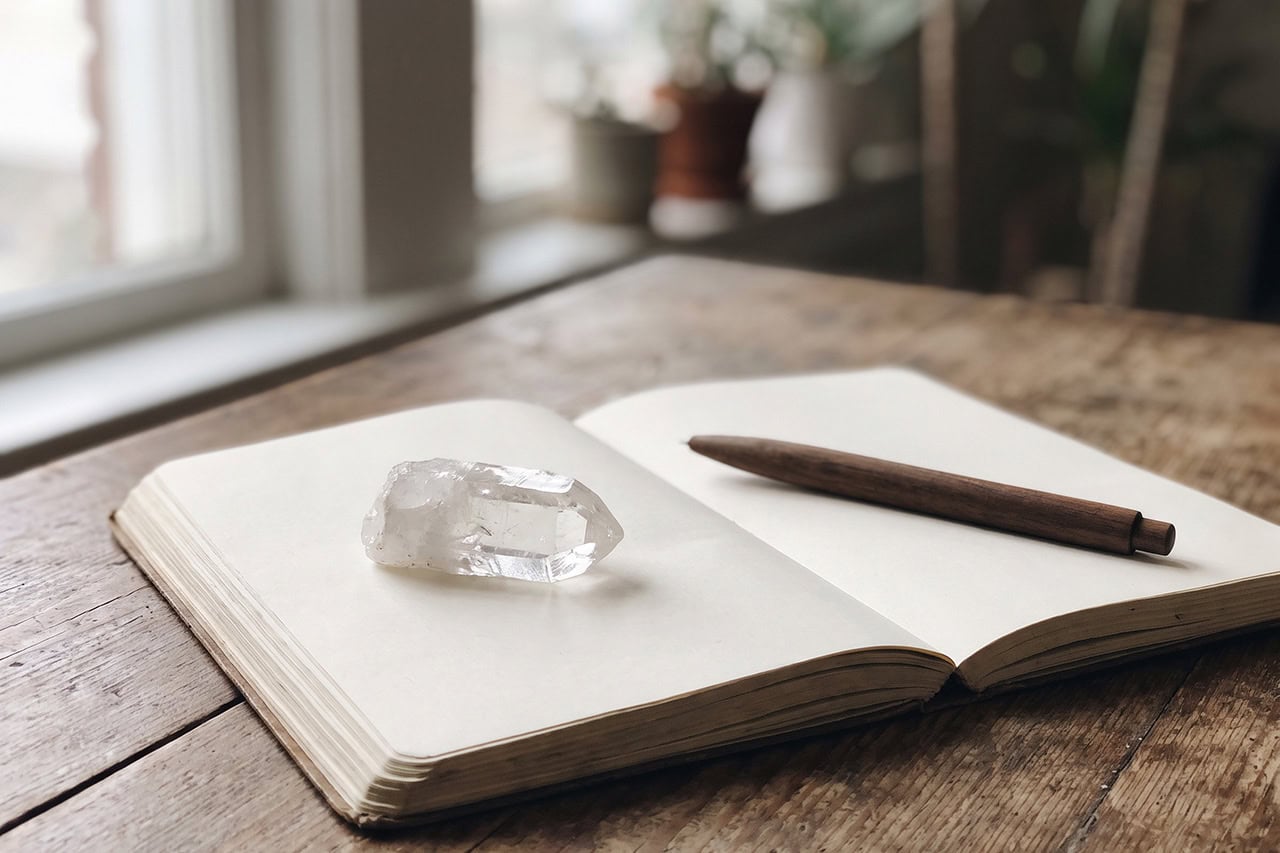
It is worth adding the mineralogy, because it grounds the point. Clear quartz, the archetypal “healing crystal,” is silicon dioxide, a hard, common, well-understood mineral (Mindat). It is genuinely remarkable as geology. It has no known mechanism for acting on human tissue, and inventing one does the stone no favours.
Why We Still Write About Crystals
If the medical claims fail, why run a whole publication about crystals at all? Because the medical claims were never the good part, and treating them as the whole story is the mistake both camps make.
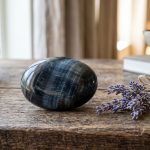
People have kept meaningful objects for as long as there have been people. A stone on a desk, a ring passed down a family, a pebble from a place that mattered, these carry weight that is real even though it is not physical. Crystals sit in that ancient human practice. A stone you have chosen, held, and given meaning to can genuinely help you focus, mark an intention, steady a moment, or simply bring a small daily pleasure. That is not a chemical effect of the mineral. It is the effect of ritual, attention, and meaning, and those are not nothing. The placebo response is often spoken of dismissively, as if “just a placebo” meant “fake.” It is one of the most robust and fascinating findings in all of psychology: expectation and meaning measurably change how people feel. A stone can be a handle for that, honestly and without a single false claim about frequencies.
Then there is everything crystals are before anyone assigns them a purpose. They are among the most beautiful objects the earth produces. Their formation is a genuinely astonishing piece of chemistry and deep time. Their histories, in trade, in myth, in adornment across cultures, are rich and worth telling accurately. We could write about crystals forever without ever needing them to cure anything, because the real material is more interesting than the invented powers.
The Line We Hold
Because the difference between honest and dishonest crystal writing lives in specific words, we are specific about ours. This is the editorial standard we hold across everything we publish.
We will say that a stone is traditionally associated with calm, or reputed to aid focus, or that people use it for grounding. We will describe what a culture believed, what a practice involves, and what someone might experience, all framed as tradition, belief, and personal practice rather than fact about the body. We will happily tell you how to meditate with a stone or set an intention with one, because those are real practices with real, meaning-based effects.
We will not say that a crystal cures, treats, heals, prevents, or manages any medical or psychological condition. We will not present “vibration,” “frequency,” or “energy healing” as physical fact. We will not tell you a stone can replace a doctor, a therapist, or a medication, and we will not imply it by omission. When we describe a traditional use, we will not quietly let it read as a clinical one.
The distinction is not cosmetic. “Amethyst is traditionally associated with calm” is true and honest. “Amethyst calms anxiety” is a medical claim we cannot support and will not make. The gap between those two sentences is the whole of our editorial ethics on this subject.
If You Are Actually Unwell
This is the part we take most seriously, so we will say it plainly rather than bury it. If you are dealing with a physical illness or a mental-health struggle, a crystal is not the answer, and no honest source should let you believe it is. See a doctor or a qualified mental-health professional. Keep taking prescribed medication. Do not swap treatment that works for a stone that cannot.
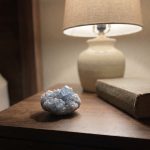
None of that means you have to put the stone down. Holding something calming while you go through a hard time is a very human thing to do, and there is nothing wrong with it. The harm is never the crystal on the nightstand. The harm is the claim that persuades someone to choose the crystal instead of the care. We write the way we do specifically so that no one reading us makes that trade because of something we said. If you are struggling, please reach out to a professional or someone you trust; that is a heavier subject than any stone, and it deserves real support.
Why Honesty Serves the Stones
There is a worry, sometimes voiced, that refusing to make big claims makes crystals less magical, that honesty drains the wonder. We think the opposite is true, and it is part of why we hold the line so firmly.
Overclaiming actually cheapens crystals. It reduces a stone with a hundred-million-year formation history and a place in a dozen cultures to a knock-off pill, judged only by whether it “works.” When the invented cure inevitably disappoints, the whole object gets thrown out with the false promise, and something genuinely worth caring about is discredited by association. Telling the truth protects the stone. It lets a crystal be what it actually is, beautiful, meaningful, historically deep, personally useful as a focus for attention, without staking its worth on a medical claim it can never keep.
We would rather hand you a stone and an honest account of it than a stone and a lie. The honest account is the more durable gift, because nothing in it can be debunked out from under you. You get to keep both the crystal and your clear sight, and in our experience those two things sit together far more comfortably than the overclaimers would have you believe.
It also builds a kind of trust that the overclaiming can never earn. A source that will tell you a stone cannot do something is a source you can believe when it tells you what a stone genuinely is. Every inflated promise spends a little of the reader’s trust; every honest limit returns some. We would rather be the site you can rely on for the boring truth than the one you learn to discount, because the discounting always comes eventually. Once you have caught a source overselling one stone, you rightly doubt everything else it says, and that suspicion is corrosive to the very wonder the overclaimers were trying to sell.
If You Only Remember One Thing
We take crystals seriously enough to tell you the truth about them: real in meaning, unproven in medicine, and more interesting than the false claims that surround them. When a source tells you a stone will cure or treat something, that source has stopped being honest with you. When a source sneers that the whole subject is idiocy, it has stopped paying attention. The honest ground is in between, and it is where we intend to stay.
For plain, accurate entries on the minerals themselves, what they are, how they form, and where they come from, see the Crystalance Mineral Library. Enjoy your stones fully, meaning and all, and keep your medicine where it belongs.
Crystal healing is a sensitive subject, and it sits close to real questions about health and wellbeing. If any of this touches something you are going through, a qualified professional is the right person to talk to, and we would always point you there first.