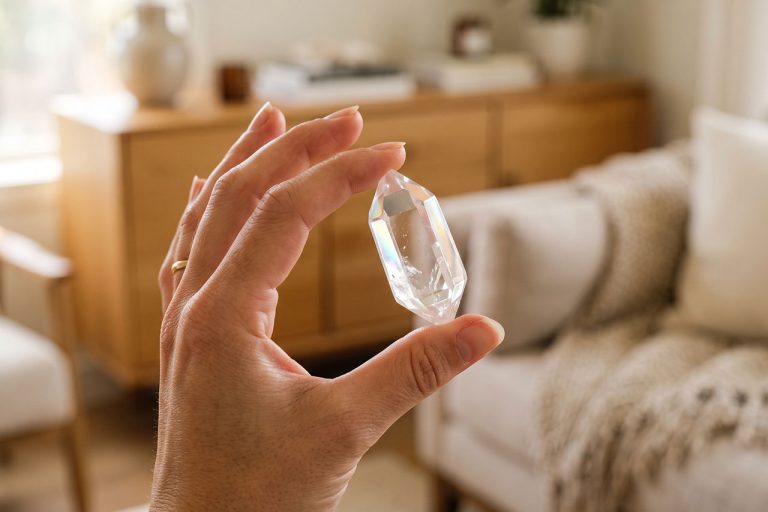

Carry it, and do not be careful with it. Tiger’s eye is used as a pocket stone, a desk stone and a bracelet, and the reason those are the uses is that it is cheap enough to lose. That has not always been true.
Tiger’s eye used to be a rare and expensive stone. Deborah Painter, writing in the earth science magazine Deposits, puts it that way and gives the reason it stopped being one: a large quantity was found in Griqualand West in South Africa, and the discovery brought the price down. How expensive it had been is harder to pin down. The geologist Dana Hunter, on Scientific American’s former blog network, says in passing that it was worth half an ounce of gold per carat in the 1870s. That is a striking figure, it carries no citation on the page, and it is offered here as her aside rather than as a measurement.
A carat is a fifth of a gram, so on that account a thumb-sized tumble would once have been priced somewhere absurd. You can buy one now for about the cost of a coffee, and you have probably been handed one without anybody thinking twice about it. Nothing about the stone changed. South Africa did. In Hunter’s words, it has been abundant ever since, and now you can get it for a song.
That collapse is the most interesting fact about tiger’s eye, and it explains more about how the stone is used today than anything you will read about its meaning.
The stone that stopped being expensive
Think about what a gemstone priced against gold gets used for. It gets set, insured, kept, handed down. It does not go in a coat pocket, and it certainly does not go in a starter kit with five other tumbles and a folded leaflet.
Tiger’s eye is in every one of those kits. It is the stone people give teenagers before exams and colleagues before interviews, the one that turns up on desks and in car door pockets and on wrists that also carry a fitness tracker. Crystal practice puts it with confidence and with getting on with a difficult thing, and it does that in a completely ordinary, unceremonious register. Nobody is precious about tiger’s eye.
My reading is that the register follows the price rather than the other way round. A stone you can replace for pocket change gets used in ways an expensive one never could, and the uses then become the meaning. That is a guess about cause and I would not push it further than a guess, because neither the price nor the modern reputation was recorded with the other in mind.
The history is thinner than it looks in other ways too. GemRocks, the reference site run out of Central Michigan University, says of hawk’s eye and tiger’s eye that its author has been unable to date to find the first application of these terms to these gemrocks, and it flags the commonly repeated late nineteenth century discovery date with a blunt note that the date is not correct. Nothing is offered in its place.
That brings up the line you will meet on page after page about this stone, that Roman soldiers carried tiger’s eye into battle for protection. No primary source for it seems to exist. It is not that the claim has been disproved. It is that it traces back to nothing. Make of that what you like. It is repeated so often that saying nothing about it feels like an omission, and the truthful thing to say is that nobody can show you where it came from.
What cheapness makes possible
Here is where the price history stops being trivia and starts being method, because a stone you can afford to lose can be used in ways a treasured one cannot.
Buy more than one. That is the single practical thing that separates tiger’s eye from most of the shelf, and it is why the standard advice to choose your stone carefully and build a relationship with it does not fit here. Two or three tumbles at the price of a sandwich means one in the coat you wear most and one in whatever bag goes to work. The moment the tradition points at, the pause before something you are dreading, is not a moment you can plan for, and the only reliable way to have a stone in your hand then is to have put stones in several places months earlier.
Let it get worn. A stone kept in a bowl to stay nice is doing nothing. Tiger’s eye takes a polish that dulls slightly with handling and then stops changing, and a piece carried for a year looks better for it in the way a wooden handle does.
Give them away. Tiger’s eye is one of the few stones where handing someone a piece costs you almost nothing and still reads as a real gesture, which is why it ends up in so many first collections. If you are the person who introduces friends to this stuff, this is the stone to keep spares of.
And do not spend long agonising over which piece. The chatoyancy, the band of light that slides across the surface as you turn it, varies from piece to piece and a strong one is genuinely nicer to look at. It is a preference, not a grade. The colour question is a different matter, and if the blue and red versions in the same tray have you wondering what you are looking at, that one has a real answer.
A hundred and fifty years ago none of this was available to anybody. The stone was a rarity in a case. Now it is the one you can keep four of, lose two, and hand a third to somebody having a bad week, and that is not a lesser way to own a stone. It is what abundance is for. The Crystalance Mineral Library takes up the quartz and the crocidolite fibres behind the band.
Sources
- Deborah Painter, The how and why of tiger’s eye, Deposits magazine, 2023: “Once it was rare and expensive, until a large quantity was discovered in recent decades in Griqualand West, South Africa… This discovery brought the price down and it is now an affordable stone for jewellery and small decorative items.”
- Dana Hunter, Tiger’s Eye: A Deceptive Delight, on Scientific American’s former blog network, 2015. The page carries the network’s standard notice that it reflects the views of the author rather than the magazine, and the price figure is an unsourced aside: tiger’s eye “used to be worth half an ounce of gold per carat in the 1870s”; abundant quantities were found in South Africa “and it’s been abundant ever since”; “now you can get it for a song”.
- GemRocks, Central Michigan University, Hawk’s Eye and Tiger’s Eye: the author has been unable to find the first application of the names; the commonly repeated late nineteenth century discovery date is “not correct”; South Africa is the most important source of both materials.