Yes, on the terms the question has. Crystal practice treats jasper as a grounding, steadying stone, and Pliny records in AD 77 that the peoples of the East are said to wear it as an amulet. No mechanism for it has ever been demonstrated.
Pliny’s chapter on jasper carries two sentences that sit four lines apart. The first reports that all the peoples of the East are said to wear them as amulets. The second says that it gives him pleasure to refute, here as elsewhere, the falsehoods of the Magi, who tell us that this stone is helpful to public speakers.
He is doing two things in one breath. Recording that the stone is worn, and rather enjoying himself pulling apart one specific claim somebody had made for it. Nineteen centuries later you can pick up a red jasper tumble with a printed card attached and feel both of those in the same minute, and that is the point at which a person tends to go looking for whether jasper counts as a healing stone or not.
Both halves of that are in one chapter, written by one man, and they have not come apart since.
The stone Pliny was writing about
His chapter is a buyer talking, and it is more practical than you might expect from a first-century encyclopaedia.
He sorts jasper by shade rather than by country and says as much outright: it is not so important to distinguish countries of origin as excellences. Purple is best, then rose, then the green of emerald. He notes that the good pieces are set in an open bezel so both faces stay exposed, with only the edges held by the gold, which is a wearing instruction and an elegant one. He lists the faults to watch for, weak lustre, failure to shine at a distance, and small specks that look like grains of salt. He warns that the stone is counterfeited in glass and gives you the tell: in the fake, the brightness scatters outward instead of gathering inside. The remaining sorts, he says, are called signets, because they take a seal impression well.
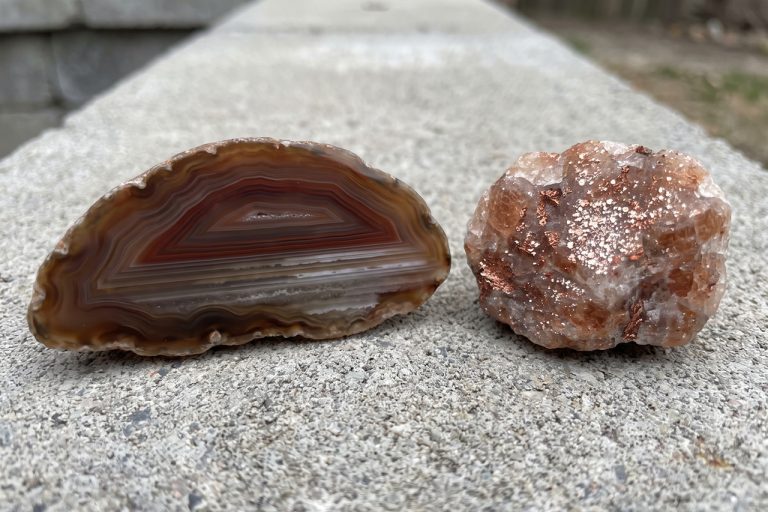
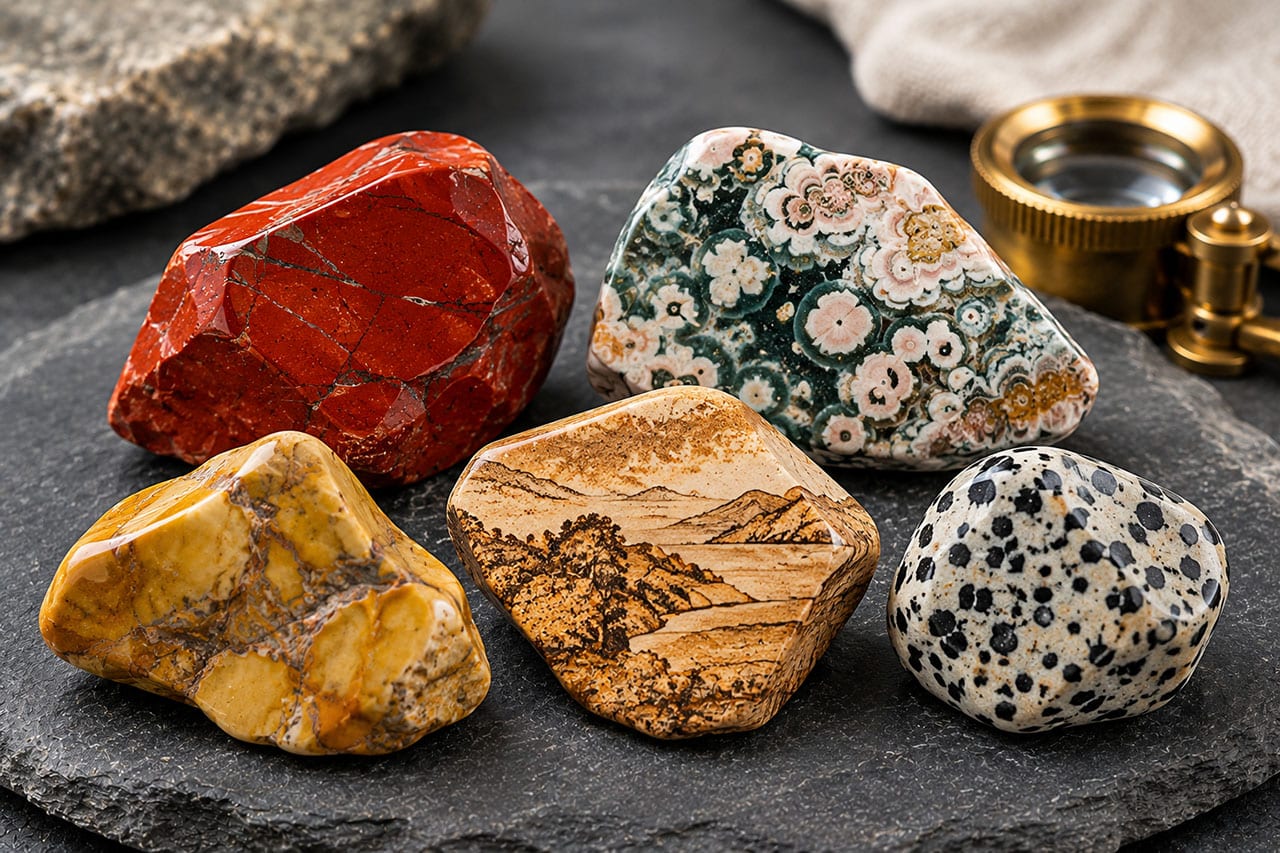
One thing in the chapter will not match what is in your hand. He opens it by calling jasper a green stone that is often translucent, still holding the reputation it had in the past. Green, and often translucent. What the crystal trade sells as jasper now is opaque, and Britannica gives its usual colour as brick red to brownish red, from hematite mixed through it. Britannica also notes that in ancient writings the name was chiefly applied to translucent and brightly coloured stones, particularly chalcedony, and only also to the opaque material we call jasper today. The word has moved, and any sentence about jasper being used for thousands of years is quietly leaning on that.
What crystal practice claims for it
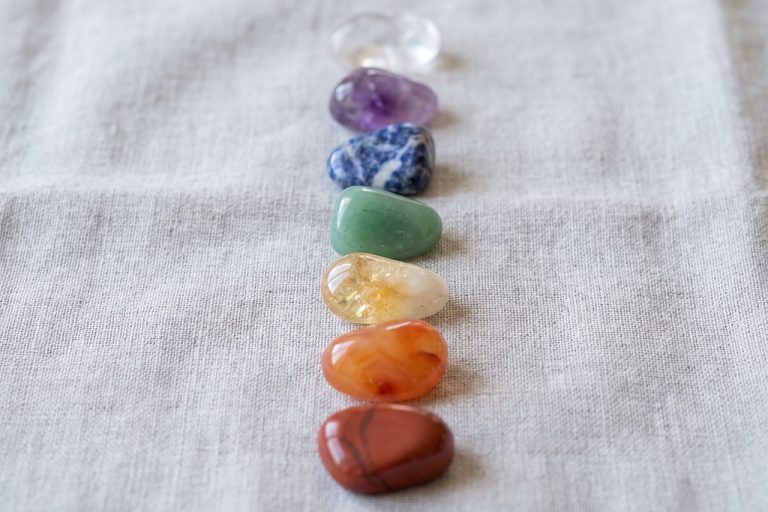
Crystal practice treats jasper as a family rather than as a stone, which is already a departure from Pliny, who was sorting one gem by shade. The character it gives the whole family is steadiness: grounding, physical stability, a slow and undramatic quality, and what the tradition describes as taking the edge off stress rather than transforming anything. Individual varieties then get their own assignments, mostly following colour, so the red ones go to the base of the spine and the yellow ones to the upper belly. All of that is a report of what the practice holds, and you can check it against any shop counter or any deck of cards you like. None of it is a statement about the mineral.
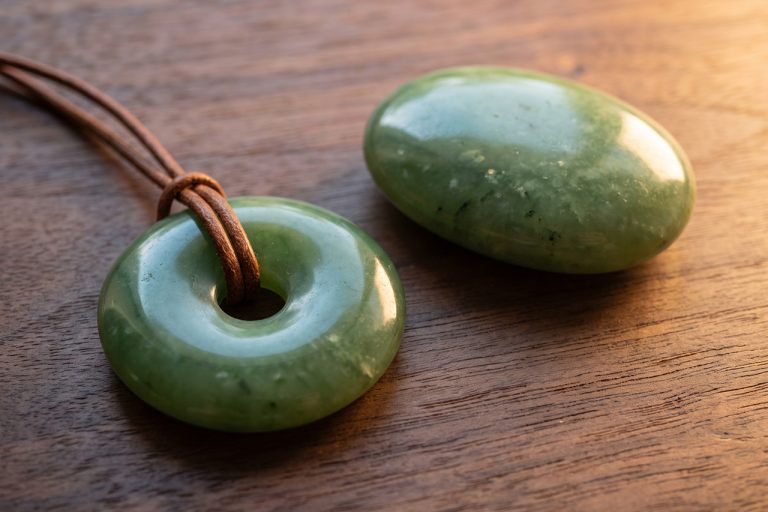
It is also a modern reading, and modern is not an insult. The ancient chapter above cannot be used to support it, because it is about a differently coloured stone with a different reputation and a different job. Where the two do line up is oddly specific. Pliny’s jasper was worn on the body, in a setting built to keep it visible. Yours is too.
Is it a healing stone, then
On the terms the question has, yes.
There is a long record of people wearing this material deliberately. There is also, from the earliest full account we have of it, an educated writer taking apart the reason he was given, and rather enjoying himself doing it. Neither of those has stopped the other. That is not a weakness in the answer, and it is not a debunking either. It is the shape the whole subject has had since AD 77, and it does not resolve.
That leaves what to do with a piece of jasper, and here the tradition asks for very little. There is one on my own shelf, display-sized but easy to pick up, a creamy freeform with dark golden-brown circles across it, cut flat at the base so it stands on its own. It came from an online dealer whose name I did not write down. It does nothing except get looked at, which is roughly what the people Pliny was describing were doing with theirs. For what jasper is made of, rather than what it has been asked to do, the jasper page is in the Mineral Library, and carnelian against red jasper explains why one of them glows and the other stays solid.
Liking a stone has always been a good enough reason to keep one.
Sources
- Pliny the Elder, Natural History 37.115 to 118, Eichholz translation, via attalus.org: “A green stone that is often translucent is the ‘iaspis'”; the localities and the sorting by shade rather than country; the open bezel setting; the defects and the glass counterfeit; the signets; “However, all the peoples of the East are said to wear them as amulets”; and the refutation of the Magi on public speakers.
- Britannica, jasper: jasper as an “opaque, fine-grained or dense variety of the silica mineral chert that exhibits various colours”, “chiefly brick red to brownish red” from admixed hematite, with a dull lustre that takes a fine polish; and the note that in ancient writings the term was “chiefly applied to translucent and brightly coloured stones, particularly chalcedony, but also was applied to the opaque jasper”.