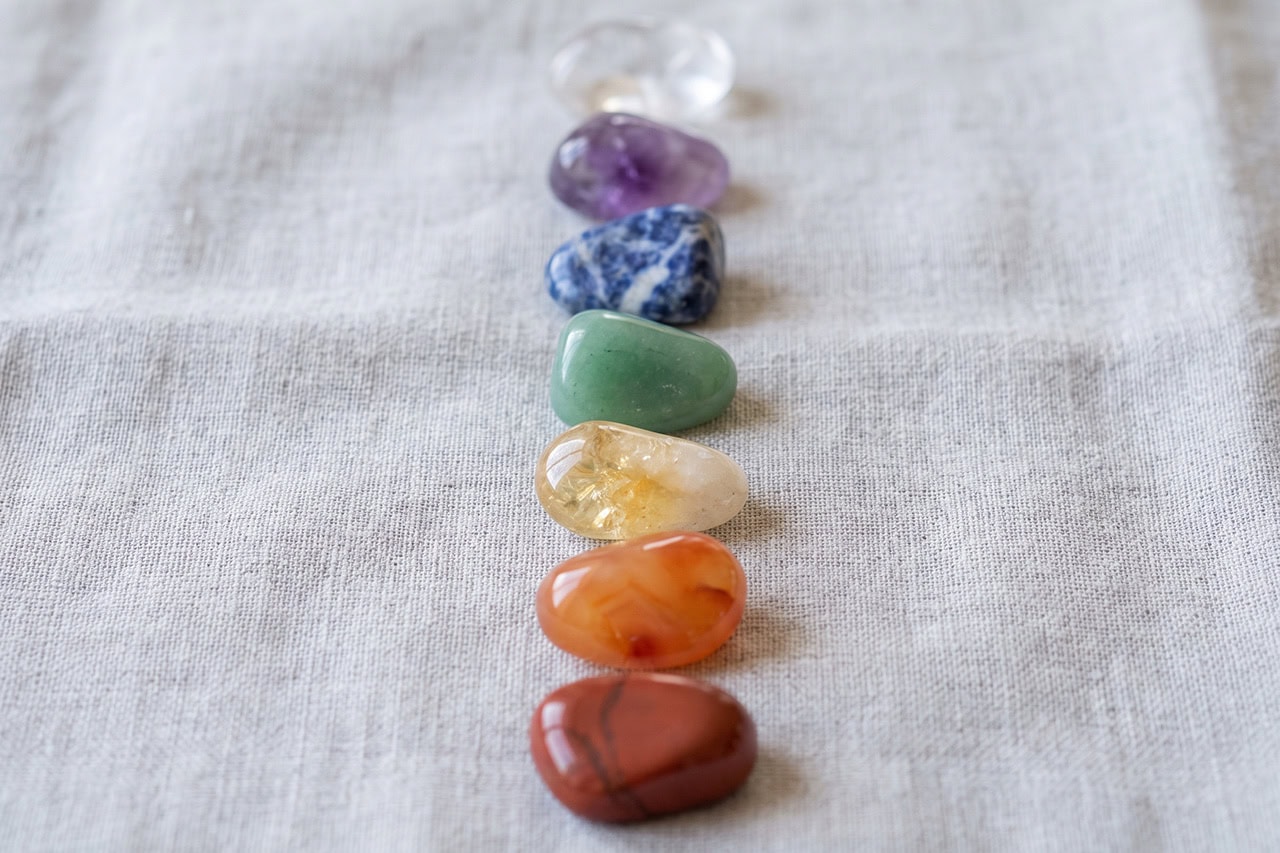
The 7 chakra stones are one crystal for each of the seven main chakras: red jasper for the root, carnelian for the sacral, citrine for the solar plexus, green aventurine for the heart, sodalite for the throat, amethyst for the third eye, and clear quartz for the crown. There are seven main chakras, so a standard chakra set has seven stones, each matched by colour and energy.
If you have seen those rows of coloured stones sold together as a set, that is exactly what they are: one stone per chakra, laid out in order. The colours run like a rainbow from bottom to top, red at the base to violet and white at the crown, which is the quickest way to remember the whole system.
There is no single official list, so you will see variations. But the seven below are the most common and the easiest to start with. Here they are, from the ground up.
The Seven Chakras and Their Stones
Each chakra is an energy centre associated with a part of the body and a part of life. The stone for each is usually matched to the chakra’s colour.
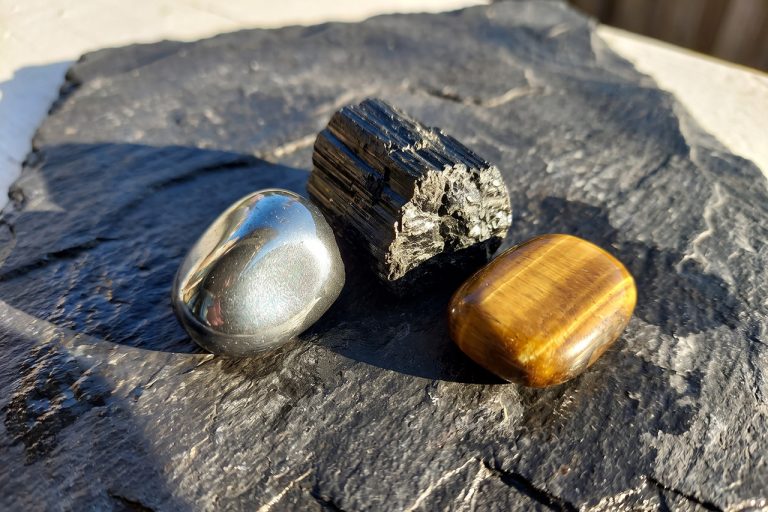
Root chakra: red jasper. At the base of the spine, the root chakra governs safety, stability, and feeling grounded. Red jasper is a steady, earthy red stone used for grounding and quiet strength. Other common choices are black tourmaline, hematite, and smoky quartz.
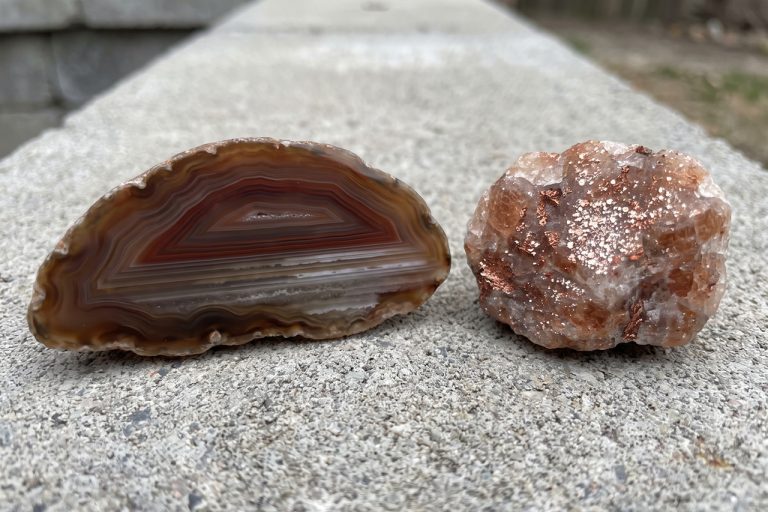
Sacral chakra: carnelian. Just below the navel, the sacral chakra governs creativity, pleasure, and drive. Warm orange carnelian is the classic match, associated with motivation and confidence. Orange calcite and sunstone also fit.
Solar plexus chakra: citrine. In the upper belly, the solar plexus governs personal power, willpower, and confidence. Golden citrine is the go-to, tied to optimism and self-assurance. Yellow calcite and tiger’s eye are alternatives.
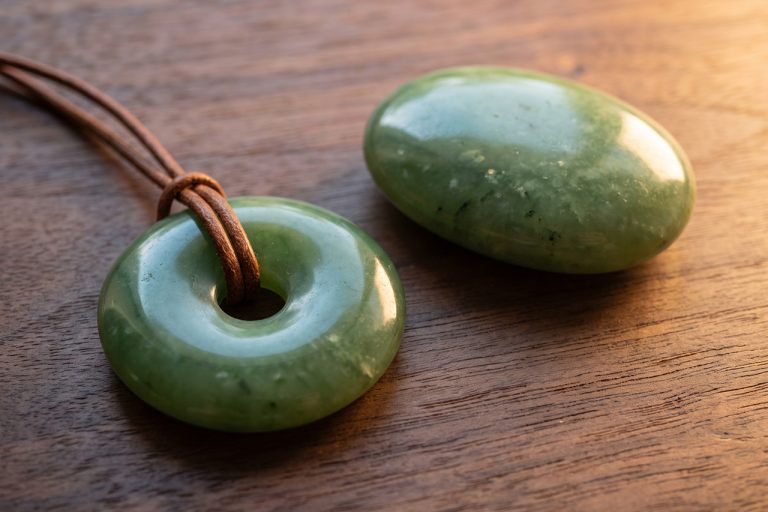
Heart chakra: green aventurine. At the centre of the chest, the heart chakra governs love, compassion, and emotional balance. Green aventurine is a gentle, lucky heart stone. Rose quartz is the equally popular pink alternative, and green calcite or jade also work.
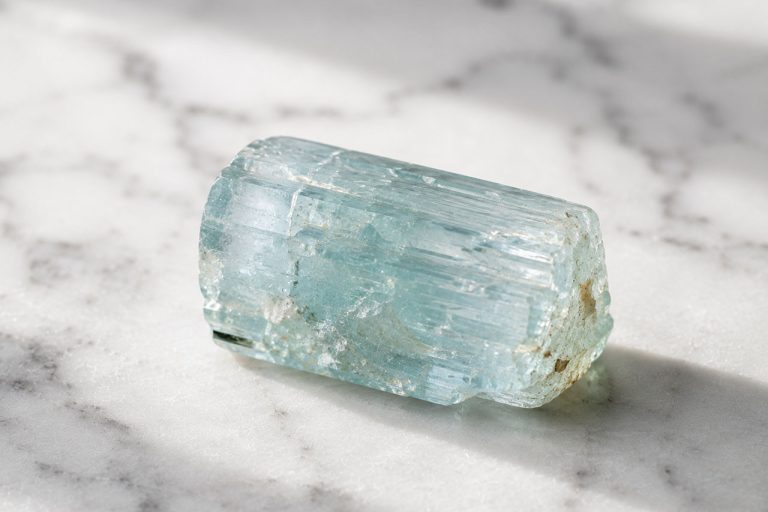
Throat chakra: sodalite. At the throat, this chakra governs communication and honest self-expression. Blue sodalite is a common choice, tied to clear, calm speech. Blue lace agate and aquamarine are gentler options.
Third eye chakra: amethyst. Between the brows, the third eye governs intuition, insight, and imagination. Purple amethyst is the classic match, associated with spiritual clarity. Lapis lazuli and fluorite also suit it.
Crown chakra: clear quartz. At the top of the head, the crown chakra governs awareness, connection, and higher consciousness. Clear quartz or amethyst is the usual choice, with selenite a popular white alternative for its luminous, clearing quality.
Why Seven, and Why These Colours
The seven-chakra system comes from older Indian spiritual traditions, where the chakras are energy centres running up the spine. Modern crystal practice mapped a colour to each one, then matched stones by colour, which is why a chakra set reads like a rainbow.
The logic is simple once you see it. Warm, grounding reds and oranges sit at the bottom, where the earthy, physical chakras are. Cool blues and purples sit at the top, where the mental and spiritual chakras are. Green, the colour of balance, sits in the middle at the heart. So the colour of a stone is usually a reliable clue to which chakra it belongs to.
That said, the matches are conventions, not laws. Plenty of stones work with more than one chakra, and different sources swap in different favourites. The set is a starting framework, not a rulebook.
How to Use a Set of Chakra Stones
Chakra stones are most often used together, in a simple lying-down practice.
-
The full layout. Lie on your back and place each stone on its matching part of the body, red jasper at the base, up to clear quartz above the crown, in order. Rest there for ten or fifteen minutes, breathing slowly. This is the classic chakra balancing practice.
-
One chakra at a time. If one area of life feels off, communication, say, or confidence, work with just that chakra’s stone. Carry it, hold it, or place it on the matching spot.
-
As a daily carry. Pick the stone for whatever you are working on that day and keep it in a pocket. It is a focused way to use the set without the full ritual.
-
On display in order. Many people simply keep the seven stones arranged as a set, as a reminder of the whole system and the areas of life it covers.
Common Questions About Chakra Stones
How many chakra stones are there? Seven, matching the seven main chakras, though some extended systems add more (an earth-star chakra below the feet, a soul-star above the head) and use additional stones for those. For almost everyone, seven is the working number.
What are the names of the 7 chakra stones? A standard set is red jasper, carnelian, citrine, green aventurine, sodalite, amethyst, and clear quartz. Rose quartz often replaces or joins green aventurine at the heart, and the exact line-up varies by seller.
Do I have to use those exact stones? No. Any stone of the right colour and matching associations works. The seven above are a common, affordable starting set, not the only valid one.
Which chakra stone should a beginner start with? Whichever chakra matches what you are working on. If you are not sure, clear quartz is the flexible all-rounder, and amethyst and rose quartz are gentle, forgiving places to begin.
For more on the individual stones, see the Crystalance Mineral Library. A chakra set is really a map of yourself in seven colours, and it is a genuinely useful way to think about where your attention needs to go.