
Setting an intention with a crystal means naming one clear aim, holding the stone while your attention rests on it, and coming back to it. The stone changes nothing in the world. It changes how consistently you hold the aim, and that is the whole point.
Set an intention on a piece of citrine and your bank balance does not move. Hold obsidian through a hard conversation and the person across the table does not soften. That is the plain floor of this practice, and it is not the disappointment it first sounds like. What shifts, when intention-setting works, is you. Attention paid to one clearly named aim, again and again, with a stone in your hand to make the returning easy, bends how you behave over weeks. That is the same machinery behind any goal you have ever managed to keep. The crystal does not open a second, magical channel. It gives you a good handle on the first one.
What it does, and what it doesn’t
The plain mechanism is not a downgrade, and it is the thing to be clear about before any how-to. Naming a specific intention and returning to it is a documented way to change behaviour. You decide what you are steering toward, you keep it in view, and being reminded of it at the right moments changes the small choices that add up. A physical object tied to that intention is one of the oldest ways humans have kept a thought in view. A wedding ring does it. A photograph on a desk does it. A stone in a pocket does the same.
Crystals happen to be very good at the job. They are pleasant to hold, they carry a lot of cultural weight, and each one comes with a lane of meaning already attached, which gives your attention somewhere specific to land. None of that requires the stone to emit anything. Whether you also feel something more in it is yours to keep, and this guide does not need to settle that question to be useful. The practical part works either way, and it is the part you can lean on.
The one thing the practice cannot do is the work. A stone will keep an intention in front of you. It will not finish the certification, have the conversation, or save the money. The rest of this is about doing the keeping-in-view part well, because that is the half a crystal genuinely helps with.
The stones people use
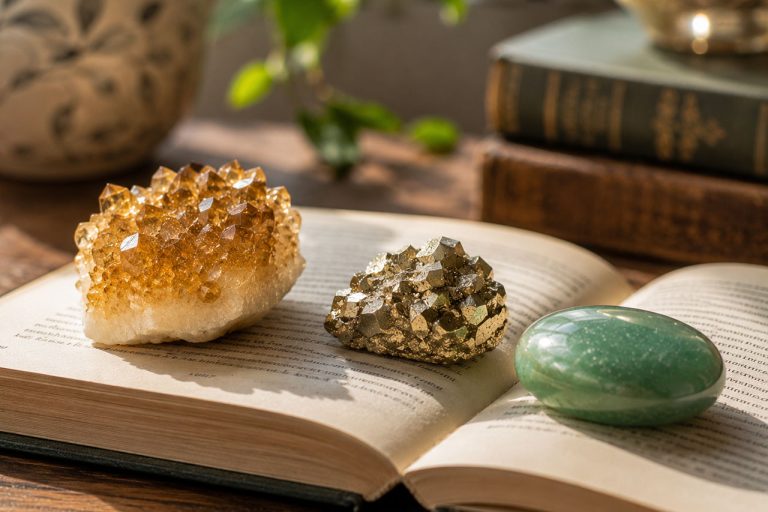
Most intention work clusters around a handful of stones, chosen for the lane of meaning each carries rather than for any measurable difference between them. Clear quartz is the blank one. It has no strong colour association of its own, so people use it when the intention is custom and they want a stone that takes whatever aim they give it. Citrine and pyrite hold the money-and-confidence lane, both trading on a warm metallic gold and the old link between gold and abundance.
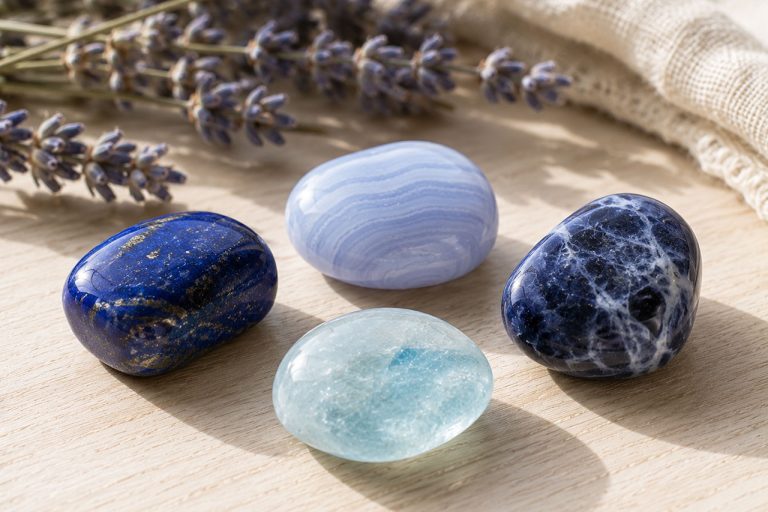
The rest sort by feel. Labradorite, with its blue flash surfacing and vanishing as you turn it, gets picked for intentions around change and creative work. Obsidian goes the other way, toward release and facing something hard, and it is not a crystal at all but a volcanic glass, lava cooled too fast to form a lattice, which is why raw pieces take a razor edge. Jade carries centuries of East Asian association with prosperity and steadiness. Amazonite, pale blue-green, gets reached for when the intention is to say a true or difficult thing. Pick the one whose lane matches your aim if you like, but the stone you respond to matters more than the correct match.
Doing it, and getting the words right
The practice itself takes about three minutes. Clean the stone if it feels right to mark a fresh start. Sit somewhere quiet, not formal meditation, just a real pause. Hold the stone, and state the intention, silently or aloud. Sit with both for a minute or two, no longer than stays natural. Then carry the stone or set it where you will pass it, so the intention gets renewed each time you notice it. Come back to the whole thing daily, or whenever the aim starts slipping out of view.
The part that repays attention is the wording, and it is the part most people get slightly wrong. State the intention in the present, as something already underway, not as a request filed with the universe. “I am building toward clearer, calmer conversations” gives your mind a state to step into now. “Please make me a better communicator” points at a distant fix and puts the doing somewhere outside you. Keep it short enough to hold in one breath, and phrased as a direction you are already facing rather than a fix you are requesting. The elaborations that get sold around this, lunar timing and set numbers of repetitions, are fine if they keep you engaged, and unnecessary if they do not. The plain version is the version that works.
None of this asks you to believe less or more than you already do. It asks you to name one thing, keep it in front of you with a stone that makes that easy, and put in the hours the thing needs. Held that way, intention-setting is one of the most genuinely useful practices in crystal work, which is why it sits underneath manifestation and much of the rest of the practice. If you want the geology sitting under the symbolism, each stone here has an entry in the Crystalance Mineral Library.