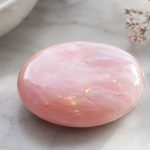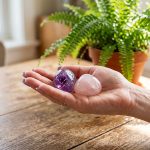
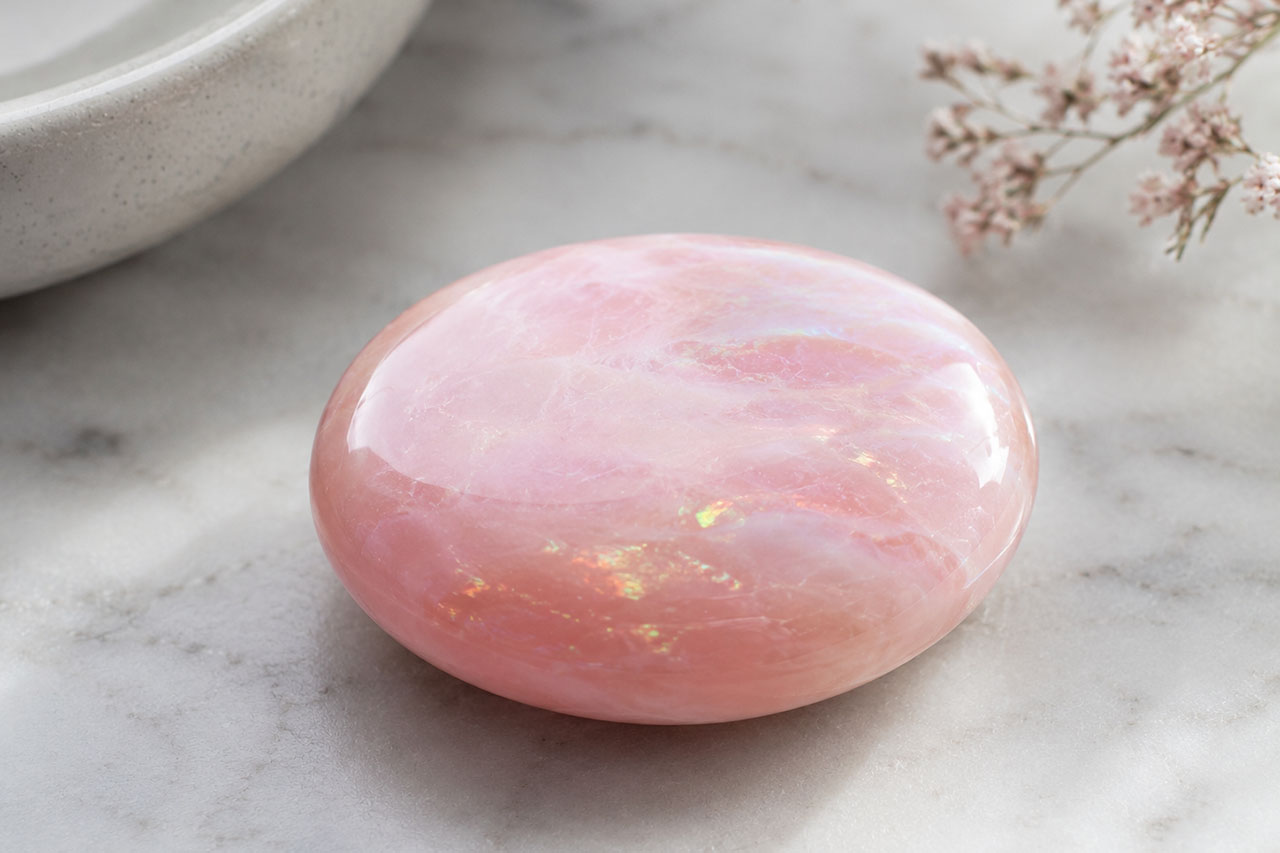
Pink opal symbolizes emotional healing, gentle renewal, and the quiet kind of hope that persists even when you’ve been through something difficult. It’s associated with the heart chakra and is one of the softer, more specifically nurturing stones in the opal family, less flashy than its play-of-color cousins, but more precisely useful for emotional work.
A lot of people discover pink opal when they’re going through something. That’s not coincidence. It has a specific reputation in crystal work for the kind of support that’s needed during recovery after loss, after heartbreak, after a period that left you more guarded than you want to be. It doesn’t demand strength from you. It meets you where you are.
Here’s what it actually does and why it has the reputation it does.
What Pink Opal Symbolizes
Pink opal’s symbolism clusters around a few related ideas.
Renewal. Opal as a family is associated with transformation and change, and pink opal specifically connects that to emotional renewal: the possibility of beginning again, of softening what has hardened, of returning to a more open relationship with life after something has closed you down.
Tenderness and self-compassion. Pink opal doesn’t push for healing to happen on a schedule. Its symbolism includes the patience to let yourself recover at the pace that’s actually natural rather than the pace that would be convenient. In the symbolic language of crystals, it represents the allowing of process rather than the forcing of outcomes.
Hope without naivety. This is the distinction that makes pink opal interesting. It’s not an optimism stone in the uncomplicated way that citrine is. It carries hope that has already encountered difficulty, which gives it a more grounded quality. The hope it represents has been tested.
Love in its quieter forms. Where rose quartz is associated with romantic love and the warmth of active relationship, pink opal is more associated with the underlying disposition toward love — the orientation of the heart that makes connection possible even when you’re not currently in the middle of it.
What Pink Opal Is Good For
Emotional healing after loss or heartbreak. Pink opal is one of the more specifically targeted crystals for the recovery period after significant emotional difficulty. Not for immediately bouncing back, but for the slower, more honest process of actually healing rather than just moving on.
Releasing anxiety held in the heart. Pink opal has a calming association that’s specific to heart-based anxiety: the worry that you won’t be loved, that you’re too much or not enough, that past experiences define what’s possible in the future. It works on that particular register of anxiety rather than the more cognitive or physical forms.
Children’s emotional wellbeing. Pink opal is one of the crystals occasionally recommended for children, given its gentle, non-overwhelming energy and its association with emotional safety and comfort. It’s softer in feeling than many protective or healing stones.
Insomnia related to emotional processing. Pink opal near the bed is sometimes suggested for the kind of sleeplessness that comes from unresolved emotional content surfacing at night. It’s gentler for this than amethyst in some cases, particularly when the emotional content is specifically grief or heartache.
Pink Opal vs. Rose Quartz
This comparison comes up often, and it’s worth being direct about the difference. Both are pink heart chakra stones with gentle, nurturing energy. But they have different registers.
Rose quartz is warmer, more expansive, and more outward-facing — it’s about love flowing both ways, warmth in relationship, the generous heart.
Pink opal is quieter, more inward, and more specifically about the recovery of emotional capacity after it’s been depleted or damaged. If rose quartz is the stone for love, pink opal is the stone for healing what made love difficult.
The two pair well together for comprehensive heart chakra work.
How to Use Pink Opal
As jewelry worn near the heart: A pink opal pendant is one of the more intentional placements for this stone, keeping its heart chakra energy in direct contact throughout the day.
Near the bed: For sleep-related emotional processing or for general comfort during difficult periods, placing pink opal on the nightstand or under the pillow uses its calming, gentle energy in a practical way.
Held in quiet moments: Pink opal rewards unhurried attention. Holding it during quiet reading, journaling, or simply sitting without agenda connects its energy to a state of receptive calm rather than active effort.
Paired with other stones: Pink opal and rose quartz is the most natural heart healing combination. Pink opal and amethyst addresses the emotional and mental dimensions of healing together. Pink opal and moonstone deepens the intuitive, emotionally receptive quality.
Common Questions About Pink Opal
What does pink opal symbolize?
Emotional renewal, gentle hope, self-compassion, and the quiet persistence of the open heart.
What chakra is pink opal?
Heart chakra, consistently and primarily.
Is pink opal the same as rose quartz?
No, they’re different minerals with related but distinct energies. Rose quartz is a variety of quartz. Pink opal is a hydrated silica mineral in the opal family. Their pink color is the visual similarity; their energy is complementary but not identical.
Can pink opal go in water?
With care. Opals contain water in their structure and extended soaking can cause cracking or crazing over time. Brief water contact is generally fine; prolonged soaking is not. Moonlight or sound cleansing is safer for regular maintenance.
Pink opal is for the part of healing that doesn’t want to be rushed. If you’ve been through something that made you wonder whether being open is worth it, this is the stone that quietly argues yes.
For a full profile of pink opal and the broader opal family, the Crystalance Mineral Library covers it in detail.