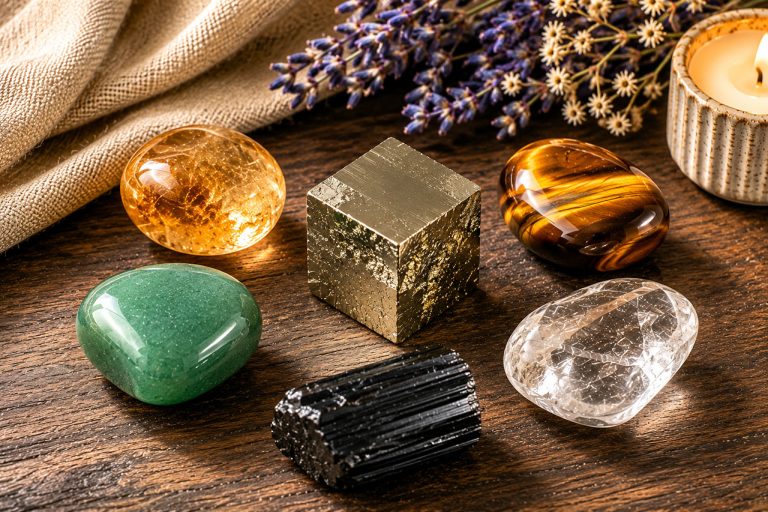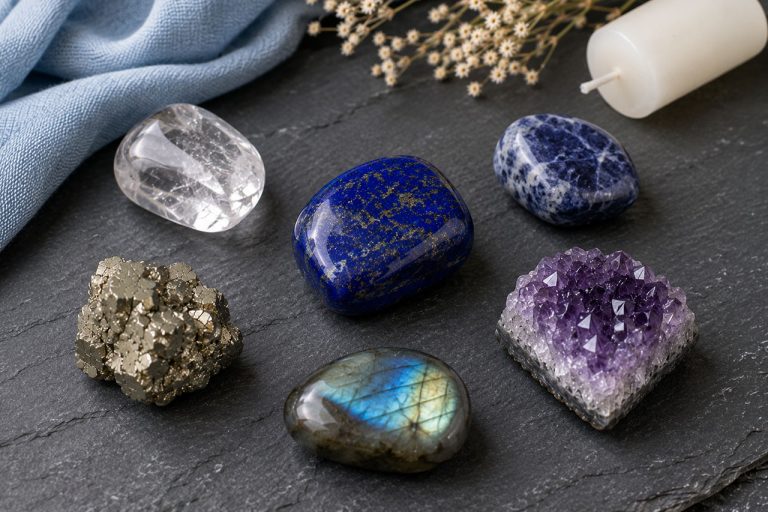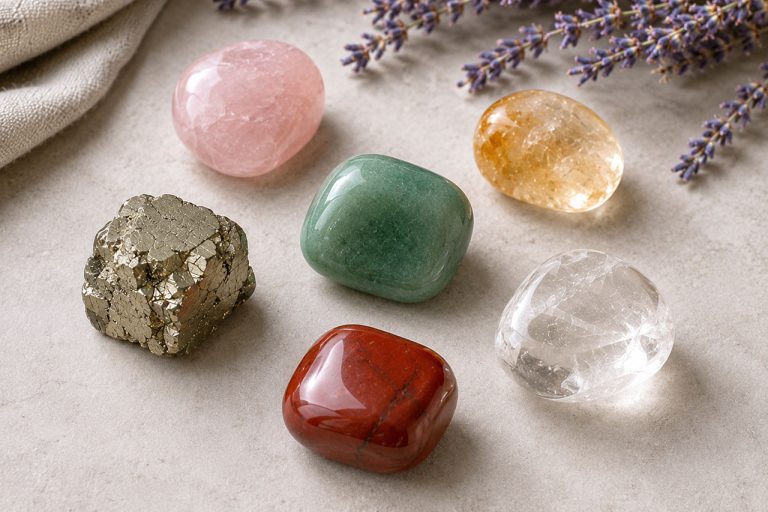
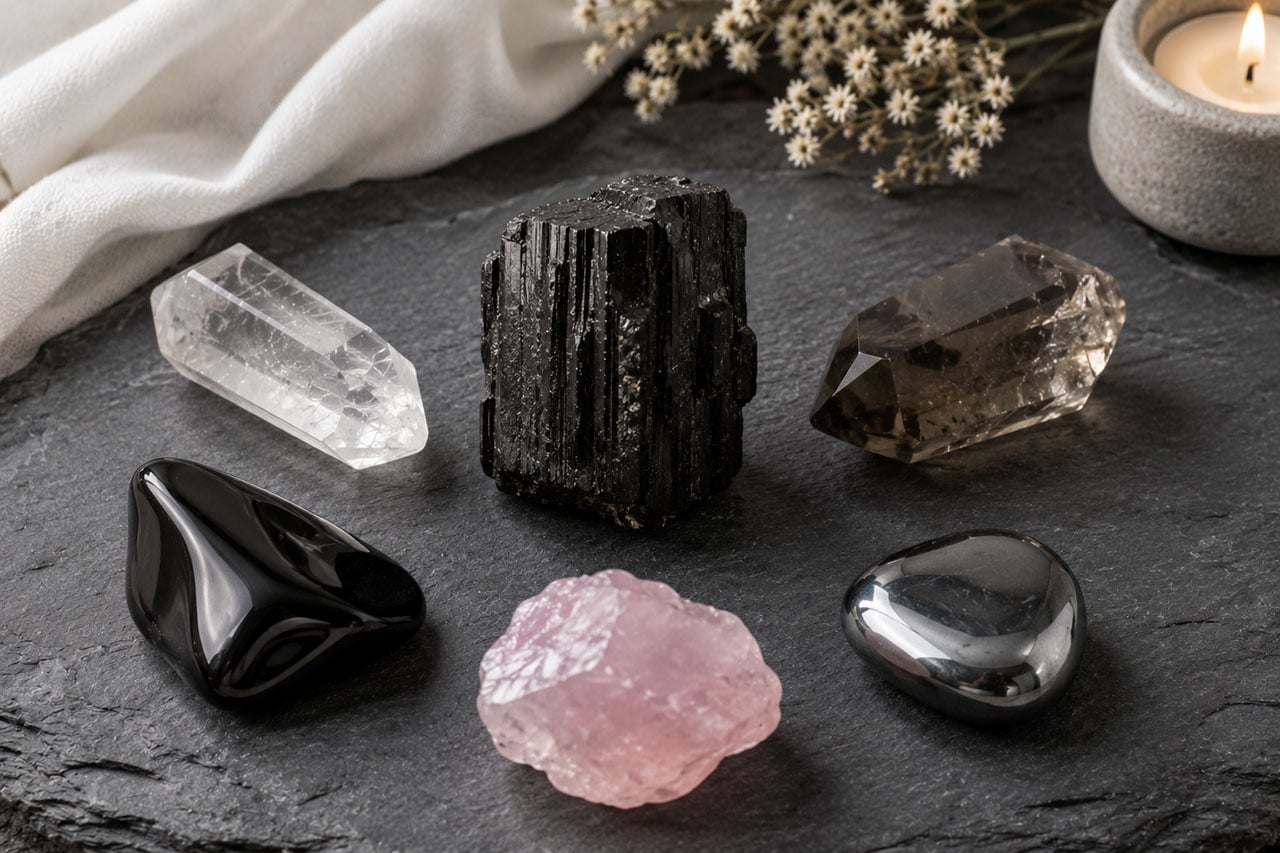
Black tourmaline pairs well with smoky quartz, hematite or clear quartz to reinforce its grounding and protection, and with rose quartz or amethyst to soften its heaviness. Every good partner does one of those two jobs, so start by deciding which one you need.
Black tourmaline has a single job in the tradition, grounding and protection, and that one job is what makes its pairings simple to read. A partner can only do two things next to it. It can turn that job up, or it can change how the job feels to live with. Reinforce, or warm. Almost every stone on a black tourmaline pairing chart is doing one or the other, which is why a list of eight options is really a choice between two directions.
The two directions are not competing, and one is not the advanced version of the other. They answer different questions. Reinforcing suits the stretch when you want the grounding as solid as it will go. Warming suits the room you live in, where a very dense stone in the corner can start to feel heavy. Decide which question is yours and the partner follows.
Reinforcing the wall
If the aim is to double down on grounding, the cleanest partner is smoky quartz. The tradition places both stones at the root, the energy centre it ties to stability and feeling physically safe, so together they read as noticeably anchored, and the pair is a sensible first thing to reach for when you feel scattered or unmoored. Hematite does something similar with its heavy metallic weight, adding a steady, focused quality to the same grounding, useful through a stretch where your attention keeps slipping.
Clear quartz belongs here too, and only here. Practice treats it as an amplifier that strengthens whatever sits beside it, so with black tourmaline it makes the protection more pronounced without changing its character, which is why the pair ends up near doorways and busy entrances. Obsidian is the heaviest option of the set, a volcanic glass the tradition reads as intense and revealing, and the piece of raw obsidian on my own shelf is a reminder to respect that literally as well as energetically, since its fractured edges are sharp enough to cut a careless hand. Pairing it with black tourmaline suits someone who genuinely wants that weight, but it is not a casual everyday combination. Start with short stretches and notice how it sits. If black tourmaline and obsidian is a pairing you keep coming back to, black obsidian versus black tourmaline sorts out what separates the two.
Warming the room
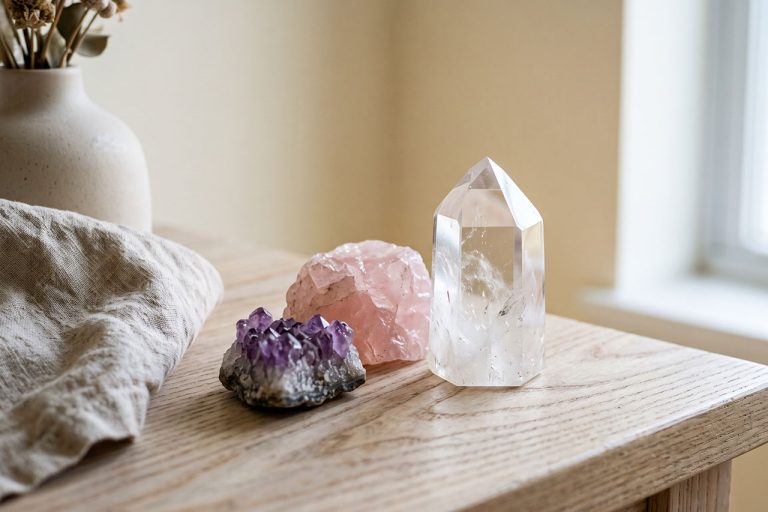
The other direction is about keeping the protection and losing the heaviness, and the partner for that is rose quartz. Practice reads it as gentle and heart-centred, so beside black tourmaline it takes the edge off what can otherwise feel like a very dense presence in a room, which is exactly why the pair is the common one for home placement. You get the grounding without the space feeling grim. Amethyst does a lighter version of the same job, laying a calm over the grounding, and it makes an easier worn pairing for anyone who wants a sense of protection they can carry all day without it weighing on them.
If you are new to black tourmaline and unsure how it will sit with you, the warming pairings are the gentler introduction. A tourmaline with rose quartz in your pocket asks a lot less of you than a tourmaline with obsidian.
What it is, and how to keep it
Black tourmaline’s real limitation is not the one the pairing charts warn about, and getting it right changes how you carry these combinations. The mineral is schorl, and by the Handbook of Mineralogy a single crystal is hardness 7, as hard as quartz, with fracture listed as uneven to conchoidal and tenacity as brittle. A clean single prism is genuinely tough. The catch is that most handful-sized raw pieces on a shop shelf are not single crystals. They are bundles of columns grown side by side, and what gives way is the join between columns rather than the mineral. The raw tourmaline on my shelf does just that: set it down on a hard surface and it leaves a scatter of black grit and the odd small chip, without any knock worth the name. Every fleck it sheds is itself hardness 7. Carry a smooth single crystal loose if you like, but treat a raw columnar piece more gently, and keep it out of a pouch where it can grind against softer stones.
Water is the other place the received advice runs ahead of the facts. Brief contact does the mineral no harm, since schorl is hardness 7 and not water-soluble, so a quick rinse is fine. Long soaks and salt water are worth avoiding as ordinary care, though that caution is really about the piece and its setting rather than anything specific to schorl, and there is no good source that singles the mineral out. The often-repeated line that tourmaline is sensitive to prolonged moisture is not something its mineralogy supports, and it looks more like copy passed from one crystal site to the next. For cleansing without any of that worry, moonlight, sound, or a rest on a selenite plate all do the job.
None of this changes the two directions. It just means the stone underneath them is tougher than the pairing charts claim and less troubled by water than they warn. Reinforce it or warm it, but decide which job you are asking for before you reach for a second stone. The Crystalance Mineral Library has the full profile of black tourmaline on its own when you want the background.