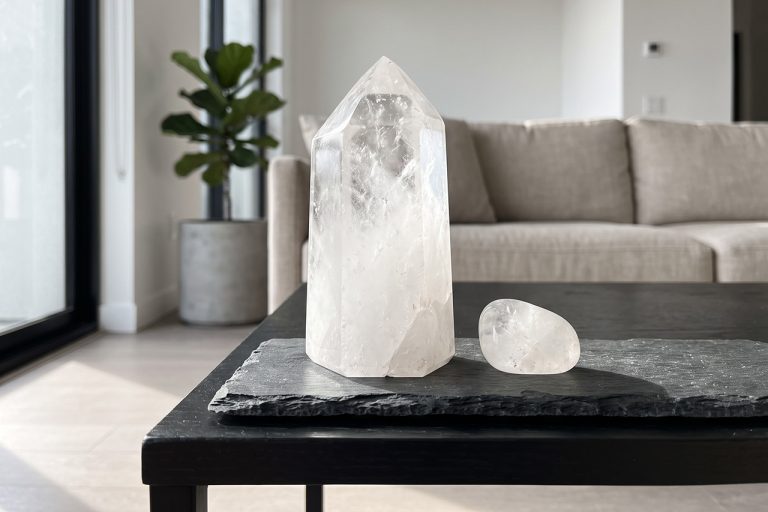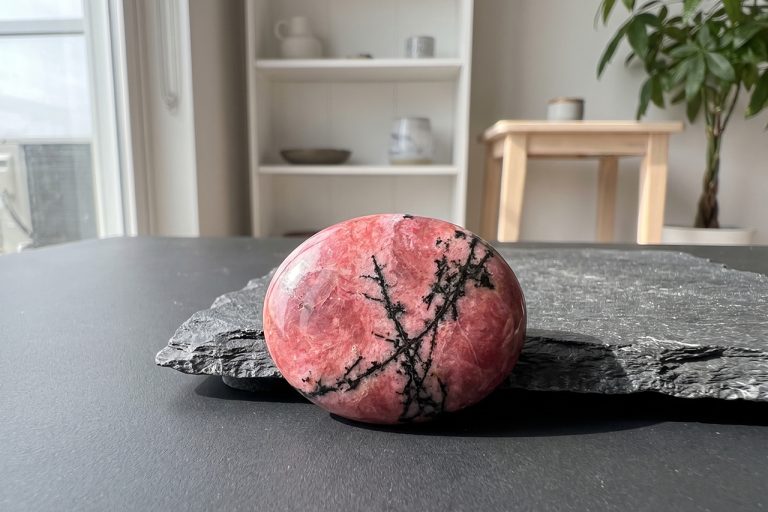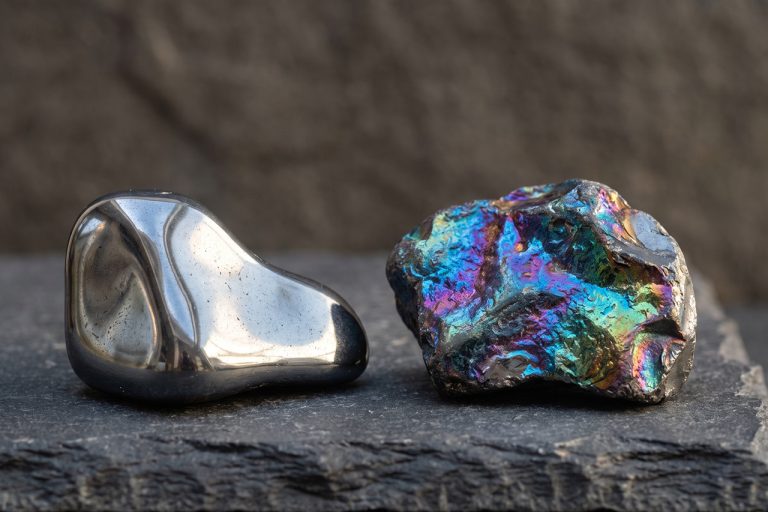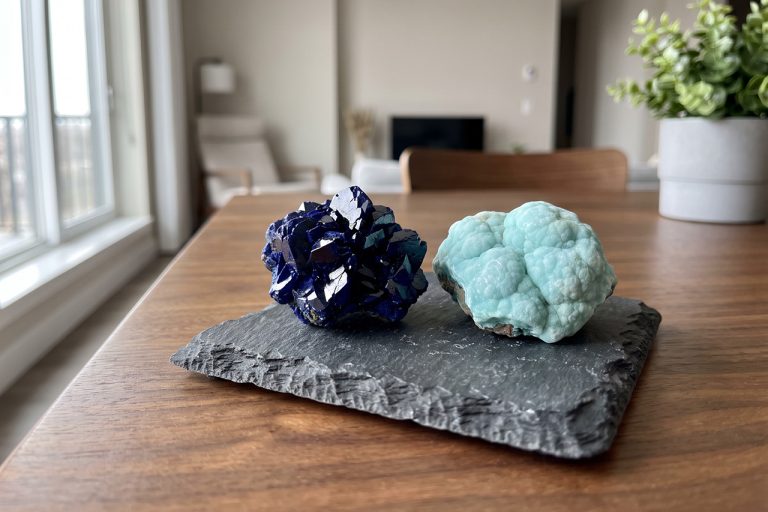
Baryte and graphite are minerals with entries in the international list. Amber is not on that list and has never been ruled on either way, which is different from being excluded. Mineral and rock are maintained by a commission. Mineraloid is not.
Every pencil mark is a streak test. The streak test is a piece of standard mineralogical procedure: drag the specimen across unglazed porcelain and read the colour of the powder it leaves, which is often steadier than the colour of the lump. The Handbook of Mineralogy gives graphite’s streak as “Black to steel-gray, shining” and its cleavage as “Perfect on {0001}”, meaning the sheets part cleanly in one direction and nowhere else.
Between them those two lines explain writing. A pencil is a mineral shedding layers onto a rough surface, and a page of handwriting is several thousand streak tests run without anybody thinking about it.
Sorting a specimen is that easy when the property and the category line up. Baryte and amber are harder, in two different directions.
Graphite, the mineral most people own without noticing
Graphite is carbon, and the Handbook records it as hexagonal in space group P63/mmc, noting a second stacking arrangement, the 3R polytype in space group R3m, which it marks as synthetic. Hardness 1 to 2, measured density 2.09 to 2.23, lustre metallic and sometimes dull or earthy, tenacity “Flexible but not elastic; sectile”, which is to say it bends and stays bent and a knife will pare it.
The USGS describes it as “a soft, crystalline form of carbon” that “exhibits the properties of a metal and a nonmetal”, conducting heat and electricity while staying chemically inert and heat resistant. It turns up, the same page says, “in metamorphic rocks such as marble, schist, and gneiss”.
Nothing about the classification is contested. Naturally occurring, formed by geological processes, one element, one arrangement of it. If a specimen came out of a schist in a lump, the lump is a mineral and the schist around it is a rock, and both statements can be made about the same object without either being wrong. That distinction, one substance against an aggregate of substances, is the part of this question that is answerable by looking.
Baryte, and the argument about how to spell it
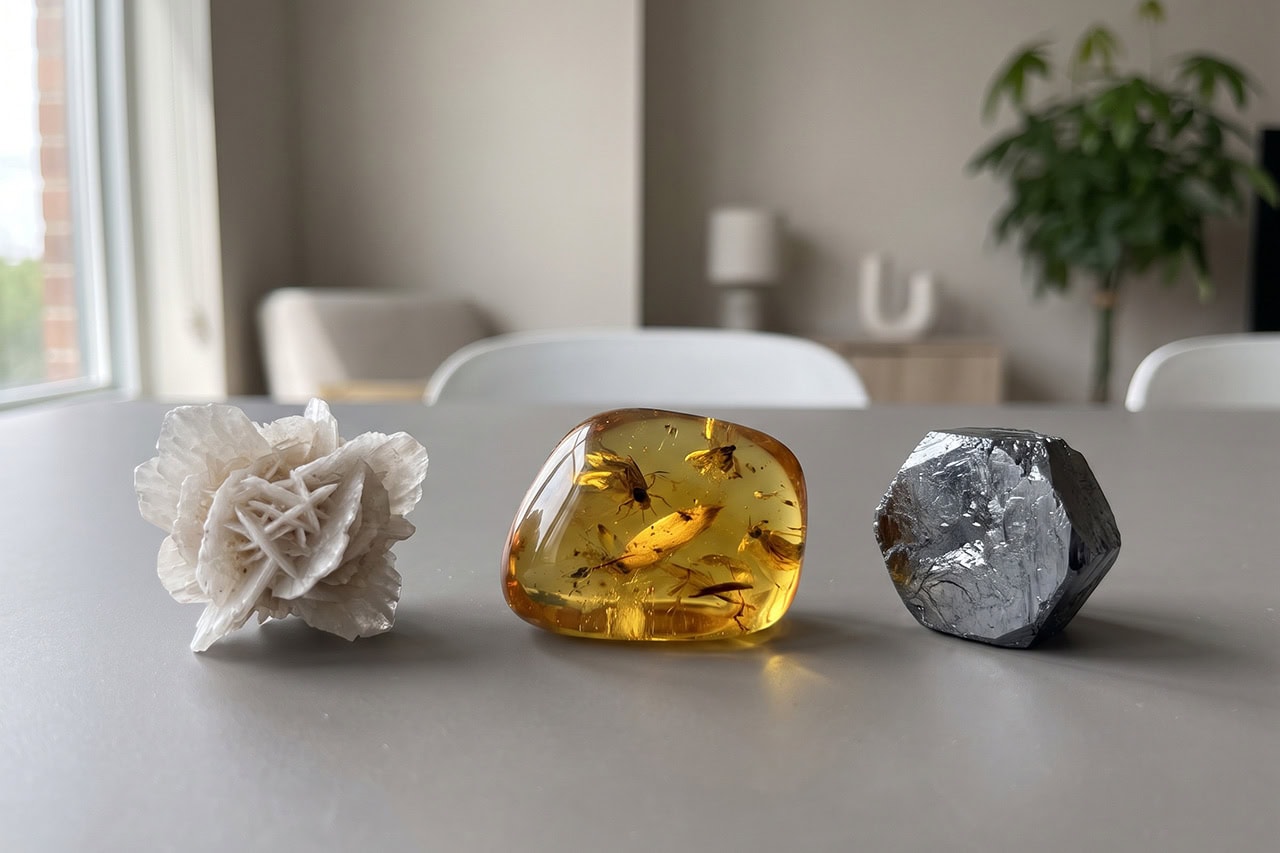
Baryte is barium sulfate. The Handbook prints the entry under the heading “Barite BaSO4” and gives it as orthorhombic in space group Pnma, hardness 3 to 3.5, measured density 4.50, habit “Commonly in well-formed crystals, to 85 cm” and also “As crested to rosettelike aggregates”. Occurrence is “A gangue mineral in low-temperature hydrothermal veins”, which means it is the material the ore came wrapped in.
The IMA-CNMNC master list of mineral names, the register the commission maintains, prints the species as baryte with the chemistry written Ba(SO4), and the RRUFF Project database does the same. The USGS prints barite, and adds an etymology while it is at it: the name “was derived from the Greek word ‘barus’ (heavy)”.
Both spellings are in current institutional use, in reference works that get consulted daily, and there is no version of this where one of them is a typo. Even the part of mineral naming that has a commission behind it carries two spellings for its heaviest common species.
The Greek word fits. Measured density 4.50 sits against quartz at 2.65, and dividing one by the other gives a factor of about 1.7, so a baryte specimen weighs close to seventy per cent more than a quartz one of the same size. That is enough to feel the moment you pick it up, and it is the fastest identification anybody makes on this species. Very little of the world’s production is looked at that closely: the USGS records that “Most barite is ground to a small, uniform size before it is used as a filler or extender, an addition to industrial products, or a weighting agent in petroleum well drilling mud”.
Amber, on which nobody has ruled
Amber is fossilised tree resin. GIA lists it under the flat heading “Organic, not mineral: Fossilized resin”, at a Mohs hardness of 2.0 to 2.5 and a specific gravity of 1.08. It also records one property no mineral in the drawer shares. “Amber is surprisingly light: in fact, it will float in a saturated salt solution.”
Its composition is where the trouble starts. The Getty’s account gives amber as “generally consists of around 79% carbon, 10% hydrogen, and 11% oxygen, with a trace of sulphur”. Round numbers with two hedges in front of them, adding to exactly a hundred with the sulphur left outside the sum. A mineral species is defined by a composition somebody can write down.
The next part is the one that gets stated wrongly. Amber does not appear in the IMA-CNMNC master list of mineral names. Not as approved, and not even as questionable, which is a status code the list does carry for poorly characterised species. It is simply absent, and absence from a list is not a ruling.
The commission’s own 1998 procedures document, written by Ernest Nickel and Joel Grice, says that “Amorphous substances are non-crystalline, and therefore do not meet the normal requirements for mineral species”, which sounds decisive until the next part, where it records that “in the past some amorphous substances (e.g., georgeite, calcio-uranoite) have been accepted as mineral species by the CNMMN”. A route exists, hedged. The basis for accepting an amorphous phase “could be” a series of complete quantitative chemical analyses “sufficient to reveal the homogeneous chemical composition of a substantial number of grains in the specimen”, together with “physicochemical data (normally spectroscopic) that prove the uniqueness of the phase”.
Whether amber could clear that bar is a reasonable question and an unanswered one, because nobody has taken it there. The same document does carry a rule that bears directly on fossilised tree resin, and it does not settle amber either. Purely biogenic substances “that have no geological counterparts, or whose origin owes essentially nothing to geological processes, are not regarded as minerals”. But “substances formed by the action of geological processes on organic material, such as the chemical compounds crystallized from organic matter in shale or from bat guano, can be accepted as minerals”. Resin buried for millions of years is organic material that geological processes have worked on, so the rule points both ways at once and nobody has been asked to decide which way it falls.
What can be said is that amber has never been submitted and never been ruled on. It sits outside the system, and that is not the same as having been thrown out of it.
The word with no keeper
Mineral has a commission, a list, a set of status codes and a published procedure for adding to it. Rock needs none of that, being a description of an aggregate anybody can apply by looking. The third word sits outside both arrangements.
In the whole of Nickel and Grice’s procedures document, the word mineraloid appears exactly once, in a sentence noting that “the term ‘mineraloid’ is sometimes applied to such substances”. Sometimes applied, by unnamed people, to a category the document has already described in other terms. The commission maintains no such classification. The word belongs to the textbook tradition, and the nomenclature document mentions it once and never uses it again.
A small green piece bought as moldavite, pointed and glassy and light enough to wear, came with its region of origin written down and the paperwork retained. It has no crystal faces on it anywhere. Look it up under all three words and two of them return nothing, while the third returns a maybe from a source with no authority behind it. The object is entirely real and the filing system runs out before it does.
Which word to reach for
Two questions about a specimen in a hand can be answered and one mostly cannot, and that is the practical position.
Whether the object is one substance or a mixture is the mineral-and-rock distinction, and it is usually visible: a graphite flake against the gneiss it came out of, a baryte crystal against the vein it grew in. Whether anybody has measured the substance and written it down is the second, and for a named species that means an entry with a formula and a crystal system in it.
Whether something counts as a mineraloid has no keeper, and the answer changes with whichever textbook is open. Nothing wrong with using the word. It is not a fact about the object.
That leaves the hand properties, and they do more work than the categories anyway. Graphite writes. Baryte is heavy in a way that surprises people every time. Amber floats where nothing else in the drawer would. Every one of those was noticed long before there was a list to put the material on, and they are still the fastest way to separate these three from the things they get confused with.
The Crystalance Mineral Library has a page for anything carrying a species name. Two of these three have one. Amber has a shelf full of jewellery, a Mohs figure, a specific gravity, a Greek name recorded by GIA, and no entry in the register that would settle the question people keep asking about it.
Sources
- Handbook of Mineralogy, graphite: carbon, hexagonal P63/mmc with the 3R polytype in R3m, hardness 1 to 2, measured density 2.09 to 2.23, streak “Black to steel-gray, shining”, cleavage perfect on {0001}, tenacity flexible but not elastic and sectile.
- USGS, graphite statistics and information, for graphite as “a soft, crystalline form of carbon”, its metal and nonmetal properties, and its occurrence in marble, schist and gneiss.
- Handbook of Mineralogy, baryte, printed under the heading “Barite BaSO4”: orthorhombic Pnma, hardness 3 to 3.5, measured density 4.50, crystals to 85 cm and crested to rosettelike aggregates, a gangue mineral in low-temperature hydrothermal veins.
- IMA-CNMNC master list of mineral names and the RRUFF Project database, both of which print the species as baryte with the chemistry Ba(SO4).
- Handbook of Mineralogy, quartz, for the measured density of 2.65 used in the comparison above.
- USGS, barite statistics and information, for the barite spelling, the derivation from the Greek “barus” meaning heavy, and the grinding of most production for fillers, extenders and drilling mud.
- GIA, amber, for “Organic, not mineral: Fossilized resin”, Mohs 2.0 to 2.5, specific gravity 1.08, and amber floating in a saturated salt solution.
- The Getty, “What Is Amber?”, for the composition of around 79 per cent carbon, 10 per cent hydrogen and 11 per cent oxygen with a trace of sulphur.
- Nickel, E.H. and Grice, J.D. (1998), “The IMA Commission on New Minerals and Mineral Names: Procedures and Guidelines on Mineral Nomenclature”, The Canadian Mineralogist 36, for amorphous substances not meeting the normal requirements, the acceptance of georgeite and calcio-uranoite, the qualified basis on which an amorphous phase could be accepted, the two rules on biogenic and geologically processed organic substances, and the single passing use of the word mineraloid.
- IMA-CNMNC master list of mineral names, maintained by the Commission on New Minerals, Nomenclature and Classification, for the status codes and for the absence of any amber entry.