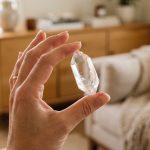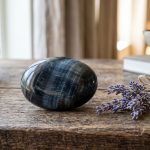
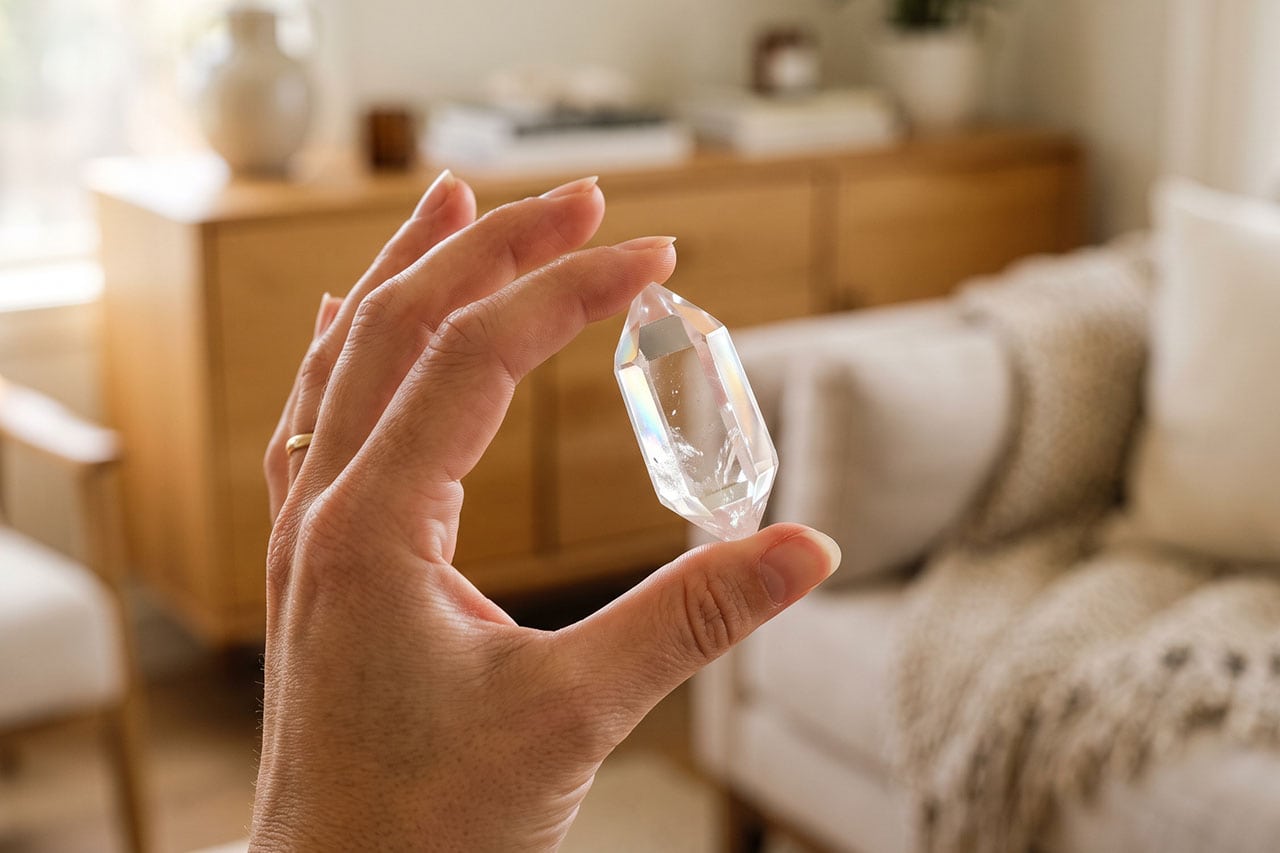
Start small. Pick one stone you like, name one specific intention, and hold it for a few minutes a day for a week or two. Clear quartz, rose quartz or amethyst are the usual first stones. Everything past that is elaboration you can add later.
The first practice is smaller than almost anything a crystal shop will sell you to begin with. You do not need a deck of cards, a lunar calendar, a chakra chart, or a starter kit in a wooden box. One stone and a couple of quiet minutes is the whole of it. The complexity turns useful later, once the basic thing is in place, but at the start it mostly gets in the way. It is also the reason a lot of people try crystals for a week, feel nothing dramatic, and quietly decide the idea is nonsense. The version below is built to respect your time.
Pick one stone
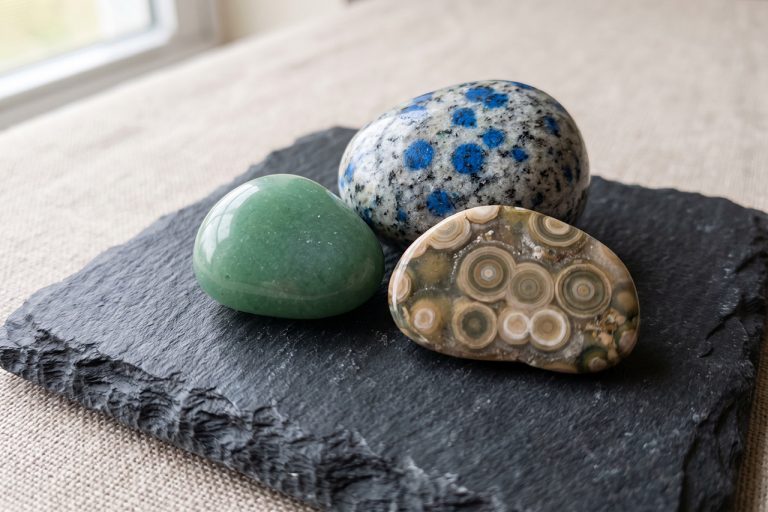
Three stones make good first choices, for slightly different temperaments.
Clear quartz is the all-rounder. It has no strong lane of its own, so it suits any intention, which makes it the right pick if you are not sure yet what you want to focus on. Easy to find and cheap, it is the low-risk way in. Rose quartz is the one to reach for if what drew you in has any gentleness or self-kindness in it. It is the most popular first stone by a distance, and the reason is that the lane it sits in, warmth toward yourself, is one almost everybody has some use for. Amethyst is the calm-and-quiet choice, the pale purple stone people gravitate to when they are coming at this from stress or from wanting a wind-down ritual in the evening.
Skip the elaborate beginner kits. A single small tumbled stone, the kind polished smooth and sized to sit in your palm, is enough to start. Expect to spend the price of a coffee, not the price of a dinner. A starter stone that costs a lot is usually priced for the packaging.
It helps to keep the expectations plain from the first purchase. The first stone catalogued in our own collection was a heavy amethyst geode, the size of a large mug, and it is a lovely object, but nobody needs anything like it to begin. A tumble you can close your hand around does the job better, because the practice is about handling the stone, not admiring it.
Name one intention, and make it specific
Be specific, because the vaguer the intention, the less it holds. “Good vibes” and “positive energy” do not anchor anything, since nothing about your day would ever count as them arriving or not. An intention that works reads more like a sentence someone could check. “I am building a steadier morning.” “I want to get through the next two weeks at work more calmly.” “I am letting myself accept help from the people around me.” Present tense, and narrow enough to picture.
State it to yourself once when you choose the stone, and then again each time you sit with it. The repetition is half of what the practice is. Holding a physical object while you name the intention gives the intention something to attach to, so it surfaces in your day more often than a resolution made once and left in your head. That is the ordinary machinery underneath crystal practice, and it is the same machinery behind any habit that sticks.
Build a small daily ritual
Five minutes a day for one to two weeks is enough to tell whether this works for you. The shape stays the same whichever stone and intention you chose.
Sit somewhere quiet for a minute or two. Not formal meditation, just a pause, at whatever time of day you can count on. Hold the stone, in your hand or your lap, because the tactile contact is part of it. Say the intention, silently or aloud, in the same words each time so it builds into a cue. Sit with it for two or three minutes, no longer than feels natural. Then carry the stone or leave it somewhere you will see it, a pocket or a bedside table, so every glance is a small reminder.
That is the entire thing. Do it daily for a week or two and notice what shifts, or does not. What you should not expect is anything dramatic or external. It will not change your bank balance, mend a relationship or fix your health, and anyone promising that is selling something. What consistent practice does produce is a small, real change in where your attention goes. The intention you have tied to the stone comes to mind more often, and coming to mind more often, it starts to shape small choices, and the small choices are what add up over months. Some people also feel an immediate response to a particular stone, a settling with amethyst, a warmth with rose quartz. If you feel it, work with it. If you do not, the practice still holds; that part just is not central for you.
If the practice has earned its place, you can build on it carefully. Add a second stone for a layered intention. Try a different form, a small point or sphere instead of a tumble, for a slightly different feel in the hand. Start reading about specific stones, which becomes interesting rather than overwhelming once you already have one you know how to use.
For the framework underneath all of it, see how to set intentions with crystals, and if you want a wider map of where to begin, the beginner’s guide to crystals covers the ground. For the stones themselves, the Crystalance Mineral Library keeps a plain entry on each one. The small practice, done steadily, builds something the elaborate practice done now and then never quite does. One stone, a few minutes a day. The rest follows from there.