
Morganite
Silicate (cyclosilicate); beryl group
Pale pink, rose, peach, salmon and orange-pink; sometimes purplish pink
Vitreous
7.5 - 8
2.80 - 2.91
Hexagonal
Brazil (Minas Gerais), Madagascar, USA (Pala district in California, Buckfield in Maine, Thomas Range in Utah), Afghanistan, Pakistan, Mozambique, Namibia, Zimbabwe, Russia, China
Uncommon; pale pink and peach stones are easy to buy, while a strong, saturated pink is rare and usually needs a large stone
Be₃Al₂Si₆O₁₈ (beryllium aluminium silicate)
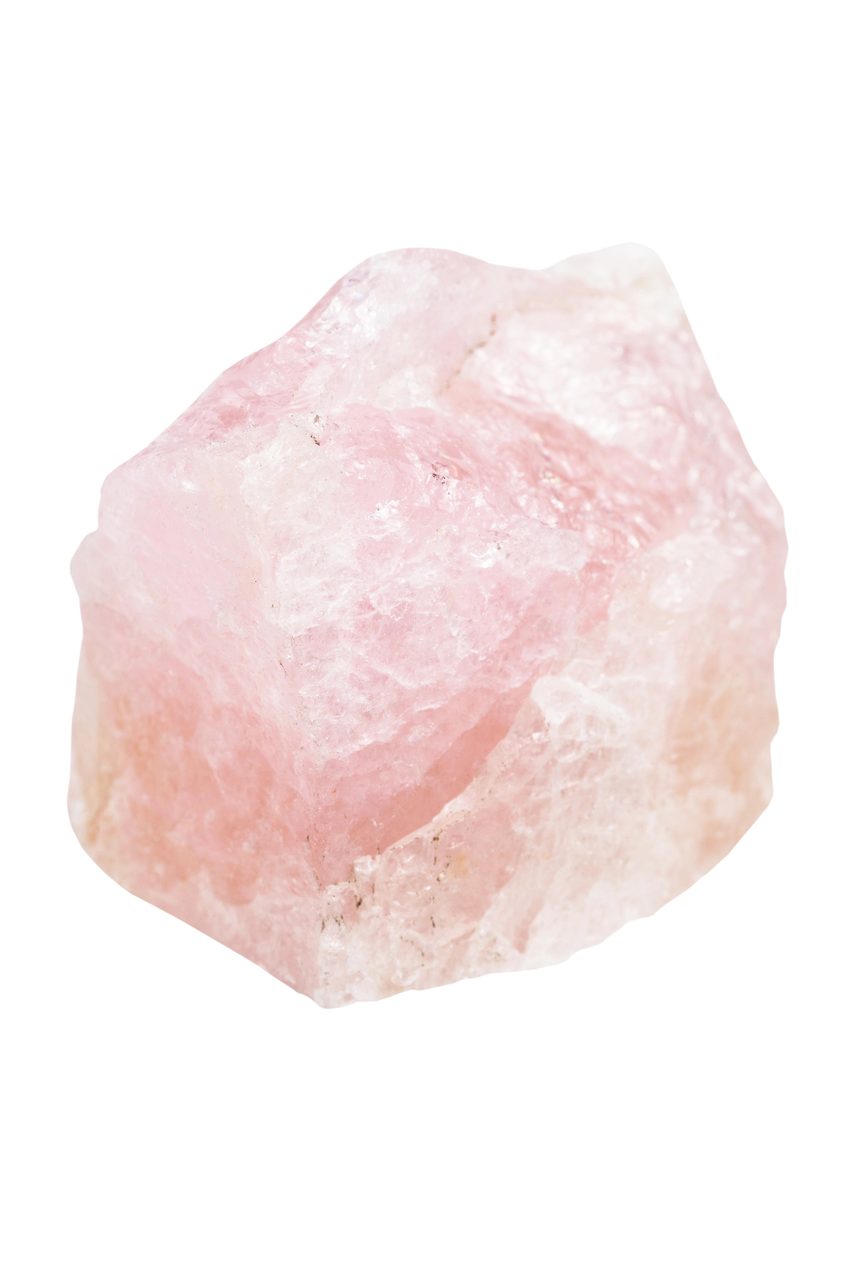
Morganite is pink beryl. It is the same mineral as emerald and aquamarine, and its soft pink to peach colour comes from small amounts of manganese in the crystal.
In 1910 fine pink beryl turned up at a new locality in Madagascar, and on 5 December that year the gemmologist George Frederick Kunz proposed calling it morganite at a meeting of the New York Academy of Sciences. GIA records that he chose the name to honour J.P. Morgan, the financier, who was his friend and customer and had given gems to the American Museum of Natural History in New York and the natural history museum in Paris. Kunz was Tiffany's chief gemmologist and had assembled part of Morgan's collection. Pink beryl was also coming out of the pegmatites around Pala in San Diego County, the same district that had given Kunz his own stone, kunzite, a few years earlier.
Most morganite sold today, GIA says, comes from pegmatite mines in Minas Gerais, Brazil, and a good share of it has been gently heated to clear away a yellow or orange tint. It is cut into large, clean stones and set in engagement rings, often in rose gold.
Crystal practice treats morganite as a heart stone and gives it gentle, patient love and compassion.
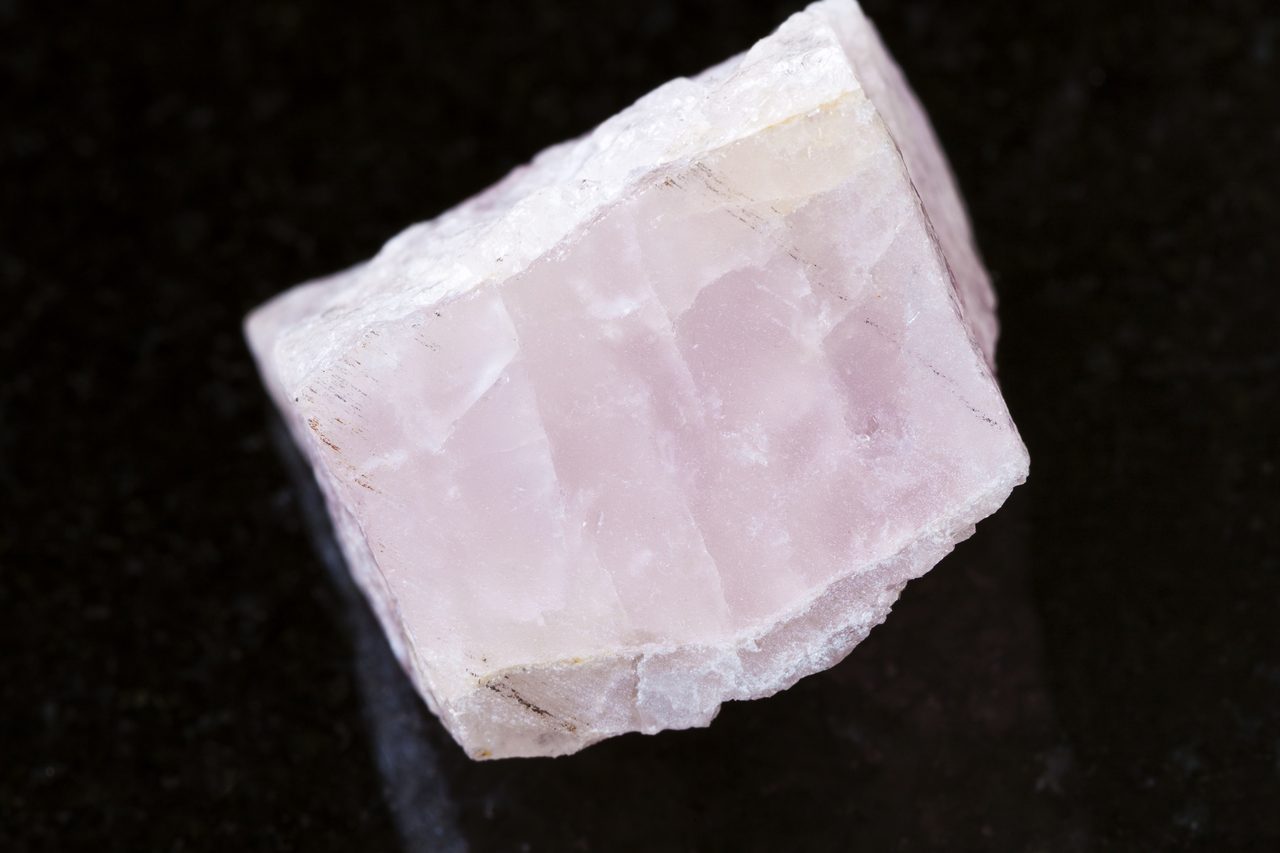
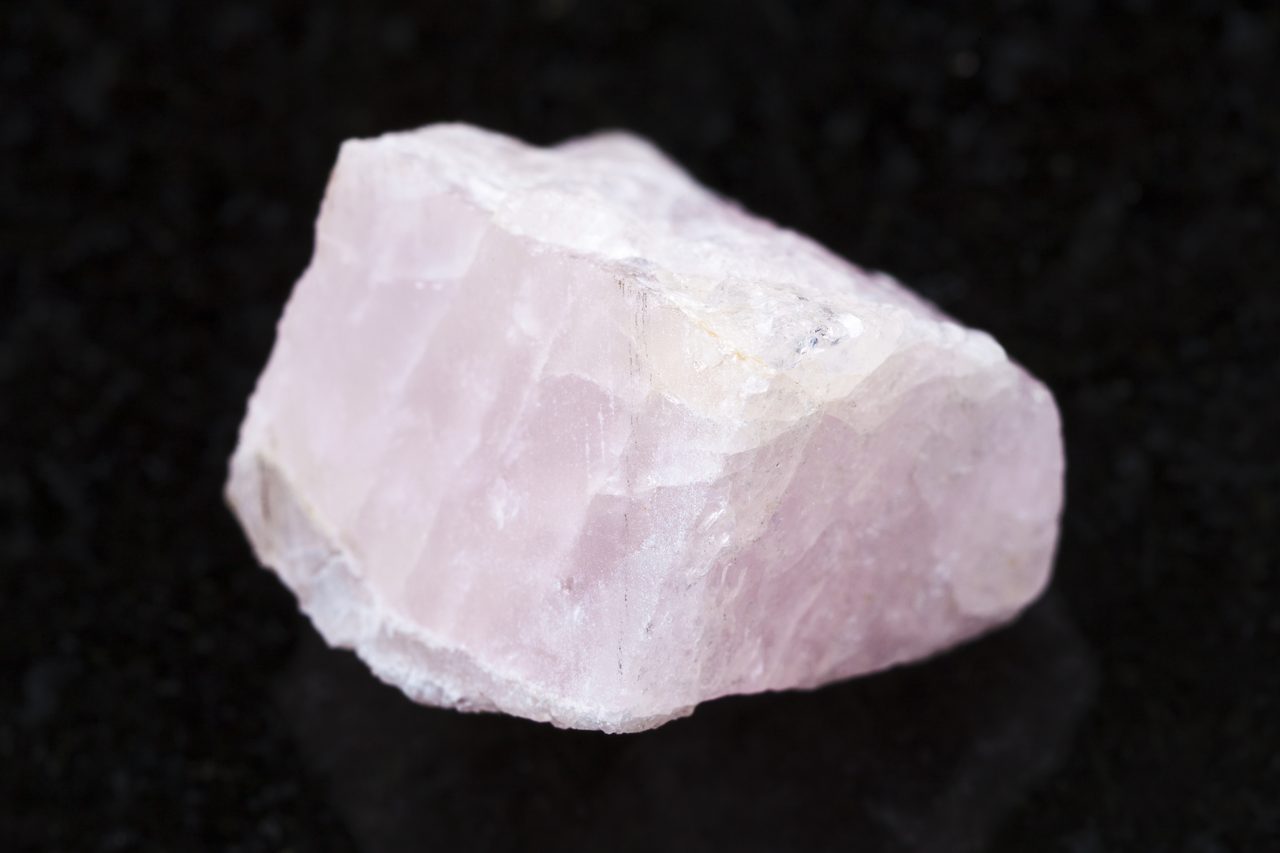
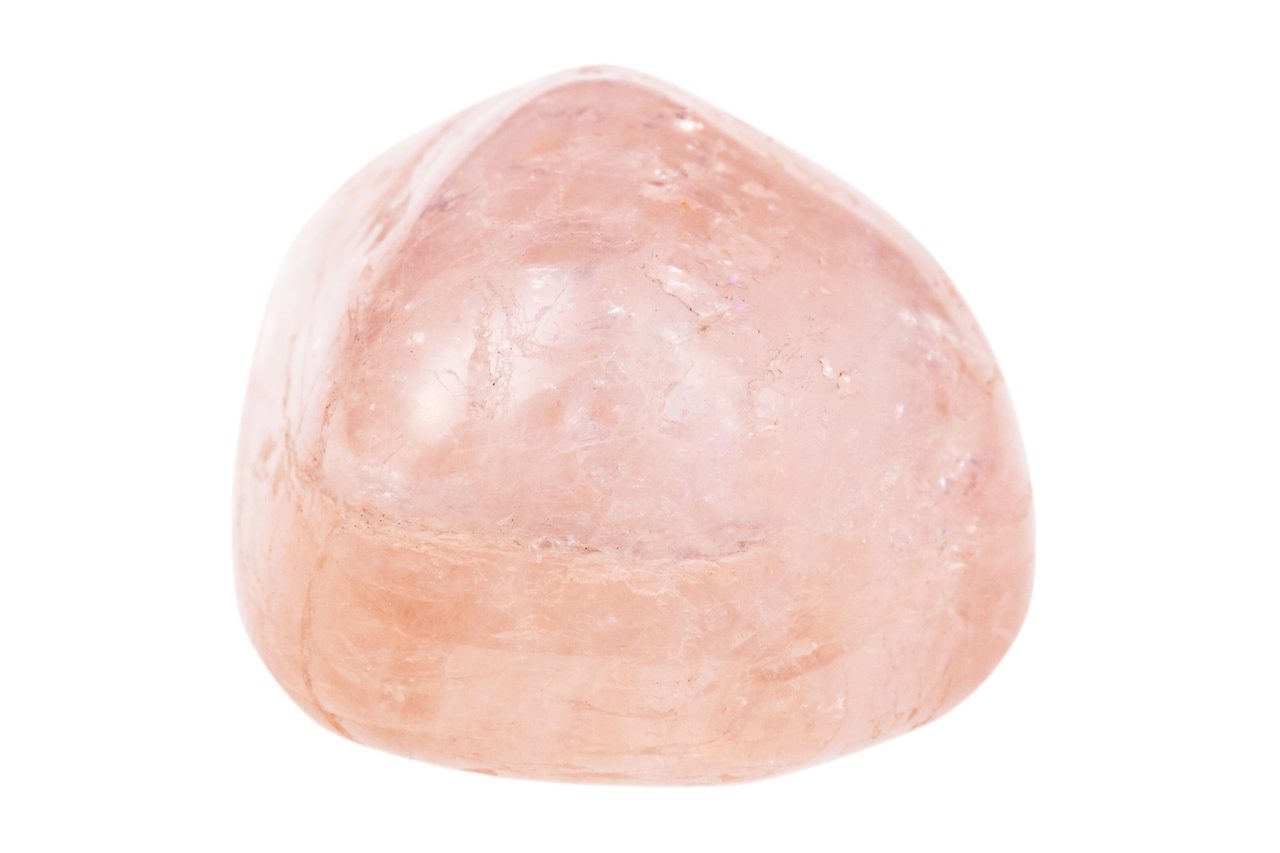
TABLE OF CONTENTS
Properties & Qualities
Physical Properties
A beryl with manganese. Morganite has beryl's formula and structure, which it shares with emerald, aquamarine, heliodor and colourless goshenite. GIA puts its pink down to traces of manganese, and spectroscopy work presented at the 2023 International Gemmological Conference ties the colour to manganese in two oxidation states, Mn²⁺ and Mn³⁺. It rates 7.5 to 8 on the Mohs scale. The Handbook of Mineralogy gives beryl only imperfect cleavage across the prism and a conchoidal fracture, and describes it as brittle.
Pink, peach and the cutter's angle. Untreated morganite often has a strong orange component, GIA notes, which gives it a salmon colour. The International Gem Society adds that morganite is never dark. It is strongly pleochroic, showing pale pink in one direction and a deeper bluish pink in another, so cutters orient the rough with care, and light crystals are sometimes cut a little deep to bring out more colour.
Optics, weight and inclusions. GIA gives morganite a refractive index of 1.583 to 1.590, with low double refraction, and a specific gravity of 2.80 to 2.91. The Handbook of Mineralogy notes that both figures rise in beryl with its alkali content, and morganite, which often carries caesium, sits towards the heavy end of beryl's range. Its inclusions are usually small pockets of liquid with a gas bubble, and GIA notes that most faceted morganite shows none to the eye.
Heat and light. The International Gem Society explains that heat and light remove the yellow component from peach beryl, so morganite is often heated to make it pinker, and occasionally irradiated. Gübelin notes that this low-temperature heating is often impossible for a laboratory to detect. GIA describes morganite's colour as stable in light, but the International Gem Society warns that the colour of irradiated stones fades.
Large crystals. Morganite grows in pegmatites, the coarse granite bodies where rare elements gather, and its crystals are usually flatter than aquamarine's. GIA reports Brazilian crystals weighing up to 10 kilograms, and the Smithsonian holds two cut gems of 236 and 250 carats. On 7 October 1989, Ron and Dennis Holden opened a pocket at the Bennett Quarry in Buckfield, Maine, and found the "Rose of Maine", an orangish crystal about 30 centimetres across that weighed just over 50 pounds. A second large crystal from the same pocket went to the Maine State Museum.
The Madagascar standard. GIA describes the magenta rough from the first Madagascar deposit as the colour standard for morganite, although Madagascar is only a minor producer today. Brazil is the main source now, with mines such as Serra do Urucum at Galileia.
Kunz's X-ray test. Kunz noticed that morganite gave off an intense red glow under X-rays, which stopped the moment the source was switched off.
Metaphysical properties
Morganite is a stone of tender, unhurried love. Practitioners call it a stone of divine love, a phrase for the kind of affection that asks nothing back, and they hand it to people who find it easier to give care than to receive it.
Its place is the heart chakra, at the centre of the chest, which practice links with love, compassion and forgiveness. Some practitioners place it at the higher heart as well, a point between the heart and the throat that they connect with speaking kindly. Gentleness and self-worth are the themes practitioners return to with it.
Its soft colour shapes the reading. Practitioners see it as a quieter heart stone than ruby or rhodochrosite, suited to slow repair after a hard season, when someone needs reassurance more than excitement. The pale peach material gets the same meaning, with some practitioners adding warmth and comfort to it.
Practice also links morganite with new relationships and with commitment, which fits its place in engagement rings. Our guide to the best crystals for love sets it beside the other stones used for the same work.
Meaning & Symbolism
Physical meaning
Morganite's pink is light, and it only deepens in a large crystal. Practitioners take that as a lesson about the heart, whose warmth builds slowly and shows best when there is room for it. They also turn it into advice not to judge a feeling by its first, faint showing.
Faceted morganite is usually clean to the eye, unlike its heavily included cousin emerald, and practice reads that clarity as openness, a stone with nothing to hide.
A peach crystal warmed gently loses its orange and turns pink, and practitioners treat this as a picture of what patience and kindness can do to a guarded person. They are careful to add that the peach stones are not lesser stones. The warmer colour is simply read as comfort where the pink is read as tenderness.
Turn the stone and its colour shifts from pale pink to a deeper bluish pink. Practitioners read that shift as a lesson about people, who also look different depending on where you stand.
Spiritual meaning
On the spiritual side, morganite belongs to unconditional love. It is kept by people who want to love others without keeping score, and by people learning to accept love without feeling they must earn it first.
The name helps. Morganite honours a friendship between a gemmologist and a collector, and a gift of gems made to museums so that the public could see them. Practitioners who know the story read the stone as a symbol of generosity, of giving what is precious so that others can enjoy it.
Practice also ties it to commitment and to vows of every kind, between partners, between friends, or made quietly to oneself. Some keep a piece on a home altar beside a photograph of someone they love.
In prayer and reflection, morganite is described as a stone that softens judgement, so a person can look at their own mistakes and other people's with more mercy. Some keep it for the end of the day, when there is time to look back over it.
Healing Benefits
Physical healing
Healing practices with morganite belong to crystal tradition and energy work, and they are not a substitute for medical care.
Practitioners associate it with the heart, the chest and the breath, and with the tight shoulders that come from carrying worry for a long time. These links are symbolic, drawn from its colour and its place at the heart chakra.
In practice a piece is laid on the chest during rest or slow breathing. Chest pain, breathlessness and anything else physical belong with a doctor.
Emotional healing
Practitioners reach for morganite after a breakup, a falling-out or a loss, when a person feels raw and wants comfort that does not push. Heartache is its main emotional work.
It is also kept for harsh self-talk, the inner voice that keeps a list of every mistake. Practice treats morganite as a stone that turns that voice down a little, so a person can speak to themselves the way they would speak to a friend.
People who give and give, the carers, the peacemakers and the ones who always say yes, are given it as a reminder that their own needs count. Some wear it as a pendant close to the heart during a hard week, or keep a piece in a coat pocket to hold during a difficult conversation.
Practitioners hope for quiet from it. A sore heart that feels safe can start to open again, and that matters more to them than any lift in mood.
Spiritual healing
When someone in meditation feels closed off or numb, practitioners put morganite on the heart.
One layout puts a morganite on the centre of the chest and a piece of rose quartz on each side, with the person lying still for several minutes. Some picture a soft pink light spreading outward from the stone with every breath, until it fills the chest and reaches the arms and hands. Others repeat a short phrase of kindness, first for themselves, then for someone close, and finally for someone they find hard to love.
Forgiveness work uses it too. Some practitioners hold the stone while thinking of an old hurt and simply let the memory sit there without judging it. Some end the session by writing down one small, kind thing they mean to do for that person, or for themselves, in the coming week. Afterwards the stone goes down on a soft cloth, and the person stays still for a breath or two before getting up.
Use & Care
How to use
- On the heart: Lay a piece on the centre of your chest while you rest or breathe slowly.
- As a pendant: Wear it on a chain long enough for the stone to sit near the heart.
- In a ring: Morganite is hard enough for a ring, but a protective setting keeps its edges safe from knocks.
- In a pocket: Carry a tumbled piece to hold during a difficult conversation.
- By the bed: Keep a stone on the bedside table after a breakup or a loss.
- On an altar: Set it beside a photograph of someone you love.
- In meditation: Hold it in your open palm during a loving-kindness practice. Our guide to meditating with crystals covers the basics.
- With a journal: Rest it on the page while you write about something you need to forgive.
- In a grid: Put morganite at the centre of a heart grid with rose quartz around it.
- As a gift: Give it to mark an engagement, an anniversary or a new friendship. Our guide to crystals that make good gifts has more ideas.
- As a display piece: Stand a crystal on a shelf you pass every morning.
How to cleanse
- Warm soapy water: GIA and the International Gem Society both call warm water, mild soap and a soft brush safe. Rinse well and dry with a soft cloth.
- Running water: Hold a tumble or rough piece under the tap for a minute.
- Ultrasonic and steam, with care: GIA says these are usually safe, but not for stones with liquid inclusions or fractures. Have a jeweller check the stone first.
- Filled stones: GIA notes that morganite is rarely fracture-filled. A filled stone should only ever see warm, soapy water.
- No heat: GIA advises keeping morganite away from heat, so skip hot water baths and hair dryers.
- Smoke: Pass it slowly through incense or herb smoke.
- Sound: Strike a singing bowl or tuning fork near it and let the note fade. Our guide to cleansing crystals with words and sound explains the method.
- Moonlight: Leave it on a windowsill on a clear night and bring it in at breakfast.
- Selenite plate: Rest it on a selenite plate for a few hours.
- Breath: Hold it close and breathe on it gently, a quick method practitioners use between sessions.
How to charge
- Morning light: Give it a short spell of morning sun on a sill. Our article on charging crystals through a window covers whether the glass matters.
- Keep it short: Heated morganite is stable in light, but irradiated stones can fade, so keep sun sessions brief if you do not know a stone's history.
- Full moon: Leave it by an open curtain on the night of a full moon.
- With rose quartz: Rest it in a bowl of rose quartz tumbles for a few hours.
- Next to quartz: Rest it beside a clear quartz cluster overnight.
- With intention: Hold it in both hands and name someone, yourself included, you want to treat more kindly.
- Sound: Play a soft chime or singing bowl near it for a few minutes.
- Grid: Place it in the centre of a ring of pink stones.
- Visualisation: Picture the stone filling with a gentle pink light until it glows.
Combining with other stones
- Rose quartz: The classic heart pairing, used to double the gentleness. See Quartz (Rose).
- Kunzite: Another pink pegmatite gem from Pala, paired for open-hearted love. See Kunzite.
- Aquamarine: Its blue beryl sibling, paired so that a loving heart can also speak clearly. See Aquamarine.
- Emerald: A green beryl and heart stone, added for loyalty in love. See Emerald.
- Heliodor: The golden beryl, paired when love needs confidence beside it. See Heliodor.
- Lepidolite: A lithium mica from the same pegmatites, used for calm. See Lepidolite.
- Watermelon tourmaline: Pink and green in one crystal, and a pocket companion of morganite, paired for balance. See Tourmaline (Watermelon).
- Rhodonite: A pink heart stone used for forgiveness work. See Rhodonite.
- Moonstone: Paired for tenderness and emotional calm. See Moonstone.
- Clear quartz: Added to amplify morganite in a layout or grid. See Quartz (Clear).
Identification
Can be mistaken for
- Kunzite: The closest pink look-alike. GIA gives kunzite a higher refractive index (1.660 to 1.676) and a specific gravity of 3.18, and it has two cleavage directions. See Kunzite.
- Pink topaz: Noticeably heavier in the hand. GIA lists topaz at a specific gravity of 3.53, with a refractive index of 1.619 to 1.627. See Topaz.
- Pink tourmaline: A gemmologist spots it by its double refraction, which GIA puts far above beryl's, along with a higher refractive index.
- Pink sapphire: Harder and much heavier than morganite, and a gemmologist separates the two at once on a refractometer. See Sapphire.
- Pink spinel: GIA lists spinel as singly refractive, with a refractive index of 1.718, so it never changes colour as it turns the way morganite does.
- Rose quartz: Usually milky rather than clear, and softer. Faceted transparent rose quartz is rare. See Quartz (Rose).
- Pezzottaite: Raspberry crystals found in Madagascar in 2002 were sold as "raspberry beryl", but Gems & Gemology described them as a new caesium-rich mineral, with a higher refractive index and specific gravity than beryl.
- Goshenite: The International Gem Society warns that near-colourless beryl is sometimes sold as morganite. It should be called goshenite.
How to spot a fake
- Ask about lab-grown stones: The International Gem Society notes that hydrothermally grown synthetic morganite is sold as a jewellery stone. Only a gemmological laboratory can confirm which is which.
- Check the name: "Pink emerald" is a misleading name for morganite, the International Gem Society says. A seller who uses it may use other loose names too.
- Watch for colourless stones: A stone with barely any pink should be sold as goshenite, not morganite.
- Ask about treatment: Heating is routine and often undetectable, so assume a pink stone may be heated. Ask directly whether it has been irradiated or fracture-filled. Our guide to what sellers rarely say about treatments explains the terms.
- Question bargain colour: GIA describes strong pink as rare, usually seen only in larger stones. A small, cheap stone with deep raspberry colour deserves a second look.
- Look for pleochroism: Turn a loose stone under a white light. Natural morganite shifts between pale pink and a bluish pink, while glass shows one colour from every side.
- Look inside: Use a loupe. Round gas bubbles and swirl marks point to glass, while morganite's inclusions are more often tiny liquid pockets.
- Ask for a locality: A dealer who knows the stone can usually name the country, and often the mine.
- Get it tested: For a valuable stone, ask for a report from a recognised laboratory, which can separate morganite from its look-alikes and from synthetics.
Sources: GIA, Morganite description; GIA, Morganite history and lore; GIA, Morganite care and cleaning; GIA, Morganite; Handbook of Mineralogy, Beryl; International Gem Society, Morganite value, price and jewelry information; Gübelin, Morganite; Irradiation treatment and gamma-ray spectroscopy of morganite, 37th International Gemmological Conference, Tokyo 2023; Laurs, B.M. et al. (2003), Pezzottaite from Ambatovita, Madagascar: A new gem mineral, Gems & Gemology 39 (4); U.S. Bureau of Mines, Minerals Yearbook 1990, Maine; GIA gem pages for kunzite, topaz, tourmaline and spinel.