
Spinel
Oxide (spinel group, Strunz 4.BB.05)
Red, pink, orange, purple, violet, blue, bluish green, grey and black; colourless is very rare, and natural pure green or yellow is practically unknown
Vitreous
7.5 - 8
3.55 - 3.63 for gem spinel, reaching 3.90 in the dark iron-rich kinds
Cubic (isometric); octahedral crystals, often twinned on the spinel law
Myanmar (Mogok), Sri Lanka, Tajikistan (Kuh-i-Lal, Pamir Mountains), Afghanistan, Vietnam (Luc Yen), Tanzania (Mahenge), Madagascar (Ilakaka) and Pakistan; found on every continent, Antarctica included
Widespread as a mineral, scarce as fine gem rough; the best red, pink and blue stones become hard to find, and much dearer, above 5 carats
MgAl₂O₄ (magnesium aluminium oxide)
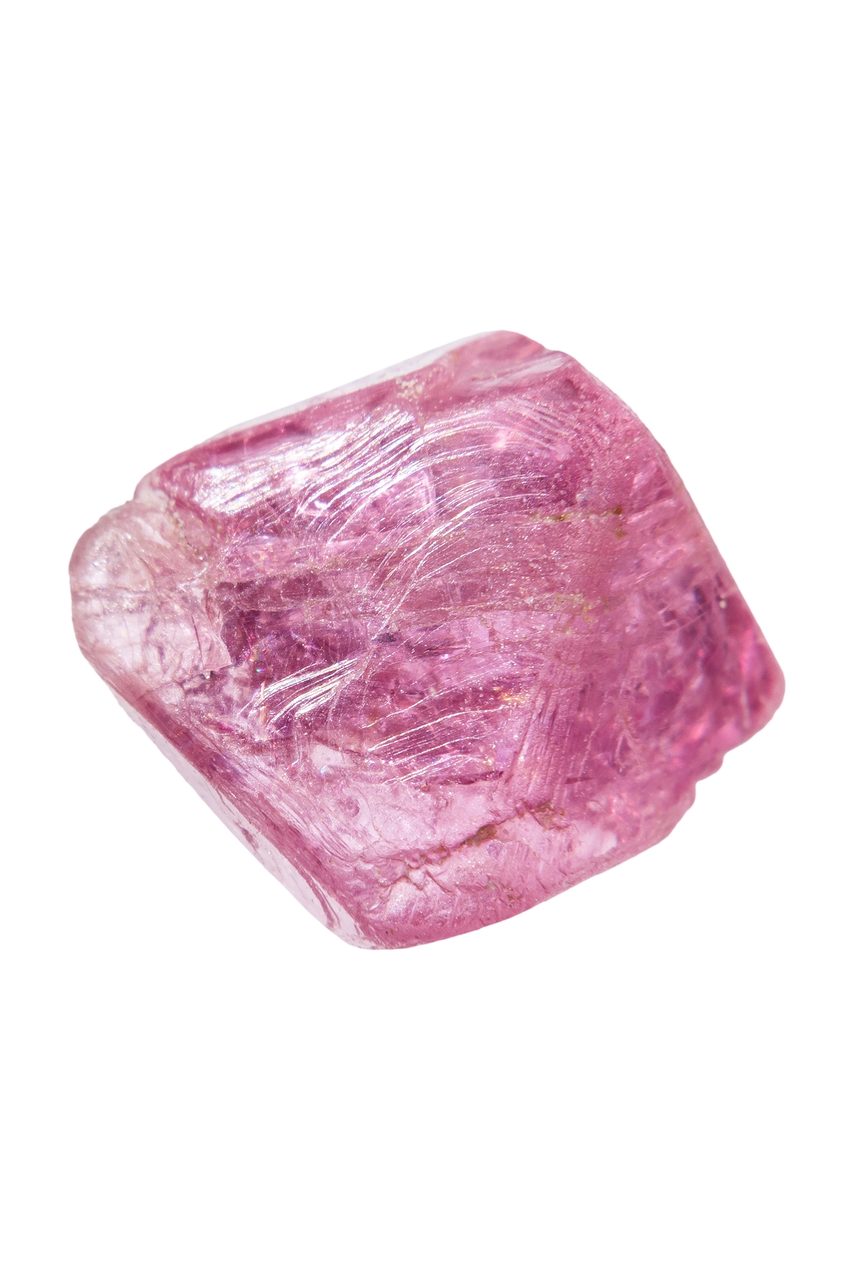
For centuries spinel was sold as ruby. Red stones reached Persia, India and Europe from the mines of Badakhshan, on today's border between Afghanistan and Tajikistan, and the trade called them balas rubies, a name generally traced to that region. Marco Polo passed through Badakhshan in the late thirteenth century and described the mines in his account of his travels.
Chemistry finally pulled the two apart. GIA dates the separation of spinel from ruby to the eighteenth century, and its reading list on the subject includes chemical analyses of ruby spinel by Martin Klaproth in 1789 and Louis Vauquelin in 1797. By then the famous red stones of Europe and Asia were already set in crowns and necklaces under the wrong name, and several of them still carry it.
The origin of the word spinel is less settled. Mindat credits Jean Demeste with naming the mineral in 1779 from the Latin spinella, a little thorn, after its sharp crystal points. Richard Hughes and Kurt Sickafus, writing in 1999, found the word already in English print in 1555 and judged its origin lost.
Giant pink and red crystals turned up near Mahenge in Tanzania in 2007, and in June 2016 Jewelers of America and the American Gem Trade Association added spinel to August, beside peridot and sardonyx. In crystal shops it is a stone of renewal, for people starting again.
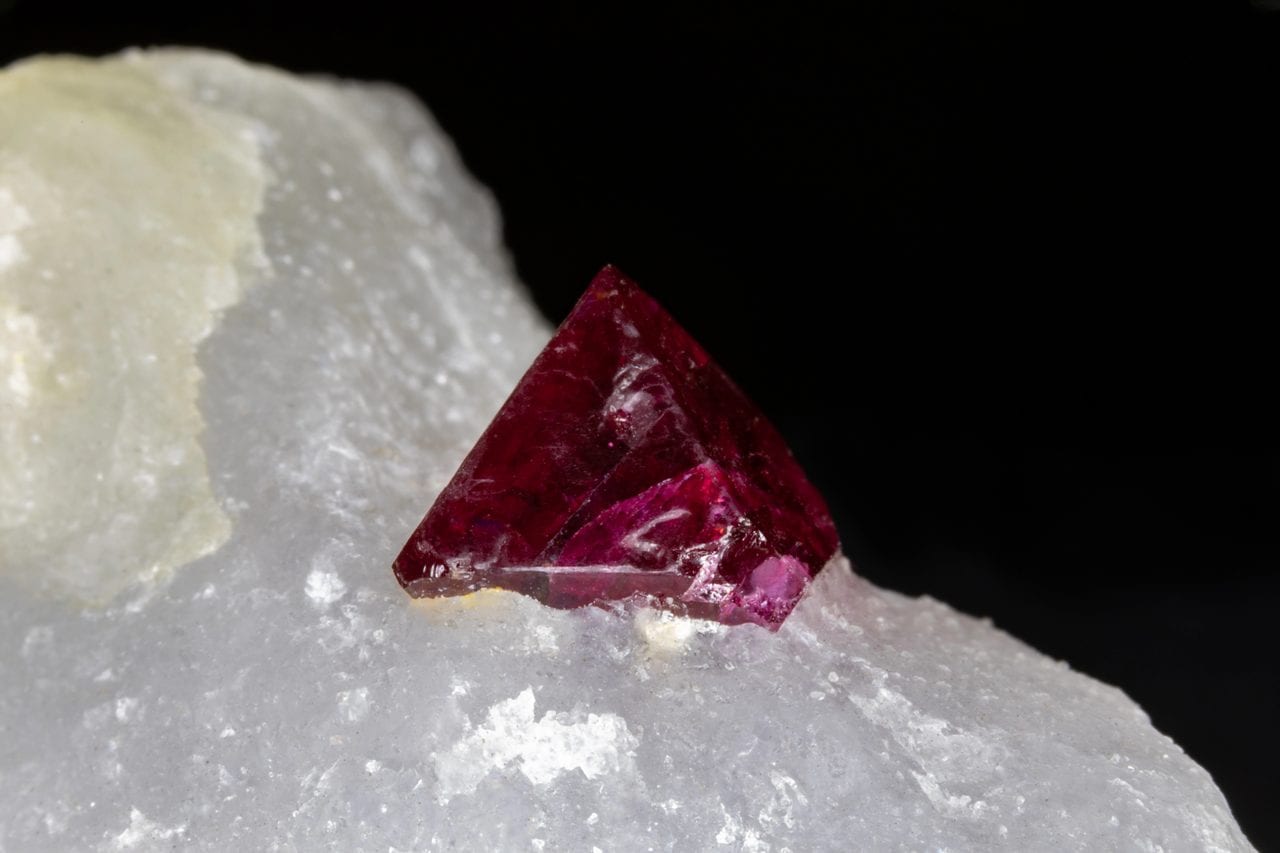
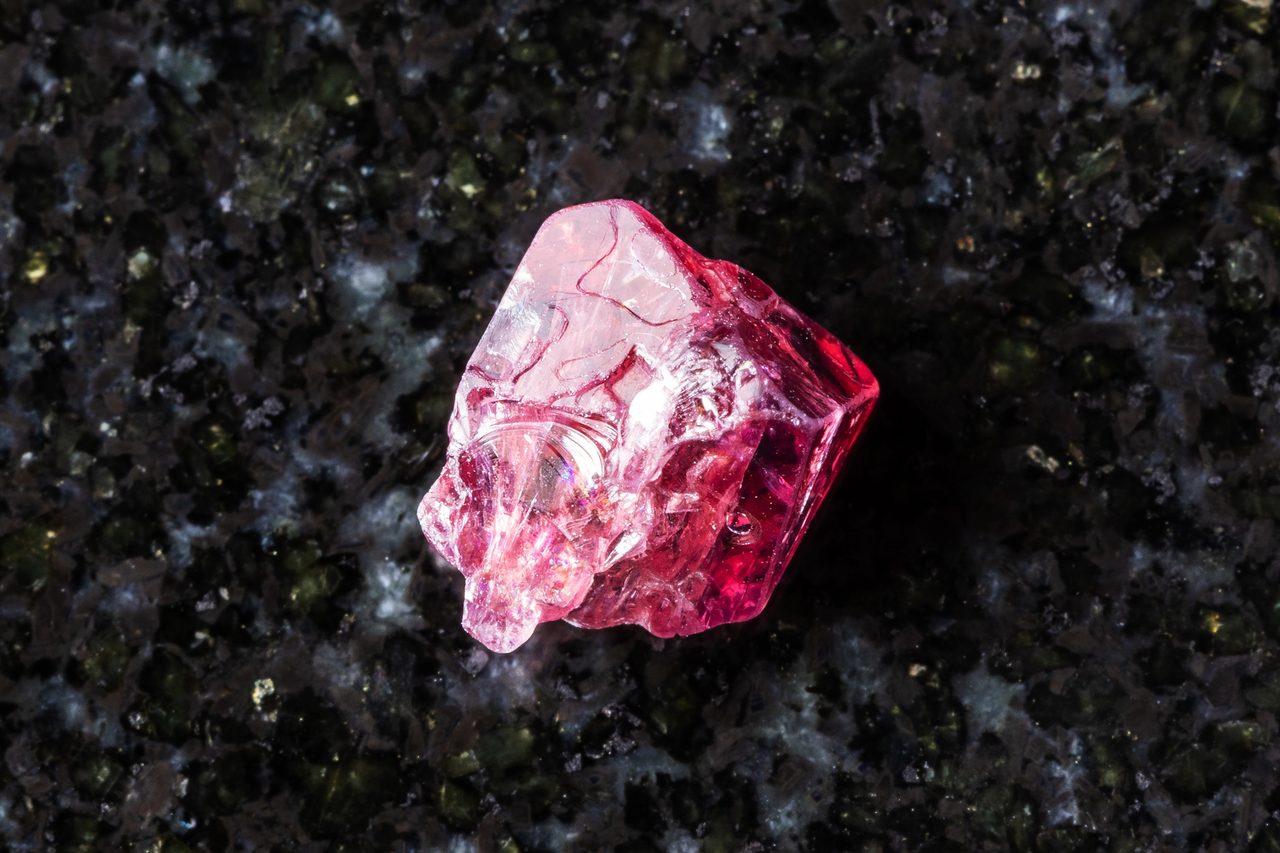
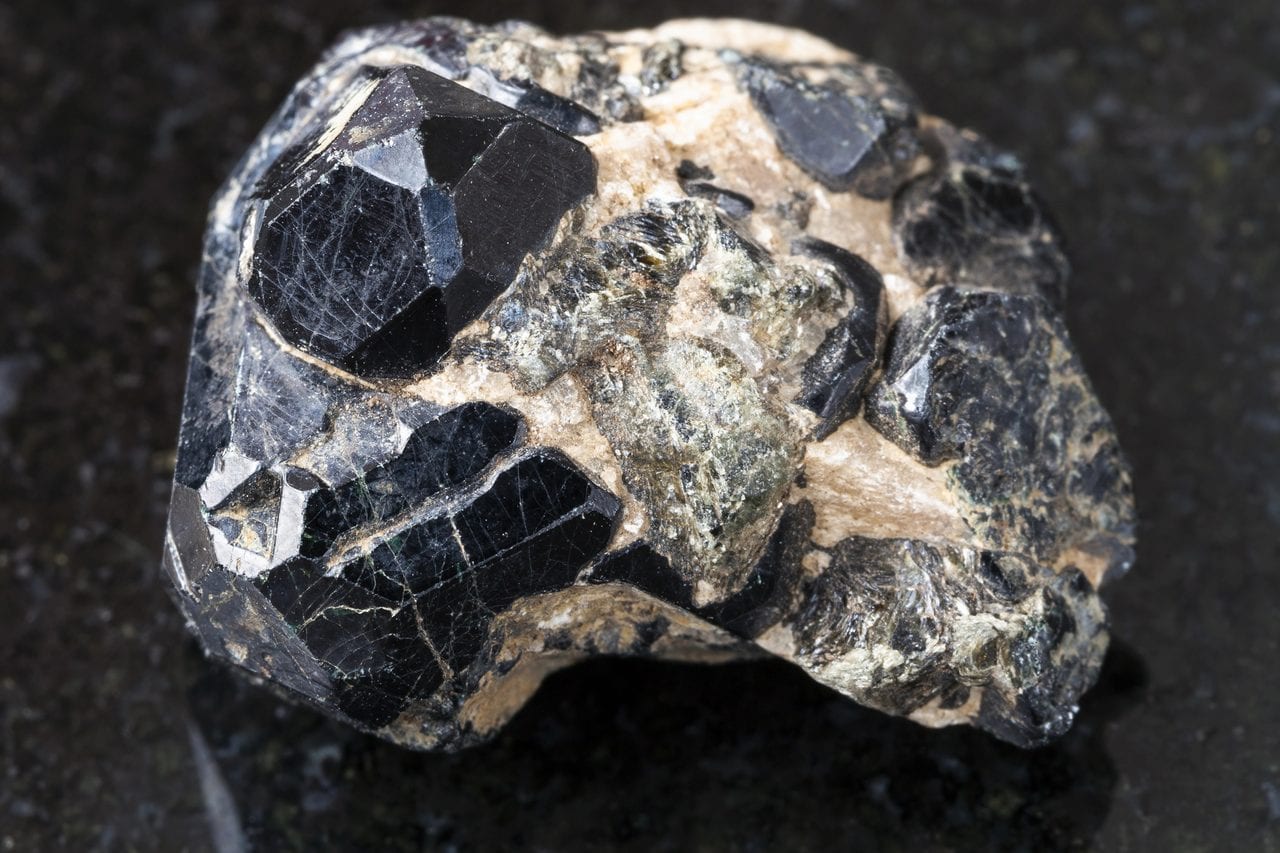
TABLE OF CONTENTS
Properties & Qualities
Physical Properties
Spinel grows as octahedra, a shape GIA compares to two pyramids joined at their bases, and well-formed crystals are fairly common in nature. Twinning on the spinel law rotates one half of the crystal against the other and flattens it, and Mindat notes that repeated twinning can produce sixlings. GIA advises judging stones cut from flat twinned rough on their overall beauty, since they tend to come out shallow. Spinel belongs to the cubic system and is singly refractive, like garnet and diamond. The International Gem Society records no cleavage and a conchoidal fracture that gives it good resistance to knocks; Mindat suspects that the occasional separation along octahedral planes is parting rather than true cleavage. On hardness the sources differ slightly: GIA gives 8, and the International Gem Society and Mindat give 7.5 to 8. The International Gem Society adds that only alexandrite, ruby, sapphire and diamond are harder among natural gems.
Pure magnesium aluminium oxide is colourless, so every colour comes from a trace of something else. GIA puts the intense reds and pinks down to chromium, with more chromium giving a stronger red, the oranges and purples to a mix of iron and chromium, violet to blue to iron, and the vivid blues to cobalt. The International Gem Society adds a trace of zinc in Sri Lankan blues, and iron, chromium and vanadium in the rare Sri Lankan stones that change from violet in daylight to reddish violet under lamplight. Grey to black stones from Myanmar can show a four-rayed star, and stones cut along a threefold axis may show six rays.
The International Gem Society gives a refractive index of about 1.719, ranging from 1.712 in pale stones to 1.747 in some blues, and up to 1.78 in the dark iron-rich kinds traded as ceylonite and pleonaste. Dispersion is 0.020. Red and pink spinel glows crimson under ultraviolet light, long-wave and short-wave alike, while blue spinel stays inert. Spinel itself is one species in a large group. Mindat lists series running from spinel towards hercynite, gahnite and magnesiochromite, and places magnetite, chromite and franklinite in the same structural family.
GIA's reading list describes the Tajik spinels growing in metamorphic marbles with forsterite and clinohumite, and Mindat notes magnesian chromian spinel in the kimberlites of the De Beers mine. Gem spinel is recovered mainly from river gravels, where the International Gem Society says stream action rounds the crystals and wears away many of their flaws. Vietnam's Luc Yen district has produced red, pink and violet spinel since the 1980s and vivid blue since the 2000s, according to GIA. The International Gem Society describes natural spinel as rarely treated, adding that heating does not reliably improve its colour. GIA researchers reported in 2009 that at least some heated spinel is on the market. Structural disorder begins at about 750 °C, and laboratories detect it from the broadening of a chromium emission line near 685 nanometres.
Metaphysical properties
Crystal writers call spinel a stone of renewal. They give it to people whose energy has run low and say it encourages a further attempt at a task that has gone badly, a phrase repeated in near-identical words across shop pages. Each colour gets its own reading: red for vitality and the root chakra, pink for the heart, blue for calm, and black for grounding and protection. Our guide to crystals for new beginnings covers the wider practice of starting over.
No dated book has been traced for that renewal reading, so it cannot be placed in time. What history does record is the value rulers set on large red spinels. The Timur Ruby in the Royal Collection belonged to several Mughal emperors, Shah Jahan among them, and its owners had their names carved into the stone. GIA's August page retells, without a date, a belief that red gems eased anger, promoted harmony and stopped bleeding; that belief concerned red stones in general. George Frederick Kunz, in 1913, retold early nineteenth-century experiments on Friederike Hauffe, the Seeress of Prevorst, in which spinel held in her hand reportedly worked on her like lodestone.
Meaning & Symbolism
Physical meaning
A spinel crystal is two pyramids set base to base, and practitioners read that octahedron as a picture of balance, with as much reaching down into the earth as up towards the light.
The same mineral turns red, pink, violet or blue on a trace of chromium, iron or cobalt. Practice takes that as a reminder that a small change in what a person carries can alter how they meet the world.
Spinel spent centuries being taken for another stone. People who have been overlooked, or measured against someone else, keep it for that reason, and say the old mix-up tells you about the people looking rather than about the stone.
Rivers carry gem spinel down from its rock and round it as they go, wearing away many of its flaws on the way. Owners who keep a water-worn crystal see in it rough edges worn down slowly, without the stone being broken.
Spiritual meaning
Spiritually, spinel belongs to beginnings that come after an end. Practitioners give it to people rebuilding after a loss, a move or a long illness, and say it keeps the will to start again from fading before the first step.
For centuries spinels sat in the treasuries of Persia, India and England under a name that belonged to a different stone, and they were prized there all the same. Crystal writers read in this a kind of dignity that does not depend on being named correctly, and offer the stone to anyone whose worth has gone unrecognised.
Twinned crystals, two halves grown together and turned against each other, are kept by couples and close friends as a picture of a bond that holds through change.
A star spinel, with its four or six rays, serves some practitioners as a focus for prayer. Our article on what red stones symbolize follows the older meanings of red that spinel shares with ruby and garnet.
Healing Benefits
Physical healing
Every use here comes from crystal writers, not from medicine, and none has been tested in a study. They belong beside ordinary care.
Practitioners reach for red spinel when the body feels drained at the end of a long week. They hold a tumble in the palm during a slow walk, or rest it on the lower belly while lying down for ten minutes. Some keep black spinel in a pocket on days spent on their feet, and others wear it during a gentle return to exercise.
If you feel worn out for weeks on end, see your doctor.
Spinel is not a substitute for medical care. If something in your body worries you, see a doctor.
Emotional healing
Discouragement is where practitioners turn to spinel first. Someone who has failed an exam, lost a job or had a plan collapse holds a piece and writes down one small thing to try tomorrow, and the stone, they say, keeps the next attempt from feeling pointless.
Anger is a second use, following the old belief that red stones cool a temper. A person who feels heat rising in an argument holds red spinel and counts ten slow breaths before answering. Our guide to crystals for anger lists more stones people hold when tempers flare.
Practice also gives spinel to people worn thin by overwork, with the advice to set it on the desk as a signal to stop at a fixed hour.
Before a talk or an interview, a small spinel in the pocket gives nervous fingers something to hold. Our article on crystals for public speaking has more for that moment.
Spiritual healing
A root meditation is the main practice. The practitioner sits on the floor with red spinel at the base of the spine, pictures a warm red light pooling at that point, then lets it sink slowly down through the legs into the ground. Our guide to using crystals for the root chakra sets out the wider method.
A second practice marks fresh starts. On a birthday, the first morning of a new job or the first day of a month, the practitioner holds spinel, names one thing to leave behind and one thing to begin, and keeps the stone in sight for the rest of the day.
Couples sometimes use a twinned crystal. Each partner holds one end in turn and says a single sentence about what they want to build together.
For protection, some place black spinel by the front door and touch it on the way out each morning with a brief word of intention.
Use & Care
How to use
- Ring stone: At 8 on GIA's figures, spinel suits a ring worn every day; our Mohs hardness explainer shows where that sits on the scale.
- August birthday gift: Spinel joined August in 2016, and our August birthstone guide sets it beside peridot and sardonyx.
- Stud earrings: A pair of small red or pink stones brings colour close to the face for daily wear.
- Black spinel bracelet: Faceted black beads make a grounding strand to wear on a busy day.
- Morning tumble: Hold a piece for a minute before you get out of bed.
- Desk stone: Put it beside your keyboard as a cue to stop work at the hour you set.
- Pocket piece for an interview: Slip a small one into a pocket before a meeting that matters.
- On a new-month shelf: Set it out on the first day of each month with a note of one intention.
- Under the pillow: Tuck a smooth piece beneath the pillow during a tiring week.
- Pendant at the heart: Choose pink spinel on a chain that lets it rest over the breastbone.
- Leo season: Some astrologers give August's stones to Leo, which our Leo crystal guide explains.
How to cleanse
- Soap and warm water: GIA's advice is that a wash in soapy, warm water is always safe.
- Go easy with machines: GIA says ultrasonic and steam cleaners can be used, though fractures in a stone could cause trouble, so keep cracked pieces out of them.
- Keep it from high heat: High heat can fade some colours, GIA notes, so skip hot water baths and candle flames.
- Running tap: A short rinse under cool running water suits this hard stone; our guide to crystals that are safe in water lists others.
- Sound bath: Tap a tuning fork or ring a bell beside it; our sound cleansing guide explains how.
- Cedar smoke: Pass it slowly through the smoke of a cedar bundle.
- Breath: Blow gently across it, slowly, three times.
- Moonlit sill: Set it by the window on a moonlit night.
- Dish of salt beside it: Set it next to, not in, a small dish of dry salt overnight.
- Spoken word: Say aloud what you are clearing from it and what you are asking it to hold.
How to charge
- Bright sun is safe: GIA calls spinel stable when exposed to light, so it can sit on a bright sill without harm; charging through glass has its own article.
- Full-moon night: Set it outdoors on the night of the full moon and fetch it at sunrise.
- Quartz cluster: Rest it on a clear quartz cluster overnight.
- Red candle, at a distance: Sit with it in candlelight, keeping the stone well back from the flame.
- In the soil: Bury it in a pot of earth for a night and rinse it the next morning.
- Morning music: Play a song that lifts you with the stone next to the speaker.
- Your own intention: Hold it and say one sentence about what you are starting.
- Held at the hip: Press red spinel against the hip, near the base of the spine, for a minute.
- Beside a houseplant: Set it among the leaves of a healthy plant for a day.
- August sunrise: Charge it outside at dawn on your birthday, if that falls in August.
Combining with other stones
- Ruby (the old namesake): Mogok produces ruby and spinel from the same ground, GIA notes, and practice pairs them for courage and warmth.
- Sapphire (Mogok neighbour): Blue sapphire joins blue spinel in meditation for a quiet, clear mind.
- Peridot (August companion): August's best-known stone, green peridot, sits with spinel in birthday jewellery and in practice for a fresh start.
- Sardonyx (August's first stone): A banded form of chalcedony, sardonyx was August's stone on the 1912 list, with peridot as an addition, and practice sets the old and new August stones together.
- Franklinite (spinel-group cousin): Mindat places franklinite in the same structural family, and collectors keep the two side by side.
- Black tourmaline with black spinel: Two black protectors, black tourmaline and black spinel, are paired at the front door, with more partners in our black tourmaline pairings.
- Clear quartz (to amplify): Practitioners place clear quartz beside spinel to strengthen a renewal intention.
- Almandine (red garnet partner): Deep red almandine shares spinel's place at the root chakra for grounding work.
- Carnelian (for nerve): Orange carnelian goes into a pocket with spinel before a performance or an exam.
- Tanzanite (the other new birthstone): Violet tanzanite, added to December in 2002, keeps company with violet spinel in evening meditation.
Identification
Can be mistaken for
- Ruby: The stone spinel was confused with for centuries. Mindat gives corundum refractive indices of 1.759 to 1.772 and a birefringence near 0.008, while the International Gem Society puts red spinel at 1.715 to 1.735, and spinel is singly refractive, so a gemmologist separates them quickly.
- Blue sapphire: Also corundum, and also doubly refractive. Blue spinel can be told apart with a spectroscope too: the International Gem Society calls a band at 460 nanometres diagnostic of natural cobalt spinel.
- Garnet: Like spinel it is singly refractive, GIA notes, so the refractometer rather than the polariscope separates them. The International Gem Society warns that red and green garnets are sometimes sold as Arizona spinel and almandine as candy spinel.
- Gahnite: The zinc member of the spinel group, found in blue from Jemaa in Nigeria. Researchers at the Gem and Jewelry Institute of Thailand note that it differs from blue spinel in refractive index, density and its zinc-rich chemistry.
- Synthetic spinel: The International Gem Society says spinel has been grown since the nineteenth century, by flame fusion, flux and the Czochralski method. A Gems & Gemology lab note gives about 1.728 for flame-fusion stones against 1.715 for a natural one it tested.
- Diamond (colourless): Natural colourless spinel is very rare, but colourless synthetic spinel serves as a diamond simulant, which a gemmologist can identify.
- Black tourmaline (lookalike in black): Both stones come in black, but spinel tends to form octahedra, while black tourmaline grows as long prisms.
- Alexandrite: Rare colour-change spinels shift from greyish blue or violet in daylight to an amethyst-like purple under incandescent light, the International Gem Society says, which can recall alexandrite, the colour-change variety of chrysoberyl; a gem laboratory settles it.
How to spot a fake
- Cheap and bright in a class ring: Synthetic spinel is inexpensive and common in birthstone jewellery and class rings, the International Gem Society notes, so ask whether the stone is natural.
- Rows of tiny octahedra: The same source calls rows of octahedral inclusions or cavities distinctive of natural spinel.
- A star that looks too perfect: Synthetic star spinels often look too even and straight, again per the International Gem Society.
- Misleading names: Ruby spinel, spinel ruby, Arizona spinel and candy spinel are all names the International Gem Society advises against.
- Pure green or yellow: No natural spinel of these colours is known to the International Gem Society, which makes a vivid green or yellow stone worth a question, though GIA has reported a rare yellowish green natural one.
- Ask about heat: Some heated natural spinel is sold, GIA researchers found in 2009, so ask whether yours has been heated.
- Trace elements tell: GIA reports that natural spinel carries lithium, beryllium, zinc and gallium, which synthetics lack or hold only in tiny amounts, a test only a laboratory can run.
- A lab report for costly stones: For a large red, pink or blue stone, ask for a report from a recognised gem laboratory before you pay.
- Read the treatment line: Our article on what crystal sites rarely tell you about treatments lists the questions to put to a seller.
Sources: GIA, Spinel description; GIA, Spinel history and lore; GIA, Spinel quality factors; GIA, August birthstones; GIA, Reading list: ruby, balas ruby and spinel; International Gem Society, Spinel value, price and jewelry information; Mindat, Spinel; Mindat, Corundum; Saeseaw, S., Wang, W., Scarratt, K., Emmett, J.L. and Douthit, T.R. (2009), Distinguishing heated spinels from unheated natural spinels and from synthetic spinels: a short review of ongoing research, GIA Research News; Gems & Gemology Lab Notes, Summer 2016: Unusual yellowish green spinel, Gems & Gemology 52 (2); Gems & Gemology Lab Notes, Winter 2014: Spinel inclusion in spinel; Hughes, R.W. and Sickafus, K.E. (1999), Spinel: history of a magnificent gem; Hughes, R.W. and Pardieu, V., Gem hunting in Mahenge and Tunduru, Tanzania; Smithsonian National Museum of Natural History, Bilgore Spinel Ring; Sripoonjan, T. et al. (2025), Automated data processing of Raman spectra for supporting spinel origin determination, International Gemmological Conference; National Jeweler, JA, AGTA add spinel as August birthstone (2 June 2016); Royal Collection Trust, The Timur Ruby Necklace, RCIN 100017; Kunz, G.F. (1913), The Curious Lore of Precious Stones, Lippincott.