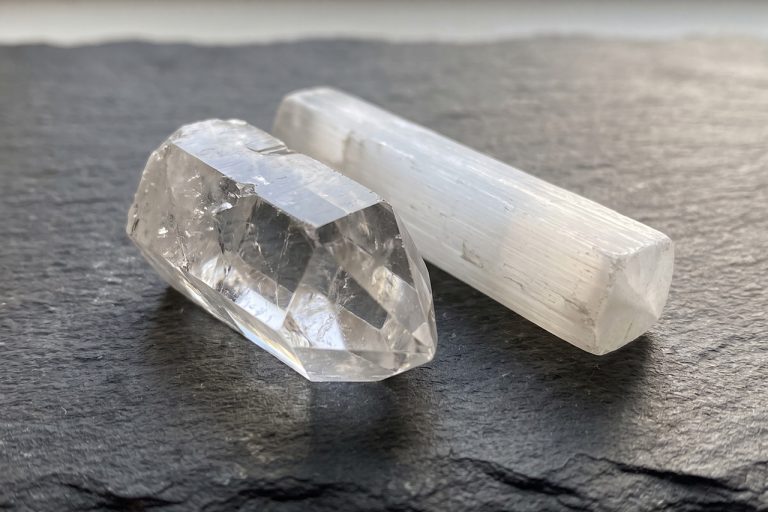
Clear Quartz vs Selenite: What’s the Difference?
Clear quartz and selenite look alike but are opposites: quartz is hard and water-safe, selenite soft and water-soluble. How to tell them apart.


Clear quartz and selenite look alike but are opposites: quartz is hard and water-safe, selenite soft and water-soluble. How to tell them apart.
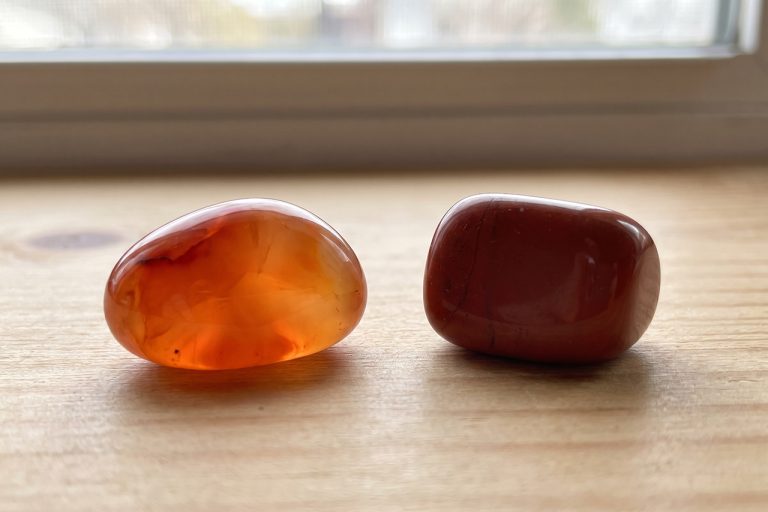
Carnelian and red jasper are both red quartz: carnelian translucent, jasper opaque. The one test that tells them apart, and how they differ.
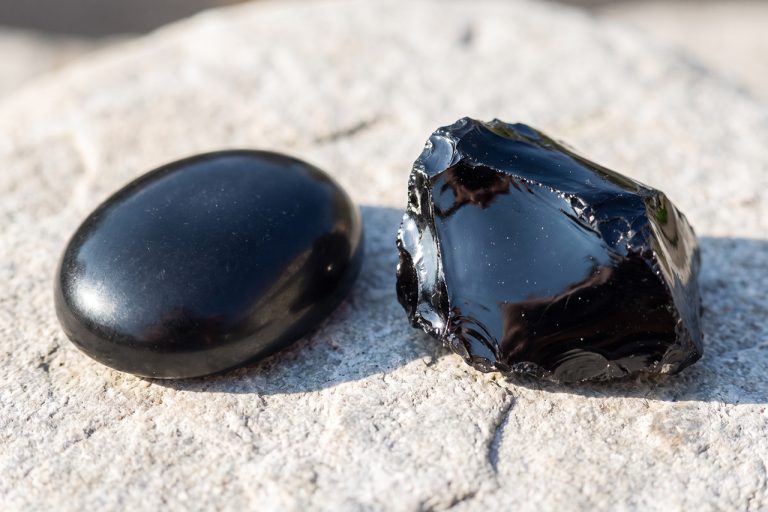
Black onyx is dyed chalcedony; obsidian is volcanic glass. Here's how to tell the two black stones apart, by weight, hardness, and lustre.
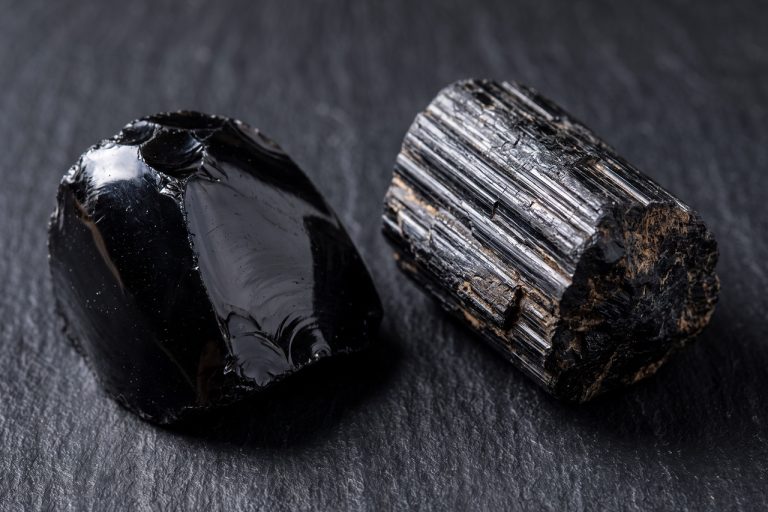
Black obsidian is volcanic glass; black tourmaline is a crystal. How to tell them apart, how they differ in use, and which to choose.
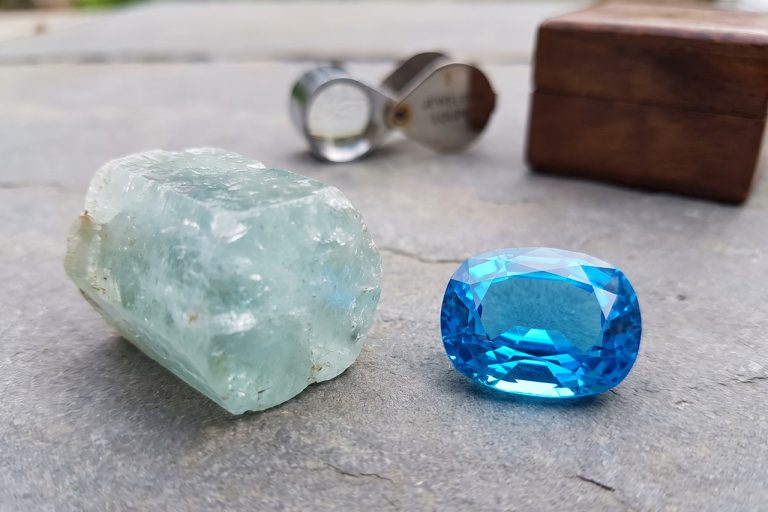
Aquamarine is naturally blue beryl; most blue topaz is treated colourless topaz. Here's how to tell them apart by colour, weight, and price.
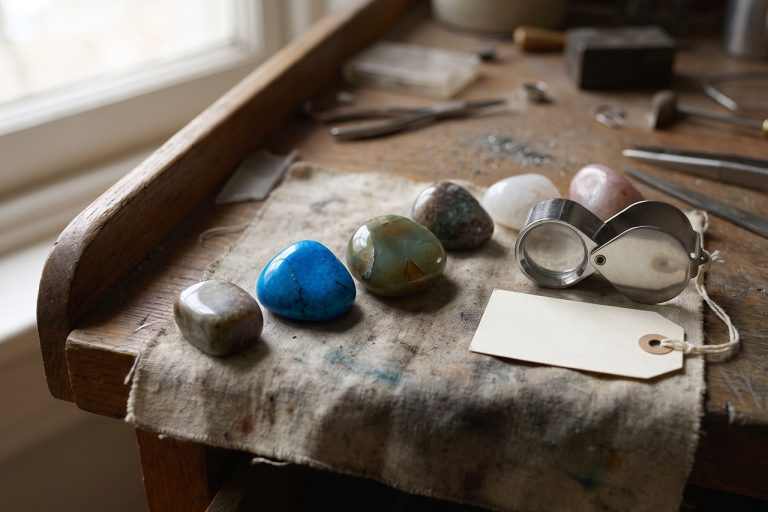
The word 'natural' hides a lot in the crystal trade: dye, heat, irradiation, even a false name. Here's what it means and what to ask.
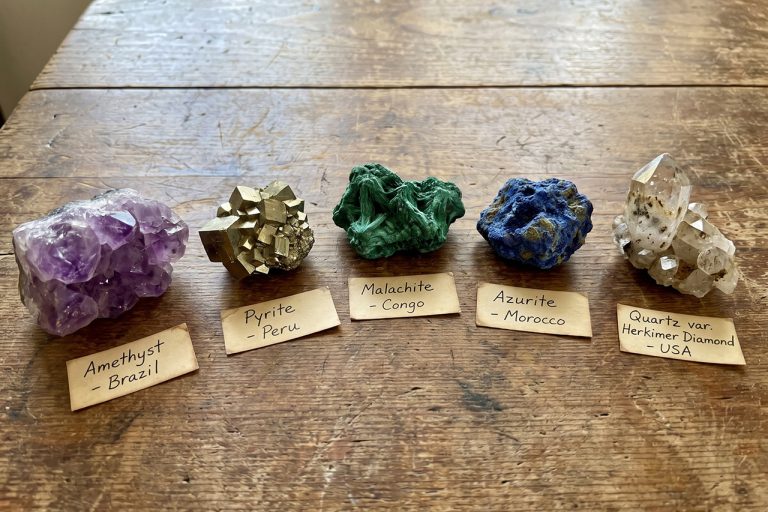
Most 'ethically sourced' crystal labels mean nothing because the supply chain isn't traceable. Here's what actually matters when you buy.
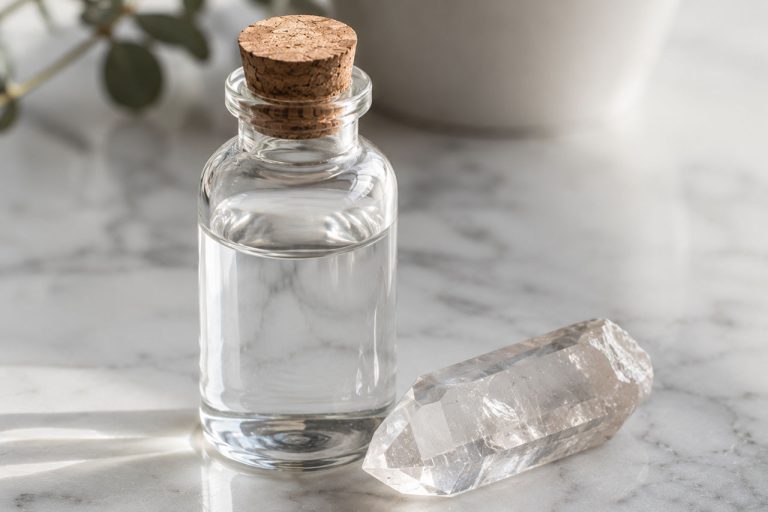
Gem essence is water that has been exposed to a crystal. Here is what is actually in the bottle and which crystals are safe to use.
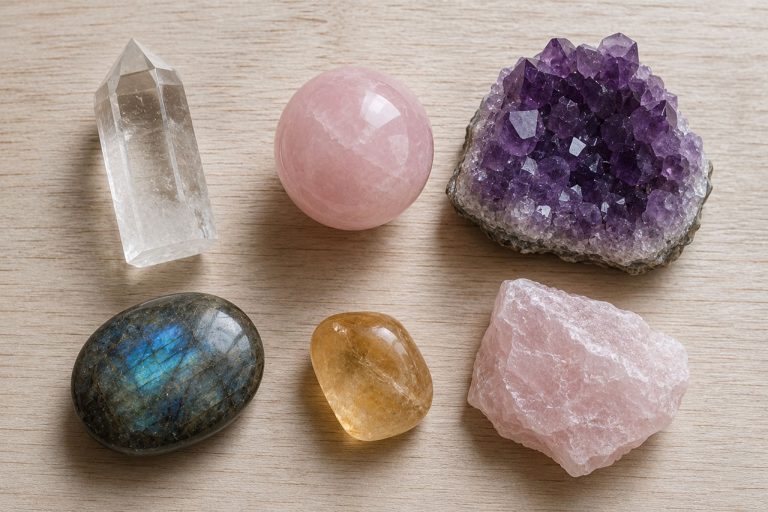
Crystal shapes split into two categories: natural (clusters, points, geodes) and lapidary (spheres, palm stones, towers). Here is what each one is.

Orange calcite and citrine are both orange-yellow stones associated with warmth and positive energy, but they're entirely different minerals.